Dutch broadcaster Avrotros withdraws from Eurovision 2027
Avrotros will sit out a second consecutive Eurovision contest after rejecting EBU rule changes regarding wartime participation and hosting rights.
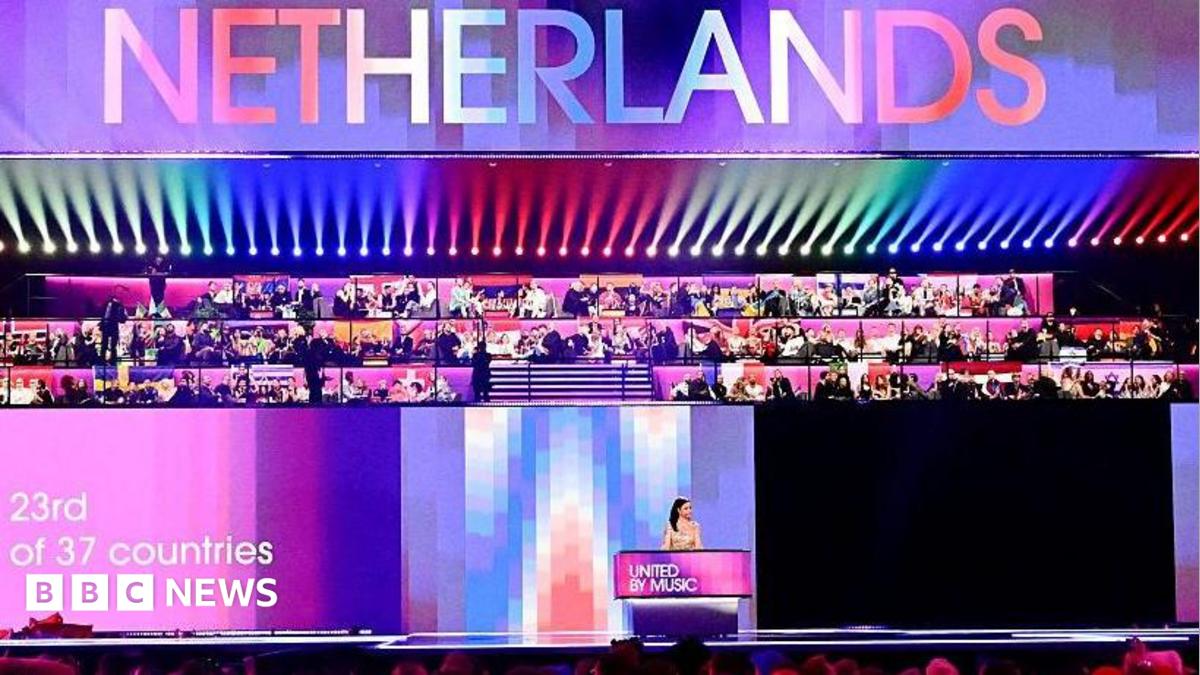
The Eurovision Song Contest was founded to unite nations through music, but for the Dutch public broadcaster Avrotros, the event has shifted from a bridge between cultures to a platform for division
. On Monday, 24 August 2026, Avrotros announced it will withdraw from the 2027 contest, marking the second consecutive year the Netherlands will sit out the competition.
The decision follows a failed attempt to find a middle ground with the Eurovision Broadcasting Union (EBU). While the EBU recently implemented new rules to address the participation of nations in wartime, Avrotros claims these measures fail to restore the contest's neutrality. The withdrawal leaves Dutch artists without a platform in next year's event, scheduled for 15 May in Burgas, Bulgaria, and signals a widening rift between the EBU and some of its most successful member broadcasters.
Related YouTube video


The central point of contention is a recent EBU rule amendment stating that if a country involved in an armed conflict wins the competition, it is ineligible to host the following year. This disqualification also applies if a sensitive geopolitical situation
threatens the security, safety or stability
of the winning state or its immediate region. The rule was approved by the governing body following feedback from broadcasters after the 2026 event.
Avrotros rejected these changes as insufficient. The broadcaster stated the contest cannot be considered neutral while a participating country remains involved in a large-scale military conflict. In its statement, Avrotros cited severe humanitarian suffering in Gaza and the ongoing restrictions on press freedom
as primary drivers of the divisions surrounding the event. Anadolu Agency reported that Gaza's Health Ministry has recorded 73,420 deaths and 174,369 injuries since October 2023, citing these conditions as the context for the broadcaster's concerns.
The EBU's rule change specifically targets the possibility of a conflict-involved nation hosting, but it does not bar them from competing. Moreover, the rule has collateral implications for Ukraine, which has been at war since the 2022 Russian invasion and previously won the contest in 2022 with Kalush Orchestra.
Taco Zimmerman, director general of Avrotros, said the decision to step away from an event very close to our hearts
was based on the broadcaster's commitment to values of trustworthiness, independence and humanity
. He argued that international conflicts are now undeniably undermining the contest's neutral character.
Martin Green, director of the contest, disputed this narrative, stating that Eurovision has always been a place to bring people together, celebrate diverse communities, and show that a better world is possible even in the most difficult times
via the Bbc.
The Dutch withdrawal is part of a broader pattern of political fallout. The 2026 contest in Vienna saw the largest political boycott in the event's history, with the Netherlands joined by Spain, Ireland, Slovenia, and Iceland. Other protests have included more than 1,000 cultural professionals signing an open letter and the Swiss winner Nemo returning their trophy in protest of Israel's participation.
Tensions have also been fueled by the performance of the Israeli entry. Israel placed second in both the 2025 and 2026 contests, with Noam Bettan's song Michelle
taking the runners-up spot in 2026. According to Brussels Signal, some have alleged these results were the product of cheating and an abuse of the voting system.
Despite Avrotros's exit, the Netherlands is not automatically excluded from the 2027 competition. Unlike the UK, the Dutch system uses multiple public broadcasters under one umbrella organization, NPO. Avrotros has formally returned responsibility for any entry to NPO, which can now decide whether to appoint a different broadcaster to participate.
The stakes for the EBU are significant. The Netherlands is a powerhouse in the competition, having won five times—a record surpassed only by Ireland and Sweden. Their most recent win in 2019 with Duncan Laurence's Arcade
became the first Eurovision entry to reach 1 billion streams on Spotify, according to DW.
While the EBU continues its dialogue with NPO, other boycotting nations remain undecided. Extra reports that Ireland's RTE has not confirmed its status for 2027, though director general Kevin Bakhurst stated in May there was no reason at the moment
to change their previous position of boycott.
The final list of participating broadcasters and countries will be announced later this year.
Timeline of Political Tensions and Boycotts
The shift toward withdrawal began in late 2025. According to the Bbc, five broadcasters announced boycotts last November following a failed attempt to have Israel suspended from the competition. This movement expanded into the 2026 event in Vienna, where the Netherlands was joined by Iceland, Slovenia, Spain, and Ireland in what DW described as the biggest political boycott in the history of the contest.
Internal friction within the EBU has also been exacerbated by safety concerns. The BBC reports that some participating broadcasters have privately expressed worries regarding the safety of staging the event in Tel Aviv or Jerusalem should Israel win in the future. This climate of uncertainty preceded the recent rule changes that now disqualify conflict-involved winners from hosting.
The Dutch broadcaster’s exit follows a year of lobbying the EBU for transparent rules regarding the participation of nations in military conflicts, according to Anadolu Agency. While Avrotros has stepped away, the EBU is now focused on the umbrella organization NPO. Martin Green stated that the EBU will continue dialogue with NPO to explore opportunities for another Dutch broadcaster to take over the responsibility for an entry.
The resolution of this dialogue represents the next step in determining whether the Netherlands will be represented in Burgas on 15 May 2027.
How significant is this development?
Contribute your assessment to the aggregated reader intelligence ledger.
Archypedia is dedicated to independent, evidence-backed reporting. This briefing was synthesized from primary source reporting, corroborated across independent newsrooms, and verified against our Editorial Standards.
Transparency record
Evidence behind this report
This report synthesizes 5 distinct sources. Open the source ledger below to compare the underlying coverage.
Prepared under the Archypedia Editorial Policy by the Iris Kane editorial desk profile. AI-assisted tools may support drafting and verification; public accountability remains with Archypedia. Report an error.