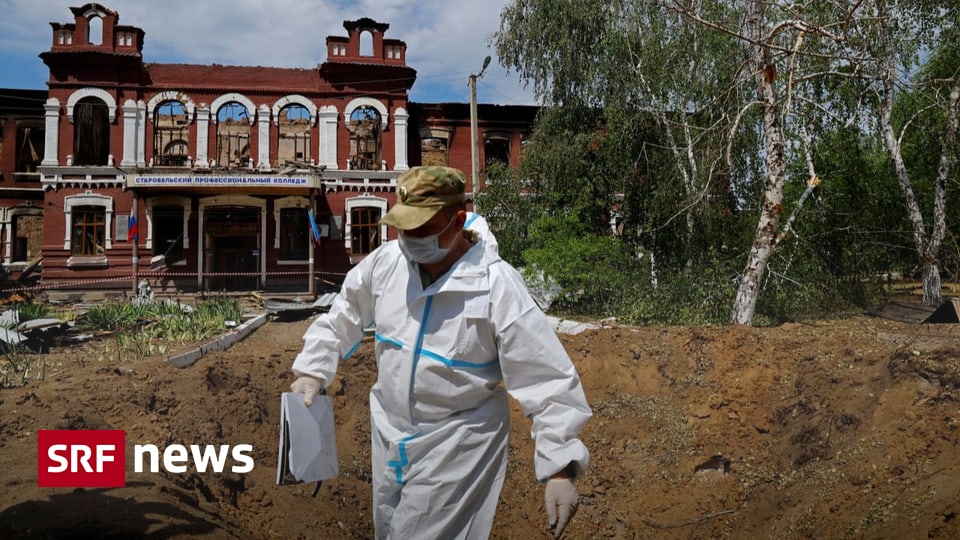
Amid intensifying hostilities in eastern Ukraine, a drone strike on a student dormitory in Starobilsk has reignited debates over civilian casualties and the credibility of military narratives. The incident, which occurred in the Kharkiv Oblast, has drawn sharp conflicting accounts from Kyiv and Moscow, with international observers calling for transparency amid escalating tensions.
How the Attack Unfolds
The attack targeted a residence housing students and staff at a technical university in Starobilsk, a city near the frontline. Ukrainian officials initially attributed the strike to Russian forces, citing footage of damaged buildings and reported casualties. Russian state media, however, accused Ukrainian troops of launching a “terrorist attack” on a civilian facility, a claim that has since been scrutinized by independent analysts.
Local media reports indicate that the strike occurred during a period of heightened cross-border shelling, with both sides exchanging accusations of targeting infrastructure. The Ukrainian military stated that the dormitory was a “legitimate military objective” due to its proximity to a nearby command post, a claim that has yet to be independently verified.
Investigations and Credibility Concerns
Investigations by international human rights organizations have cast doubt on the initial narratives from both sides. A report by a coalition of European monitoring groups found inconsistencies in the timing and trajectory of the attack, suggesting the possibility of misidentification or deliberate misinformation. The findings align with earlier analyses by the German newspaper Faz, which noted that Ukraine’s account “did not hold up under scrutiny in all points.”
Russian officials have released video clips purportedly showing Ukrainian forces approaching the site before the strike, but these have not been independently corroborated. Meanwhile, Ukrainian authorities have declined to provide detailed evidence of the alleged military presence, citing operational security concerns.
Regional Implications and International Reactions
The incident has further complicated efforts to de-escalate the conflict, with the European Union and the United States urging both parties to prioritize civilian safety. The UN High Commissioner for Human Rights reiterated calls for accountability, emphasizing that “attacks on educational institutions constitute a war crime under international law.”
Analysts note that the dispute reflects broader challenges in verifying wartime claims, particularly in areas with active combat. Dr. Elena Markova, a conflict studies expert at the University of Warsaw, stated, “The lack of independent access to the site undermines trust in both narratives, complicating diplomatic efforts to address civilian harm.”
What’s Next?
International teams are preparing to conduct on-the-ground assessments, though access remains contingent on the cooperation of local authorities. Both Ukraine and Russia have pledged to investigate the incident, but the absence of a neutral oversight mechanism raises concerns about the transparency of the process.
As the conflict enters its third year, the Starobilsk attack underscores the persistent risks to civilian infrastructure and the urgent need for clearer protocols to prevent such tragedies. The coming weeks will test the resolve of global actors to enforce accountability in one of the most protracted and devastating wars in Europe since World War II.
