Kirkland Advises Dajin on its Hong Kong IPO – Kirkland & Ellis LLP
In a significant move for the renewable energy sector, Kirkland Advises Dajin on its Hong Kong IPO – Kirkland & Ellis LLP, marking a major milestone for the Chinese wind equipment manufacturer. The company’s entry into the public markets was characterized by strong initial investor demand, culminating in a listing valued at approximately $847 million. Despite the successful pricing of the offering, the company’s debut on the Hong Kong exchange saw a dip in share price, reflecting the inherent volatility of the current market for industrial and green energy stocks.
The listing of Dajin Heavy Industry is more than just a capital-raising exercise; it represents the strategic intersection of high-stakes legal advisory and the global transition toward sustainable energy. By securing over HK$7.6 billion in planned proceeds, the company is now positioned to scale its operations in an increasingly competitive global wind energy landscape.
Analyzing the Dajin Heavy Industry Listing
The public offering of Dajin Heavy Industry was a high-profile event that drew significant attention from institutional investors. The process reached a critical peak when the IPO was priced at the top of its expected range, a strong indicator that there was substantial appetite for the company’s shares prior to the official start of trading.
Pricing at the top of the range typically suggests that the underwriters and the issuing company believe the valuation is well-supported by market demand. For a wind equipment manufacturer, this level of confidence often stems from the company’s perceived role in China’s broader energy transition and its ability to produce critical infrastructure for wind farms.
| Metric | Details |
|---|---|
| Listing Value | Approximately $847 Million |
| Planned Proceeds | Over HK$7.6 Billion |
| Pricing Status | Priced at the Top of the Range |
| Industry Sector | Wind Equipment Manufacturing |
| Legal Counsel | Kirkland & Ellis LLP |
The Dynamics of the Hong Kong Debut
Despite the strength of the pricing phase, Dajin Heavy Industry experienced a slip in its share price during its initial trading sessions in Hong Kong. This phenomenon is not uncommon in the IPO market, where the excitement of the pre-listing phase can sometimes lead to a “correction” once the shares begin trading on the open market.
Several factors typically contribute to such a debut performance:
- Market Sentiment: Broader economic headwinds affecting Chinese equities can drag down even fundamentally strong debuts.
- Profit Taking: Early institutional investors may sell a portion of their holdings to lock in immediate gains.
- Sector Volatility: The renewable energy sector is often subject to rapid price swings based on policy changes and global supply chain shifts.
While the initial drop may seem concerning to short-term traders, the primary objective of the IPO—securing over HK$7.6 billion in capital—was successfully achieved, providing the company with a massive war chest for future expansion.
The Strategic Role of Kirkland & Ellis LLP in the IPO Process
Executing a cross-border listing of this magnitude requires an immense amount of legal precision and strategic navigation. The fact that Kirkland Advises Dajin on its Hong Kong IPO – Kirkland & Ellis LLP underscores the importance of top-tier legal counsel in managing the complexities of the Hong Kong Exchange (HKEX) regulations.
The role of legal counsel in a Hong Kong IPO extends far beyond simple paperwork; it involves the rigorous structuring of the company to meet international standards of transparency, governance, and regulatory compliance.
Navigating Regulatory Hurdles
For a mainland Chinese company listing in Hong Kong, the legal journey is fraught with challenges. Kirkland & Ellis LLP would have been tasked with ensuring that Dajin Heavy Industry adhered to both the laws of its home jurisdiction and the stringent requirements of the HKEX. This involves a comprehensive process of due diligence, where every aspect of the company’s financial history, contractual obligations, and operational risks is scrutinized.
Key areas of legal focus during this IPO likely included:
- Prospectus Drafting: Ensuring that all material risks and financial disclosures are accurately presented to potential investors.
- Corporate Governance: Establishing a board structure and internal controls that satisfy the expectations of global institutional investors.
- Regulatory Filings: Managing the complex submission process to the Securities and Futures Commission (SFC) and the HKEX.
- Structuring the Offering: Advising on the optimal balance between new share issuance and the sale of existing shares.
Managing the High-Stakes Pricing Window
The legal team plays a critical role during the “book-building” phase, where the price of the IPO is determined. By ensuring that the legal framework of the offering is airtight, the counsel allows the company and its underwriters to focus on maximizing valuation. The fact that Dajin was priced at the top of its range suggests a seamless execution of the legal and financial strategy.
Contextualizing the Wind Equipment Sector in China
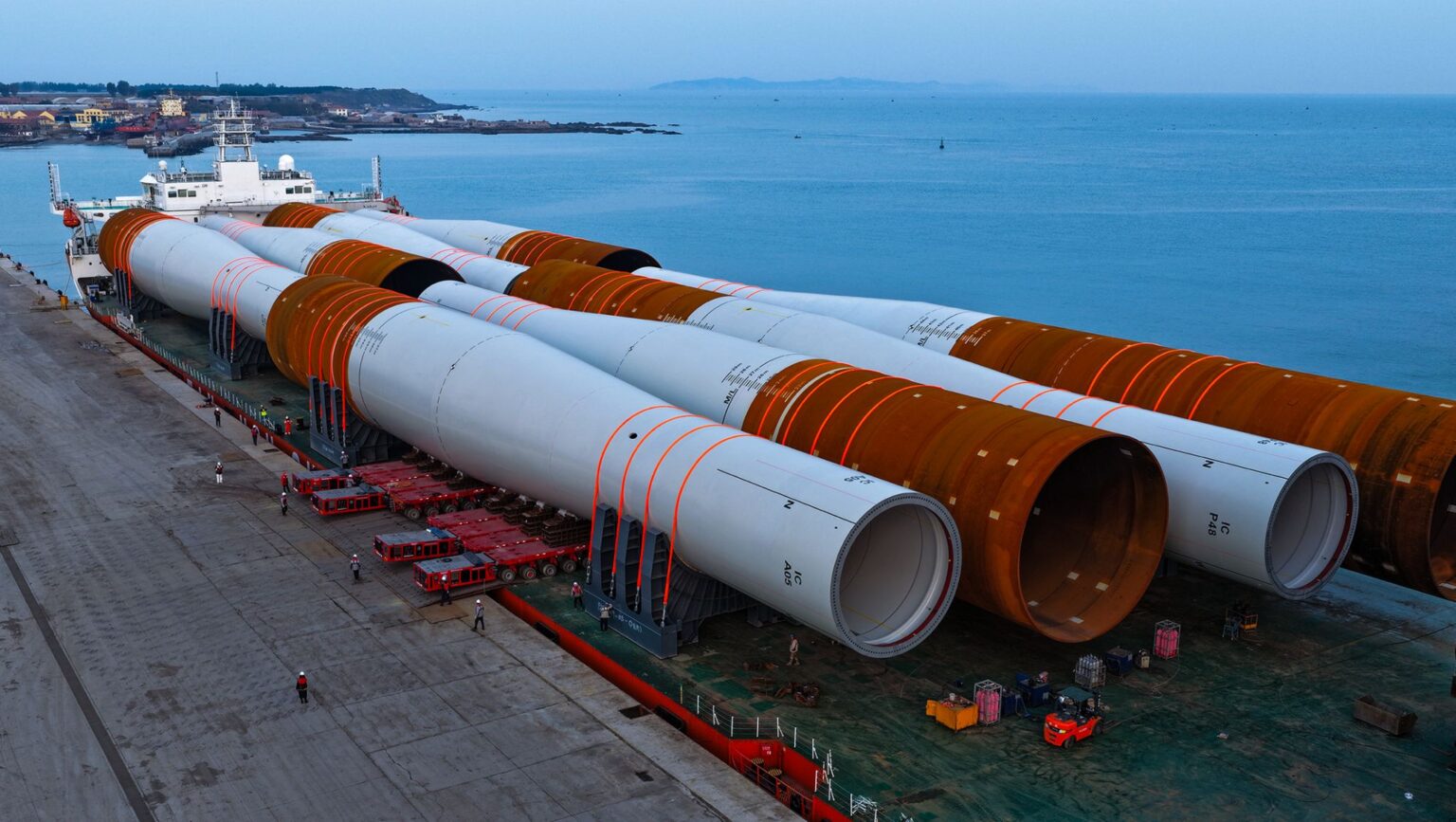
To understand why the Dajin IPO is significant, one must look at the broader trajectory of the wind energy industry. China is currently the world leader in wind power capacity, driven by aggressive national targets to reach carbon neutrality. This has created a massive demand for the heavy equipment—such as turbine components and towers—that companies like Dajin Heavy Industry produce.
The Drive Toward Green Infrastructure
The wind equipment sector is characterized by high capital intensity. Building the factories and machinery required to produce massive wind turbines requires billions of dollars in investment. This explains why Dajin sought a listing of this scale, targeting over HK$7.6 billion in proceeds.
The capital raised through this IPO is likely earmarked for:
- Capacity Expansion: Building new production lines to meet the rising demand for larger, more efficient turbines.
- Technological Innovation: Investing in R&D to improve the durability and energy yield of wind equipment.
- Market Diversification: Expanding the company’s footprint beyond domestic markets into international territories.
Competitive Pressures and Market Risks
While the growth potential is immense, the sector is not without risks. Wind equipment manufacturers face intense competition, which can lead to “price wars” that squeeze profit margins. The industry is highly dependent on government subsidies and policy support. Any shift in the regulatory environment regarding renewable energy credits or land-use permits for wind farms can immediately impact the order books of equipment makers.
For investors, the “slip” in Dajin’s debut may reflect a cautious approach toward these systemic risks, even while acknowledging the company’s individual strength.
Comparing the Hong Kong Listing Route to Other Options
Dajin Heavy Industry chose Hong Kong as its listing destination, a decision that involves weighing various strategic advantages against other financial hubs like New York or Shanghai.
Why Hong Kong?
Hong Kong remains a premier gateway for Chinese companies to access international capital. The city offers a unique blend of mainland proximity and global financial standards. For a company like Dajin, the HKEX provides:
- Global Visibility: Access to a diverse pool of international institutional investors who may not have access to mainland exchanges.
- Currency Flexibility: The ability to raise capital in Hong Kong dollars, which is pegged to the US dollar, providing a hedge against currency volatility.
- Regulatory Prestige: A listing in Hong Kong is often viewed as a “seal of approval” regarding a company’s corporate governance.
In contrast, listing in the US has become increasingly complex for Chinese firms due to heightened regulatory scrutiny and geopolitical tensions. Similarly, while the Shanghai or Shenzhen exchanges offer deep domestic liquidity, they may not provide the same level of international prestige or access to global funds.
Common Misconceptions About IPO Performance
When a company like Dajin Heavy Industry “slips” or “drops” in its debut, the public often perceives it as a failure of the IPO. However, professional analysts view these events through a different lens.
Pricing vs. Trading
There is a fundamental difference between the pricing of an IPO and its trading performance. The pricing is a negotiated agreement between the company and a set of cornerstone investors. If a company prices at the top of its range, the IPO is technically a success because the company raised the maximum amount of capital it intended to seek.
The subsequent trading price is determined by the open market, which is influenced by thousands of variables unrelated to the company’s core business, such as:
- Overall Market Volatility: A bad day for the Hang Seng Index can pull down almost every listing.
- Liquidity Squeezes: If there are too many sellers and not enough buyers in the first few hours of trading, the price will naturally dip.
- Speculative Trading: Many IPO traders are “flippers” who buy shares solely to sell them for a quick profit on day one, creating artificial downward pressure.
the $847 million listing value and the HK$7.6 billion in proceeds are the primary metrics of success, while the debut dip is often a temporary market fluctuation.
Key Takeaways for the Renewable Energy Market
The trajectory of Dajin Heavy Industry’s IPO provides several insights into the current state of the global energy transition and the financial markets that support it.
- Strong Appetite for Green Tech: The ability to price at the top of the range proves that investors are still eager to back companies that provide the physical infrastructure for the energy transition.
- The Necessity of Expert Counsel: The complexity of the Kirkland Advises Dajin on its Hong Kong IPO – Kirkland & Ellis LLP arrangement shows that legal expertise is a prerequisite for successfully navigating cross-border capital markets.
- Capital Over Valuation: For industrial giants, the priority is often the total amount of capital raised (the proceeds) rather than the immediate post-IPO share price.
As the world continues to shift away from fossil fuels, we can expect more wind and solar equipment manufacturers to seek similar listings to fund the massive scaling required to meet global climate goals.
Frequently Asked Questions
What was the total value of the Dajin Heavy Industry IPO?
The listing was valued at approximately $847 million, with planned proceeds exceeding HK$7.6 billion.
Who provided the legal counsel for Dajin’s Hong Kong listing?
Kirkland & Ellis LLP served as the legal advisors for Dajin Heavy Industry throughout the IPO process.

Why did Dajin’s share price drop during its Hong Kong debut?
While the IPO was priced at the top of its range, the share price slipped during its debut. This is often attributed to general market volatility, profit-taking by early investors, or sector-specific sentiment in the renewable energy market.
What does it mean that the IPO was “priced at the top of the range”?
This means that the final price per share was set at the highest end of the estimated price bracket provided to investors. This typically indicates incredibly strong demand for the shares during the book-building process.
What does Dajin Heavy Industry actually produce?
Dajin Heavy Industry is a Chinese manufacturer specializing in wind equipment, producing the critical infrastructure needed for wind power generation.
Why is a Hong Kong listing significant for a Chinese wind equipment maker?
A Hong Kong listing allows the company to access international capital markets, increase its global visibility, and establish a level of corporate governance that appeals to global institutional investors.
For those interested in how legal frameworks impact large-scale financial transactions, you may find a related explainer on cross-border IPO regulations helpful in understanding the broader landscape.
