Cosmic Dawn Fuel Discovery Unlocks Early Galaxy Growth Secrets – Asia Research News
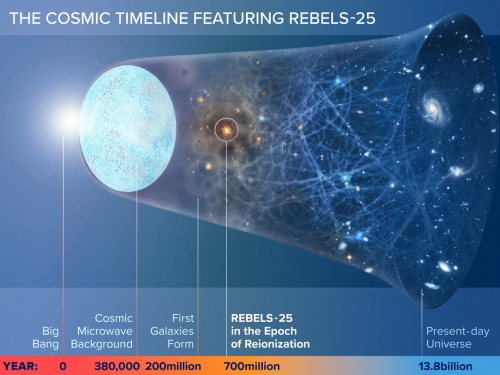
Astronomers have identified the primary mechanism and fuel source responsible for the unexpectedly rapid growth of the first galaxies during the Cosmic Dawn, according to research highlighted by Asia Research News. The discovery reveals that massive streams of cold primordial gas fed early galaxies, allowing them to accumulate mass far faster than previous cosmological models predicted.
How did the discovery of cosmic dawn fuel change our understanding of early galaxies?
For years, a discrepancy existed between the observed size of early galaxies and the theoretical timelines of the early universe. Observations from high-powered telescopes showed galaxies that were far more massive and mature than they should have been only a few hundred million years after the Big Bang. The discovery of “cosmic dawn fuel”—specifically, cold accretion streams of hydrogen and helium—explains this acceleration. According to Asia Research News, these streams acted as high-speed pipelines, delivering raw materials directly into the centers of young galaxies.
Previous theories suggested that galaxies grew primarily through “mergers,” where two smaller galaxies collided and fused. While mergers happen, they are sporadic and slow. The new data indicates a continuous, fluid-like intake of gas from the intergalactic medium (IGM). This process allowed for sustained star formation rates that far exceeded the capacity of merger-based growth alone.
- Cold Accretion: Gas enters the galaxy without being heated to millions of degrees, allowing it to collapse into stars more efficiently.
- Primordial Composition: The fuel consists almost entirely of hydrogen and helium, the two most abundant elements created during the Big Bang.
- Cosmic Web Integration: Galaxies are positioned at the intersections of a vast, invisible network of dark matter, which funnels this gas toward the galactic cores.
Why were early galaxies growing faster than predicted?
The standard model of cosmology assumed that gas falling into a galaxy would be shock-heated to extremely high temperatures, creating a “hot halo” that would slow down the rate at which the gas could settle and form stars. This theoretical bottleneck meant galaxies should have grown incrementally. However, the findings reported by Asia Research News suggest that in the early universe, the gas was able to penetrate these halos in dense, cold filaments.
Because this gas remained cold, it did not exert the outward pressure that typically slows galactic growth. Instead, it plummeted toward the center of the galaxy, triggering bursts of star formation. This explains why the James Webb Space Telescope (JWST) has spotted “massive” galaxies in the very early universe that appear to defy the laws of gradual evolution.
The identification of these cold streams solves a fundamental paradox in astronomy: how the universe produced complex, massive structures in a fraction of the time previously thought possible.
What technology enabled the discovery of this cosmic fuel?
Tracking invisible gas across billions of light-years requires detecting extremely faint signals. This discovery relied on a combination of deep-field infrared imaging and spectroscopy. Since the universe is expanding, light from the Cosmic Dawn is “redshifted,” meaning it stretches into the infrared spectrum by the time it reaches Earth. This makes infrared-optimized instruments essential for seeing through the dust and gas of the early universe.
Researchers used “absorption line spectroscopy” to find this fuel. By looking at a bright, distant light source—such as a quasar—astronomers can see the “shadows” cast by the gas clouds sitting between the quasar and the telescope. Each element leaves a specific signature in the light spectrum, allowing scientists to determine the temperature, density, and chemical composition of the gas streams.
Key Tools Used in Early Universe Observation
| Technology/Method | Function | Impact on Discovery |
|---|---|---|
| Infrared Spectroscopy | Analyzes redshifted light | Identifies chemical makeup of primordial gas |
| Deep-Field Imaging | Captures faint, distant light | Locates the first generation of massive galaxies |
| Quasar Absorption | Uses quasars as “backlights” | Maps the density of the intergalactic medium (IGM) |
| Cosmological Simulations | Models gas flow via dark matter | Predicts the location of cold accretion streams |
The role of the Cosmic Web in fueling galaxy growth
To understand how this fuel reached the galaxies, one must look at the “Cosmic Web.” According to current astrophysical models, the universe is not a random distribution of matter. Instead, dark matter—which does not emit light but has immense gravity—formed a web-like structure of filaments and voids during the first few moments after the Big Bang.
The galaxies we see today formed at the “nodes,” or the intersections, of these filaments. The cold gas discovered as the “fuel” for early growth traveled along these dark matter highways. Gravity pulled the gas from the low-density voids toward the high-density filaments, and finally into the galaxies at the nodes. This streamlined transport system ensured that early galaxies had a constant, reliable supply of hydrogen to fuel the birth of the first stars.
This mechanism differentiates the early universe from the modern universe. In the current epoch, the intergalactic medium is much hotter and less dense, making this type of “cold-stream” accretion far rarer. Most modern galaxies must rely on the slower process of recycling internal gas or merging with neighbors.
Comparing old vs. new models of galactic evolution
The shift in understanding from “merger-dominant” to “accretion-dominant” growth represents a significant pivot in astronomy. The following comparison highlights the differences between the traditional view and the evidence provided by the cosmic dawn fuel discovery.
Evolutionary Model Comparison
| Feature | Traditional Merger Model | Cold Accretion Model (New) |
|---|---|---|
| Primary Growth Driver | Galactic collisions and mergers | Continuous streams of cold gas |
| Growth Speed | Slow, episodic bursts | Rapid, sustained accumulation |
| Gas State | Shock-heated (Hot Halo) | Primordial and Cold |
| Timing | Gradual over billions of years | Accelerated in the first 500 million years |
| Structure | Randomized by collisions | Directed by the Cosmic Web |
By moving away from a model that relies solely on mergers, scientists can now explain why the “Cosmic Dawn”—the period when the first stars ignited—was such a violent and productive era of creation. This shift also suggests that the first black holes may have grown faster than previously thought, as they too would have been fed by these same cold gas streams.

What are the implications for the future of cosmology?
The discovery of how early galaxies were fueled has a ripple effect across multiple fields of science. First, it forces a re-evaluation of the “Dark Ages” of the universe—the period before the first stars formed. If gas could be funneled so efficiently, the transition from a dark, featureless void to a universe filled with light may have happened more abruptly than once believed.
Second, this discovery provides a roadmap for future observations. Now that astronomers know what “fuel” to look for and how it behaves, they can target specific regions of the sky where these cold streams are likely to exist. This will allow for a more precise mapping of the Cosmic Web, potentially revealing the nature of dark matter itself, since the gas follows the dark matter’s gravitational pull.
Finally, this research impacts our understanding of chemical evolution. The “fuel” was primordial—mostly hydrogen and helium. As these gases were processed through the first generations of stars, they created heavier elements like carbon, oxygen, and iron. Understanding the rate of gas intake helps scientists calculate how quickly the universe became “polluted” with the elements necessary for the formation of planets and, eventually, life.
For those interested in how these discoveries are made, a related explainer on infrared astronomy can provide more context on the hardware used to see the early universe.
Common misconceptions about the Cosmic Dawn
When discussing the early universe, several common misconceptions often arise. Clarifying these is essential to understanding the significance of the cosmic dawn fuel discovery.
Misconception: The Big Bang created galaxies immediately
The Big Bang created the raw materials (energy and subatomic particles), but galaxies did not appear instantly. There was a period called the “Dark Ages” where the universe was a hot, dense soup of gas. The “Cosmic Dawn” refers to the specific moment when the first stars ignited and began to clear the fog of neutral hydrogen. The fuel discovery explains how this transition accelerated.

Misconception: “Cold” gas means freezing temperatures
In astronomy, “cold” is a relative term. Cold gas in the early universe is still thousands of degrees Celsius. However, it is “cold” compared to the millions of degrees found in shock-heated galactic halos. This temperature difference is the critical factor that allows the gas to collapse into stars rather than remaining as a diffuse cloud.
Misconception: Galaxies only grow by eating other galaxies
While galactic cannibalism (mergers) is a spectacular event, the discovery reported by Asia Research News proves that “feeding” via the intergalactic medium is a more consistent and primary driver of growth during the early stages of the universe.
Frequently Asked Questions
What exactly is “Cosmic Dawn fuel”?
Cosmic dawn fuel refers to the primordial streams of cold hydrogen and helium gas that flowed from the intergalactic medium into early galaxies. This gas provided the necessary raw material for rapid star formation and galactic mass accumulation.

How does this discovery relate to the James Webb Space Telescope (JWST)?
The JWST provides the infrared sensitivity required to see the first galaxies and the spectroscopic tools to analyze the gas surrounding them. The discovery of cold accretion streams helps explain the “too-massive” galaxies that JWST has observed in the very early universe.
Why is the “Cosmic Web” important for galaxy growth?
The Cosmic Web is a structure of dark matter filaments that acts as a gravitational highway. It directs the flow of primordial gas toward the nodes where galaxies form, ensuring a steady supply of fuel for growth.
Did this discovery happen recently?
The evidence for cold accretion has been building through simulations, but recent observational data and reports, such as those from Asia Research News, have provided the empirical evidence needed to confirm these mechanisms in the early universe.
How does cold gas differ from hot gas in space?
Hot gas has high internal pressure, which resists gravitational collapse and slows down star formation. Cold gas has lower pressure, allowing gravity to pull it together more easily, which leads to the rapid birth of stars and faster galaxy growth.
As researchers continue to analyze data from the deepest reaches of space, the focus now shifts to determining exactly when this cold-stream accretion stopped being the primary driver of growth and when the universe transitioned to the slower, merger-based evolution seen in the modern era. Future observations will likely target the “reionization” period to see how the first stars’ radiation affected the fuel supply of their neighboring galaxies.
