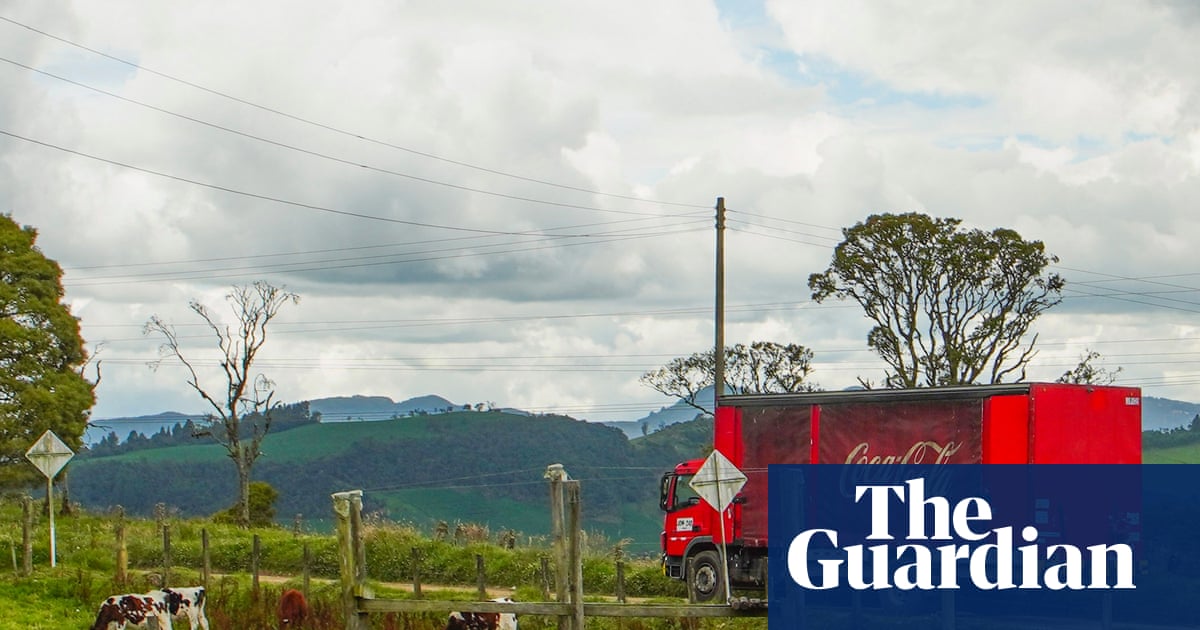
‘This is what I was born for’: the drought-ridden Colombian town that took on Coca-Cola Femsa – and won – The Guardian
Residents of a Colombian community successfully challenged Coca-Cola Femsa’s water extraction permits in court, securing legal protections for local water sources during periods of severe drought. The ruling prioritizes human consumption and ecological stability over industrial bottling operations, marking a significant victory for grassroots environmental activism against one of the world’s largest beverage bottlers.
How a Colombian Community Overturned Industrial Water Privileges
A legal battle in Colombia has ended in a victory for local residents who accused Coca-Cola Femsa of depleting essential water reserves. The court’s decision mandates that the company restrict its water usage when the region faces drought, ensuring that the community’s right to water takes precedence over corporate production schedules.
For years, the town faced a recurring crisis: while the bottling plant continued to operate at high capacity, local wells ran dry and agricultural yields plummeted. The community argued that the industrial extraction of millions of liters of water per day disrupted the local aquifer, leaving the population vulnerable during dry seasons. The legal victory establishes a precedent that industrial permits are not absolute and must be contingent upon the availability of water for the surrounding population.
The ruling focuses on several key mandates:
- Prioritization of Human Use: In times of water scarcity, the company must reduce or cease extraction to ensure residents have drinking water.
- Environmental Monitoring: The court ordered stricter oversight of the aquifer’s health to prevent permanent depletion.
- Community Consultation: Future changes to water usage permits must involve transparent dialogue with the affected local population.
The Roots of the Conflict: Water Scarcity and Industrial Demand
The conflict centers on the tension between industrial growth and environmental sustainability in a region already struggling with climate instability. Colombia has experienced erratic weather patterns, with prolonged droughts exacerbated by El Niño phenomena, making the management of water tables a matter of survival for rural towns.
Coca-Cola Femsa, the largest franchise bottler of Coca-Cola products in the world, operates massive facilities that require consistent, high-volume water access. According to community reports, the scale of this extraction created a “cone of depression” in the water table, effectively sucking water away from the shallower wells used by farmers and households.
“This is what I was born for,” stated one of the community leaders, reflecting the lifelong commitment of local activists who spent years documenting the drying of their land to build a legal case.
The disparity in water access became a flashpoint for social unrest. While the bottling plant maintained a steady supply of water to produce soft drinks for export and national sale, residents were forced to rely on expensive water trucks or trek long distances to find viable sources. This imbalance shifted the struggle from a mere environmental concern to a human rights issue.
The Impact of Industrial Bottling on Local Aquifers
Industrial bottling plants do not simply use water; they alter the hydraulic pressure of the ground. When a company extracts water faster than the rain can replenish the aquifer, the water level drops. For a large corporation, this can be solved by drilling deeper, more expensive wells. For a local farmer, a dropping water table means their existing well becomes a dry hole in the ground.
The affected Colombian town documented a steady decline in water availability over a decade. The correlation between the plant’s expansion and the failure of local wells provided the empirical basis for the lawsuit.
Timeline of the Legal Struggle
The victory did not happen overnight. It was the result of a prolonged campaign involving legal filings, community organizing, and scientific data collection.
| Phase | Action Taken | Outcome/Result |
|---|---|---|
| Initial Conflict | Residents report drying wells and crop failure. | Local protests and initial complaints to regulators. |
| Evidence Gathering | Community activists document water levels and plant output. | Creation of a factual record showing industrial impact. |
| Legal Filing | Lawsuit filed against Coca-Cola Femsa and water authorities. | Court accepts the case based on the right to water. |
| Court Ruling | Judicial decision prioritizes human consumption. | Legally binding restrictions on industrial extraction. |
Who are the Key Stakeholders in the Water War?
The dispute involves a complex web of corporate, governmental, and civil actors, each with competing interests in the region’s natural resources.
Coca-Cola Femsa
As the corporate entity, Femsa’s primary goal is operational efficiency and profit. The company has historically pointed to its sustainability reports and “water neutrality” goals—claims that the company replenishes the same amount of water it uses. However, activists argue that “water neutrality” is a global accounting trick; replenishing water in one watershed does not help a town whose specific local aquifer is being drained.
The Local Community
Led by grassroots organizers, the community consists of small-scale farmers, indigenous groups, and residents. Their interest is existential: the ability to drink, bathe, and grow food. Their strategy relied on the “right to water” as a fundamental human right, a concept increasingly recognized by international courts.
Colombian Regulatory Bodies
Government agencies responsible for granting water concessions often face pressure to attract foreign investment. In this case, the regulators were accused of overlooking the environmental impact of the bottling plant in favor of economic development. The court ruling serves as a reprimand to these agencies, forcing them to prioritize ecological health over industrial permits.
Why This Victory Matters for Global Water Rights
The outcome in this Colombian town is more than a local win; it serves as a blueprint for other communities facing “water grabbing” by multinational corporations. This case highlights a critical shift in how courts are viewing the relationship between corporate permits and human rights.
A Shift in Legal Precedent
Historically, if a company held a legal permit to extract water, they were generally protected from local complaints. This ruling suggests that permits are not static contracts but are subject to the changing reality of the environment. If the environment changes (e.g., a drought occurs), the permit must change.
This aligns with a growing global movement toward Environmental Justice. Similar battles have occurred in India, where Coca-Cola plants were previously shut down due to groundwater depletion, and in Mexico, where communities have fought the privatization of water sources. The Colombian case adds a strong Latin American legal precedent to this trend.
The Fallacy of Corporate Water Neutrality
The case exposes the gap between corporate sustainability marketing and on-the-ground reality. Many beverage companies claim to be “water positive” or “neutral.” This usually involves funding reforestation or water-saving projects in various parts of the world. However, the Colombian court’s focus on the local aquifer emphasizes that water is a site-specific resource. You cannot offset the drying of a well in one village by planting trees in another province.
For more on how corporate claims are scrutinized, see a related explainer on corporate greenwashing.
Common Misconceptions About Industrial Water Use
To understand the gravity of this case, it is necessary to correct several common myths regarding how bottling plants interact with the environment.
- Myth: “Bottling plants only use a small fraction of the water they sell.”
Reality: While the water inside the bottle is a significant portion, the total “water footprint” includes the water used for cleaning machinery, cooling systems, and the massive amounts of water required to grow the ingredients (like sugar cane or corn syrup) used in the drinks. - Myth: “Water is an infinite renewable resource.”
Reality: While the water cycle is continuous, accessible freshwater in aquifers is finite. If extraction exceeds the recharge rate, the aquifer can collapse or become contaminated by saltwater intrusion. - Myth: “Legal permits mean the extraction is sustainable.”
Reality: Permits are often granted based on outdated geological data or political pressure rather than real-time environmental monitoring.
The Broader Implications for the Beverage Industry
This ruling puts Coca-Cola Femsa and other beverage giants on notice. The “social license to operate”—the unofficial approval a company gets from the local community—is becoming as important as the legal license. When a company loses its social license, it faces lawsuits, protests, and brand damage.
Industry analysts suggest that companies may need to move toward more “closed-loop” water systems, where water is recycled within the plant rather than extracted fresh from the ground. There is also increasing pressure to implement “Water Stewardship” programs that are truly local, meaning the company invests in the specific aquifer it uses, rather than global offsets.
The financial risk for these companies is also increasing. As climate change makes droughts more frequent and severe, the likelihood of courts stepping in to revoke or limit water permits grows. Water is no longer a cheap, guaranteed input; it is becoming a primary business risk.
Frequently Asked Questions
What is Coca-Cola Femsa?
Coca-Cola Femsa is one of the largest bottling companies in the world. It is a joint venture that handles the bottling and distribution of Coca-Cola products across several countries, primarily in Latin America. It operates independently from The Coca-Cola Company (which owns the brands and syrup) but is its largest bottling partner.
Why did the Colombian town sue the company?
The community alleged that the company’s industrial-scale water extraction was depleting the local aquifer, causing residential wells to run dry and destroying agricultural livelihoods, especially during periods of drought.
What was the specific legal outcome of the case?
The court ruled in favor of the community, stating that the human right to water takes precedence over industrial use. The company is now required to limit its water extraction during droughts to ensure the local population has sufficient access to water.
Is “water neutrality” a real thing?
Water neutrality is a corporate goal where a company aims to replace as much water as it uses. While helpful in a broad sense, critics and the Colombian court’s logic suggest it is often a global metric that ignores local depletion. Replenishing water in one area does not fix the drought in another.
Could this happen to other companies in Colombia?
Yes. This ruling sets a legal precedent in Colombia. Other industries that rely on heavy water extraction—such as mining or large-scale agribusiness—may now find their permits challenged if they can be shown to interfere with the community’s basic right to water.
The struggle of this Colombian town demonstrates a shifting power dynamic. Through a combination of scientific evidence and legal persistence, a small community proved that the right to a basic necessity outweighs the operational convenience of a global corporation. The victory serves as a reminder that in the era of climate change, water is the most contested resource on earth, and the courts are increasingly siding with the people over the plants.
