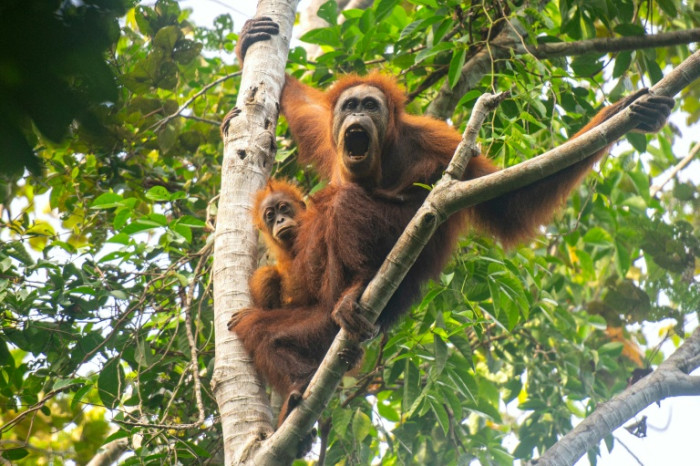
Climate Change-Fueled Storm Threatens World’s Rarest Great Apes
Severe weather linked to climate change has caused significant harm to the Tapanuli orangutan, the world’s rarest great ape species, according to conservation organizations and local authorities. The event, which occurred in Indonesia’s Sumatra region, has raised urgent concerns about the vulnerability of endangered wildlife to escalating environmental pressures.
What Happened and How Did It Affect the Tapanuli Orangutan?
A powerful storm system, exacerbated by rising global temperatures, struck the Sumatran rainforest in late 2023, triggering landslides and flooding that devastated critical habitats for the Tapanuli orangutan (Pongo tapanuliensis). Conservation groups estimate that the disaster resulted in the loss of approximately 7% of the species’ remaining population, with many individuals displaced or killed.
The Tapanuli orangutan, discovered as a distinct species in 2017, is already critically endangered, with fewer than 800 individuals surviving in a restricted area of North Sumatra. The storm’s impact has compounded existing threats, including deforestation and human encroachment, according to the International Union for Conservation of Nature (IUCN).
“This disaster underscores the fragility of ecosystems that are already under immense pressure,” said Dr. Sarah Lin, a primatologist with the Rainforest Conservation Alliance. “The Tapanuli orangutan’s survival now depends on immediate, coordinated action to protect what remains of their habitat.”
Who Is Involved in Addressing the Crisis?
Multiple stakeholders are working to mitigate the aftermath of the storm. The Indonesian Ministry of Environment and Forestry, alongside international NGOs such as the World Wildlife Fund (WWF) and the Wildlife Conservation Society (WCS), have launched emergency response efforts. Local communities, many of whom rely on the rainforest for their livelihoods, are also playing a role in monitoring and protecting the affected areas.

“We’re coordinating with local rangers to assess the damage and identify injured animals,” said Andi Prasetyo, a conservation officer with the Indonesian government. “But the scale of the destruction is overwhelming, and resources are limited.”
International funding has been pledged to support recovery efforts, though advocates argue that long-term solutions require addressing the root causes of climate change. “This is not just a local issue—it’s a global crisis that demands urgent policy changes and investment in conservation,” said Maria Gonzalez, a spokesperson for the WWF.
When and Where Did the Storm Occur?
The storm struck in October 2023, during the rainy season in Sumatra. The epicenter was the Batang Toru ecosystem, a UNESCO Biosphere Reserve and the sole habitat of the Tapanuli orangutan. Satellite data from the European Space Agency (ESA) showed that the region experienced rainfall 150% above average during the event, leading to widespread flooding and soil instability.
Historically, Sumatra has been prone to extreme weather events, but scientists note that the frequency and intensity of such storms have increased in recent decades. A 2022 study published in *Nature Climate Change* linked the rise in extreme precipitation to climate change, warning that tropical ecosystems like those in Sumatra will face “unprecedented challenges” in the coming decades.
Why This Crisis Matters: Climate Change and Biodiversity
The Tapanuli orangutan’s plight highlights the broader threat that climate change poses to global biodiversity. As one of the most genetically distinct great apes, the species represents a unique evolutionary branch, and its decline could have cascading effects on the rainforest ecosystem.
“Orangutans play a crucial role in seed dispersal and forest regeneration,” explained Dr. Lin. “Losing them could disrupt the balance of the entire ecosystem, affecting everything from soil health to carbon storage.”
The storm also raises questions about the adequacy of current conservation strategies. While protected areas like Batang Toru are designed to safeguard wildlife, their effectiveness is increasingly challenged by climate-related disruptions. A 2021 report by the IUCN found that 60% of protected areas worldwide are at risk from climate change impacts, including extreme weather, rising temperatures, and shifting precipitation patterns.
Reactions From Experts and Conservation Groups
Conservationists have called for an immediate reassessment of climate adaptation measures in protected areas. “We need to rethink how we design and manage conservation zones to account for the new realities of climate change,” said Dr. Amara Kofi, a climate scientist at the University of Cambridge.

Some experts have also criticized the lack of political will to address the dual crises of deforestation and climate change. “Indonesia’s palm oil industry continues to expand into critical habitats, even as the climate becomes more unpredictable,” said Maya Patel, a researcher with the Environmental Defense Fund. “This is a recipe for disaster.”
The storm has also sparked discussions about the role of global carbon emissions in driving extreme weather. A 2023 report by the Intergovernmental Panel on Climate Change (IPCC) warned that tropical regions like Sumatra are particularly vulnerable to climate impacts, with “severe consequences for both people and wildlife.”
What Are the Next Steps for Conservation?
In the short term, conservation groups are focusing on rescue operations and habitat restoration. Teams are using drones and camera traps to locate surviving orangutans and assess the extent of the damage. Replanting native vegetation and creating buffer zones around the Batang Toru ecosystem are also priorities.
Long-term strategies include advocating for stronger climate policies and increased funding for conservation. “We need to ensure that the Tapanuli orangutan’s survival is not left to chance,” said Andi Prasetyo. “This requires collaboration between governments, scientists, and local communities.”
Some researchers are also exploring the potential of assisted migration, a controversial approach that involves relocating species to more suitable habitats. However, this method remains contentious due to the risks of disrupting existing ecosystems.
