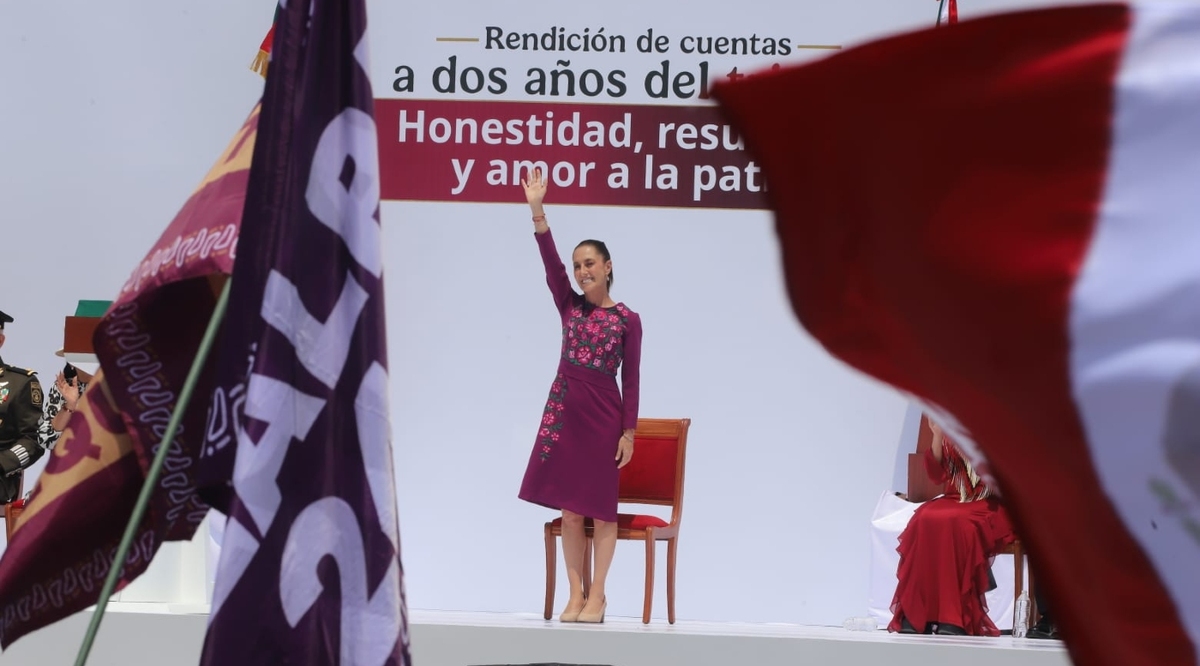
When Mexican President Claudia Sheinbaum addressed the nation this week, her words didn’t just resonate—they sparked a wave of civic engagement unseen in recent years, turning public squares into impromptu stages for solidarity. Across the country, hundreds of thousands gathered in cities from Puebla to Sinaloa, not for a concert or political rally, but to amplify a message of unity that transcended partisan lines.
Sheinbaum’s speech, delivered with the weight of a leader navigating complex national challenges, became a cultural moment in its own right. The scale of the response—over 45,000 people filling the government plaza in Culiacán, Sinaloa alone—underscored how deeply her call for sovereignty and cohesion struck a chord. In Tamaulipas, one of the states with the most visible turnout, the gathering was framed as more than political support; it was a collective assertion of shared identity in a fractured era.
Why the Mass Turnout Matters
The numbers tell a story beyond politics. In Puebla, where local officials reported “unity in defense of national sovereignty,” the crowd size reflected not just approval of Sheinbaum’s policies but a broader cultural shift. Social media became a secondary arena for the moment, with clips of the gatherings circulating widely, turning the event into a viral display of civic pride. The contrast with typical political rallies—often divisive or performative—was stark. Here, the energy felt organic, almost festival-like, with no clear beginning or end.

Sheinbaum’s ability to mobilize such broad support in a country with deep regional divisions speaks to her role as a unifying figure. Unlike many leaders whose messages get lost in noise, hers cut through, tapping into a collective desire for stability and pride. The response also highlights how public gatherings, once rare in Mexico’s political landscape, have become a tool for both dissent and solidarity—mirroring global trends where civic engagement is increasingly performative and participatory.
The Cultural Ripple Effect
While the immediate context is political, the cultural implications are harder to ignore. Mass gatherings like these often become part of the national narrative, shaping how future leaders are perceived and how citizens engage with governance. The sheer scale of the turnout suggests a hunger for connection, a craving for moments where shared purpose feels tangible.
For Sheinbaum, this isn’t just about policy—it’s about legacy. The images of packed plazas will be remembered long after the speeches fade, reinforcing her image as a leader who understands the power of collective action. In an era where trust in institutions is fragile, these moments of unity become currency, proving that politics and culture are not separate but intertwined.
What’s Next
The immediate aftermath of the gatherings remains focused on reinforcing the message of solidarity. No new policies or announcements were tied directly to the events, but the groundswell of support signals that Sheinbaum’s approach—rooted in grassroots engagement—will likely continue shaping her administration. For now, the story isn’t just about the numbers; it’s about the feeling they represent: a nation, for a moment, speaking with one voice.

