citizenM to Debut Third Washington, D.C. Hotel in Historic Georgetown District
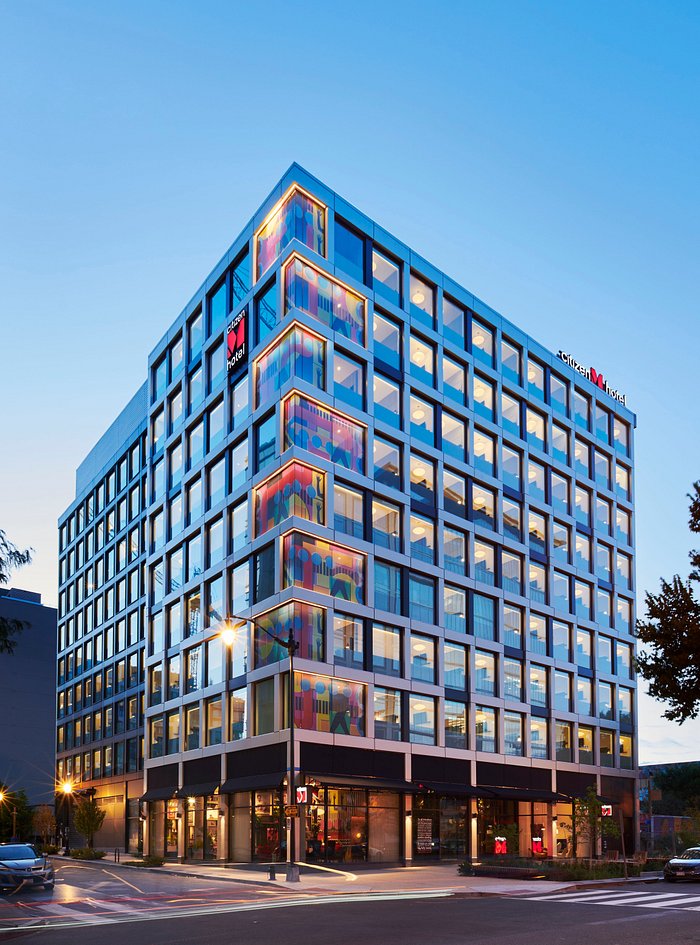
citizenM is expanding its footprint in the U.S. capital with the opening of a new hotel in the historic Georgetown neighborhood, according to a company announcement. This marks the brand’s third location in Washington, D.C., further establishing its “affordable luxury” hybrid model in one of the city’s most prominent residential and commercial districts.
What is the scope of the citizenM Georgetown expansion?
The decision to launch a third property in Washington, D.C. signals a strategic deepening of the brand’s presence in the Mid-Atlantic region. According to the company, the new hotel will be situated within the Georgetown district, an area known for its colonial-era architecture, upscale shopping, and proximity to Georgetown University. This move follows the success of the brand’s previous entries into the D.C. market.
The Georgetown location is designed to capture a specific demographic of travelers who seek a blend of high-end amenities and efficiency. By placing a property in this specific district, citizenM is positioning itself to attract both leisure tourists visiting the waterfront and business travelers who prefer a less corporate environment than the hotels found near the K Street corridor or the National Mall.
Key details regarding the expansion include:
- Market Position: The hotel operates as a “hybrid,” combining the luxury of a boutique hotel with the efficiency and price point of a mid-scale option.
- Location Strategy: Georgetown provides a high-traffic, high-income environment that aligns with the brand’s target audience of “mobile citizens.”
- Portfolio Growth: This is the third citizenM property in the city, indicating a successful pilot phase with its first two D.C. locations.
How does the citizenM “hybrid” hotel model work?
The company defines its approach as a hybrid model, which seeks to strip away the redundancies of traditional hotel operations to lower costs while increasing the quality of the guest experience. According to brand documentation, this is achieved through a combination of modular construction and a focus on shared social spaces.
In a traditional luxury hotel, significant square footage is dedicated to large rooms, expansive hallways, and massive lobby reception areas. citizenM reverses this logic. The guest rooms are designed as standardized, high-tech “pods” that maximize efficiency. These rooms typically feature a wall-to-wall extra-large bed, mood lighting, and integrated technology controlled via a proprietary app.
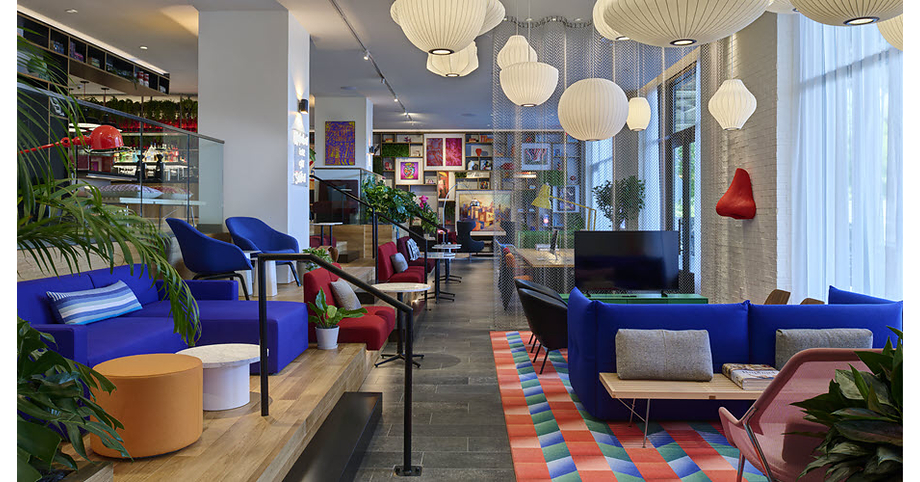
The cost savings from the smaller room footprints are reinvested into the public areas. The “living room” concept is central to the brand’s identity. Rather than a formal lobby, the Georgetown property will feature expansive, designer-led social spaces intended to function as coworking hubs by day and social lounges by night. This shift reflects a broader trend in the hospitality industry toward “lifestyle hotels,” where the communal experience is prioritized over the privacy of the bedroom.
The hybrid model removes the traditional front desk and replaces it with self-check-in kiosks, shifting the staff’s role from administrative processing to guest hospitality and concierge services.
To understand how this differs from standard hospitality, the following table compares the hybrid model to traditional luxury and budget hotels:
| Feature | Budget Hotels | Traditional Luxury | citizenM Hybrid |
|---|---|---|---|
| Room Size | Small/Standard | Large/Suites | Compact/Modular |
| Check-in | Front Desk | Concierge/Desk | Self-Service Kiosk |
| Public Space | Minimal/Functional | Formal/Exclusive | Social/Coworking Hub |
| Pricing | Low | High | Mid-to-High (Affordable Luxury) |
Why is the Georgetown district a strategic choice for this hotel?
Georgetown is one of Washington, D.C.’s most distinct neighborhoods, characterized by its cobblestone streets and strict zoning laws. According to urban planning trends in the district, the area attracts a high volume of international tourists and academic visitors due to the presence of Georgetown University.
The choice of Georgetown over more commercial areas like Downtown or Foggy Bottom suggests that citizenM is targeting a “bleisure” traveler—individuals who mix business with leisure. The neighborhood’s walkability and high concentration of dining and retail options make it an ideal anchor for a brand that encourages guests to spend more time in the city and in the hotel’s social lobbies than in their rooms.
Furthermore, the historic nature of Georgetown creates a contrast with citizenM’s ultra-modern, tech-forward aesthetic. This juxtaposition is a common strategy for lifestyle brands, where a modern interior provides a “sanctuary” of technology within a traditional or historic exterior environment.
The implications for the local economy include:
- Increased Foot Traffic: The addition of a high-capacity hotel increases the number of visitors to local Georgetown businesses.
- Competitive Pressure: Existing boutique hotels in the area may face pressure to modernize their tech offerings to compete with the hybrid model.
- Job Creation: The opening of a third city hotel creates new employment opportunities in the service and hospitality sectors.
What are the broader implications for the Washington, D.C. hospitality market?
The entry of a third citizenM hotel indicates a growing appetite for non-traditional lodging in the U.S. capital. For decades, the D.C. market was dominated by legacy brands and massive convention hotels. However, the shift toward a “mobile” workforce and a younger generation of travelers has created a gap in the market for hotels that prioritize Wi-Fi, social connectivity, and streamlined check-ins over white-glove room service.
Industry analysis suggests that the success of the hybrid model in D.C. is tied to the city’s role as a global diplomatic and political hub. Visitors to the city often require a place to work remotely between meetings but want an environment that feels less sterile than a standard business hotel. By providing a “living room” atmosphere, citizenM addresses the needs of the digital nomad.
This trend is not unique to D.C. but is being amplified here. As the city continues to diversify its economy beyond government and lobbying, the demand for “lifestyle” accommodations is expected to rise. The Georgetown debut serves as a test case for whether this model can scale across different neighborhoods within the same city without cannibalizing the guest base of the other two locations.
For a deeper look at how urban centers are evolving, see this related explainer on urban hospitality trends.
Common misconceptions about hybrid hotels
A frequent misconception regarding the hybrid hotel model is that “affordable luxury” implies a reduction in quality. In reality, the model focuses on the distribution of luxury. According to the brand’s operational logic, luxury is not found in the size of the room, but in the quality of the materials used—such as high-thread-count linens and high-end rain showers—and the seamlessness of the technology.
Another common misunderstanding is that the lack of a traditional front desk results in poor customer service. The company argues the opposite: by removing the administrative burden of checking IDs and processing credit cards at a desk, staff (often called “Ambassadors”) are freed to interact with guests in the lobby, providing more personalized recommendations and assistance.
Finally, some critics suggest that modular rooms are less durable or less soundproof than traditional builds. However, modular construction often allows for tighter quality control in a factory setting, which can lead to more consistent soundproofing and insulation standards than on-site pouring and framing.
Timeline of citizenM’s growth in Washington, D.C.
The expansion into Georgetown is the culmination of a phased entry strategy into the D.C. market. While the specific dates of the first two openings vary by reporting, the trajectory shows a clear move from the city’s transit and government hubs toward its residential and historic districts.
- Initial Entry: The brand established its first presence in D.C., focusing on high-accessibility areas to test the American market’s reaction to the hybrid model.
- Secondary Expansion: The second hotel reinforced the brand’s footprint, proving that the model could sustain multiple locations within a single metropolitan area.
- Georgetown Debut: The third hotel marks a shift toward “destination” neighborhoods, moving away from purely functional locations toward areas with high cultural and aesthetic value.
How the Georgetown hotel integrates technology into the guest experience
The citizenM Georgetown property will lean heavily on its proprietary technology stack to manage guest flow and enhance the stay. According to the company’s standard operating procedures, the guest experience is designed to be “frictionless.”
The process begins with a mobile app that handles booking, check-in, and room control. Once on-site, guests use self-service kiosks to obtain their room keys in seconds. Inside the room, the technology extends to the “MoodPad,” a tablet that allows guests to control everything from the window blinds to the lighting and temperature without leaving the bed.
This level of automation is not merely for convenience; it is a core component of the business model. By reducing the need for a large administrative staff, the hotel can maintain lower overhead costs while offering premium amenities. This allows the brand to maintain its price point while offering a “luxury” feel that would typically cost significantly more in a traditional hotel setting.
The integration of technology also extends to the social spaces. The “living room” is designed with integrated power outlets and high-speed connectivity to support the coworking needs of guests, effectively turning the hotel lobby into a public-private hybrid space.
Frequently Asked Questions
Where exactly is the new citizenM hotel located?
The new hotel is located in the historic Georgetown district of Washington, D.C., a neighborhood known for its colonial architecture and high-end shopping.
What makes a “hybrid hotel” different from a standard hotel?
A hybrid hotel combines the luxury amenities of a boutique hotel (high-end bedding, designer lounges) with the efficiency of a budget hotel (smaller modular rooms, self-service check-in) to offer a more affordable price point without sacrificing quality.

How many citizenM hotels are now in Washington, D.C.?
With the debut of the Georgetown property, citizenM now has three hotels operating within the Washington, D.C. area.
Does citizenM have a traditional front desk?
No. The brand replaces the traditional front desk with self-check-in kiosks and “Ambassadors” who roam the lobby to assist guests, aiming to make the arrival process faster and more social.
Who is the target audience for the Georgetown location?
The hotel targets “mobile citizens,” including business travelers, digital nomads, and leisure tourists who value technology, social environments, and a central location over large room sizes.
The expansion into Georgetown represents a calculated bet on the continued growth of the lifestyle hospitality sector. As travelers increasingly prioritize experiences and efficiency over traditional luxury, the hybrid model’s presence in the U.S. capital is likely to influence how other hotel brands approach urban development in historic districts.
