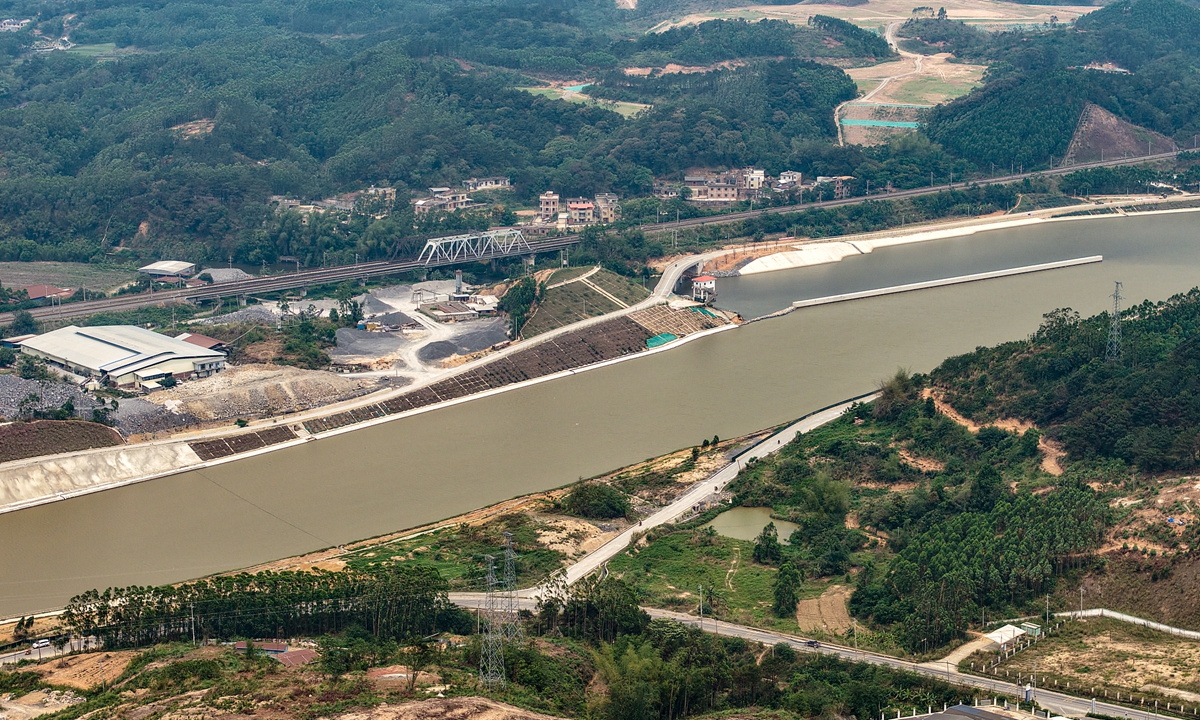
China’s First Mega-Canal Pinglu Canal Achieves Full Water Filling, Set for Full Navigation in September
In a landmark achievement for global civil engineering and regional logistics, China has announced that the Pinglu Canal, the nation’s first “mega-canal” project, has successfully achieved full water filling. This critical milestone signals the final transition from a massive construction site to a functioning maritime artery, with the project now officially set for full navigation in September. This development represents more than just the completion of a waterway; it is the realization of a strategic vision to redefine the economic geography of Southern China.
The Pinglu Canal is designed to create a direct link between the Xijiang River—a major tributary of the Pearl River system—and the Luzhou Gulf in the Beibu Gulf. For decades, cargo moving from the inland waterways of the Pearl River basin to the Beibu Gulf had to navigate a circuitous route, often adding hundreds of kilometers to the journey. By carving a direct path through the landscape, China is effectively creating a “shortcut” to the sea, drastically reducing transit times and operational costs for shipping and logistics.
The Final Countdown: From Excavation to Navigation
The transition to full water filling is the penultimate step in a grueling construction timeline. After years of monumental excavation and the installation of complex lock systems, the canal has now reached the stage where the waterway is fully saturated and stabilized. This process is not merely about letting water flow; it involves precise hydraulic management to ensure the canal bed is secure and that the water levels are optimized for the heavy tonnage of industrial vessels.
The announcement that the canal is set for full navigation in September marks the beginning of a new era for the Guangxi Zhuang Autonomous Region and neighboring provinces. The project has moved through several high-pressure phases, including the completion of the main excavation—a feat that required moving millions of cubic meters of earth and rock—and the construction of sophisticated navigation locks that allow ships to traverse varying elevations of terrain.
The Pinglu Canal is not merely a piece of infrastructure; it is a strategic pivot that transforms the Beibu Gulf from a regional port into a global gateway for the hinterlands of Southern China.
Key Technical Milestones of the Project
- Main Excavation Completion: The removal of massive amounts of earth to create a consistent channel depth capable of supporting large-scale commercial vessels.
- Lock System Integration: The installation of advanced locks to manage water levels, ensuring safe passage across different topographical heights.
- Full Water Filling: The successful filling of the entire canal length, testing the integrity of the banks and the flow of the current.
- September Navigation Launch: The final phase where commercial traffic will be permitted to use the waterway at full capacity.
Strategic Geography: Why the Pinglu Canal Matters
To understand the significance of the Pinglu Canal, one must look at the map of Southern China. Historically, the Pearl River Delta has been the economic engine of the region, but the Beibu Gulf—located further west—offered untapped potential for direct access to Southeast Asian markets via the ASEAN trade corridors.
Before the canal, ships traveling from the Xijiang River to the Beibu Gulf had to travel a long, indirect route. The Pinglu Canal effectively “bridges” these two water systems. By providing a direct connection, the canal reduces the shipping distance significantly, which has a cascading effect on the cost of raw materials, finished goods, and energy resources.
| Feature | Pre-Canal Logistics | Post-Canal Logistics (Pinglu) |
|---|---|---|
| Route Efficiency | Indirect, circuitous path via the Pearl River mouth | Direct link from Xijiang River to Luzhou Gulf |
| Transit Time | Higher; dependent on longer riverine navigation | Significantly reduced; streamlined maritime access |
| Shipping Costs | Higher fuel and labor costs due to distance | Lower operational costs per ton of cargo |
| Market Access | Primary focus on Pearl River Delta markets | Enhanced direct access to ASEAN and Pacific trade |
Economic Implications for the Region and Beyond
The economic ripple effects of the Pinglu Canal are expected to be profound. By lowering the barrier to entry for maritime trade, the canal is likely to stimulate industrial growth in cities that were previously considered “landlocked” or poorly connected to deep-water ports.
Boosting the “Golden Waterway”
The integration of the Xijiang River with the Beibu Gulf creates what economists call a “golden waterway.” This allows for a more seamless flow of goods from the industrial heartlands of Guangdong and Guangxi directly to international shipping lanes. Key industries expected to benefit include:
- Agriculture: Faster transport of perishable goods from rural Guangxi to international markets.
- Manufacturing: Reduced costs for transporting heavy machinery and electronics.
- Energy: More efficient movement of bulk minerals and energy resources.
Regional Development and Urbanization
Infrastructure of this scale often acts as a catalyst for urban development. The areas surrounding the canal are expected to see an influx of investment in warehouses, logistics hubs, and specialized industrial parks. This shift not only creates jobs but also redistributes economic wealth from the hyper-developed coastal cities to the interior, supporting China’s broader goal of balanced regional development.
For a deeper dive into how this fits into broader trends, you might find a related explainer on China’s Belt and Road Initiative useful, as the Pinglu Canal serves as a domestic anchor for international trade ambitions.
Engineering Challenges and Environmental Stewardship
Constructing a “mega-canal” is not without its hurdles. The Pinglu Canal project faced significant engineering challenges, primarily due to the complex geology of the region. Engineers had to contend with varying soil stability, the need for massive amounts of dredging, and the requirement to maintain ecological balance in a biodiverse region.
Overcoming Geological Hurdles
The excavation phase was particularly daunting. Moving millions of cubic meters of earth required a fleet of advanced machinery and a meticulous plan to prevent landslides and soil erosion. The construction of the locks was equally complex, requiring precision engineering to ensure that thousands of tons of water and ships could be moved vertically without compromising the structural integrity of the canal walls.
Environmental Mitigation
One of the primary criticisms of mega-projects is their environmental footprint. To counter this, the project incorporated several “green” engineering practices:
- Water Quality Monitoring: Implementing systems to ensure that the mixing of different water bodies does not lead to ecological degradation or the spread of invasive species.
- Reforestation: Planting vegetation along the canal banks to prevent erosion and restore local habitats.
- Sustainable Dredging: Utilizing the excavated earth for land reclamation and other infrastructure projects to minimize waste.
Comparing the Pinglu Canal to Global Waterways
While the Pinglu Canal is a domestic project, its scale and ambition draw comparisons to the world’s most famous canals. Unlike the Suez or Panama Canals, which are primarily designed for inter-oceanic transit, the Pinglu Canal is a strategic logistics connector designed to optimize internal trade and regional export capacity.
In many ways, it is a modern evolution of the Grand Canal of China. While the Grand Canal was built to unify the North and South for political and grain-transport reasons, the Pinglu Canal is built for the era of globalized trade and high-efficiency supply chains. It represents a shift from “connectivity for survival” to “connectivity for competitive advantage.”
Common Misconceptions About the Project
We find several common oversimplifications regarding the Pinglu Canal that merit correction:
- “It’s just a ditch for ships”: In reality, it is a complex hydraulic system involving locks, dams, and water management technology to ensure year-round navigability regardless of seasonal rainfall.
- “It only benefits the coast”: On the contrary, the primary winners are the inland cities that now have a shorter, cheaper path to the ocean.
- “It’s a purely economic project”: While economics drive it, the canal is also a geopolitical tool, strengthening China’s ties with ASEAN nations by making the Beibu Gulf a more attractive port of call.
The Broader Context: China’s Infrastructure Super-Cycle
The Pinglu Canal does not exist in a vacuum. It is part of a larger pattern of “mega-infrastructure” investments that China has pursued over the last two decades. From high-speed rail networks that blanket the country to massive bridge projects and the expansion of the South-to-North Water Diversion Project, the strategy is clear: eliminate logistical bottlenecks.
By removing the “friction” of distance and geography, China aims to lower the cost of doing business internally, making its exports more competitive and its internal markets more integrated. The Pinglu Canal is the maritime equivalent of a high-speed rail line—it accelerates the movement of value across the landscape.
For those interested in the financial side of these developments, a related analysis on infrastructure investment trends provides context on how these projects are funded and their long-term ROI.
What to Monitor as September Approaches
As the canal moves toward full navigation in September, several key indicators will determine the project’s initial success:
- Tonnage Volume: How quickly do shipping companies switch from the old routes to the Pinglu Canal?
- Transit Time Reductions: Will the actual time saved match the theoretical projections?
- Port Congestion: Can the ports of the Beibu Gulf handle the anticipated surge in traffic coming from the Xijiang River?
- Environmental Stability: Will the water levels and bank integrity hold up under the stress of constant heavy vessel traffic?
The successful opening of the canal will likely trigger a new wave of investment in the Guangxi region, potentially shifting the industrial center of gravity further west and creating a new economic corridor that links the heart of China to the shores of Southeast Asia.
Frequently Asked Questions
What exactly is the Pinglu Canal?
The Pinglu Canal is a massive artificial waterway in China designed to connect the Xijiang River (part of the Pearl River system) directly to the Luzhou Gulf in the Beibu Gulf. Its primary purpose is to provide a shorter, more efficient shipping route for cargo moving from inland Southern China to the sea.

Why is the “full water filling” milestone important?
Full water filling indicates that the physical construction of the channel and its locks is complete and that the waterway is now hydraulically stable. This is the final technical requirement before the canal can be opened for actual commercial ship navigation.
When will the Pinglu Canal be open for full navigation?
The project is scheduled for full navigation in September, marking the point where commercial vessels can begin using the canal to transport goods.
How does the Pinglu Canal benefit the economy?
It reduces the distance and time required for ships to travel between the Xijiang River and the Beibu Gulf. This lowers shipping costs, reduces fuel consumption, and makes inland cities more competitive by giving them faster access to international trade routes, particularly those leading to ASEAN countries.
Are there environmental concerns associated with the canal?
Yes, like any mega-project, there are concerns regarding habitat disruption and water quality. However, the project has implemented mitigation strategies including reforestation of banks and advanced water monitoring systems to minimize its ecological impact.
The completion of the Pinglu Canal stands as a testament to modern engineering and strategic planning. As the water fills the channel and the first commercial fleets prepare to sail in September, the region prepares for a fundamental shift in its economic trajectory. The “Project of the Century” is no longer a blueprint or a construction site—it is becoming a living, breathing artery of global trade.
