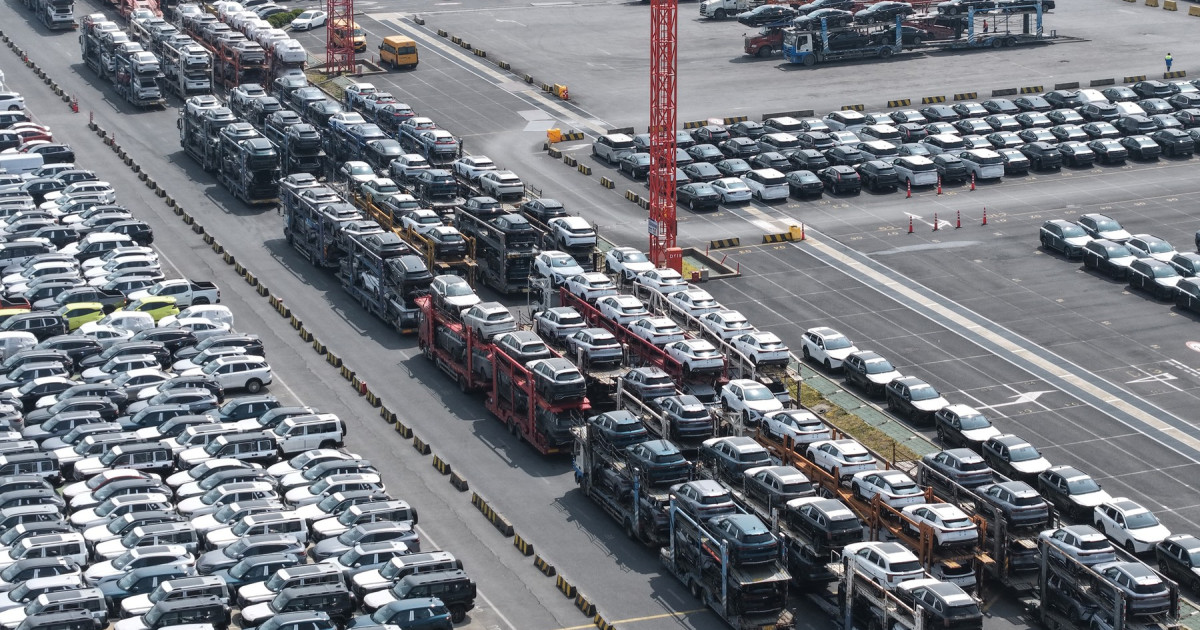
China’s electric vehicle (EV) exports surged 50% in May, marking a pivotal shift in global automotive markets as traditional automakers face intensified competition, according to multiple reports. The growth underscores the rapid dominance of Chinese EV manufacturers, with BYD, the nation’s leading automaker, projecting that electric vehicles will account for 80% of China’s auto sales by 2025.
BYD’s Market Projections and Investor Confidence
BYD’s CEO addressed investors in late May, emphasizing the company’s ambition to become the world’s largest automaker. “We are confident in our trajectory,” the executive stated, citing the company’s expanding production capabilities and technological advancements. BYD’s projections align with broader industry analyses, which suggest that electric vehicles will constitute the majority of China’s auto sales within the next few years.
The company’s recent performance reflects this trend. In May, BYD reported a 25% increase in domestic sales, driven by demand for its affordable and energy-efficient models. This growth has positioned BYD as a key player in the global EV supply chain, with exports to Europe, Southeast Asia, and Latin America rising sharply.
Global Implications of China’s EV Surge
The rapid expansion of China’s EV industry has disrupted traditional automotive markets. Volkswagen, which has long dominated European auto sales, reported a 12% decline in May, attributing the drop to shifting consumer preferences and increased competition from Chinese manufacturers. “The pace of change is unprecedented,” a spokesperson for the German automaker said, noting that Chinese EVs are now priced 20% lower than comparable models from Western brands.
Analysts attribute China’s success to a combination of government subsidies, advanced battery technology, and streamlined manufacturing processes. The country’s focus on EVs has also been bolstered by a fuel crisis, which has accelerated the transition away from internal combustion engines. “China’s EV boom is not just about technology—it’s about policy and scale,” said Dr. Li Wei, an automotive economist at Tsinghua University.
Market Challenges and Regulatory Scrutiny
Despite the growth, Chinese EV manufacturers face regulatory hurdles in international markets. The European Union has introduced stricter emissions standards, while the United States has raised concerns about the sourcing of critical minerals used in battery production. “We are committed to transparency and sustainability,” a BYD representative said, highlighting the company’s investments in recycling programs and ethical supply chains.
Meanwhile, the broader Chinese auto industry is grappling with a slowdown in domestic demand. May’s sales figures showed a 3% decline compared to the previous month, prompting fears of oversupply. Industry experts suggest that continued government support and innovation in vehicle-to-grid (V2G) technologies could help sustain growth.
The global automotive landscape is undergoing a transformation, with China’s EV exports redefining competition and reshaping consumer expectations. As traditional automakers adapt to this new reality, the pace of innovation and regulatory responses will determine the next phase of the industry’s evolution.
