Mumbai subsea cable bottleneck threatens India digital infrastructure
Roughly 95% of India's international bandwidth converges in a six-kilometre Mumbai coastal strip, where aging subsea cables and a lack of local repair vessels threaten digital infrastructure.

A six-kilometre stretch of coastline in Mumbai's northwest neighbourhood of Versova forms the primary bottleneck for India's digital economy, according to a recent BBC report. At least 13 of the country's 18 intercontinental submarine cables come ashore within this narrow area, carrying roughly 95% of India's international bandwidth to Europe, Africa, and West Asia. This severe geographic concentration exposes critical networks to simultaneous physical disruptions.
While cable architecture permits some traffic rerouting through southern landing points such as Chennai and Kochi, experts warn that even minor performance degradation could impose steep costs on domestic banks, stock exchanges, cloud providers, and government networks. The vulnerability is acute for artificial infrastructure, which depends on high-volume, high-speed data transfers to train and operate advanced models.
Related YouTube video
The underlying infrastructure is also aging rapidly. A paper by the Takshashila Institution indicates that 11 of India's 18 international cables have been operational for more than 20 years, bringing them near their nominal 25-year operational lifespan. Amajit Gupta, group CEO and managing director of the digital infrastructure firm Lightstorm, acknowledged that a significant share of these landing cables are approaching their economic end-of-life.
Compounding this physical risk is a severe repair bottleneck. India possesses no domestic subsea cable-repair vessels, forcing the nation to rely entirely on foreign ships dispatched from bases in Dubai or Singapore. According to Anwesha Sen of the Takshashila Institution, once a foreign vessel is assigned to a fault in Indian waters, it must secure operational licences, which introduces weeks of delay into an already lengthy procedure.
This heavy reliance on foreign repair capacity represents a structural vulnerability that outpaces standard cable rerouting capabilities. Globally, submarine cables experience between 150 and 200 faults annually, typically caused by commercial fishing, ship anchors, and natural maritime hazards rather than intentional sabotage. Governance fragmentation further complicates the operating environment. Aruna Sundararajan, chairperson of the Broadband India Forum (BIF), notes that establishing a single cable landing station requires navigating approximately 50 distinct clearances overseen by at least 16 different ministries and agencies, spanning telecommunications, defense, home affairs, shipping, ports, environment, and state governments.
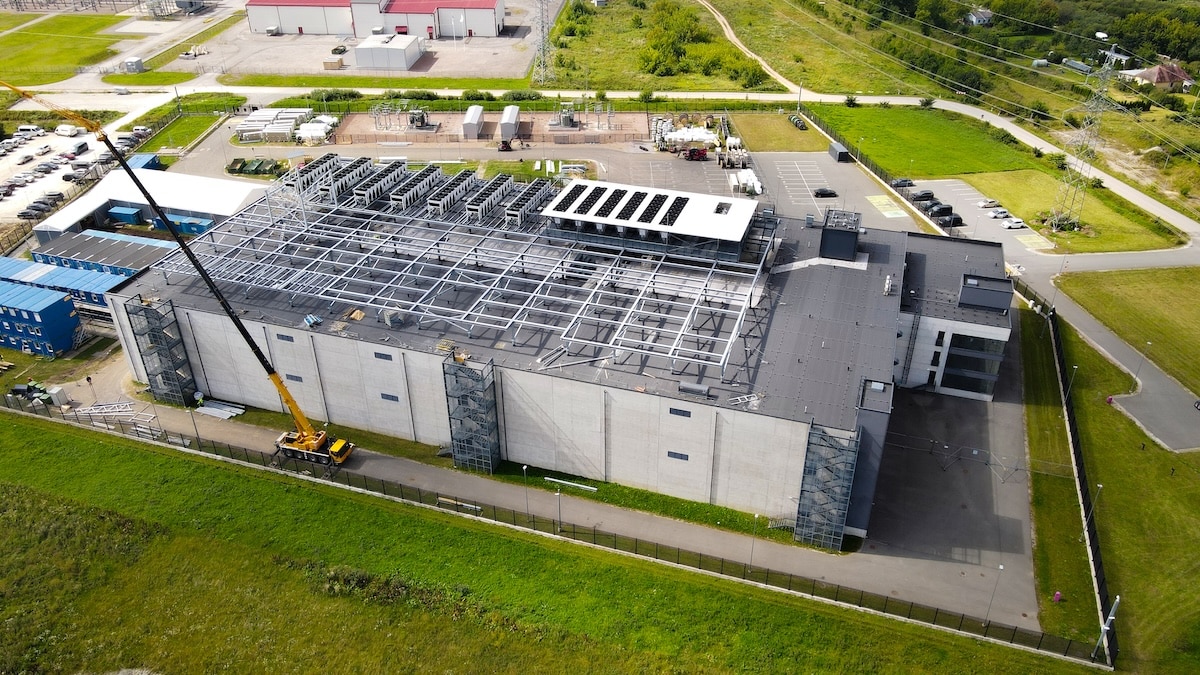
The disparity between India's data consumption and its physical infrastructure footprint highlights the scale of the challenge. Although India accounts for roughly 20% of global data consumption, it connects to only about 3% of the world's submarine cables and hosts a mere 21 cable landing stations—representing approximately 1% of the global total, according to BIF figures. Meanwhile, installed data-centre capacity across the country has surged from 375 megawatts in 2020 to about 1,575 megawatts, driven by accelerating demand for computing and AI capabilities.
To mitigate these risks, industry advocates are pressing for administrative reforms. Sundararajan advocates designating India's Department of Telecommunications as the primary coordinating agency equipped with a single-window clearance system to expedite repair-vessel permits and pre-approve coastal landing zones. Security upgrades are also under consideration, including Distributed Acoustic Sensing technology to convert optical fibres into vibration-detecting sensors that can identify approaching anchors or underwater vehicles before a line is severed. The Indian government has already classified submarine cable systems as critical telecommunications infrastructure, a designation intended to facilitate emergency repair mechanisms and legally protected cable zones.
New commissioning efforts are underway to diversify physical routes, with four new submarine cable systems currently in development and three more planned. Among them, Lightstorm is leading a consortium constructing the I-2SEA project, which links India with Malaysia and Singapore and features dual Indian landings at Machilipatnam and a new location in South Chennai. Whether these expanding pathways and regulatory updates can outpace surging AI-driven data demands before a major failure strikes the Versova corridor remains the central question for the region's digital future.
Regulatory Hurdles and Expansion Timelines
Establishing domestic subsea connectivity and mitigating these structural risks involves navigating complex administrative channels. According to Aruna Sundararajan of the Broadband India Forum (BIF), subsea cable planning itself takes three-four years and then cable laying also takes up to two years depending upon cable length. This protracted timeline creates a lag in delivering subsea capacity to feed incoming data-centre infrastructure. Furthermore, as noted by OP Jindal Global University associate professor Pooja Bhatt, the mismatch between India's high data consumption and its constrained physical footprint underscores the need for self-sustained infrastructure to protect national security and governance.
- Geographic Concentration: At least 13 of India's 18 intercontinental submarine cables land within a six-kilometre coastal strip in Mumbai's Versova neighbourhood.
- Infrastructure Age: A Takshashila Institution paper reveals that 11 of the country's 18 international cables have been operational for more than 20 years.
- Administrative Fragmentation: Setting up a single cable landing station demands navigating approximately 50 distinct clearances across at least 16 separate ministries and agencies.
To address these systemic vulnerabilities, the Indian government has classified submarine cable systems as critical telecommunications infrastructure, a move intended to streamline emergency repairs and secure protected coastal zones. Industry stakeholders continue to press for the Department of Telecommunications to act as the primary coordinating body with a single-window clearance system for repair-vessel permits. As the industry monitors the deployment of upcoming subsea projects like the Lightstorm-led I-2SEA consortium, the next step depends on whether these administrative updates and physical additions can be executed before rising demand strains the network.
Archypedia is dedicated to independent, evidence-backed reporting. This briefing was synthesized from primary source reporting, corroborated across independent newsrooms, and verified against our Editorial Standards.
Transparency record
Evidence behind this report
This report synthesizes 4 distinct sources. Open the source ledger below to compare the underlying coverage.
Prepared under the Archypedia Editorial Policy by the Elena Voss editorial desk profile. AI-assisted tools may support drafting and verification; public accountability remains with Archypedia. Report an error.