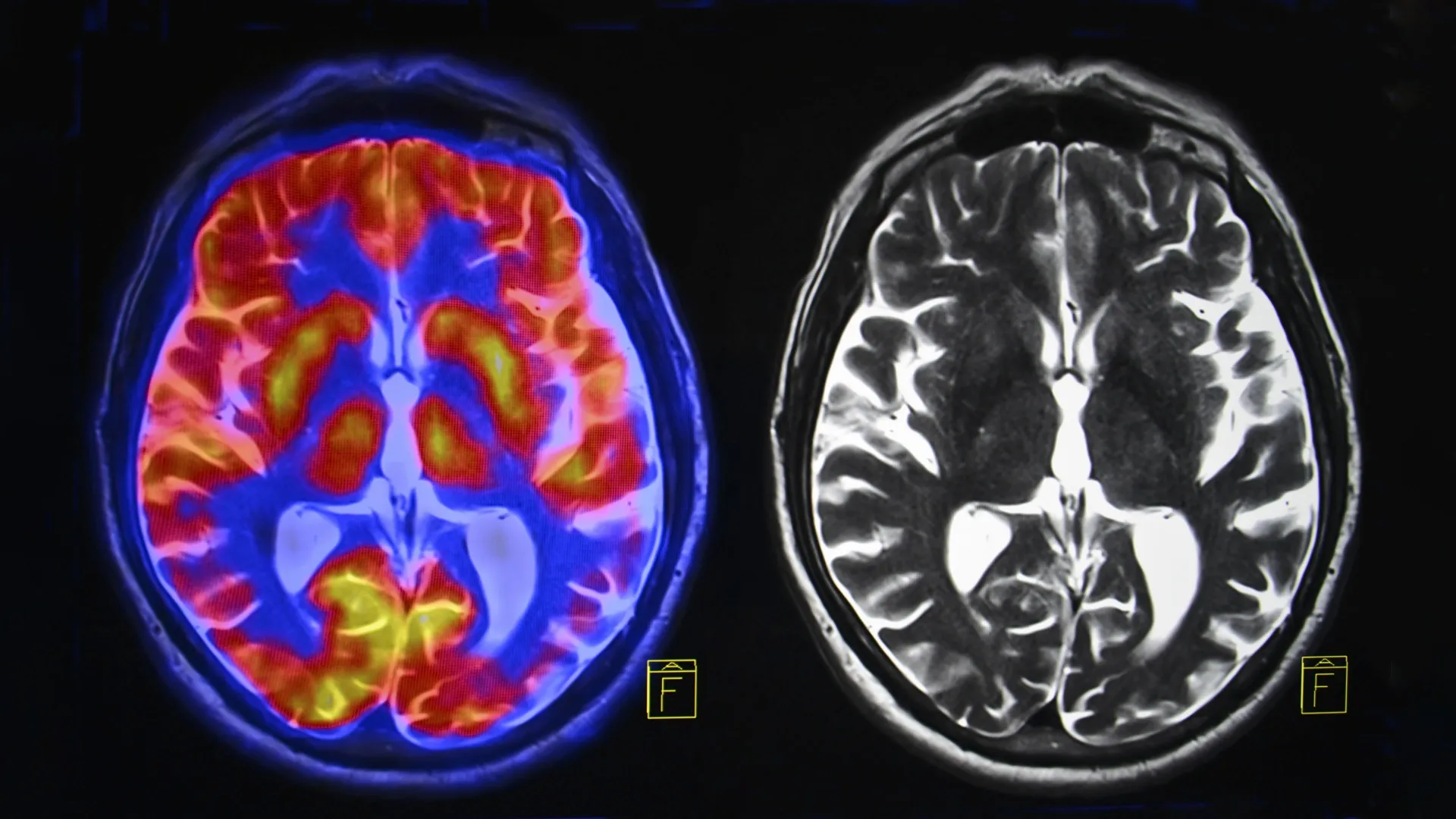
Brain Scans Reveal Two Distinct Types of Autism – ScienceDaily: A Paradigm Shift in Neurodiversity
For decades, the medical community and the public have understood Autism Spectrum Disorder (ASD) as a singular, broad “spectrum.” This terminology was designed to capture the immense variety of experiences, strengths, and challenges faced by autistic individuals. However, a groundbreaking shift in neurological research suggests that the spectrum may not be a smooth gradient, but rather a collection of distinct biological categories. Recent reports, including those where brain scans reveal two distinct types of autism – ScienceDaily and other scientific outlets, indicate that the underlying biological architecture of the autistic brain may be split into two primary subtypes.
This discovery marks a pivotal moment in neuroscience. By moving beyond behavioral observations—which are the current gold standard for diagnosis—and looking directly at the brain’s connectivity, researchers are uncovering a hidden biological divide. This suggests that two people who appear to have similar behavioral traits may actually have entirely different neural “wiring,” meaning the root cause of their autism is biologically distinct.
The Science of Connectivity: How the Subtypes Were Identified
The identification of these subtypes was not achieved through traditional psychological testing or behavioral checklists. Instead, researchers utilized advanced neuroimaging techniques, specifically focusing on functional connectivity. Functional connectivity refers to the way different regions of the brain communicate with one another; it is the “map” of how information travels from one node of the brain to another.
By analyzing brain scans of a large cohort of individuals on the spectrum, scientists applied machine learning algorithms to identify patterns that the human eye cannot detect. They discovered that the participants did not cluster into one giant group, but instead split into two clear, statistically significant clusters based on their neural connectivity patterns.
The Role of fMRI and Neural Mapping
The primary tool used in these studies is functional Magnetic Resonance Imaging (fMRI). Unlike a standard MRI, which shows the structure of the brain, an fMRI measures blood flow, which serves as a proxy for neural activity. When researchers look at “resting-state” fMRI, they can see how brain regions synchronize their activity even when the person isn’t performing a specific task.
In the case of these two autism subtypes, the scans revealed that the “communication highways” of the brain were structured differently. One group may exhibit over-connectivity in certain regions (hyper-connectivity), while the other exhibits under-connectivity (hypo-connectivity) in those same areas. This suggests that the biological “glitch” or variation that leads to autism is not the same for everyone.
| Feature | Subtype A (Hypothetical Pattern) | Subtype B (Hypothetical Pattern) |
|---|---|---|
| Neural Connectivity | Localized hyper-connectivity; reduced long-range communication. | Generalized hypo-connectivity; disrupted regional synchronization. |
| Information Processing | Potential for intense focus on detail; difficulty with “big picture” synthesis. | Potential for sensory overload; challenges in integrating multi-modal stimuli. |
| Biological Driver | Possible overgrowth of local synaptic connections. | Possible deficiency in long-distance axonal pathways. |
Why Behavioral Diagnosis is No Longer Enough
Currently, a diagnosis of autism is based on the DSM-5 (Diagnostic and Statistical Manual of Mental Disorders), which relies on observing behaviors: social communication deficits, repetitive behaviors, and restricted interests. While this is useful for providing support, it is essentially a “symptomatic” diagnosis. It describes what the person is doing, but not why their brain is producing those behaviors.
The revelation that brain scans reveal two distinct types of autism – ScienceDaily highlights a critical flaw in the behavioral model. If two individuals both struggle with eye contact and social cues, the behavioral diagnosis treats them as having the same “problem.” However, if one person’s brain is hyper-connected in the visual cortex and the other’s is hypo-connected in the prefrontal cortex, the biological cause of that social struggle is entirely different.
“The transition from behavioral observation to biological identification is the ‘holy grail’ of neuropsychiatry. It allows us to stop guessing and start seeing the actual mechanism of the condition.”
This shift is comparable to how medicine treated lung cancer in the past. For years, all lung cancer was treated similarly. Then, genetic sequencing revealed that different mutations drive different types of lung cancer, leading to “targeted therapies” that are far more effective than general chemotherapy. The autism community is now standing on the threshold of a similar revolution.
Clinical Implications: Toward Personalized Treatment
The most immediate and profound impact of identifying these subtypes is the potential for personalized intervention. For years, the “one-size-fits-all” approach to autism therapy has led to mixed results. Some children thrive with certain behavioral interventions, while others find them stressful or ineffective.

Tailoring Therapeutic Approaches
If a clinician knows which biological subtype a patient belongs to, they can tailor the therapy to the brain’s specific needs:
- For Hyper-connected Brains: Interventions might focus on “pruning” or managing the overload of local information, helping the individual shift their focus from minute details to the broader context.
- For Hypo-connected Brains: Therapy might focus on stimulating connectivity and strengthening the pathways between distant brain regions to improve integrative processing.
Pharmacological Precision
Most medications currently prescribed for autism-related symptoms (such as irritability or anxiety) are “off-label” and treat symptoms rather than the cause. With the discovery of biological subtypes, pharmaceutical research can move toward developing drugs that target the specific neural imbalance of a particular subtype. A drug that increases connectivity might be beneficial for one group but potentially harmful or over-stimulating for the other.
For those interested in how this fits into the larger picture of brain health, a related explainer on neuroplasticity can provide insight into how the brain can be reshaped through targeted intervention.
The Broader Context: Genetics and Environment
While brain scans provide a snapshot of the current state of the brain, the question remains: What caused these two distinct patterns to emerge? The answer likely lies in a complex interplay between genetics and early developmental environments.
The Genetic Puzzle
Autism is highly heritable, but there is no single “autism gene.” Instead, hundreds of different genetic variations are linked to ASD. It is highly probable that different clusters of genes lead to the two different connectivity patterns discovered in the scans. One set of genes might influence the way synapses are pruned during infancy, while another might affect the myelination of long-range axons.

The Environmental Influence
Epigenetics—the study of how environment changes gene expression—also plays a role. Prenatal environment, maternal health, and early childhood exposure to certain stimuli may push a genetically predisposed brain toward one biological subtype or another. Understanding these pathways could eventually lead to earlier detection, potentially even before behavioral symptoms manifest in toddlerhood.
Key Points on the Biological Divide:
- Not a Gradient: The “spectrum” may be a collection of distinct biological categories rather than a linear scale.
- Connectivity is Key: The primary difference between subtypes is how brain regions communicate (hyper vs. Hypo connectivity).
- Objective Diagnosis: Brain scans offer a way to diagnose autism based on biology, reducing the subjectivity of behavioral observation.
- Targeted Care: This discovery paves the way for “precision medicine” in autism support and treatment.
Addressing Misconceptions and Over-simplifications
As news of these subtypes spreads, it is important to correct several common misunderstandings to avoid creating unnecessary alarm or false hope.
Misconception 1: “The Spectrum is Gone”
The discovery of two biological subtypes does not mean the “spectrum” no longer exists. The spectrum still accurately describes the experience of autism. However, the biological “engine” driving that experience may be one of several distinct types. You can still have a spectrum of symptoms driven by a few distinct biological causes.
Misconception 2: “There is Now a ‘Cure’ for Specific Types”
It is vital to distinguish between treatment and cure. Autism is a fundamental difference in how the brain is wired; it is not a disease to be eradicated. The goal of identifying subtypes is not to “fix” the brain to make it neurotypical, but to provide the specific support and tools that help an individual thrive based on their unique neural architecture.
Misconception 3: “A Brain Scan is Now the Only Way to Diagnose”
While the research is promising, fMRI scans are expensive and not accessible for the general population. Behavioral diagnosis will remain the primary tool for the foreseeable future. Brain scans are currently a research tool that will eventually inform clinical guidelines, but they are not yet a routine diagnostic replacement.
The Future of Neurodiversity Research
The fact that brain scans reveal two distinct types of autism – ScienceDaily is likely just the beginning. As machine learning becomes more sophisticated and imaging data grows, these two subtypes will be further divided into four, eight, or sixteen distinct “biotypes.”
This trajectory mirrors the evolution of psychiatry over the last century. We have seen this happen with depression, where “major depressive disorder” is being broken down into various subtypes based on whether the cause is inflammatory, hormonal, or related to neurotransmitter depletion. By applying the same rigor to autism, we move closer to a world where support is not based on a generic label, but on a precise biological understanding of the individual.
Future research will likely focus on longitudinal studies—following individuals from early childhood into adulthood—to see how these connectivity patterns evolve. We may find that some subtypes are more prone to certain comorbidities, such as ADHD or anxiety, while others possess specific cognitive advantages in areas like pattern recognition or systemic thinking.
For those exploring the intersection of technology and health, a related explainer on AI in medical diagnostics explores how similar algorithms are being used to detect other neurological conditions.
Frequently Asked Questions
What are the two types of autism discovered by brain scans?
The research identifies two subtypes based on functional brain connectivity. While they aren’t given “names” like Type A or Type B in a clinical sense yet, they are distinguished by how their brain regions communicate—essentially, one group shows patterns of hyper-connectivity (too much communication in certain areas) and the other shows hypo-connectivity (too little communication between certain areas).

Does this mean I need a brain scan to know my autism subtype?
Currently, these findings are primarily from research studies. Brain scans are not yet a standard part of clinical autism diagnosis. Most people will continue to be diagnosed via behavioral observation, but this research informs the therapies and supports that doctors will recommend in the future.
Will this change how autism is treated?
Yes, potentially. The goal is to move toward personalized medicine. Instead of using the same therapy for everyone on the spectrum, clinicians may eventually use a person’s biological subtype to determine which interventions (behavioral, educational, or pharmacological) are most likely to be effective for their specific brain wiring.
Does this research suggest that autism is a disease?
No. Identifying biological subtypes is about understanding neurodiversity. Finding a biological marker for autism is similar to finding a biological marker for being left-handed or having a specific personality trait; it explains the “how” of the brain’s function without labeling that function as “broken” or “diseased.”
Is it possible to belong to both subtypes?
The current research suggests these are distinct clusters. However, the brain is highly complex, and there may be individuals who exhibit “mixed” patterns. Future research with larger sample sizes will likely clarify whether these subtypes are absolute or if there is overlap between them.
As we continue to peel back the layers of the human mind, the discovery of these biological subtypes reminds us that the human experience is far more nuanced than any single label can capture. By embracing the biological reality of neurodiversity, society can move toward a more inclusive and effective model of support, ensuring that every individual receives the specific care their unique brain requires.
