
The Parthenon, Athens’ 2,500-year-old temple, has undergone its most significant restoration in centuries, revealing a gleaming new marble pediment that tourists have not seen since antiquity.
After years of painstaking work, the Acropolis Museum and Greek authorities unveiled the reconstructed pediment of the Parthenon’s south side on Thursday. The project, completed by a team of Greek and international conservators, restored the original Pentelic marble using traditional techniques and modern forensic analysis to match the temple’s historic appearance.
Why the Restoration Matters for Greece’s Cultural Legacy
The Parthenon’s pediment, carved in the 5th century BCE under Pericles’ leadership, was severely damaged during the Ottoman occupation in the 17th century. Over time, pollution, weathering, and past restoration attempts further eroded its integrity. This latest effort—led by the Greek Ministry of Culture and Sports—aims to preserve the monument for future generations while adhering to strict UNESCO guidelines for heritage conservation.
“This is not just about aesthetics,” said Maria Papadopoulou, director of the Acropolis Restoration Service. “It’s about ensuring the Parthenon remains a living symbol of Western civilization, accessible to visitors and scholars alike.”
How the Restoration Process Worked
The team used laser scanning and 3D modeling to replicate missing fragments, while original marble blocks were cleaned with water-based solutions to remove centuries of grime. Unlike previous restorations that relied on modern materials, this project prioritized compatibility with the ancient structure, using only Pentelic marble—quarried from the same site as the original.
According to the Acropolis Museum, the restoration cost approximately €12 million, funded by the Greek government and private donations from cultural foundations. The work was overseen by a committee of archaeologists, historians, and conservators to ensure historical accuracy.
What Tourists and Scholars Can Expect
Visitors to the Acropolis will now see the pediment’s original color palette—ranging from white to soft pinks and blues—after decades of yellowing from atmospheric pollution. The restoration also included protective measures to shield the marble from future deterioration, such as a microclimate-controlled environment around the temple.
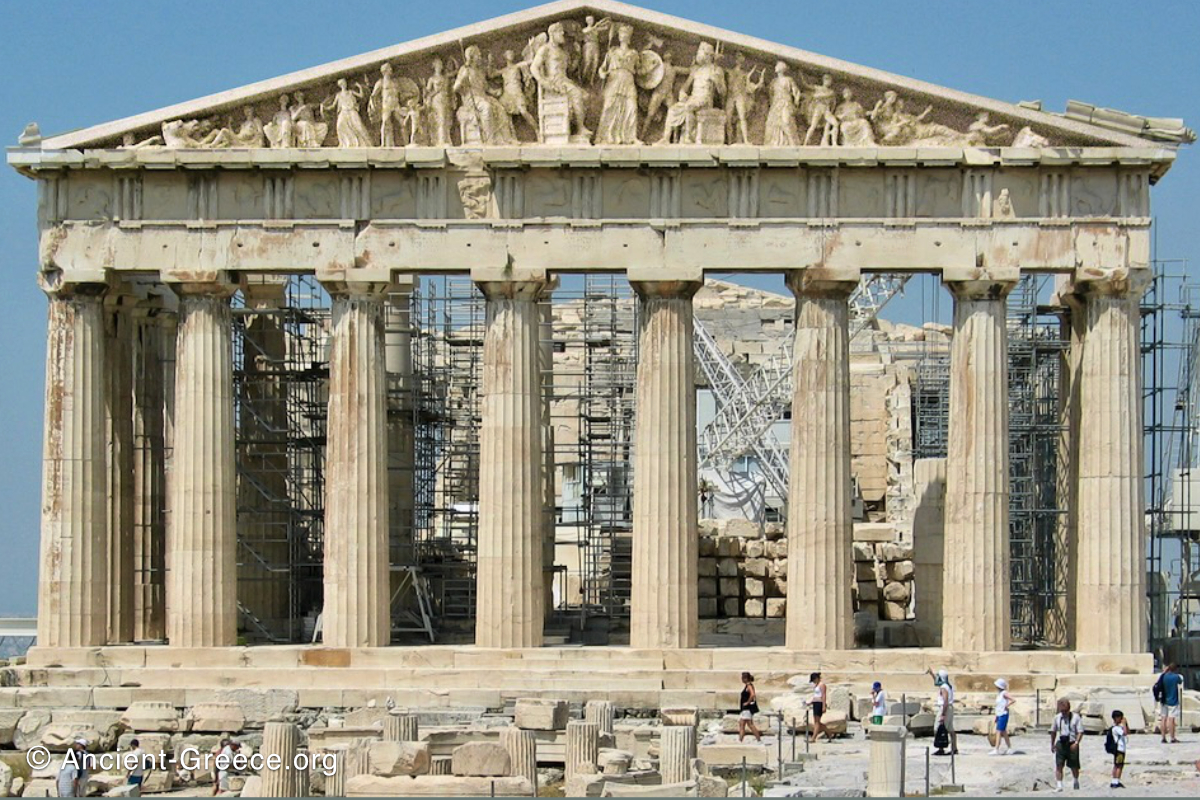
“This is a milestone in our understanding of ancient Greek art,” said Dr. Elias Syrigos, a classical archaeologist at the University of Athens. “By restoring the pediment to its original state, we’re essentially bringing a piece of the 5th century BCE back to life.”
A Look Ahead: Challenges and Controversies
While the restoration has been praised for its meticulous approach, some critics argue that any intervention—no matter how careful—risks altering the Parthenon’s authenticity. The Greek government has defended the project, citing decades of scientific research to justify the use of traditional methods.
Moving forward, authorities plan to monitor the pediment’s condition using advanced sensors and will consider further restorations only if absolutely necessary. The Acropolis Museum has also launched an educational program to inform visitors about the temple’s history and the challenges of its preservation.
