
Iran-US War Latest: Trump Warns Talks Will End if Tehran Tolls Strait of Hormuz
President Donald Trump stated that diplomatic negotiations with Iran will cease if Tehran imposes tolls on vessels passing through the Strait of Hormuz. This threat comes as the US Congress passed a war powers measure to limit presidential military authority regarding Iran, marking a rare bipartisan break with the administration’s foreign policy.
Why Trump’s Warning on Hormuz Tolls Matters
The Strait of Hormuz serves as the world’s most critical oil chokepoint. According to reports from The Independent, President Trump has tied the continuation of diplomatic talks directly to Iran’s behavior in this waterway. Specifically, the administration has signaled that any attempt by Tehran to monetize the transit of ships via tolls would be viewed as a red line, effectively ending the possibility of a negotiated settlement.
The geopolitical stakes involve the stability of global energy markets. Because a significant portion of the world’s liquefied natural gas and crude oil passes through the Strait, any disruption—whether through physical blockades or financial tolls—threatens to spike global oil prices. Trump’s stance positions the free flow of commerce as a non-negotiable prerequisite for diplomacy.
- Economic Impact: Tolls would increase shipping costs, leading to higher fuel prices for consumers globally.
- Diplomatic Leverage: The US uses the threat of ending talks to discourage Iran from using its geographic advantage as a weapon.
- Military Presence: The US maintains a naval presence in the region to ensure “freedom of navigation,” a core tenet of US maritime strategy.
How Congress Broke with Trump Over Iran War Powers
While the executive branch maintains a hardline stance toward Tehran, the US legislative branch has moved to curb the president’s ability to initiate conflict. The BBC reports that Congress passed a war powers measure for the first time in a manner that directly challenges Trump’s approach to Iran. This move represents a significant shift in the balance of power between the White House and Capitol Hill.
The US Senate further reinforced this position by voting to pass an Iran war powers resolution. According to Al Jazeera, this vote serves as a direct blow to Trump’s authority, as it seeks to prevent the president from engaging in hostilities against Iran without explicit congressional approval. This is not merely a procedural disagreement but a fundamental clash over who holds the power to commit the United States to war.
The US Senate’s action is characterized by The Guardian as a “symbolic rebuke” of the president’s military actions against Iran, signaling that a majority of lawmakers are wary of a full-scale conflict in the Persian Gulf.
The Role of ‘Rebel Republicans’
The passage of the anti-Iran war resolution was not a purely partisan effort. The Telegraph notes that “Rebel Republicans” played a decisive role in passing the measure. These lawmakers broke party lines to join Democrats, suggesting that concerns over “forever wars” and the risk of an unplanned escalation with Iran have penetrated the Republican base.

This internal party split indicates that while many Republicans support a “maximum pressure” campaign of sanctions, there is a growing divide regarding the use of kinetic military force. The alliance between Democrats and these dissident Republicans created a legislative majority that the administration could not ignore.
| Action | Source of Authority | Outcome/Status | Primary Objective |
|---|---|---|---|
| Hormuz Toll Warning | Executive Branch (Trump) | Diplomatic Threat | Prevent shipping disruptions |
| War Powers Measure | US Congress | Passed | Limit unilateral military action |
| Senate Resolution | US Senate | Passed | Symbolic rebuke of military posture |
Comparing the Executive and Legislative Approaches
The current tension reveals two competing strategies for managing the Iran crisis. The Trump administration focuses on deterrence through unpredictability and the threat of severe consequences. By stating that talks will end over Hormuz tolls, the president utilizes a “maximum pressure” framework designed to force Iran into concessions.
Conversely, the Congressional approach focuses on institutional restraint. By invoking war powers, lawmakers are attempting to return to a constitutional framework where the decision to enter a war is a collective legislative act rather than a solo executive decision. The contrast is stark: the White House views flexibility and speed as assets, while Congress views them as risks that could lead to an avoidable war.
This friction is a modern iteration of the struggle over the War Powers Resolution of 1973, a piece of legislation intended to prevent presidents from committing US troops to overseas conflicts without congressional consent. The recent votes mentioned by the BBC and Al Jazeera suggest that Congress is now applying that 1973 precedent specifically to the Iranian theater.
Potential Consequences of a Diplomatic Collapse
If Tehran were to impose tolls on the Strait of Hormuz, the resulting collapse of talks would likely trigger a sequence of escalatory events. Experts suggest that the US would not simply walk away from the table but would likely increase its naval presence to forcibly ensure the passage of ships.
A collapse in diplomacy would also remove the primary incentive for Iran to maintain a level of stability in the Gulf. Without the prospect of sanctions relief or a diplomatic exit, Tehran might feel more inclined to utilize asymmetric warfare—such as deploying sea mines or using fast-attack boats—to pressure the US and its allies.
Furthermore, the domestic political fallout in the US would be severe. If Trump were to launch military strikes in response to tolls, he would be doing so in direct opposition to the “symbolic rebuke” and the war powers resolutions passed by the Senate and House. This could lead to a constitutional crisis regarding the legality of the president’s orders during a period of explicit congressional disapproval.
Key Risks for Global Markets
- Oil Price Volatility: Any threat to the Strait of Hormuz typically results in an immediate “risk premium” being added to the price of Brent crude.
- Insurance Hikes: Shipping companies would face massive increases in war-risk insurance premiums for vessels entering the Persian Gulf.
- Supply Chain Disruption: Beyond oil, the transit of chemicals and other raw materials would be delayed or diverted, impacting global manufacturing.
Common Misconceptions About the Iran-US Conflict
A frequent oversimplification in this narrative is that the US and Iran are in a binary state of “war” or “peace.” In reality, the relationship is characterized by a “gray zone” conflict. This involves sanctions, cyberattacks, and proxy battles in third-party countries, rather than direct state-on-state warfare.
Another misconception is that the Congressional war powers resolution is a binding “stop” sign that prevents all military action. As noted by The Guardian, these measures are often symbolic. The president still retains authority to defend US forces under the Commander-in-Chief clause of the Constitution. The resolution is more of a political barrier and a legal challenge than a physical wall preventing military movement.
Finally, some assume that the “Rebel Republicans” mentioned by The Telegraph are acting out of sympathy for Iran. Evidence suggests the opposite; their opposition is rooted in a desire to avoid the costs and casualties of another Middle Eastern war, reflecting a broader “America First” isolationist trend within the party.
For those looking for a related explainer on the War Powers Act, the current situation highlights how the law is used as a political tool during times of high international tension.
Frequently Asked Questions
What is the Strait of Hormuz and why is it important?
The Strait of Hormuz is a narrow waterway connecting the Persian Gulf with the Gulf of Oman and the Arabian Sea. It is the primary artery for the export of oil from Saudi Arabia, Iraq, the UAE, Kuwait, and Iran. Because of its narrowness, it is easily blockaded or monitored, making it a strategic lever for Iran.
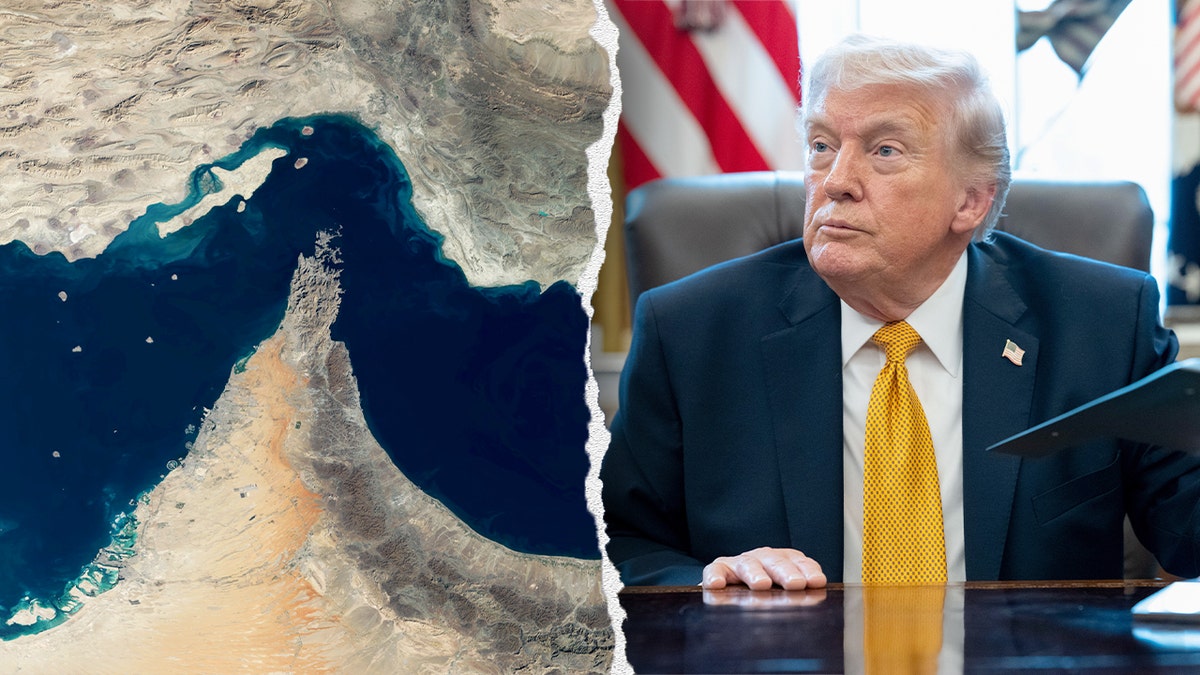
Will Trump actually end talks if Iran imposes tolls?
According to reports from The Independent, President Trump has stated that talks will end under those conditions. Whether he would follow through depends on the broader strategic environment, but the statement serves as a formal warning to deter Tehran from taking such action.
What does a “War Powers Resolution” actually do?
A war powers resolution is a legislative act intended to limit the president’s ability to commit US armed forces to hostilities without a formal declaration of war or specific authorization from Congress. While often symbolic, it creates a legal and political record of opposition to military escalation.
Who are the “Rebel Republicans” in this context?
As reported by The Telegraph, these are Republican members of Congress who broke with the Trump administration to vote in favor of limiting the president’s military options regarding Iran. Their motivation is typically a desire to avoid long-term military entanglement in the Middle East.
Is the US currently at war with Iran?
No, the US and Iran are not in a declared state of war. However, they are engaged in a high-tension standoff involving economic sanctions, diplomatic threats, and indirect confrontations via regional proxies.
