
Southeast Asia’s Push for an Interconnected Energy Grid: How Shared Sustainability Goals Are Reshaping the Region’s Power Future
Regional leaders and energy officials are accelerating plans to build a cross-border electricity grid spanning Southeast Asia, aiming to boost energy security, reduce carbon emissions, and cut costs—while navigating geopolitical tensions and technical hurdles. The initiative, backed by the Association of Southeast Asian Nations (ASEAN) and supported by major economies including China, Indonesia, and Malaysia, could redefine how the region powers its rapid economic growth. But with financing gaps, infrastructure challenges, and competing national interests, the timeline remains uncertain.
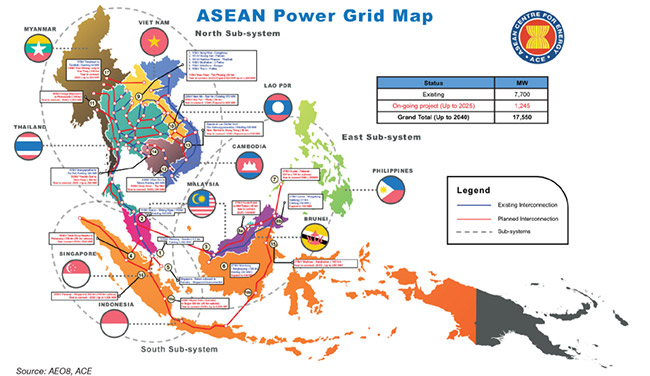
According to ASEAN’s latest energy roadmap, released in October 2023, member states have committed to advancing the ASEAN Power Grid (APG) project by 2030, with pilot connections expected as early as 2025. The plan involves linking national grids across 11 countries—from Singapore to Myanmar—to enable seamless electricity trade, renewable energy sharing, and disaster resilience. Yet critics warn delays in funding and political disagreements could derail progress.
This article explores the drivers behind the push for an interconnected grid, the key players shaping its future, and the obstacles that could determine whether Southeast Asia meets its sustainability targets—or falls short.
—
Why Southeast Asia Is Racing to Build a Cross-Border Energy Grid
The urgency behind the ASEAN Power Grid stems from three interlocking crises: rising energy demand, climate commitments, and supply chain vulnerabilities. By 2030, the region’s electricity needs are projected to grow by 40%, according to the ASEAN Centre for Energy (ACE), with coal and gas still dominating power generation despite pledges to phase out fossil fuels by 2050.
Key drivers:
- Energy security: The COVID-19 pandemic and Russia’s invasion of Ukraine exposed how supply disruptions—such as coal shortages in Indonesia or gas shortages in Malaysia—can cripple economies. An interconnected grid would allow countries to import power during shortages and export surplus during peak production.
- Renewable energy integration: Solar and wind projects in Vietnam and the Philippines are outpacing grid capacity, leading to wasted energy when excess power can’t be stored or shared. A regional grid would let countries like Laos (with its hydropower surplus) sell electricity to Thailand or Cambodia during dry seasons.
- Cost savings: Building new power plants is expensive. ASEAN estimates that shared infrastructure could cut capital costs by 15–20% by avoiding redundant transmission lines and generation assets.
- Climate pledges: Under the ASEAN Vision 2025 and the Paris Agreement, member states have promised to reduce emissions by 30% by 2030. An interconnected grid is seen as critical to scaling renewables, as solar and wind are intermittent and require backup power or storage—both of which are easier to manage regionally.
Yet the push for integration isn’t just about sustainability—it’s also about geopolitical leverage. China, which has invested heavily in Southeast Asia’s energy sector through its Belt and Road Initiative (BRI), is positioning itself as a key partner in grid development. Meanwhile, the U.S. and Japan have signaled interest in funding cleaner energy projects as part of their Indo-Pacific Economic Framework (IPEF).
Expert insight:
“The APG isn’t just about electricity—it’s about who controls the region’s energy future,” says Dr. Mira Raghubir, a senior fellow at the Institute for Energy Economics and Financial Analysis (IEEFA). “China sees this as a way to lock in long-term access to Southeast Asian markets, while Western nations are using climate finance to counterbalance that influence.”
—
Who’s Leading the Charge—and Who’s Holding Back?
The ASEAN Power Grid is a multi-stakeholder effort, with governments, private firms, and international donors all playing critical roles. But progress hinges on resolving deep divisions over funding, technology, and sovereignty.
Key Players and Their Roles
| Stakeholder | Role | Challenges |
|---|---|---|
| ASEAN Secretariat | Coordinates policy, sets targets (e.g., 2030 grid interconnection goal), and negotiates with external partners. | Lacks enforcement power; relies on member states to implement plans. |
| China (via BRI) | Funding major projects (e.g., Laos-China power transmission lines), supplying technology, and offering loans through institutions like the Asian Infrastructure Investment Bank (AIIB). | Debt concerns in smaller ASEAN nations (e.g., Cambodia, Laos); accusations of geopolitical strings attached. |
| Japan & U.S. (via IPEF) | Proposing clean energy partnerships, including grants for renewable integration and grid modernization. | Smaller budgets compared to China; competition with BRI projects. |
| Private Sector (e.g., PTT Global Chemical, CLP Holdings) | Investing in cross-border transmission lines and renewable projects. | Profitability risks due to unpredictable regulatory environments. |
| ASEAN Member States | Implementing national plans (e.g., Vietnam’s Power Development Plan VIII, Indonesia’s Just Energy Transition Partnership). | Political resistance (e.g., Malaysia’s rejection of coal plants vs. Indonesia’s reliance on them); infrastructure gaps. |
Notable delays:
- The Singapore-Malaysia-Sarawak power link, a pilot project, has faced 18 months of delays due to environmental reviews and funding disputes.
- Indonesia’s reluctance to fully commit stems from its domestic coal lobby, which opposes policies that could reduce demand for local mines.
- Thailand’s grid modernization is held back by corruption scandals in state utilities, raising investor concerns.
Geopolitical flashpoint: China’s dominance in grid technology—supplying 80% of Southeast Asia’s transmission equipment, per a 2023 report by the Rhodium Group—has sparked concerns about dependency risks. The U.S. and EU are pushing for alternative suppliers, including European firms like Siemens Energy.
—
How the Interconnected Grid Could Work—and Where It Might Fail
The ASEAN Power Grid isn’t a single project but a network of projects, each with different timelines, technologies, and political hurdles. Here’s how it could unfold—and where risks lie.
Three Phases of Development
| Phase | Timeline | Key Projects | Challenges |
|---|---|---|---|
| Pilot Connections (2025–2027) | 2025–2027 |
|
Limited capacity; requires new transmission lines. |
| Regional Backbone (2028–2035) | 2028–2035 |
|
High costs ($50–70 billion estimated); land acquisition disputes. |
| Full Interconnection (2036–2050) | 2036–2050 |
|
Requires political consensus on climate policies; technological leaps in storage. |
Critical Risks to Watch
1. Funding gaps: The ASEAN Centre for Energy estimates the grid will need $100 billion by 2040, but only $20 billion has been pledged so far. Multilateral banks like the World Bank and ADB are hesitant due to debt sustainability concerns in poorer members.
2. Technical hurdles: Grids in Southeast Asia use three different frequencies (50Hz, 60Hz, and mixed), requiring costly upgrades. Additionally, cybersecurity risks from interconnected systems are a growing worry.
3. Political resistance: Countries like Myanmar and Brunei have opted out of early phases, citing sovereignty concerns. Meanwhile, Indonesia’s coal-dependent provinces are pushing back against renewable mandates.
Case study: The Laos-China power link
Laos, which generates 90% of its electricity from hydropower, has sold surplus power to Thailand and Vietnam since 2018—but only 30% of its capacity is used due to transmission bottlenecks. A new China-backed 1,200 MW line aims to export more, but critics argue it locks Laos into long-term contracts with Beijing.
—
What This Means for Southeast Asia’s Energy Future—and Beyond
The ASEAN Power Grid isn’t just about electricity—it’s a test of regional cooperation in an era of climate urgency and geopolitical rivalry. Success could set a global precedent for how developing economies collaborate on clean energy, while failure risks deepening inequality and carbon lock-in.
Potential Benefits
- Lower costs: Shared infrastructure could reduce power prices by 10–15% for consumers, according to a 2023 ASEAN Economic Research Institute study.
- Faster renewable adoption: Countries like the Philippines (with 30 GW of solar potential) and Vietnam (aiming for 40% renewables by 2030) could avoid blackouts by trading excess power.
- Disaster resilience: During the 2022 floods in Thailand, power outages lasted weeks. A regional grid would allow automatic rerouting of electricity from unaffected areas.
- Climate leadership: ASEAN could meet its 2030 emissions targets more easily by balancing intermittent renewables across borders.
Risks of Delay or Failure
- Continued fossil fuel dependency: Without grid integration, countries may build more coal plants to meet demand—undermining climate pledges.
- Geopolitical fragmentation: If China dominates grid technology, Southeast Asia could face energy security risks similar to Europe’s reliance on Russian gas.
- Economic disparities: Wealthier nations (e.g., Singapore, Malaysia) would benefit more from shared infrastructure, widening the energy access gap.
Comparative perspective: The European Union’s internal energy market, launched in the 1990s, took 30 years to fully integrate. ASEAN’s timeline is half that, but with less political unity and greater infrastructure gaps.
Expert warning:
“ASEAN’s biggest mistake would be treating this as a technical project rather than a political one,” says Prof. Andrew Marwah, a Southeast Asia energy specialist at Nanyang Technological University. “If member states don’t align on climate policies and funding, the grid will become a patchwork of disconnected lines—useless for sustainability.”
—
Key Questions About Southeast Asia’s Energy Grid—Answered
How will the ASEAN Power Grid affect my electricity bill?
If successful, shared infrastructure could lower costs by 10–15% by reducing redundancy in power plants and transmission lines. However, initial upgrades may temporarily increase prices as countries invest in new grids. The impact varies by country—Singapore and Malaysia may see faster benefits, while rural areas in Laos or Myanmar could face delays.
Will China control Southeast Asia’s energy future?
China is already the largest investor in ASEAN’s power sector, but full control is unlikely. The U.S., Japan, and EU are increasing funding for clean energy alternatives, and ASEAN nations are negotiating balanced partnerships. However, debt concerns mean many countries may have little choice but to accept Chinese terms for critical infrastructure.
What happens if the grid fails to materialize?
Without integration, Southeast Asia risks higher energy costs, more blackouts, and missed climate targets. Countries may resort to building isolated coal plants, locking in high-emission pathways. The region could also lose out on foreign investment, as firms prefer stable, interconnected markets.
How can I track progress on the ASEAN Power Grid?
Follow updates from:
- The ASEAN Centre for Energy (ACE) (ace.asean.org)
- National energy ministries (e.g., Indonesia’s Ministry of Energy, Vietnam’s EVN)
- Multilateral banks like the ADB and World Bank for funding announcements
Key milestones to watch in 2024 include the launch of the Singapore-Malaysia-Sarawak pilot and ASEAN’s first regional power trading auction.
Is the ASEAN Power Grid a model for other regions?
Yes—but with caveats. The Southern African Power Pool and Mercosur’s energy integration in South America show that political will and funding are the biggest hurdles. Southeast Asia’s advantage is its geographic proximity and shared climate goals, but success will depend on resolving geopolitical tensions and securing private investment.
—
The ASEAN Power Grid’s future hinges on whether regional leaders can overcome national interests, funding shortfalls, and technological barriers. With ASEAN’s 2030 deadline approaching, the next 12 months will be critical—especially as China, the U.S., and Japan compete to shape the project’s direction. For Southeast Asia, the stakes couldn’t be higher: a unified grid could power growth sustainably—or leave the region trapped in a cycle of energy poverty and climate inaction.
Further reading:
- Our explainer on how Southeast Asia’s coal phase-out is progressing
- Analysis of China’s Belt and Road Initiative in energy infrastructure
- Breakdown of ASEAN’s 2025 climate and energy targets
