Nature’s Armor: How Armadillos Inspire New Tech to Protect Soft Machines
The intersection of biology and engineering has always yielded some of the most innovative breakthroughs in modern robotics. While the industry has spent decades perfecting rigid, metallic machines, a newer frontier—soft robotics—is redefining how we interact with the physical world. However, these flexible machines face a critical flaw: they are inherently fragile. To solve this, researchers have looked toward one of nature’s most successful defensive specialists. The revelation that armadillos inspire new tech to protect soft machines – futurity.org signals a pivotal shift in how engineers approach the problem of protecting delicate electronics within flexible systems.
By mimicking the unique curling mechanism of the armadillo, scientists have developed a morphing module capable of transitioning from a pliable, functional state to a rigid, protective shell. This bio-inspired approach solves a long-standing engineering paradox: how to create a machine that is soft enough to navigate complex environments but hard enough to survive a catastrophic impact.
The Vulnerability of Soft Robotics
To understand why an armadillo-inspired shield is necessary, one must first understand the rise of soft robotics. Unlike traditional industrial robots, which are built from steel and aluminum to perform repetitive tasks with high precision, soft robots are constructed from elastomers, gels, and flexible polymers. These materials allow them to squeeze through tight gaps, handle delicate biological tissues without causing damage, and adapt their shape to uneven terrain.
Despite these advantages, soft robots are “glass cannons.” Their flexibility comes at the cost of structural integrity. The electronics—the “brains” and “nervous system” of the machine—are often embedded within these soft materials. If the robot encounters a sharp object, a high-pressure environment, or a sudden impact, the soft exterior offers little resistance, leading to the immediate failure of the internal circuitry.
The primary challenge in soft robotics has not been achieving flexibility, but achieving “switchable” rigidity—the ability to be soft when moving and hard when under threat.
Historically, engineers attempted to solve this by adding internal skeletons or external hard casings. However, these additions often neutralized the exceptionally benefits of soft robotics, making the machines clunky and limiting their range of motion. This is where the biological blueprint of the armadillo provides a superior alternative.
Engineering the Morphing Module: How it Works
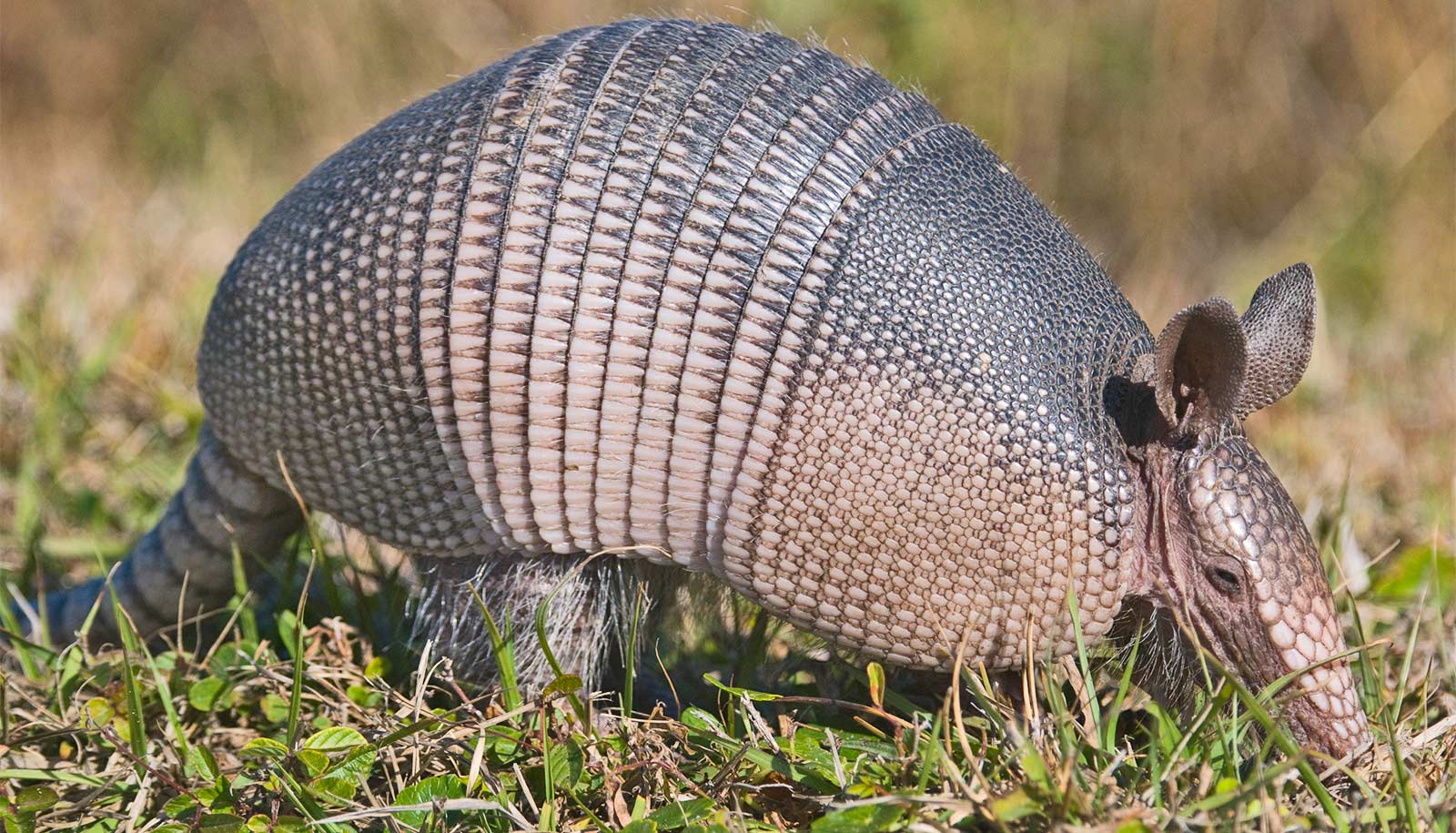
The armadillo does not rely on a single, solid piece of armor. Instead, its carapace consists of overlapping bony plates called osteoderms, held together by flexible connective tissue. This architecture allows the animal to remain mobile while possessing the ability to curl into a near-impenetrable sphere when threatened.
The new technology translates this biological strategy into a “morphing module.” This system utilizes a combination of smart materials and geometric design to achieve a similar effect. The module consists of a series of interlocking segments that can slide and rotate relative to one another.
The Transition Mechanism
The core of the innovation lies in the trigger mechanism that initiates the “curl.” Depending on the specific design, this can be achieved through several methods:
- Actuation: Using pneumatic or hydraulic pressure to force the segments to curve inward.
- Material Memory: Utilizing shape-memory alloys (SMAs) or polymers that return to a pre-set “curled” shape when exposed to a specific temperature or electrical current.
- Mechanical Triggering: A physical impulse that causes the module to snap into a locked, protective configuration.
Protection of Internal Electronics
When the module is in its extended state, the electronics are distributed and flexible, allowing the robot to perform its primary task. However, once the curling sequence is triggered, the hard outer segments overlap perfectly, creating a shielded vault. This vault encapsulates the fragile components, diverting external force away from the electronics and distributing the impact across the rigid exterior shell.
| Feature | Traditional Soft Robots | Armadillo-Inspired Modules |
|---|---|---|
| Structural Integrity | Low; susceptible to punctures | High; switchable rigidity |
| Mobility | High; highly adaptable | High; maintains flexibility until activated |
| Electronics Safety | Exposed/Vulnerable | Encapsulated during threat |
| Weight | Very Light | Light to Moderate |
Real-World Applications and Impact
The ability to shield soft machines on demand opens the door to deployments in environments that were previously too dangerous for flexible robotics. The implications span multiple industries, from deep-sea exploration to life-saving medical interventions.
Search and Rescue in Disaster Zones
In the aftermath of an earthquake or building collapse, search-and-rescue robots must navigate through unstable rubble. A soft robot is ideal for this because it can slip through narrow crevices to locate survivors. However, the risk of a secondary collapse is high. An armadillo-inspired robot could navigate the ruins in its soft state and, upon detecting a structural shift or a falling piece of debris, instantly curl into a protective ball to prevent its internal systems from being crushed.
Advanced Medical Robotics
Minimally invasive surgery relies on tools that can navigate the winding paths of the human body. Soft robotic catheters and endoscopes are safer for the patient, but they can be fragile. A morphing shield could allow a medical device to remain soft while traversing a vein or organ, but then harden to provide a stable platform for a surgical tool to perform a precise incision or biopsy.
Extreme Environment Exploration
Whether exploring the crushing depths of the ocean or the jagged surfaces of a distant moon, robots face extreme physical stress. The armadillo-inspired tech allows for a “hybrid” approach:
- Deep Sea: Protecting sensors from sudden pressure spikes or collisions with underwater rock formations.
- Space: Protecting delicate instruments from micrometeoroid impacts or the harsh conditions of landing on an asteroid.
For those interested in how these materials are developed, a related explainer on smart polymers provides more context on the chemistry behind shape-shifting materials.
The Broader Context of Biomimicry
The fact that armadillos inspire new tech to protect soft machines – futurity.org is not an isolated incident but part of a broader trend called biomimicry. Biomimicry is the practice of looking to nature’s time-tested patterns and strategies to solve human engineering problems. Nature has had millions of years of R&D to optimize survival, and engineers are increasingly realizing that biological solutions are often more efficient than synthetic ones.
Parallels in Bio-Inspired Armor
The armadillo approach is similar to other bio-inspired projects, yet distinct in its focus on morphing. For example:
- The Pangolin Effect: Similar to the armadillo, pangolin scales have inspired “scale-mail” robotics that offer protection while maintaining a degree of flexibility.
- The Turtle Shell: While the turtle provides a static hard shell, the armadillo provides a dynamic one. The turtle model is useful for stationary protection, but the armadillo model is essential for active, moving machines.
- Insect Exoskeletons: Many soft robots use “segmented” designs inspired by arthropods to balance strength and movement.
The key difference here is the active transition. Most bio-inspired armor is passive—it is always hard. The armadillo-inspired module is active, meaning it can change its physical properties in real-time based on the environment.
Addressing Misconceptions
When discussing “soft machines” and “morphing modules,” several common misconceptions often arise. It is crucial to clarify these to understand the actual scope of the technology.
Misconception 1: “Soft” means “Weak”
Many assume that soft robotics are simply inferior versions of hard robots. In reality, “softness” is a functional choice. In many scenarios, a rigid robot is actually the “weaker” option because it cannot adapt to its environment and is more likely to break when it hits an unexpected obstacle. Softness provides resilience through deformation.
Misconception 2: The Shield Makes the Robot Heavy
There is a belief that adding a protective shell inevitably adds too much weight, defeating the purpose of a lightweight soft robot. However, by using advanced composites and thin-film polymers, the armadillo-inspired shell adds minimal mass while providing a disproportionate increase in structural protection.
Misconception 3: The Transition is Leisurely
Some imagine the “curling” process as a slow, mechanical movement. In reality, using shape-memory alloys or pneumatic triggers, the transition can happen in milliseconds—fast enough to respond to a sudden impact or a falling object.
Future Outlook and Technical Hurdles
While the prototype modules are promising, several hurdles remain before this technology becomes standard in commercial robotics. The first is energy efficiency. Powering the transition from soft to hard—especially if using thermal triggers—requires a consistent energy source that can be taxing on small, battery-operated robots.
The second challenge is material fatigue. Every time a material morphs or curls, it undergoes stress. Engineers must ensure that the module can curl and uncurl thousands of times without the polymer cracking or the joints wearing down. This requires the development of “self-healing” materials that can repair microscopic tears in the shell automatically.
integrating sensors that can “predict” the need for protection is crucial. For a robot to curl before it is crushed, it needs a sophisticated sensory array (mimicking the armadillo’s nervous system) that can detect incoming threats via vibration, pressure changes, or visual cues.
As we move forward, People can expect to see these modules integrated into a wider array of devices. Beyond robotics, this could lead to “smart” protective gear for humans—such as sports equipment or military armor that remains flexible during movement but hardens instantly upon impact.
Frequently Asked Questions
What exactly is a “soft machine” in this context?
A soft machine, or soft robot, is a device constructed from highly compliant materials like silicone, rubber, or flexible polymers. Unlike traditional robots made of metal, these machines can deform and change shape, allowing them to interact safely with humans or navigate unpredictable environments.

How does the armadillo-inspired module protect electronics?
The module uses a morphing design that allows it to curl inward. When triggered, the flexible exterior transforms into a rigid, overlapping shell that encapsulates the internal electronics, shielding them from external pressure, punctures, or impacts.
Can this technology be used in consumer electronics?
Potentially. While currently focused on robotics, the principle of “switchable rigidity” could be applied to foldable phones, wearable tech, or protective cases that harden only when a drop is detected via accelerometers.
Is this technology already being used in the field?
Most of these developments are currently in the research and prototyping phase. While there are specialized applications in laboratory settings and high-end industrial prototypes, widespread commercial use is still in development as engineers optimize the materials for longevity and power efficiency.
What makes the armadillo a better model than a turtle or a crab?
Turtles and crabs have static armor; they are always hard. The armadillo is unique because its armor is dynamic. It can transition between a state of high mobility (extended) and high protection (curled), which is exactly what soft robotics need to solve the flexibility-vs-durability trade-off.
The pursuit of this technology represents a deeper understanding of the synergy between nature and machine. By observing how an animal survives in the wild, engineers are not just building better robots; they are creating a new class of resilient technology that can survive the most hostile environments on—and off—the planet. The transition from rigid machines to adaptable, morphing systems marks the beginning of a more organic era of engineering.
