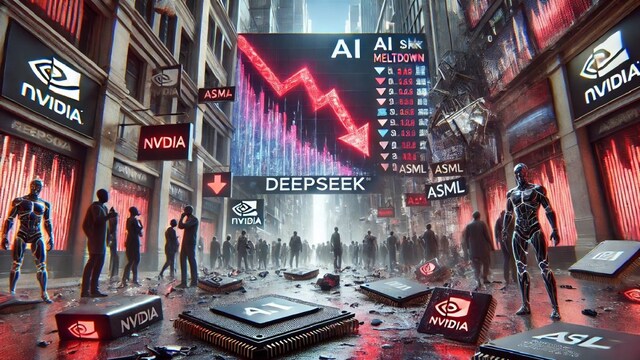
Tech Drags on US Stocks as AI Selloff Ripples Across From Asia – Bloomberg.com
US equity markets declined as a global semiconductor rout, originating in Asian markets, triggered a sell-off in artificial intelligence (AI) stocks. According to CNBC, the Nasdaq Composite fell 2%, led by a sharp drop in Micron Technology, while the S&P 500 also retreated as investors weighed cooling AI demand and hawkish Federal Reserve signals, reported The Business Times.
Why did the Nasdaq and S&P 500 fall?
The decline in US indices was driven primarily by a contagion effect from Asian markets, where chip stocks faced heavy selling pressure. According to Bloomberg, the volatility “rippled across” from Asia to Wall Street, creating a synchronized downturn in the technology sector. This movement suggests a shifting sentiment among global investors regarding the valuation of AI-related assets.
CNBC reported that the Nasdaq was the hardest hit, sliding 2%. The S&P 500 followed suit, as the heavy weighting of mega-cap tech stocks meant that losses in the semiconductor space dragged down the broader market. The sell-off was not limited to a single company but represented a broader “chip rout,” according to CNBC.
Several factors converged to create this downward pressure:
- Asian Market Lead: Selling pressure began in Asian trading sessions, setting a bearish tone for US opens.
- Sector Concentration: The high concentration of AI-linked stocks in major indices amplified the impact of the sell-off.
- Profit Taking: After a prolonged rally in AI stocks, investors began locking in gains as growth expectations were questioned.
Which AI stocks led the sell-off?
The semiconductor industry bore the brunt of the volatility. Yahoo Finance reported that Nvidia, Micron, and AMD were the primary leaders in the tech sell-off. These companies, which provide the hardware essential for generative AI, saw their valuations drop as the “AI trade” began to cool.
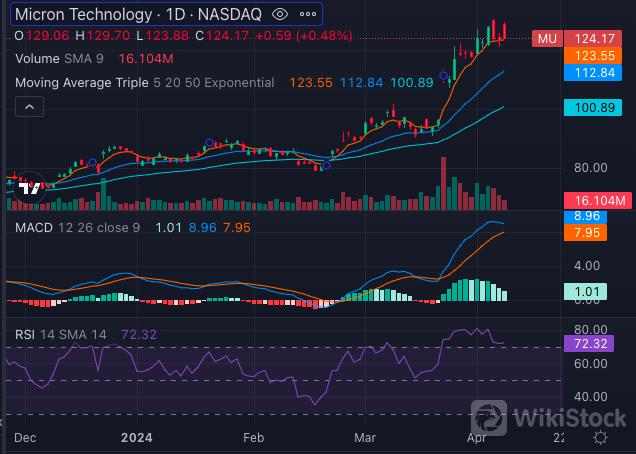
Micron Technology was specifically highlighted by CNBC as a primary driver of the Nasdaq’s 2% decline. As a major provider of memory chips, Micron’s price action often serves as a bellwether for the health of the broader hardware sector. When Micron falls sharply, it often signals a broader lack of confidence in short-term demand for AI infrastructure.
Nvidia and AMD, the dominant forces in GPU (Graphics Processing Unit) markets, also faced declines. According to Yahoo Finance, the cooling of the AI trade indicates that investors are no longer buying into any company associated with artificial intelligence regardless of price, but are instead becoming more selective about valuation and actual revenue growth.
| Company | Role in AI Ecosystem | Market Impact (per reports) |
|---|---|---|
| Micron | Memory/HBM Chips | Led the Nasdaq rout (CNBC) |
| Nvidia | GPU/AI Accelerators | Led tech sell-off (Yahoo Finance) |
| AMD | GPU/CPU Competitor | Led tech sell-off (Yahoo Finance) |
How did concerns over AI spending fuel the decline?
The sell-off was not merely a technical correction but was rooted in fundamental concerns about the sustainability of AI capital expenditure. The Business Times reported that Wall Street fell at the open as concerns mounted regarding AI spending. This suggests a growing skepticism among investors about whether the massive investments in AI infrastructure are yielding proportional returns.
For the past year, companies have spent billions on H100 chips and data center expansions. However, the market is now asking when these investments will translate into significant bottom-line growth for the companies buying the hardware. If enterprise spending on AI slows, the demand for the chips produced by Nvidia, AMD, and Micron will inevitably drop.
This “spending anxiety” creates a feedback loop. As investors fear a slowdown in AI adoption or monetization, they sell the hardware providers first, which then puts pressure on the software companies and cloud providers who are the primary customers of that hardware.
What role did the Federal Reserve play in the market drop?
Beyond the AI-specific bubble concerns, macroeconomic headwinds contributed to the volatility. The Business Times reported that concerns about a “hawkish Fed” added to the pressure on Wall Street. A hawkish Federal Reserve is one that is inclined to keep interest rates higher for longer or even raise them to combat inflation.
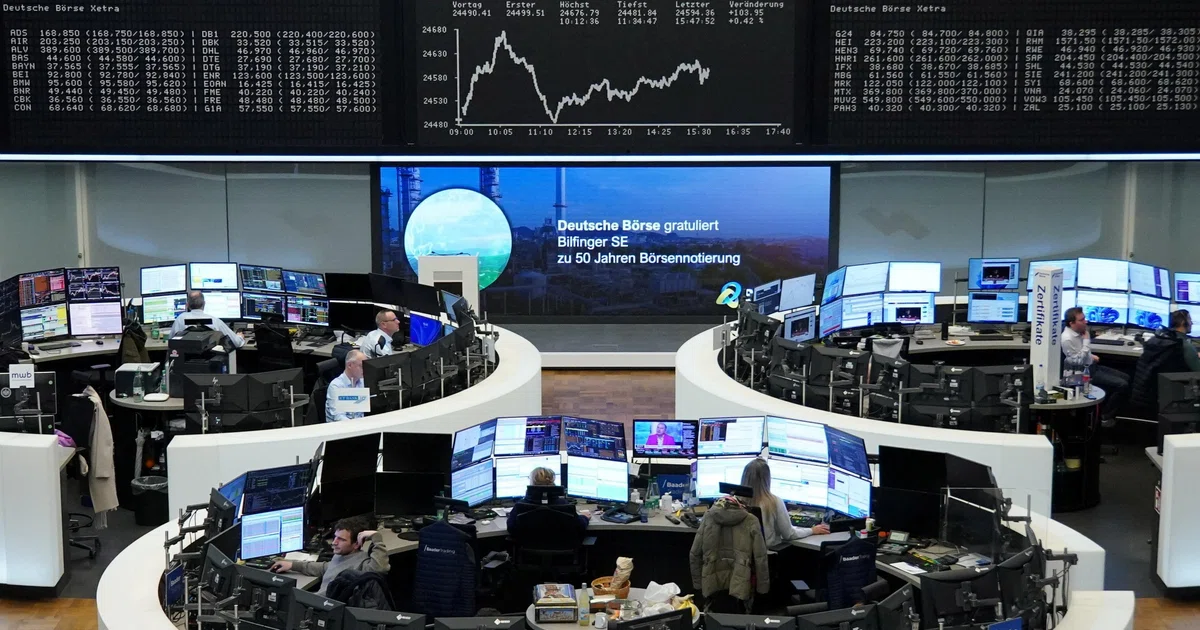
High interest rates are particularly damaging to tech stocks for two reasons:
- Discounted Cash Flow: Tech companies are often valued based on their future earnings. When interest rates rise, the “discount rate” applied to those future earnings increases, which lowers the current present value of the stock.
- Cost of Capital: Many AI startups and growth-stage tech firms rely on debt to fund their rapid expansion. Higher rates increase the cost of this borrowing, squeezing margins.
The combination of a potential “AI spending plateau” and a Federal Reserve that refuses to pivot toward rate cuts created a “double whammy” for tech investors, according to reporting from The Business Times.
How did other global events impact the session?
While the AI sell-off was the primary driver, other geopolitical and corporate events added layers of complexity to the trading day. The Edge Singapore reported that stocks fell as a “rout” involving SpaceX offset hopes related to US-Iran relations.
The mention of SpaceX is significant because, although it is a private company, its perceived value and the sentiment surrounding Elon Musk’s ventures often bleed into the public markets, particularly for companies like Tesla or other aerospace and defense contractors. When a high-profile entity like SpaceX faces a perceived downturn or “rout,” it can dampen the overall appetite for high-risk, high-growth tech investments.
Furthermore, The Edge Singapore noted that hopes for improved US-Iran relations were not enough to sustain a market rally. This indicates that the internal pressures of the tech sector—specifically the AI bubble concerns and interest rate fears—outweighed positive geopolitical news.
Comparing the AI Hype Phase vs. the Cooling Phase
To understand the current market movement, it is necessary to contrast the current “cooling” phase with the previous “hype” phase. During the hype phase, any mention of “AI” in a corporate earnings call typically led to a stock price increase. In the current phase, however, investors are demanding concrete evidence of ROI (Return on Investment).
Based on the reports from Yahoo Finance and The Business Times, the market is shifting from a “speculative” mindset to an “analytical” one. The following table compares these two market regimes:
| Feature | AI Hype Phase | AI Cooling Phase (Current) |
|---|---|---|
| Investor Focus | Potential and Possibility | Revenue and ROI |
| Stock Movement | Broad sector lift | Selective, based on fundamentals |
| Key Metric | GPU shipment volume | Software monetization/Margins |
| Fed Sensitivity | Low (Growth at all costs) | High (Cost of capital matters) |
What are the long-term implications for the semiconductor industry?
A short-term sell-off does not necessarily mean the AI revolution is over, but it does suggest a transition. The “ripple effect” from Asia mentioned by Bloomberg indicates that the semiconductor supply chain is highly integrated. When sentiment shifts in Taiwan, South Korea, or Japan, it almost immediately impacts the Nasdaq.
The primary risk now is a “demand air pocket.” If companies like Microsoft, Google, and Meta determine they have bought enough chips for the next two years, the sudden drop in orders would hit Nvidia and Micron harder than a gradual slowdown. This is the core fear driving the current volatility.
However, the industry has a history of “boom and bust” cycles. Memory chips, specifically those produced by Micron, are notoriously cyclical. The current rout may be a natural correction after an unprecedented vertical climb in prices.
For a deeper look at how these cycles work, readers may find a related explainer on semiconductor cyclicality useful for understanding historical patterns.
Common misconceptions about the AI sell-off
One common misconception is that the sell-off means AI technology has failed. In reality, the technology continues to advance; the issue is the valuation of the companies providing it. There is a significant difference between a “technological failure” and a “valuation correction.”
Another misconception is that this is a purely US-based phenomenon. As Bloomberg noted, the sell-off “rippled across from Asia.” This confirms that the AI trade is a global macro-trend. The US is the center of the software and design world (Nvidia, AMD), but Asia is the center of the manufacturing and memory world (TSMC, Samsung, SK Hynix). You cannot have a sell-off in one without eventually seeing it in the other.
Finally, some analysts suggest that the Fed’s hawkishness is a secondary concern. However, as The Business Times points out, the Fed’s stance is central to the “AI trade” because AI is a long-duration bet. Long-duration assets are the most sensitive to interest rate changes.
Frequently Asked Questions
Why did Micron lead the Nasdaq decline?
According to CNBC, Micron acted as a primary trigger for the sell-off. Because Micron provides the high-bandwidth memory (HBM) necessary for AI GPUs, its stock price often reflects the immediate demand for AI hardware. A drop in Micron typically signals a broader cooling in the chip sector.
How does a “hawkish Fed” affect AI stocks?
A hawkish Federal Reserve keeps interest rates high to fight inflation. According to The Business Times, this increases the cost of borrowing for tech companies and lowers the present value of their future earnings, making high-growth AI stocks less attractive to investors.
What is the “AI trade” and why is it cooling?
The “AI trade” refers to the strategy of investing in companies that build or use artificial intelligence. Yahoo Finance reports that it is cooling because investors are moving from speculative buying to questioning whether the massive spending on AI infrastructure will generate actual profits.
Did the sell-off start in the US?
No. Bloomberg reported that the sell-off rippled across from Asia, indicating that the downward trend began in Eastern markets before hitting Wall Street at the open.
What other factors influenced the market besides AI?
The Edge Singapore noted that a rout involving SpaceX and geopolitical tensions involving the US and Iran also played a role, though they were largely offset by the dominant tech-driven decline.
Investors should monitor upcoming earnings reports from the “Hyperscalers” (the big cloud providers) to see if AI spending remains steady. If these companies signal a reduction in capital expenditure, the pressure on Nvidia, AMD, and Micron could intensify. Conversely, a strong showing of AI-driven revenue could reverse the current trend. For more on how cloud spending affects hardware, see our analysis of cloud infrastructure trends.
