AI-Designed Miniproteins Target GPCRs in Drug Discovery: A New Era for Undruggable Targets
Skape Bio and other biotechnology researchers are utilizing artificial intelligence to create de novo miniproteins that target G protein-coupled receptors (GPCRs), according to reports from BioWorld News and Drug Discovery News. These engineered proteins provide higher specificity and stability than traditional small molecules, potentially unlocking previously unreachable drug targets and allowing for precise control of cellular signaling.
What are AI-designed miniproteins and why are they targeting GPCRs?
Miniproteins are small, engineered protein scaffolds, typically consisting of 30 to 100 amino acids, designed to mimic the binding properties of larger proteins or antibodies while maintaining a much smaller physical footprint. According to Drug Target Review, the application of AI to these structures allows scientists to move beyond modifying existing natural proteins toward de novo design—creating entirely new sequences from scratch to fit a specific molecular target.
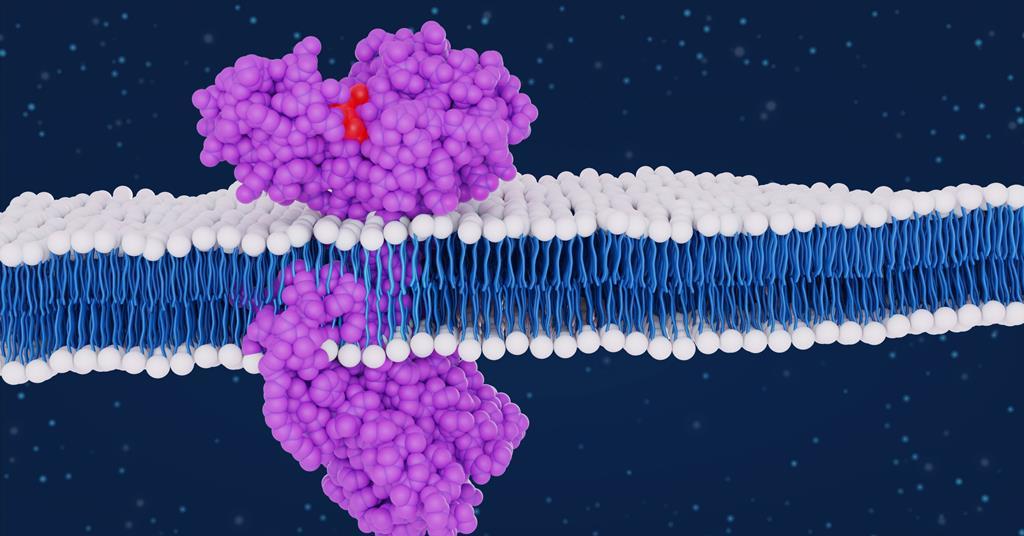
The primary target for this technology is the G protein-coupled receptor (GPCR) family. GPCRs are a vast group of proteins located on the surface of cells that act as sensors, receiving signals from hormones, neurotransmitters, and photons to trigger internal cellular responses. Because they regulate almost every physiological process in the human body, they are among the most lucrative targets in pharmacology.
Industry data indicates that roughly one-third of all FDA-approved drugs target GPCRs. However, many GPCRs remain “undruggable” because their binding pockets are too shallow for small molecules to grip effectively, or they are too shielded for large antibodies to access. AI-designed miniproteins fill this gap by combining the high affinity and specificity of an antibody with the stability and size of a small molecule.
- Small Molecule Limitations: Often lack the surface area to bind specifically to complex GPCR interfaces, leading to “off-target” effects.
- Antibody Limitations: Too large to penetrate certain tissues and expensive to manufacture.
- Miniprotein Advantage: Precisely shaped by AI to fit the specific contours of a GPCR, ensuring high potency and reduced toxicity.
How does Skape Bio use de novo design to unlock these targets?
Skape Bio is leveraging computational platforms to design miniproteins that can engage GPCRs with a level of precision previously unavailable to drug developers, according to BioWorld News. The company’s approach focuses on the “de novo” aspect, meaning the AI does not simply search a library of known proteins but calculates the optimal amino acid sequence required to bind to a specific receptor site.
This process involves mapping the three-dimensional structure of the target GPCR and using AI to predict a protein fold that is complementary in both shape and charge. According to Drug Discovery News, this capability allows for the control of GPCR signaling, which is a critical hurdle in treating complex diseases. Rather than simply turning a receptor “on” or “off,” these miniproteins can potentially act as biased agonists—triggering only the therapeutic signaling pathways while avoiding those that cause side effects.
“Skape Bio unlocks GPCR targets with de novo-designed miniproteins,” reports BioWorld News, highlighting the company’s ability to target receptors that were previously considered inaccessible to traditional therapeutic modalities.
The technical workflow typically involves several iterative steps:
- Structural Analysis: Using cryo-electron microscopy (cryo-EM) or AI-predicted structures (such as AlphaFold) to identify the GPCR’s binding pocket.
- AI Generation: Using generative AI to propose thousands of potential miniprotein sequences.
- Virtual Screening: Simulating the binding energy to narrow down the most promising candidates.
- Wet-Lab Validation: Synthesizing the top candidates to test their actual binding affinity and functional effect on the cell.
Why is this approach superior to traditional drug discovery?
The shift toward AI-designed miniproteins represents a fundamental change in how chemists and biologists approach drug design. Traditionally, drug discovery relied on “high-throughput screening,” where millions of existing compounds were tested against a target to see if any happened to stick. This “lottery” approach is slow and often fails for complex targets like GPCRs.

In contrast, the AI-driven approach is “rational design.” Scientists define the desired outcome—such as blocking a specific receptor in the brain—and the AI engineers a molecule to achieve that exact result. Drug Target Review notes that this precision reduces the time spent in the early discovery phase and increases the likelihood that a candidate will succeed in clinical trials.
The following table compares the three primary modalities used to target GPCRs:
| Feature | Small Molecules | Monoclonal Antibodies | AI Miniproteins |
|---|---|---|---|
| Size | Very Small | Very Large | Small to Medium |
| Specificity | Moderate to Low | Very High | High |
| Tissue Penetration | High | Low | Moderate to High |
| Design Method | Screening/Optimization | Biological Selection | Computational De Novo |
| Stability | High | Variable (Fragile) | High (Engineered) |
What are the implications for future drug development?
The ability to control GPCR signaling with high precision has immediate implications for several therapeutic areas. According to Drug Discovery News, the capacity to “unlock” these targets means that diseases previously deemed untreatable may now have viable drug candidates. This includes specific types of autoimmune disorders, metabolic diseases, and various forms of cancer where GPCRs are overexpressed or mutated.
One of the most significant implications is the potential for “functional selectivity.” Most GPCR drugs act like a light switch, either turning the receptor on or off. However, a single GPCR can trigger multiple different internal pathways. A drug that activates all of them might treat the disease but also cause severe nausea or liver toxicity. AI-designed miniproteins can be engineered to fit into the receptor in a way that only triggers the “healing” pathway, effectively removing the side effects.

Furthermore, the speed of AI design allows for personalized medicine. If a patient has a specific mutation in a GPCR that makes standard drugs ineffective, AI could theoretically design a bespoke miniprotein tailored to that patient’s specific protein structure.
Key potential impact areas include:
- Neurology: Targeting receptors in the brain that are too complex for small molecules but too protected for antibodies.
- Endocrinology: Creating more stable mimics of natural hormones to treat diabetes or growth disorders.
- Oncology: Blocking GPCRs that tumors use to signal for blood vessel growth (angiogenesis).
What challenges remain in AI-driven protein design?
Despite the promise reported by BioWorld News and other outlets, several hurdles remain before AI-designed miniproteins become a standard of care. The first is delivery. While miniproteins are smaller than antibodies, they are still larger than small molecules. They cannot be taken as a pill because the stomach would digest them; they must be injected. Researchers are currently exploring ways to improve the half-life of these proteins so patients don’t require frequent injections.
The second challenge is immunogenicity. Because these proteins are de novo—meaning they do not exist in nature—the human immune system may recognize them as foreign invaders and develop antibodies against them. This could neutralize the drug or, in worst-case scenarios, cause an allergic reaction. To combat this, AI is being used not just to design the binding site, but to “humanize” the rest of the protein structure to hide it from the immune system.
Finally, there is the issue of validation. AI predictions are only as good as the data they are trained on. If the structural data for a specific GPCR is slightly inaccurate, the designed miniprotein will not bind in the real world. This necessitates a tight loop between computational design and physical laboratory testing, a process that remains resource-intensive.
For those interested in how these technologies integrate with broader pharmaceutical trends, a related explainer on generative AI in pharmacology provides further context on the software architectures driving these breakthroughs.
Common misconceptions about AI in drug discovery
A frequent oversimplification is the idea that AI “invents” the drug autonomously. In reality, AI acts as a sophisticated architect. Human scientists define the target, set the constraints, and validate the results. The AI handles the mathematical complexity of folding amino acids, but the biological hypothesis remains a human endeavor.

Another misconception is that AI-designed proteins are inherently “synthetic” and therefore more dangerous. In truth, miniproteins are made of the same amino acids found in every protein in the human body. Their “synthetic” nature refers to the sequence, not the material. When designed correctly, they are often more biocompatible than the chemically modified small molecules used in traditional pharmacy.
Lastly, some believe that this technology will immediately replace antibodies. This is unlikely. Antibodies are still superior for targets that require massive surface area coverage or for those that need to be cleared from the bloodstream slowly. Miniproteins are a complementary tool, expanding the toolkit rather than replacing existing ones.
Frequently Asked Questions
What is the difference between a miniprotein and a peptide?
Peptides are short chains of amino acids that are often floppy and easily degraded by the body. Miniproteins are slightly larger and are designed with specific “folds” (like alpha-helices or beta-sheets) that make them rigid and stable, allowing them to bind to targets more strongly and last longer in the bloodstream.
How does AI actually “design” a protein?
AI uses deep learning and physics-based simulations to predict how amino acids will interact. By analyzing thousands of known protein structures, the AI learns the “grammar” of protein folding and can then suggest a sequence that will fold into a specific shape complementary to the target GPCR.
Why are GPCRs so important for drug discovery?
GPCRs are the “gatekeepers” of the cell. Almost every signal from the outside world—light, smell, hormones—passes through a GPCR. Because they control so many different functions, they are the most versatile targets for treating a wide range of diseases.
Can AI-designed miniproteins be taken as a pill?
Currently, no. Because they are proteins, they would be broken down by digestive enzymes in the stomach. They are typically administered via injection or infusion, though research into protective coatings and delivery vehicles is ongoing.
Who are the main players in this field?
While many academic labs are contributing, companies like Skape Bio are leading the commercial application of de novo miniprotein design specifically for GPCR targets, as noted in recent industry reports from BioWorld News.
