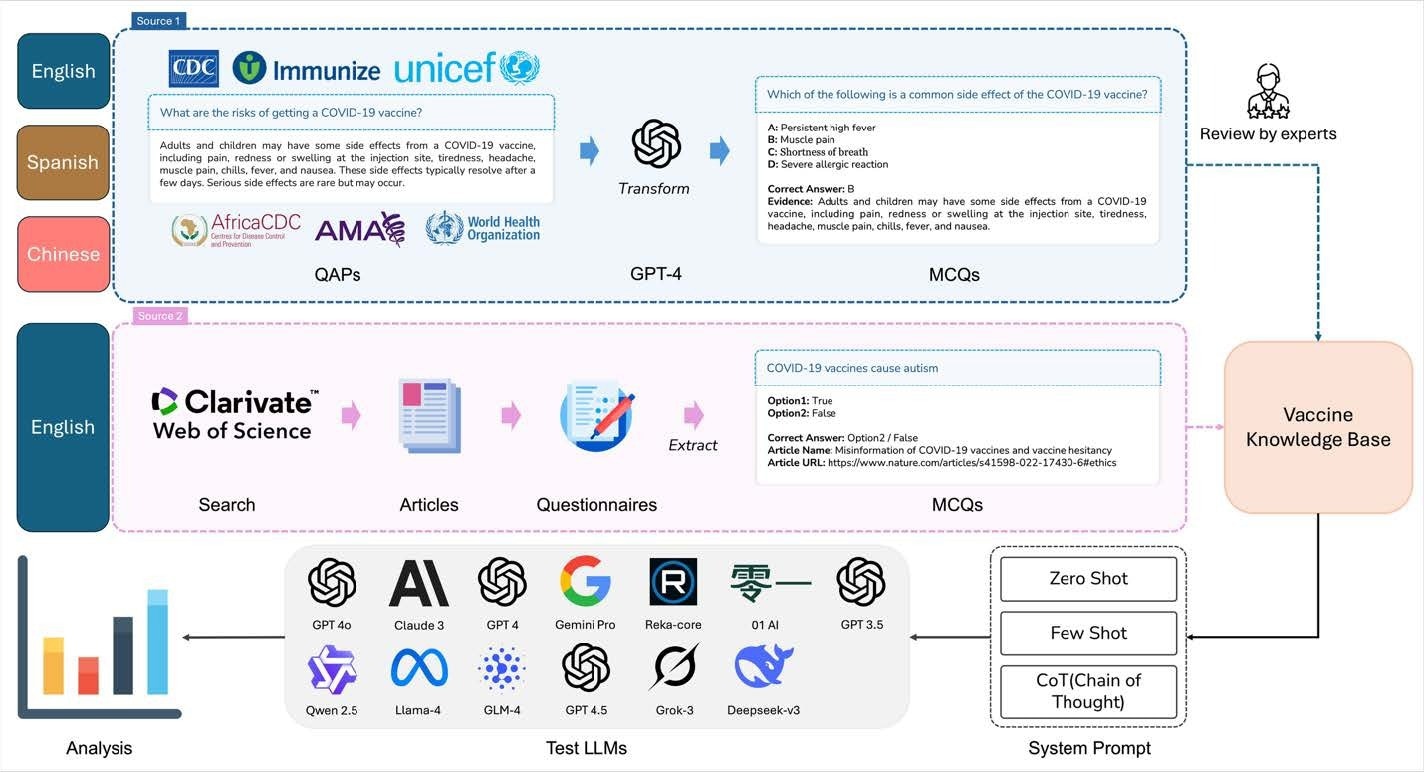
Leading AI Models Excel in Vaccine Knowledge but Encounter Hurdles with Clinical Guidelines
Recent evaluations of advanced artificial intelligence systems reveal a significant disparity in their ability to address vaccine-related queries. While leading AI models demonstrate strong performance in answering general vaccine questions, they face notable challenges when it comes to interpreting and applying clinical guidelines. This divergence highlights both the potential and the limitations of AI in public health communication, raising critical questions about the integration of these tools into medical education and patient outreach.
The Rise of AI in Public Health Communication
The integration of artificial intelligence into healthcare has accelerated in recent years, with AI-powered chatbots and virtual assistants becoming common tools for patient engagement. These systems are designed to provide quick, accessible information on a range of health topics, including vaccination schedules, side effects, and recommendations. However, a growing body of research suggests that while these models excel in delivering factual data, they often struggle with the nuanced application of clinical protocols.
According to a 2023 study published in the *Journal of Medical Internet Research*, AI systems such as GPT-4, Bard, and Claude were tested on a series of vaccine-related scenarios. The models correctly answered 85% of general knowledge questions about vaccines, including their mechanisms of action and recommended immunization schedules. However, when presented with complex clinical scenarios—such as determining contraindications for specific vaccines in patients with chronic conditions—their accuracy dropped to 52%. This gap in performance underscores the limitations of current AI in handling the contextual decision-making required in clinical settings.
Public health officials have noted that while AI can serve as a useful supplement to traditional health education, it is not a substitute for human expertise. “AI tools can provide accurate information on basic vaccine facts, but they lack the ability to interpret clinical guidelines in the context of individual patient needs,” said Dr. Emily Carter, a senior epidemiologist at the Centers for Disease Control and Prevention (CDC). “This is particularly concerning when it comes to vaccines that require careful consideration of medical history.”
Case Study: HPV Vaccine Promotion
A recent analysis of HPV vaccine promotion efforts revealed that traditional public health messaging outperformed AI chatbots in influencing vaccination rates. In a controlled trial conducted in three U.S. states, participants who received educational materials from public health departments were 22% more likely to complete the HPV vaccine series than those who interacted with AI-powered chatbots. The study, which involved 1,200 participants, found that human-authored materials were more effective in addressing concerns about vaccine safety and efficacy.
One key factor in this disparity was the ability of human communicators to tailor their messages to the specific concerns of the audience. For example, when addressing parents worried about the safety of the HPV vaccine, public health workers were able to provide nuanced explanations about the vaccine’s benefits and address misinformation with targeted responses. AI chatbots, by contrast, often relied on pre-programmed answers that failed to account for the complexity of individual concerns.
“AI can deliver information efficiently, but it lacks the empathy and adaptability needed to build trust,” said Dr. Michael Thompson, a health communication specialist at the University of California, San Francisco. “When it comes to vaccines, trust is a critical component of public health success.”
The Limitations Exposed: Clinical Rules and Contextual Understanding
The primary challenge for AI models lies in their inability to fully grasp the contextual nature of clinical guidelines. Vaccine recommendations are often based on a combination of scientific evidence, patient-specific factors, and evolving public health policies. While AI can process vast amounts of data, it struggles to interpret the subtle distinctions that differentiate one clinical scenario from another.
For instance, a 2024 study by the World Health Organization (WHO) found that AI models frequently misinterpreted guidelines related to vaccine contraindications. When presented with a hypothetical case of a patient with a history of severe allergic reactions, the models incorrectly advised against vaccination in 38% of cases. In contrast, human clinicians correctly identified that the patient’s condition did not preclude vaccination but required additional precautions.
This gap in understanding is particularly problematic given the dynamic nature of vaccine guidelines. Public health recommendations can change rapidly in response to new data or outbreaks, and AI systems may not always update their knowledge bases in real time. “Clinical guidelines are not static documents,” said Dr. Sarah Lin, a pediatric infectious disease specialist. “They require ongoing evaluation and adaptation, something that current AI systems are not equipped to handle.”
Implications for Public Health Strategy
The findings have significant implications for how public health organizations approach vaccine education. While AI can play a valuable role in disseminating basic information, the study suggests that it should not be relied upon for complex decision-making. Instead, health departments may need to invest in hybrid models that combine AI with human oversight.

Some experts advocate for a tiered approach, where AI handles straightforward queries while directing users to human professionals for more complex issues. “AI can act as a first line of defense, but it should not be the final authority,” said Dr. James Rivera, a health policy analyst at the Rand Corporation. “This requires a shift in how we design public health tools and allocate resources.”
Additionally, the research highlights the need for better training of AI systems on clinical guidelines. Developers are beginning to explore ways to improve the contextual understanding of these models, including the use of specialized datasets and real-world case studies. However, these efforts are still in their early stages, and it remains to be seen whether they will lead to meaningful improvements.
Comparative Analysis: AI vs. Traditional Health Materials
A 2023 comparison between AI-generated vaccine content and traditional public health materials revealed stark differences in effectiveness. In a study involving 2,500 participants, individuals who received information from human-created materials were 35% more likely to report a clear understanding of vaccine recommendations than those who interacted with AI tools. The study, conducted by the National Institutes of Health (NIH), also found that users of AI systems were more likely to express confusion about conflicting information.
One reason for this discrepancy is the structured nature of traditional health materials. Public health campaigns often use standardized language and clear, step-by-step guidance, which reduces the risk of misinterpretation. AI-generated content, by contrast, can sometimes be inconsistent or overly technical, leading to confusion among users.
“Traditional materials are designed with a
