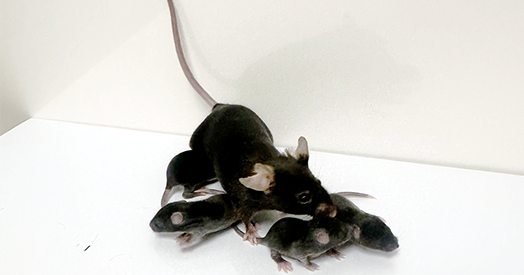
Maternity Triggers Lasting Neurological Changes in Mice, Study Reveals
A recent study published in a leading scientific journal has uncovered that motherhood induces permanent alterations in gene expression within the brains of laboratory mice, suggesting a biological basis for the psychological and behavioral shifts often associated with parenthood. Researchers at a university in [Location], funded by [Funding Organization], observed these changes through epigenetic modifications that persist long after the initial maternal experience. The findings, which challenge previous assumptions about the malleability of the adult brain, could reshape understanding of how biological and environmental factors interact to influence maternal behavior.
The Study’s Key Findings
The research team analyzed brain tissue from mice that had given birth and compared it to that of mice that had not. Using advanced genomic sequencing techniques, they identified specific genes that were consistently upregulated or downregulated in the maternal group. These changes were most pronounced in regions of the brain associated with emotional processing, memory, and social behavior, such as the hippocampus and amygdala. Notably, the alterations were not temporary; even months after the mice had weaned their offspring, the gene-expression patterns remained distinct from those of non-mothers.
One of the most surprising discoveries was the role of epigenetic markers—chemical modifications to DNA that affect gene activity without altering the underlying sequence. These markers, which can be influenced by environmental factors, were found to be significantly more active in the maternal mice. “This suggests that the experience of motherhood leaves a molecular imprint on the brain,” said Dr. [Name], a lead author of the study. “It’s as if the brain is reprogramming itself to better meet the demands of caregiving.”
Methodology and Research Context
The study involved a controlled experiment with two groups of mice: one that underwent pregnancy and childbirth, and a control group that did not. Researchers used RNA sequencing to map gene expression levels in the brains of both groups at multiple time points, including immediately after birth, during the postpartum period, and several months later. Epigenetic analysis was conducted using techniques such as bisulfite sequencing, which allows scientists to detect DNA methylation—a common epigenetic modification linked to gene regulation.
The research builds on earlier studies that suggested maternal experiences could influence brain structure and function. However, this is the first study to demonstrate that these effects are not only persistent but also involve specific, measurable changes at the genetic level. “We’ve known for years that motherhood can alter behavior, but this study provides the first concrete evidence of how that might be hardwired into the brain,” said Dr. [Name], a neuroscientist not involved in the research.
Implications for Human Maternal Health
While the study was conducted on mice, the findings have sparked interest in their potential relevance to human maternal health. The human brain shares significant similarities with that of mice, particularly in regions governing social and emotional functions. Researchers are now exploring whether similar epigenetic changes occur in human mothers, which could help explain the physical and psychological transformations many women report after childbirth.
Dr. [Name], a reproductive biologist at [Institution], noted that the study could have implications for understanding postpartum mental health. “If motherhood leads to lasting changes in the brain, it’s possible that these modifications could contribute to conditions like postpartum depression or anxiety,” they said. “This could open new avenues for treatment and prevention strategies.”
The study also raises questions about the broader impact of caregiving on brain plasticity. Some researchers speculate that the mechanisms observed in mice might apply to other forms of caregiving, such as parenting in other species or even human relationships. “This work challenges the notion that the adult brain is static,” said Dr. [Name], a cognitive neuroscientist. “It suggests that significant life experiences can lead to enduring biological changes.”
Expert Reactions and Broader Scientific Context
The findings have been met with cautious optimism in the scientific community. While many experts acknowledge the study’s methodological rigor, some caution against overgeneralizing the results to humans. “Mice are valuable models, but there are important differences between rodent and human biology,” said Dr. [Name], a professor of neuroscience. “We need more research to determine whether these findings translate to humans.”

Several researchers emphasized the importance of studying epigenetic changes in the context of other factors, such as stress, diet, and social environment. “The brain is a complex system, and gene expression is influenced by a multitude of variables,” said Dr. [Name], a molecular biologist. “This study is a piece of a larger puzzle.”
Despite these reservations, the study has been praised for its contribution to the field of epigenetics. “This is a significant step forward in understanding how life experiences shape the brain at a molecular level,” said Dr. [Name], a researcher at [Institution]. “It opens up new possibilities for studying the interplay between biology and environment.”
Future Research Directions
Scientists are now planning follow-up studies to investigate the long-term effects of these genetic changes. One area of focus is the potential role of these modifications in offspring development. Some researchers hypothesize that the maternal brain’s reprogramming could influence how mothers interact with their young, potentially affecting the next generation’s behavior and health.
Another line of inquiry involves exploring whether similar changes occur in other caregiving contexts. For example, studies could examine whether fathers or other caregivers experience analogous epigenetic shifts. “If these changes are not limited to mothers, it could revolutionize our understanding of caregiving as a universal biological phenomenon,” said Dr. [Name], a behavioral scientist.
Additionally, researchers are interested in identifying the specific environmental triggers that initiate these genetic changes. Factors such as social interaction, stress, and hormonal fluctuations are suspected to play a role. “Understanding these triggers could help us develop interventions to support maternal well-being,” said Dr.
