Indonesian Navy Conducts First SINKEX Since 2024 with Exocet Missile Strike on Former East German Vessel
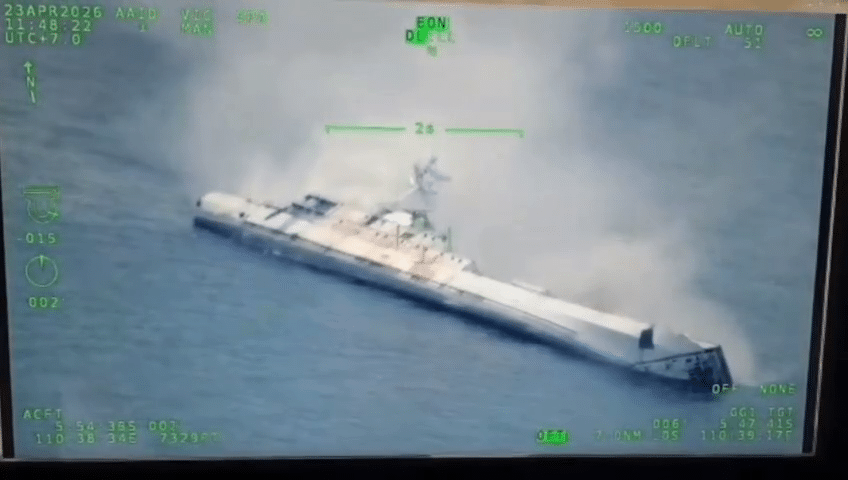
On April 23, 2026, the Indonesian Navy (TNI AL) carried out a significant live-fire exercise in the Java Sea, culminating in the sinking of a decommissioned landing ship tank (LST) originally built for East Germany’s Volksmarine. The operation, designated as a sinking exercise (SINKEX), marked the first such event conducted by Indonesia since May 2024 and formed part of a broader combat drill involving naval and air units. The target vessel, KRI Teluk Hading (538), was struck by a French-made MM40 Block 3 Exocet anti-ship missile launched from the frigate KRI I Gusti Ngurah Rai (332), a SIGMA 10514-class warship. This event underscores Indonesia’s ongoing efforts to maintain combat readiness through realistic training scenarios although responsibly disposing of aging naval assets.
The SINKEX served multiple strategic purposes: validating weapon system performance, testing crew proficiency under simulated combat conditions and evaluating the effectiveness of naval coordination in a multi-domain environment. Beyond the primary missile strike, the exercise included secondary engagements such as the launch of a Chinese-made C-705 missile from the swift attack craft KRI Sampari (628) against a land target on Pulau Gundul, and air defense drills involving Mistral and Strela surface-to-air missiles launched from the frigate KRI R.E. Martadinata (331). These elements collectively demonstrated the Indonesian Navy’s growing capability to integrate diverse weapon systems in complex operational settings.
Background of the Target Vessel: From East German Service to Indonesian Reserve
KRI Teluk Hading began its service life as a Frosch-class LST constructed in the German Democratic Republic during the 1970s. Built by VEB Peenewerft in Wolgast, the vessel was part of the Hoyerswerda class, known to NATO as the Frosch I and II variants. Following German reunification and the subsequent dissolution of the Volksmarine, the ship was among several Frosch-class vessels transferred to the Indonesian Navy in the 1990s. Upon acquisition, it was renamed KRI Teluk Hading and assigned the pennant number 538, entering service with the Indonesian fleet in the mid-1990s.
Over nearly three decades of service, the ship supported amphibious logistics, humanitarian missions, and routine naval operations across Indonesia’s vast archipelago. Although, its operational life ended after sustaining severe damage in a fire incident off the coast of South Sulawesi in 2023. Despite efforts to assess repair feasibility, the vessel was formally decommissioned in 2024 due to the extent of the damage and the cost-effectiveness of retirement over refurbishment. Its final role came as a target in the April 2023 SINKEX, providing a realistic endpoint for a vessel that had served both East German and Indonesian naval forces.
Details of the Exercise: Weapon Systems and Participating Units
The centerpiece of the April 23 exercise was the successful launch and impact of an MM40 Block 3 Exocet missile from KRI I Gusti Ngurah Rai (332). This French-developed, sea-skimming anti-ship missile is known for its inertial navigation system upgraded with GPS capability, allowing precision strikes against maritime targets even in electronic countermeasure environments. The Block 3 variant extends engagement range and improves resistance to jamming, making it a key asset in the Indonesian Navy’s surface warfare arsenal.
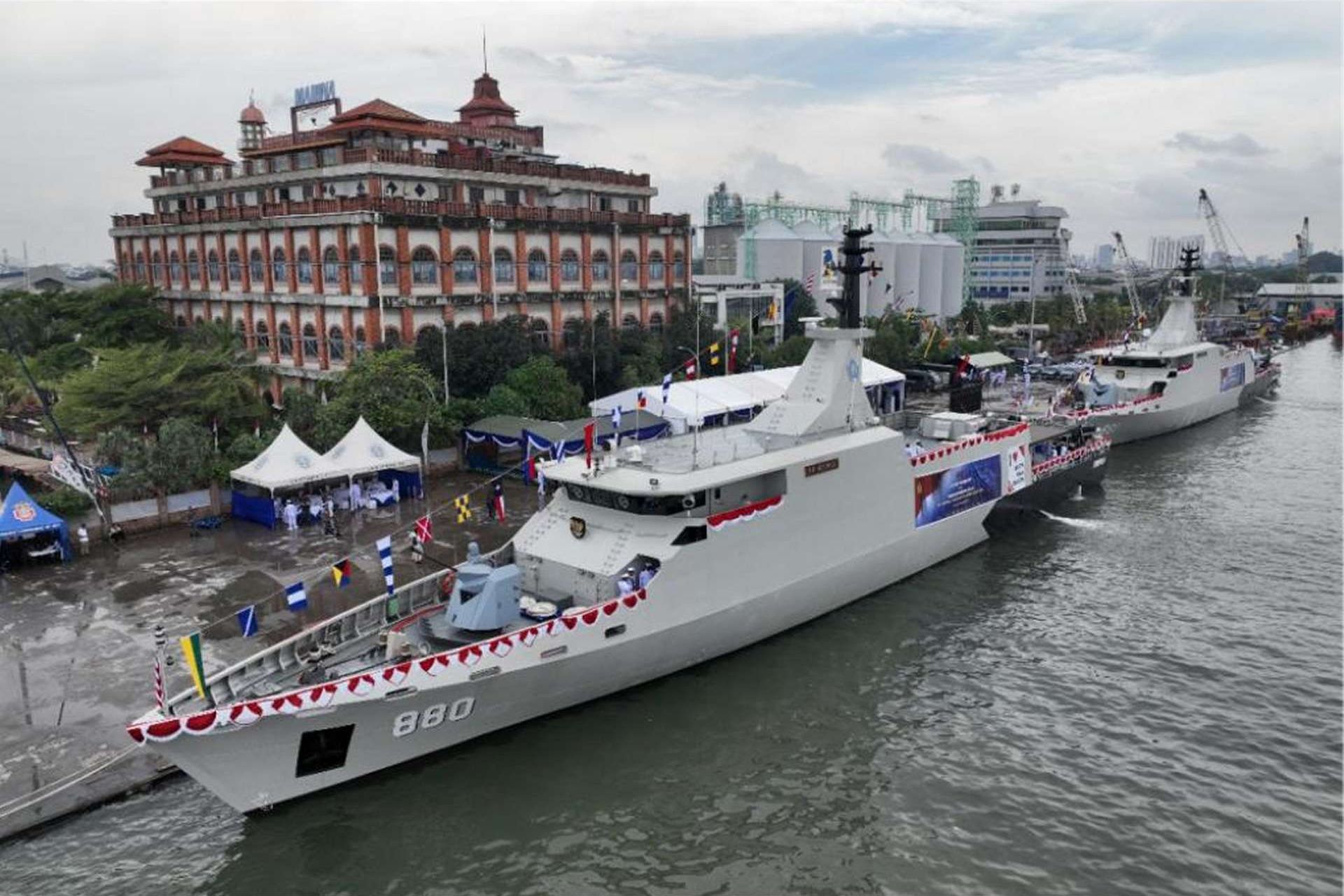
KRI I Gusti Ngurah Rai, commissioned in 2021, is one of Indonesia’s most advanced frigates, equipped with a suite of sensors and weapons designed for anti-air, anti-surface, and anti-submarine warfare. Its participation in the SINKEX highlighted the integration of modern platforms with proven munitions in live-fire scenarios. The frigate’s ability to detect, track, and engage a surface target at range validated both its combat system and crew readiness.
In addition to the primary sinking, KRI Sampari (628), the lead ship of the Sampari-class fast attack craft, launched a C-705 missile — a Chinese-developed, short-range anti-ship and land-attack weapon — against a designated land target on Pulau Gundul. This marked the second publicly known instance of the Indonesian Navy employing an anti-ship missile in a land-attack role, following a similar engagement in December 2024. The dual-use capability of such munitions enhances operational flexibility, particularly in littoral environments where land-based threats may coexist with maritime challenges.
Air defense components of the exercise involved the launch of Mistral and Strela surface-to-air missiles from twin launchers on the helicopter deck of KRI R.E. Martadinata (331). The Mistral, a French-manufactured infrared-guided short-range system, is typically used for point defense against aircraft and unmanned aerial vehicles. The Strela, a Russian-designed system, adds diversity to Indonesia’s air defense inventory. Their use in the drill reflected ongoing efforts to maintain layered defense capabilities against aerial threats.
Strategic and Operational Significance of the SINKEX
Conducting a SINKEX after a two-year hiatus signals the Indonesian Navy’s return to high-intensity training modalities that closely simulate wartime conditions. Such exercises are resource-intensive and require meticulous planning to ensure safety, environmental compliance, and measurable training outcomes. By allocating significant assets — including frigates, fast attack craft, aircraft, and missile systems — the navy demonstrated its capacity to organize and execute complex, multi-unit operations.
From a tactical standpoint, the exercise allowed for the evaluation of missile guidance, target acquisition, and battle damage assessment under realistic sea states. Observing the effects of a modern anti-ship missile on a steel-hulled vessel provides invaluable data for improving future procurement, tactics, and damage control procedures. It also serves as a deterrent signal, showcasing Indonesia’s ability to project maritime power and neutralize surface threats.
Environmentally, the Indonesian Navy adhered to established protocols for SINKEX operations, which include the removal of hazardous materials prior to sinking and the selection of deep-water locations to minimize ecological impact. The Java Sea, with its considerable depth in the exercise area, provided a suitable site for the vessel’s final resting place, ensuring compliance with international maritime guidelines on artificial reefs and marine preservation.
Context Within Indonesia’s Naval Modernization Efforts
The April 2026 SINKEX occurs amid a broader initiative by the Indonesian Navy to modernize its fleet and enhance deterrence capabilities. Faced with evolving security dynamics in the Indo-Pacific — including increased maritime activity, territorial disputes, and the demand to safeguard vital sea lanes — Indonesia has pursued a balanced approach of acquiring new platforms, upgrading existing systems, and conducting realistic training.
Recent years have seen the induction of SIGMA-class frigates, the development of indigenous corvettes, and the procurement of advanced missiles such as the Exocet and C-705. Simultaneously, the navy has phased out older vessels like the Frosch-class LSTs, many of which have exceeded their service lives or suffered damage beyond economical repair. The sinking of KRI Teluk Hading represents a controlled conclusion to the service life of one such vessel, clearing space in the inventory for more capable replacements.
the exercise reinforced interoperability between different classes of ships and weapon systems, a critical factor in network-centric warfare. The ability to coordinate surface, subsurface, air, and land-attack elements in real time remains a hallmark of a capable maritime force, and drills like this SINKEX are essential for refining those competencies.
Regional Implications and Maritime Security Outlook
While the exercise was conducted as a routine training evolution, its execution in the Java Sea — a strategically vital waterway linking the Indian and Pacific Oceans — carries implicit regional significance. Indonesia’s assertive demonstration of naval firepower contributes to perceptions of its readiness to defend national interests and uphold maritime security within its exclusive economic zone (EEZ) and archipelagic waters.
Neighboring states and maritime observers often monitor such activities for insights into evolving defense postures. The transparent reporting of the SINKEX, including the release of imagery and basic operational details, reflects a degree of openness that can facilitate prevent misinterpretation while still conveying capability. This balance between transparency and operational security is increasingly important in an era of information openness and strategic signaling.
Looking ahead, the Indonesian Navy is expected to continue integrating new technologies, conducting periodic live-fire exercises, and adjusting its force structure to meet emerging challenges. Lessons learned from the April 2023 SINKEX will likely inform future training scenarios, maintenance protocols, and tactical doctrines, particularly concerning missile employment and damage control.
Frequently Asked Questions
The successful execution of the SINKEX reaffirms the Indonesian Navy’s commitment to maintaining a credible and capable maritime force. By combining realistic training with responsible asset disposal, the navy advances both its operational readiness and long-term sustainability. As regional dynamics continue to evolve, exercises of this nature will remain vital in ensuring that Indonesia’s naval forces are prepared to defend sovereignty, protect maritime interests, and contribute to regional stability.
