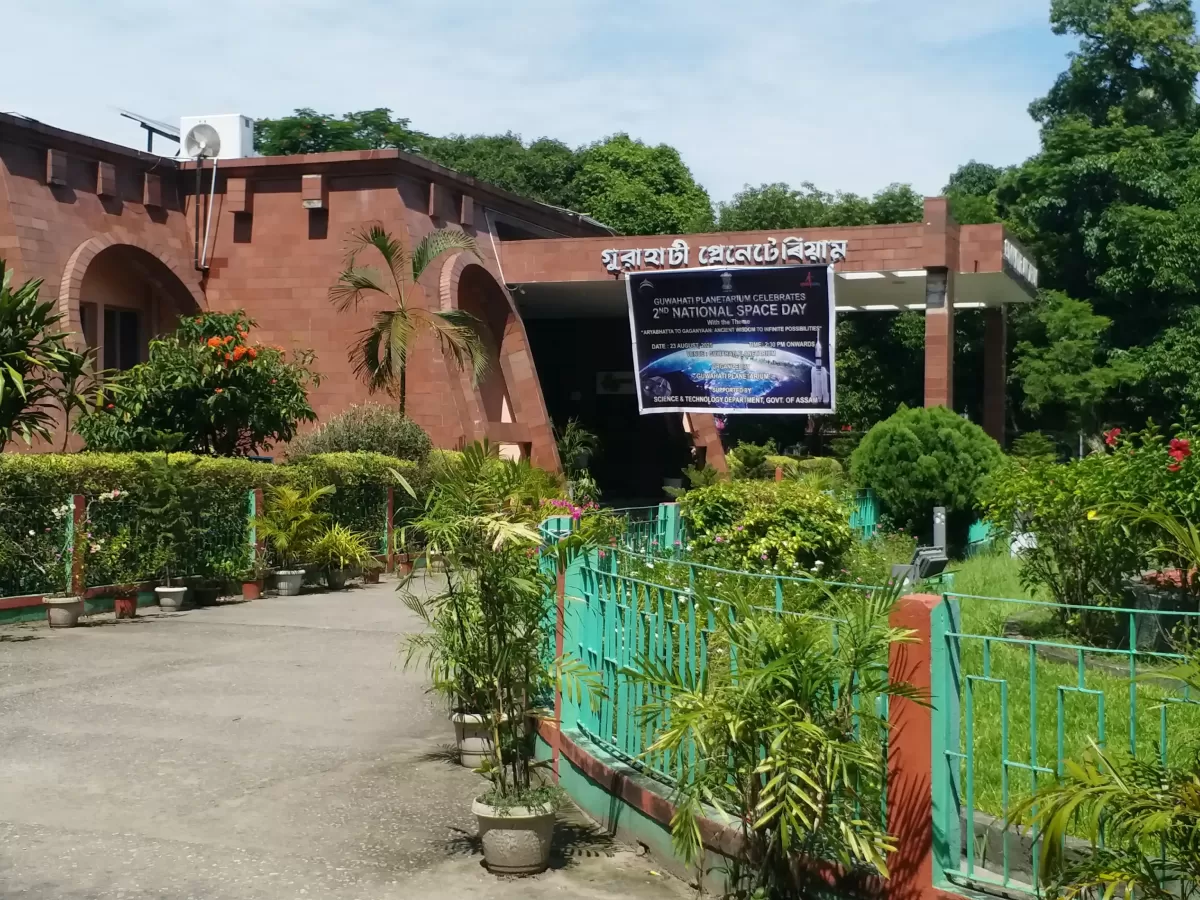
Guwahati Planetarium Schedules Special Astronomical Shows for School Students During Break
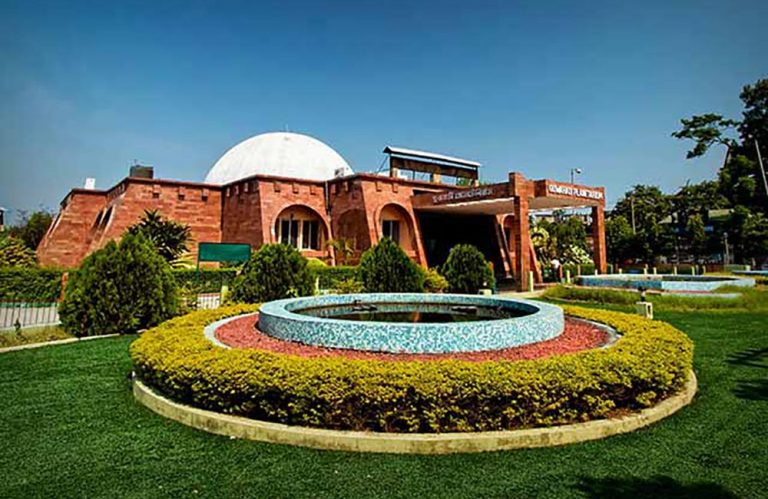
The Guwahati Planetarium has organized a series of specialized astronomical presentations specifically for school students during their academic break, according to reports from Borok Times. These shows aim to enhance scientific literacy and interest in space science among youth in the region by providing immersive educational experiences outside the traditional classroom setting.
How the Guwahati Planetarium’s Special Shows Support Student Learning
The decision to schedule these shows during school breaks targets a specific window where students have the time to engage with complex scientific concepts without the pressure of daily coursework. According to the report from Borok Times, the initiative focuses on making astronomy accessible to school-aged children, using the planetarium’s specialized equipment to simulate the night sky and celestial movements.
Planetariums serve as a bridge between theoretical textbook knowledge and visual reality. While a student might read about the rotation of the Earth or the positioning of constellations in a geography or science book, a projected simulation allows them to witness these phenomena in real-time. This experiential learning model is designed to trigger curiosity and encourage students to pursue STEM (Science, Technology, Engineering, and Mathematics) fields.
Key educational goals of these special sessions typically include:
- Visualizing Celestial Mechanics: Helping students understand the orbits of planets and the movement of stars.
- Identifying Constellations: Teaching students how to navigate the night sky using recognizable star patterns.
- Understanding Scale: Providing a sense of the vast distances between galaxies and solar systems.
- Encouraging Inquiry: Prompting students to ask “why” and “how” regarding the universe’s origins and structure.
The integration of immersive technology in science education transforms passive listening into active observation, which is critical for retaining complex astronomical data.
Why Timing Astronomical Programs During School Breaks is Strategic
Scheduling educational events during school holidays is a deliberate move to combat the “learning slide” that often occurs when students are away from formal instruction. By offering these shows during breaks, the Guwahati Planetarium provides a structured yet entertaining environment that keeps the mind engaged.
For many students in the region, a visit to the planetarium is not a regular occurrence. By designating “special shows,” the facility creates a sense of urgency and exclusivity that can increase student attendance. This approach also allows schools to coordinate group visits, ensuring that a larger cross-section of the student population—including those from underprivileged backgrounds—can access these resources.
The following table outlines the differences between traditional classroom astronomy and the planetarium experience provided during these breaks:
| Feature | Classroom Learning | Planetarium Experience |
|---|---|---|
| Visual Aid | 2D Diagrams/Videos | 360-degree Immersive Projection |
| Perspective | Theoretical/Abstract | Simulated First-Person View |
| Engagement | Lecture-based | Observation-based |
| Context | Curriculum-driven | Curiosity-driven |
The Role of Planetariums in Modern Science Education
Modern planetariums are no longer just rooms with a projector; they are sophisticated data centers capable of rendering real-time astronomical data. The Guwahati Planetarium uses these capabilities to turn the dome into a window to the universe. When students attend these special shows, they are interacting with a simulation that can accelerate time, allowing them to see a year’s worth of planetary motion in a matter of minutes.
This capability is essential for teaching concepts like precession, nutation, and the changing of seasons, which are often difficult to grasp through static images. By manipulating the simulation, educators can show exactly how the tilt of the Earth’s axis affects sunlight distribution, making the lesson concrete rather than abstract.
The Psychology of Immersive Learning
Immersive environments reduce the cognitive load required to imagine a scene. When a student is surrounded by a projected star field, their brain processes the information as a lived experience rather than a memorized fact. This shift in processing helps in the long-term retention of information. For students during their break, this means the “lesson” feels more like an event or an adventure, which removes the mental fatigue associated with traditional schooling.
Furthermore, these shows often introduce students to the concept of “dark skies.” In an urban environment like Guwahati, light pollution makes it nearly impossible to see the Milky Way or faint nebulae. The planetarium removes this barrier, showing students what the universe actually looks like away from city lights, which can inspire a lifelong interest in observational astronomy.
Expanding Astronomical Interest in Northeast India
The initiative by the Guwahati Planetarium is part of a broader effort to decentralize science education in India. For too long, high-end scientific facilities were concentrated in major metros like Delhi, Mumbai, or Bengaluru. By providing high-quality astronomical shows in Guwahati, the facility serves as a regional hub for the entire Northeast.
This regional focus is important because it lowers the barrier to entry for students from neighboring states who may travel to Guwahati for educational purposes. When students from various backgrounds gather for these shows, it fosters a community of young science enthusiasts, potentially leading to the formation of local astronomy clubs or science circles.
The impact of such programs often extends beyond the duration of the show. Students who are exposed to the wonders of the cosmos at a young age are more likely to:
- Engage with science-related literature and documentaries.
- Participate in national-level science exhibitions and competitions.
- Choose physics or astronomy as their major in higher education.
- Develop a critical thinking mindset based on empirical evidence.
This alignment with the National Education Policy (NEP) of India, which emphasizes experiential learning and the reduction of rote memorization, makes the Guwahati Planetarium’s break-time schedule a timely intervention in the regional education landscape.
Common Misconceptions About Planetarium Visits
Many people believe that planetariums are simply “movie theaters for space,” but this is a significant oversimplification. Unlike a cinema, where the viewer looks at a flat screen, a planetarium projection covers the entire field of vision. This creates a psychological effect known as “presence,” where the viewer feels they are actually floating in space.
Another common misconception is that these shows are only for students who are already “good at science.” In reality, the visual nature of these presentations is designed to appeal to students who struggle with traditional mathematics or physics. By seeing the geometry of the solar system in action, students who are visual learners can often grasp concepts that they found impossible to understand in a textbook.
Finally, some assume that these shows replace the need for telescopes. In fact, they complement them. The planetarium shows the “big picture” and the theoretical movements, while a telescope provides the raw, unfiltered view of a specific object. Together, they provide a complete educational cycle: theory, simulation, and observation.
The Broader Implications for STEM Outreach
When a public institution like the Guwahati Planetarium schedules special events during breaks, it signals that education is a continuous process, not one confined to a school calendar. This philosophy is central to the concept of “lifelong learning.” By engaging students during their leisure time, the facility helps normalize science as a hobby and a passion rather than just a subject to be passed in an exam.
This type of outreach is critical for building a scientifically literate society. A population that understands the basics of astronomy is generally more supportive of space exploration and scientific research. As India continues to make strides in space technology—such as the Chandrayaan and Mangalyaan missions—inspiring the next generation of scientists at the local level is a national priority.
The success of these programs can be measured not just by the number of tickets sold, but by the quality of questions asked by the students after the show. When a student asks about the possibility of life on exoplanets or the nature of black holes, the planetarium has succeeded in moving the student from a state of passive observation to active intellectual curiosity.
For more information on how these programs fit into the regional educational framework, readers may find a related explainer on STEM education in Northeast India useful.
Frequently Asked Questions
What are the special astronomical shows at Guwahati Planetarium?
According to Borok Times, these are specialized presentations designed for school students that use the planetarium’s immersive projection system to teach astronomy and space science during their academic break.
Who is eligible to attend these shows?
The programs are specifically scheduled for school students, though they are often organized through school groups or available for individual student visits during the break period.
Why are these shows held during school breaks?
The timing allows students to engage with scientific concepts without the pressure of regular school hours, helping to maintain educational momentum during holidays and encouraging non-formal learning.
How do these shows differ from a regular science class?
Unlike a classroom, the planetarium provides a 360-degree immersive environment that simulates the night sky, allowing students to visualize celestial movements and scale in a way that textbooks and 2D screens cannot.
Does the Guwahati Planetarium offer these shows year-round?
While the planetarium has regular operations, these “special shows” are specifically timed to coincide with school breaks to maximize student participation and outreach.
The continued effort to bring astronomy to the youth of Guwahati ensures that the city remains a center for scientific curiosity in the region. By turning a school break into a learning opportunity, the Guwahati Planetarium is helping to cultivate a new generation of thinkers and explorers.
