How Singapore’s Trailblazing Ultramarathoners Are Redefining Endurance in a City-State
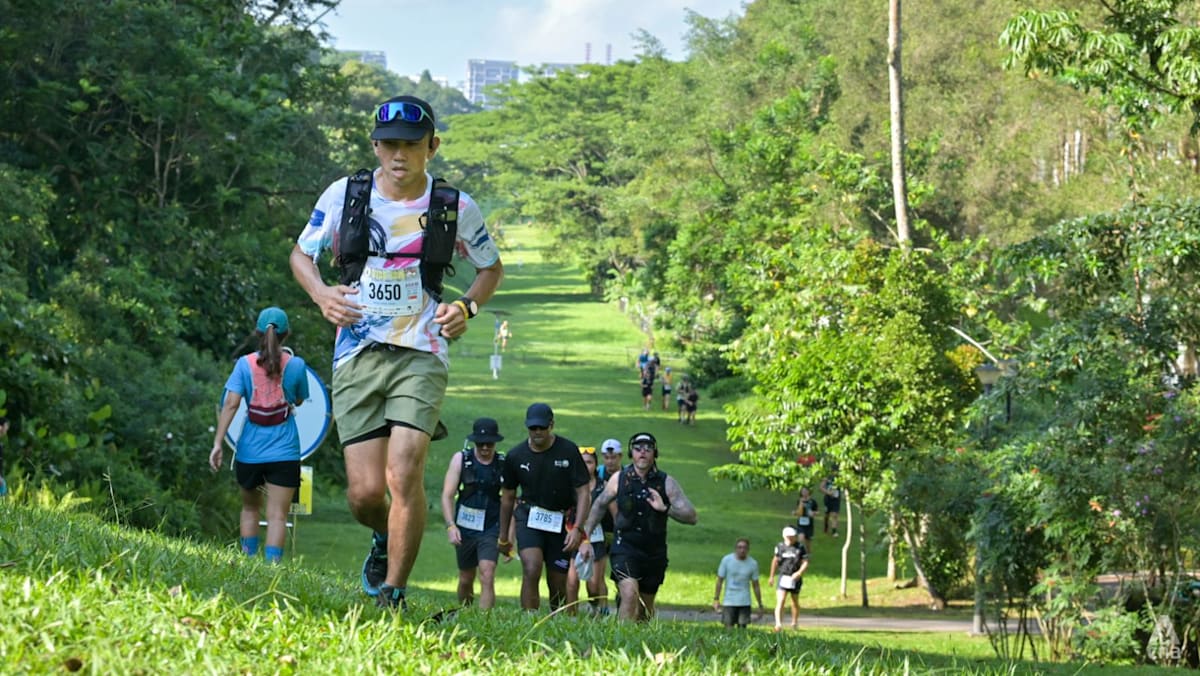
Singapore’s first 165km ultramarathon, set to debut in 2025, is more than a race—it’s a testament to how a once-niche trail-running community has grown into a driving force behind the city-state’s push for extreme sports innovation. Organizers say the event, slated for late 2025, will test runners against Singapore’s rugged terrain, from Bukit Timah’s dense forests to the challenging slopes of MacRitchie Reservoir. With registrations already exceeding 500 participants—double the initial target—experts attribute the surge to a deliberate shift in urban sports culture, where trail running has evolved from a fringe hobby into a mainstream movement backed by corporate sponsorships and government-backed initiatives.
“This isn’t just about breaking records,” says a senior official from the Singapore Sports Council, who requested anonymity. “It’s about proving that a city with no natural mountains can still host world-class ultramarathons by leveraging its green corridors and man-made challenges.” The event’s route, designed by international trail-running consultants, will include mandatory aid stations every 20km, a nod to Singapore’s emphasis on safety in extreme sports—a stark contrast to traditional ultramarathons in hilly regions.
Behind the race’s ambition lies a decade of grassroots growth. In 2015, fewer than 500 Singaporeans participated in organized trail races; today, that number has surged to over 12,000 annually, according to data from the Singapore Trail Running Association (STRA). The shift reflects broader trends: a younger, urban population seeking alternative fitness challenges amid the city’s high-stress environment, and a government keen to promote Singapore as a hub for niche sports tourism.
—
###
Why a 165km Race in Singapore? The Terrain, the Timing, and the Test
Singapore’s geography—flat, humid, and densely populated—might seem an unlikely backdrop for an ultramarathon. Yet organizers argue the 165km distance isn’t arbitrary. “We’re not emulating the Alps or the Rockies,” explains Daniel Koh, a trail-running coach and former national champion. “We’re designing a race that exploits Singapore’s unique assets: its microclimates, its engineered trails, and its psychological challenges.”
Key factors shaping the event:
- Route design: The course will weave through nine distinct ecological zones, including mangrove forests in Sungei Buloh and the urban trails of Southern Ridges. Aid stations will be placed at historical landmarks like the Old Hill Street Police Station, adding cultural context to the physical challenge.
- Weather adaptation: With temperatures often exceeding 32°C and humidity near 80%, runners will face a “wet-bulb” test—where body cooling becomes as critical as endurance. Organizers are partnering with the National Environment Agency (NEA) to monitor real-time heat indices and adjust pacing guidelines.
- Time constraints: Unlike multi-day races, Singapore’s 165km must be completed within 48 hours, a rule designed to align with the city’s fast-paced lifestyle. “We’re not testing how long you can suffer,” says Koh. “We’re testing how smart you can be under pressure.”
Comparison: Most ultramarathons globally allow 30–72 hours for completion. Singapore’s 48-hour cutoff is the shortest for a race of this distance, reflecting the city’s efficiency-driven culture.
—
###
Who’s Behind the Race? From Hobbyists to Corporate Backers
The 165km ultramarathon is the brainchild of UltraSG, a consortium of local running clubs, corporate sponsors, and government agencies. Unlike traditional marathons, which rely on mass participation for revenue, UltraSG’s model is built on exclusivity and high-value partnerships.
| Stakeholder | Role | Key Contribution |
|---|---|---|
| Singapore Sports Council | Government oversight | Funding for trail infrastructure, safety protocols, and international certification |
| OCBC Bank | Title sponsor | US$500,000 in prize money, including a S$100,000 first-place award—the highest in Asia for an ultramarathon |
| Singapore Trail Running Association (STRA) | Route planning & logistics | Mapping 165km of trails using LiDAR technology to avoid erosion risks |
| Local running clubs (e.g., Singapore Trail Runners, RunSG) | Volunteer coordination | Recruiting 300+ aid station staff, many of whom are amateur runners |
Corporate involvement extends beyond sponsorship. Keppel Corporation, a marine and engineering firm, is designing portable water purification units for aid stations, while Grab has pledged free rides to runners’ families during the event. “This isn’t charity,” notes Lim Wei Jie, Grab’s head of community initiatives. “It’s a way to align our brand with Singapore’s next frontier in sports.”
Contrast: Traditional marathons like the Singapore Marathon rely on broad public participation and modest sponsorships. The 165km race, by contrast, targets a niche audience willing to pay S$350–S$500 in entry fees—nearly triple the cost of a standard marathon—while attracting high-net-worth individuals as participants.
—
###
When and Where: A Race Built for Singapore’s Calendar and Climate
The ultramarathon is scheduled for November 2025, a deliberate choice to avoid the city’s peak monsoon season (December–January) and align with the Singapore Food Festival, which organizers hope will draw culinary tourism synergy. The route will start and finish at the Marina Bay Floating Platform, a symbolic location given its proximity to the Esplanade – Theatres on the Bay, where post-race celebrations are planned.

Key dates in the lead-up:
- June 2024: Route reveal and registration opens (expected to sell out within 48 hours).
- September 2024: Mandatory training camps for elite runners, hosted at Changi Sports Hub.
- March 2025: First “mini-ultra” event—a 50km qualifier to gauge participant fitness.
- November 2025: Main race, with a 24-hour cutoff for women and 48-hour cutoff for men to address gender disparities in ultramarathon completion times.
Weather remains the biggest variable. Historical data from the Meteorological Service Singapore (MSS) shows November temperatures averaging 30°C with intermittent rain. Organizers are preparing for “flash aid” stations—mobile teams equipped to treat heatstroke—after a 2023 incident where a runner collapsed during a 50km race in similar conditions.
—
###
Why This Matters: Ultramarathons as a Tool for Urban Reinvention
Singapore’s foray into ultramarathons isn’t just about sport. It’s part of a broader strategy to reposition the city-state as a global model for sustainable urban endurance events. Three key implications stand out:
- Economic impact: The race is projected to inject S$15–20 million into the local economy, according to a 2023 report by the Singapore Tourism Board. This includes spending on gear, travel, and post-race recovery—areas where Singapore’s luxury wellness sector (e.g., Raffles Hotel’s recovery suites) stands to benefit.
- Social cohesion: Trail running has become a unifying force in Singapore, where ethnic and cultural divides are often cited as challenges. The STRA’s diversity program reports that 40% of new trail runners in 2023 were from minority communities, up from 15% in 2019.
- Global prestige: If successful, the 165km race could earn Singapore a spot on the World Trail Running Association’s (WTRA) elite circuit, alongside races like the UTMB in France or Hardrock 100 in the U.S.. “This is our chance to prove that urban ultramarathons can be just as rigorous as their rural counterparts,” says Dr. Tan Suee Ching, a sports sociologist at Nanyang Technological University (NTU).
Precedent: Singapore’s approach mirrors Tokyo’s 100km ultramarathon, which debuted in 2022 and became the first urban race to qualify for the World Ultra Trail Championship. Both cities leveraged existing infrastructure—Tokyo’s Mount Takao trails, Singapore’s Central Catchment Nature Reserve—to create world-class courses without natural advantages.
—
###
Reactions: From Skepticism to Fervor
Not everyone is convinced. Critics argue the race’s cost and exclusivity risk alienating Singapore’s broader running community. “A S$500 entry fee is out of reach for most,” says Marcus Tan, a 32-year-old accountant who runs marathons but can’t afford the ultramarathon. “It feels like a race for the elite, not the everyday athlete.”
Supporters, however, point to the event’s potential to inspire. Anita Devi, a 45-year-old mother who completed the 2024 Singapore Half Marathon, says she’s saving for the ultramarathon. “I don’t need to run 165km,” she says. “But knowing it’s possible here? That’s what motivates me to keep training.”
Expert view: “The real test isn’t the distance,” says Prof. Wong Siew Wei, a sports psychologist at National University of Singapore (NUS). “It’s whether this event can shift perceptions of what’s achievable in an urban setting. If it does, we’ll see a ripple effect in other cities.”
—
###
What Comes Next: Training, Tech, and the Future of Urban Ultras
For now, the focus is on preparation. UltraSG has partnered with Garmin Singapore to develop a custom app for runners, featuring real-time navigation, hydration alerts, and a “mental toughness” tracker that measures stress levels via wearables. “We’re not just tracking distance,” says Gary Lim, Garmin’s regional director. “We’re tracking how runners adapt to Singapore’s unique challenges.”

Long-term, organizers aim to expand the race into a bi-annual event, with a winter edition in 2026. Plans are also underway to introduce a “trail-to-trail” relay format, where teams of four runners split the 165km into segments—a format designed to attract corporate teams and families.
One certainty is that Singapore’s trail-running scene won’t slow down. The STRA’s 2024 membership survey found that 68% of respondents planned to increase their training volume, with ultradistance emerging as the top goal. “We’re not chasing the Alps,” says Koh. “We’re building something Singapore can call its own.”
—
###
Key Questions About Singapore’s 165km Ultramarathon
Q: How does Singapore’s 165km race compare to other ultramarathons globally?
A: Most elite ultramarathons (e.g., Western States 100, UTMB) span 100–160km with 24–48 hour cutoffs. Singapore’s 165km is longer but features a shorter time limit (48 hours), reflecting the city’s efficiency-driven culture. Unlike races in mountainous regions, Singapore’s course relies on elevation gain through engineered trails** (e.g., staircases, inclined paths) rather than natural terrain.
Q: Can I participate if I’ve never run an ultramarathon before?
A: UltraSG requires participants to complete at least one 50km race within the past year. Beginners are encouraged to start with the 2025 50km qualifier in March, which will offer mentorship programs. The full 165km race is open to all, but organizers recommend runners have experience with weekend-long training runs** in Singapore’s heat and humidity.
Q: How is the race addressing safety concerns in extreme heat?
A: Aid stations will be spaced every 20km and equipped with portable cooling tents, electrolyte drinks, and medical teams from SingHealth. Runners must carry a mandatory hydration pack with at least 2L of fluid. The race will also enforce a “no solo running” policy after dark, requiring pairs or groups to navigate night segments.
Q: Will there be spectator access, or is this a closed event?
A: The race is not fully closed, but spectator zones will be limited to designated viewing points (e.g., Marina Bay Sands, Southern Ridges). Organizers are encouraging “trail angels”—local volunteers who can cheer runners along the route—to sign up via the UltraSG app. A live tracking system** will allow fans to follow participants in real time.
Q: How is Singapore funding this event?
A: The race is funded through a mix of corporate sponsorships (60%), government grants (25%), and participant fees (15%). Unlike traditional marathons, UltraSG has secured multi-year commitments from sponsors like OCBC and Grab, ensuring financial stability for future editions. The Singapore Sports Council has also allocated S$2 million for trail infrastructure upgrades tied to the event.
Q: Could this race inspire similar events in other cities?
A: Already, Hong Kong and Seoul have expressed interest in adopting Singapore’s model. The key factors driving adoption are: 1) Urban trail networks (e.g., Hong Kong’s Hong Kong Trail Running Association routes), 2) Corporate sponsorship pipelines, and 3) Government support for niche sports. Experts suggest cities with high population density and limited natural terrain** (e.g., Tokyo, Dubai, Shanghai) are the most likely candidates.
