
61 Dead, 40 Missing After Strong Quake in S. Philippines – Xinhua
At least 61 people are dead and 40 remain missing following a powerful earthquake in the southern Philippines, according to reports from Xinhua. The disaster, triggered by a 7.7-magnitude quake in the Sulawesi Sea, displaced 32,000 residents and prompted urgent tsunami warnings across the region.
What caused the southern Philippines earthquake and tsunami warnings?
A massive 7.7-magnitude earthquake struck the Sulawesi Sea, sending seismic shocks through the southern Philippines and neighboring regions, according to ANTARA News. The scale of the tremor immediately triggered tsunami early warnings as authorities monitored the potential for displaced water to hit coastal communities. The Jakarta Post reported that the initial shock killed at least one person and put thousands of residents on high alert.
The earthquake’s epicenter in the Sulawesi Sea placed it in a highly volatile seismic zone. Because the magnitude reached 7.7, regional monitoring agencies prioritized the issuance of tsunami alerts to prevent further loss of life in low-lying coastal areas. While the initial warnings were focused on the immediate threat of waves, the subsequent land-based destruction proved more lethal.
Key details regarding the seismic event include:
- Magnitude: 7.7M, according to ANTARA News.
- Epicenter: Sulawesi Sea.
- Primary Threats: Structural collapse and tsunami surges.
- Immediate Action: Tsunami early warnings issued for coastal zones.
How has the death toll evolved in the southern Philippines?
The casualty count rose sharply in the hours and days following the initial tremor. Early reports from The Jakarta Post indicated a death toll of one person shortly after the quake struck. However, as rescue teams penetrated deeper into affected provinces, those numbers climbed. The Jakarta Globe later reported that at least 37 people had died.
The most recent figures provided by Xinhua and Tempo.co English confirm the death toll has now reached 61. These agencies also report that 40 individuals remain missing, suggesting that casualties may continue to rise as search and rescue operations continue in the rubble of collapsed buildings.
The discrepancy in numbers across different reports highlights the timeline of the disaster’s unfolding. Initial reports often capture only the most accessible areas, while later figures include remote villages and confirmed deaths from structural failures that took longer to document.
| Reporting Source | Reported Deaths | Reported Missing/Displaced |
|---|---|---|
| The Jakarta Post | 1 | Not specified |
| Jakarta Globe | 37 | 32,000 displaced |
| Xinhua / Tempo.co | 61 | 40 missing |
Who is most affected by the displacement and destruction?
The human cost extends beyond the death toll. According to the Jakarta Globe, approximately 32,000 people have been displaced by the earthquake. These individuals have been forced from their homes due to total structural collapse or the fear of aftershocks rendering their dwellings unsafe.
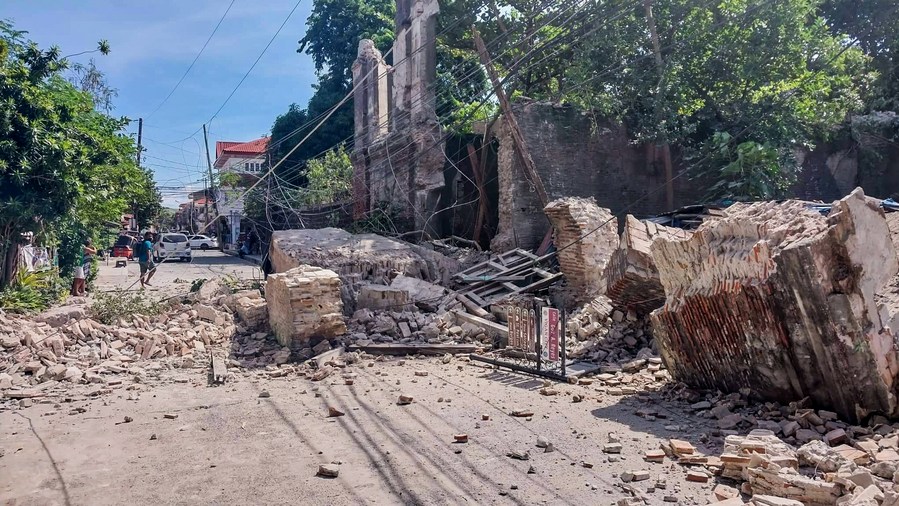
Displacement on this scale creates an immediate humanitarian crisis. Thousands of residents are now reliant on temporary shelters and emergency aid. The loss of housing in the southern Philippines is compounded by the region’s geography, where remote coastal and island communities often face delays in receiving government supplies.
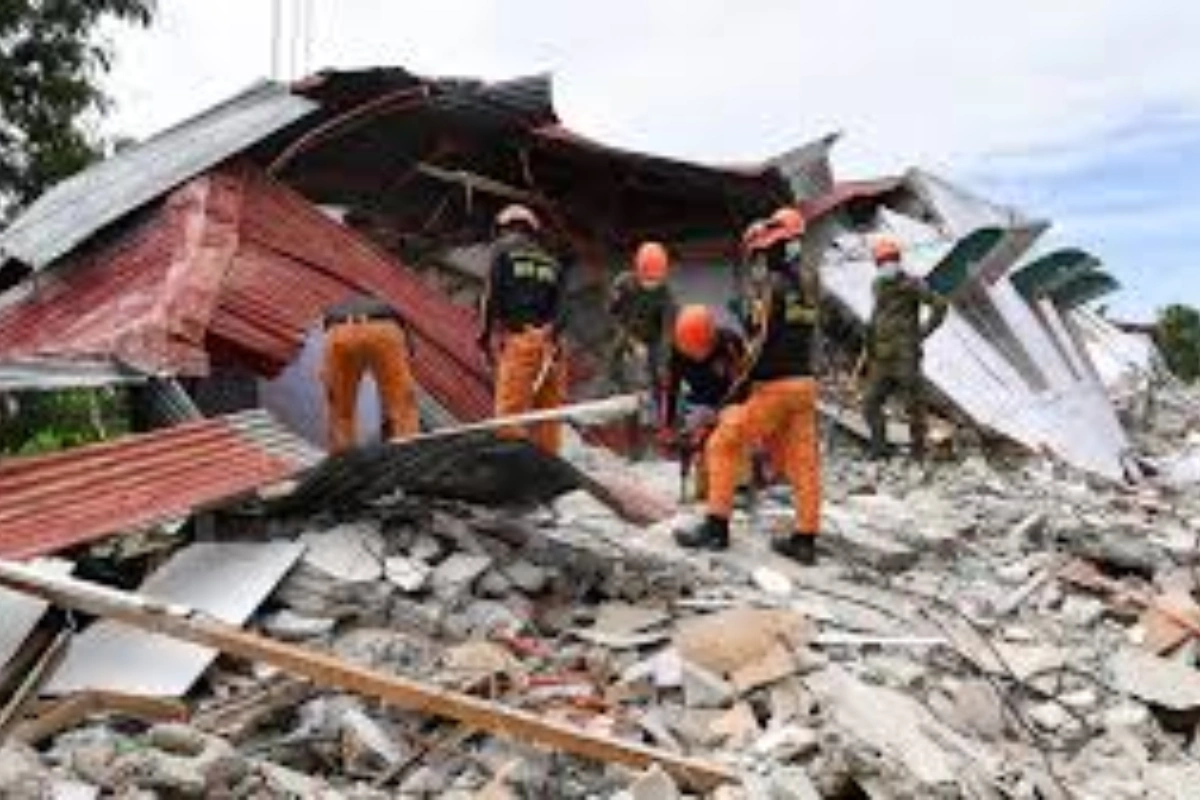
The 40 people still listed as missing, according to Xinhua, are believed to be trapped under debris. Search and rescue efforts are focused on these individuals, though the risk of aftershocks continues to complicate recovery missions. The displaced population now faces a dual struggle: finding basic necessities and coping with the psychological trauma of the 7.7-magnitude event.
Why is the Sulawesi Sea region prone to such strong quakes?
The area encompassing the southern Philippines and the Sulawesi Sea is located within the Pacific Ring of Fire, a region characterized by frequent volcanic eruptions and seismic activity. The 7.7-magnitude quake reported by ANTARA News is a result of the complex interaction between several tectonic plates.
When these plates shift or collide, they release massive amounts of energy. In the case of the Sulawesi Sea, the undersea nature of the epicenter is what triggers the tsunami warnings mentioned by The Jakarta Post. Any significant vertical displacement of the seafloor can push a column of water upward, creating waves that travel across the ocean at high speeds.
This regional vulnerability means that the southern Philippines must maintain constant vigilance. The transition from a “major quake” to a “tsunami warning” is a standard protocol for events of this magnitude in the Sulawesi Sea, as the geography allows for rapid water displacement that can threaten multiple coastlines simultaneously.
For more information on regional disaster preparedness, see a related explainer on tectonic plate movements in Southeast Asia.
What are the immediate consequences for the region?
The immediate aftermath of the quake is defined by a race against time to find the 40 missing persons. With 61 deaths already confirmed by Xinhua, the priority for local authorities is clearing ruins and establishing stable housing for the 32,000 displaced residents reported by the Jakarta Globe.
Economic impacts are also significant. The destruction of homes and infrastructure disrupts local trade and agriculture, which are the primary livelihoods for many in the southern Philippines. The cost of rebuilding 32,000 homes, alongside repairing public roads and bridges, will likely require national government intervention and potentially international aid.
Furthermore, the psychological impact of the tsunami warnings cannot be ignored. Even when waves do not result in catastrophic flooding, the evacuation of thousands of people creates a state of instability and fear that lingers long after the seismic activity stops.
Current priorities for emergency response:
- Search and Recovery: Locating the 40 missing individuals reported by Xinhua.
- Shelter Provision: Managing the 32,000 displaced persons identified by the Jakarta Globe.
- Infrastructure Assessment: Evaluating the safety of bridges and roads for aid delivery.
- Coastal Monitoring: Maintaining surveillance for delayed tsunami activity or secondary surges.
Comparing the reporting of the disaster
There is a notable difference in how various news outlets framed the event as it developed. The Jakarta Post and ANTARA News focused heavily on the immediate seismic data—specifically the 7.7-magnitude figure and the urgency of the tsunami warnings. This reflects a “breaking news” approach, prioritizing the immediate threat to life.
In contrast, the Jakarta Globe shifted the focus toward the humanitarian scale, highlighting the 32,000 displaced people. This framing emphasizes the long-term social impact rather than just the immediate geological event. Finally, Xinhua and Tempo.co provided the most updated casualty figures, moving the narrative from “initial warnings” to a “confirmed death toll” of 61.
This progression—from magnitude and warnings (ANTARA/Jakarta Post) to displacement (Jakarta Globe) to final death tolls (Xinhua)—illustrates the typical lifecycle of a natural disaster news cycle. It moves from the event to the impact and finally to the cost.
Frequently Asked Questions
What is the current death toll from the southern Philippines earthquake?
According to reports from Xinhua and Tempo.co English, the death toll has risen to 61 people.
How many people are still missing after the quake?
Xinhua reports that 40 people remain missing as search and rescue operations continue.
What was the magnitude of the earthquake in the Sulawesi Sea?
ANTARA News reported that the earthquake had a magnitude of 7.7M.
How many people were displaced by the disaster?
The Jakarta Globe reports that approximately 32,000 people have been displaced from their homes.
Were there tsunami warnings issued?
Yes, according to ANTARA News and The Jakarta Post, tsunami early warnings were issued following the 7.7M quake in the Sulawesi Sea.
As recovery efforts proceed, the focus remains on the 40 missing individuals and the logistical challenge of resettling over 30,000 displaced citizens. Authorities continue to monitor the Sulawesi Sea for any further seismic activity that could trigger additional warnings or aftershocks in the southern Philippines.
