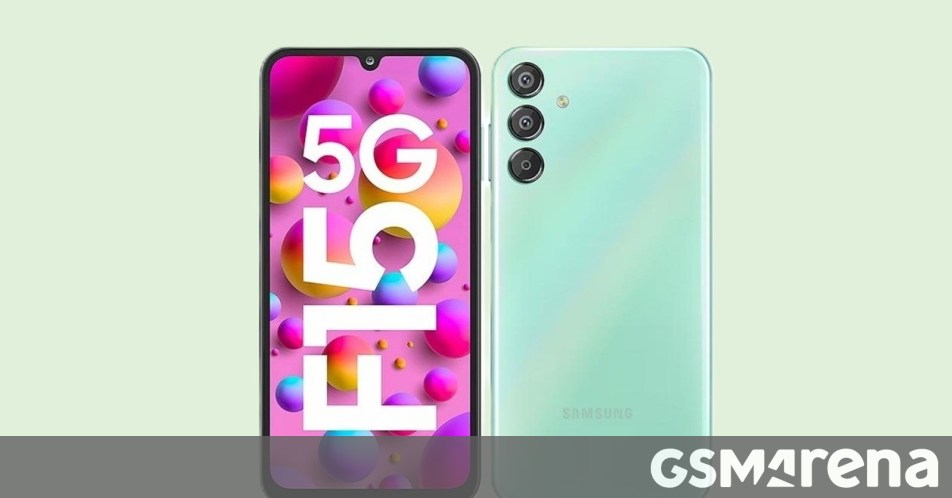
Samsung Galaxy F15 receives the One UI 8.5 stable update – GSMArena.com news – GSMArena.com
Samsung has released the stable One UI 8.5 update for the Galaxy F15, according to reports from GSMArena. This deployment is part of a broader software push across 44 confirmed Samsung devices, as noted by Gizchina, bringing updated system stability and new interface features to the budget-oriented F-series handset.
What is the status of the One UI 8.5 rollout for the Galaxy F15?
The Samsung Galaxy F15 receives the One UI 8.5 stable update – GSMArena.com news – GSMArena.com, marking the transition from testing phases to a general public release. This stable build replaces previous beta versions, ensuring that the software has undergone rigorous testing to minimize bugs and optimize performance for the F15’s specific hardware configuration. According to GSMArena, the update is now reaching users, though the rollout typically occurs in stages across different regions to prevent server congestion.
This update arrives as part of a massive synchronization effort by Samsung. Gizchina reports that the company has effectively completed the One UI 8.5 rollout for all 44 devices that were previously confirmed for the update. This suggests that the F15 is among the final group of devices to move from the “pending” or “beta” list to the “stable” list. For F15 users, this means access to the latest security patches and the refined user interface that defines the 8.5 version of Samsung’s software skin.
The F15 occupies a specific niche in Samsung’s portfolio, often targeting markets where battery life and value-for-money are prioritized. Providing a stable update to this tier of device indicates Samsung’s commitment to maintaining software parity across its budget and flagship lines, even if the feature sets differ.
Which other Galaxy devices are getting One UI 8.5?
The Galaxy F15 is not alone in this update cycle. SamMobile reports that the One UI 8.5 update for the Galaxy A34 is now available globally. The A34, a mid-range staple, shares similar update timelines with the F-series, reflecting Samsung’s strategy of grouping its “A” and “F” series devices into similar software deployment waves.
According to Gizchina, the total number of confirmed devices receiving this specific version of One UI stands at 44. This list encompasses a wide range of hardware, from the high-end S-series flagships to the more affordable A and M series. The goal of this wide-scale rollout is to ensure a consistent ecosystem experience, allowing users to move between different Samsung devices without encountering drastic differences in menu layouts or core functionality.
| Device Model | Update Status (One UI 8.5) | Source |
|---|---|---|
| Galaxy F15 | Stable Release | GSMArena |
| Galaxy A34 | Global Release | SamMobile |
| 44 Confirmed Devices | Rollout Complete | Gizchina |
| Galaxy S22 | Excluded/Missing | Gadget Hacks |
Why was the Galaxy S22 left off the One UI 8.5 list?
While the F15 and A34 are receiving the update, not every legacy device is as fortunate. Gadget Hacks reports that the Galaxy S22 was notably left off the list for the One UI 8.5 update. This exclusion has caused confusion among users, as the S22 was a premium flagship at launch, whereas the F15 is a budget device.
Industry analysis suggests this disparity often stems from the underlying hardware architecture and the specific Android version the device was launched with. Software updates are not just about the “skin” (One UI) but the underlying Android OS. If a device’s hardware drivers are no longer compatible with the newest kernel requirements of a specific OS version, Samsung may skip a minor version update or move the device to a different support track.
Gadget Hacks notes that the S22’s absence highlights a shift in how Samsung manages its update lifecycle. While the company has promised longer support windows for newer devices, older flagships can sometimes hit a “hardware wall” where the cost of optimizing new software for old silicon outweighs the benefit, or where the hardware simply cannot support new system-level features.
Which One UI 8.5 features are missing on certain devices?
Receiving the “One UI 8.5” label does not guarantee that every device gets every feature. TechCabal explains that there are “missing features” across the Galaxy lineup, with certain phones missing out on specific tools included in the 8.5 update. This is a common practice in the smartphone industry known as feature tiering.
According to TechCabal, the missing features usually fall into three categories:
- AI-Driven Tools: Advanced generative AI features often require high-end Neural Processing Units (NPUs). Budget devices like the Galaxy F15 may lack the processing power to run these tools locally, leading Samsung to disable them or move them to a cloud-based model that may not be available for all regions.
- Display-Dependent Features: Features that rely on high refresh rates or specific panel technologies (like LTPO) are often omitted from devices with standard LCD or lower-spec AMOLED screens.
- Camera-Specific Enhancements: Advanced image processing algorithms introduced in One UI 8.5 may require specific sensor hardware found only in the S-series, meaning F-series and A-series users may see a revised menu but not the actual new photography modes.
This creates a scenario where a Galaxy F15 user and a Galaxy S24 user both run One UI 8.5, but their actual user experiences differ significantly. The F15 receives the stability, security, and general UI refinements, while the S24 receives the “power user” features.
How does the F15 update impact Samsung’s market position?
The decision to push a stable update to a budget device like the F15 is a strategic move. In markets like India and Southeast Asia, the F-series is a critical volume driver. By ensuring these devices remain current, Samsung prevents users from migrating to competitors who offer aggressive update schedules on budget hardware.

The rollout described by GSMArena and Gizchina demonstrates a “trickle-down” efficiency. By first perfecting One UI 8.5 on flagship hardware and then optimizing it for 44 different devices, Samsung reduces the risk of widespread system crashes. The fact that the F15 is now receiving the stable build suggests that the optimization process for lower-end chipsets is complete.
“The completion of the One UI 8.5 rollout across 44 devices signals Samsung’s intent to maintain a unified software ecosystem, regardless of the price point of the hardware.”
This strategy also builds brand loyalty. A user who buys a budget F15 and receives consistent, stable updates is more likely to upgrade to a more expensive A-series or S-series device in the future, trusting that the software support will remain reliable.
Comparing the update experience: F15 vs. S22
The contrast between the Galaxy F15 and the Galaxy S22 regarding One UI 8.5 provides a case study in software lifecycles. On one hand, the F15 is a newer, budget-friendly device that fits perfectly into the current support window. On the other, the S22 is an older flagship that is nearing the end of its primary support cycle.
For the F15 user, the update is a performance gain. According to the stable build reports, users can expect better battery optimization and a more fluid interface. For the S22 user, the exclusion reported by Gadget Hacks represents a “soft sunset” of the device’s cutting-edge status. While the S22 will still receive critical security patches, it will no longer have the latest feature set offered by the 8.5 version.
This disparity underscores a critical point for consumers: the “flagship” status of a phone at launch does not always guarantee a longer life in terms of feature updates than a budget phone released two years later. The date of manufacture and the chipset generation are the primary drivers of software longevity.
Common misconceptions about One UI updates
There are several common misunderstandings regarding how Samsung handles updates like One UI 8.5. One primary misconception is that a “stable update” is the same as a “feature update.” While the F15 is receiving a stable build, as GSMArena notes, this often focuses more on reliability and bug fixes than on adding entirely new capabilities.
Another misconception is that if a device is “confirmed” for an update, it will receive it at the same time as others. The staggered rollout mentioned in the context of the F15 and A34 updates is intentional. Samsung pushes updates by region and carrier to ensure that if a critical bug is discovered, it can be halted before it affects the entire global user base.
Finally, users often assume that “missing features” described by TechCabal are the result of a mistake. In reality, these are intentional omissions based on hardware capabilities. A budget processor cannot run a high-end AI model without overheating or draining the battery in minutes, making the omission a necessity for device health.
FAQ about the Samsung Galaxy F15 One UI 8.5 Update
How can I check if my Galaxy F15 has the One UI 8.5 update?
Users can check for the update by navigating to Settings > Software update > Download and install. If the update is available for your specific region and carrier, it will appear there for download.
Is the One UI 8.5 update available globally for the F15?
While GSMArena reports the stable update is out, Samsung typically uses a phased rollout. This means it may be available in some countries before others. If you do not see it yet, it is likely because your region is scheduled for a later wave.
Will the Galaxy S22 ever receive One UI 8.5?
According to reports from Gadget Hacks, the S22 was left off the confirmed list. While Samsung could theoretically change its mind, current data suggests the S22 will not receive this specific version of the update.
What should I do if the update causes battery drain on my F15?
It is common for devices to experience temporary battery drain immediately after a major update as the system re-indexes files and optimizes apps in the background. If the issue persists for more than a week, users are encouraged to clear the system cache partition.
What is the difference between the stable update and the beta update?
The beta update is a testing version released to a small group of users to find bugs. The stable update, which the Galaxy F15 has now received, is the final, polished version intended for the general public.
For those interested in how Samsung manages its wider device portfolio, a related explainer on Samsung software support cycles can provide more context on how the company decides which devices get which updates.
