
SpaceX launches Starlink mission from Cape Canaveral as stock trades on the Nasdaq for first time – Spaceflight Now
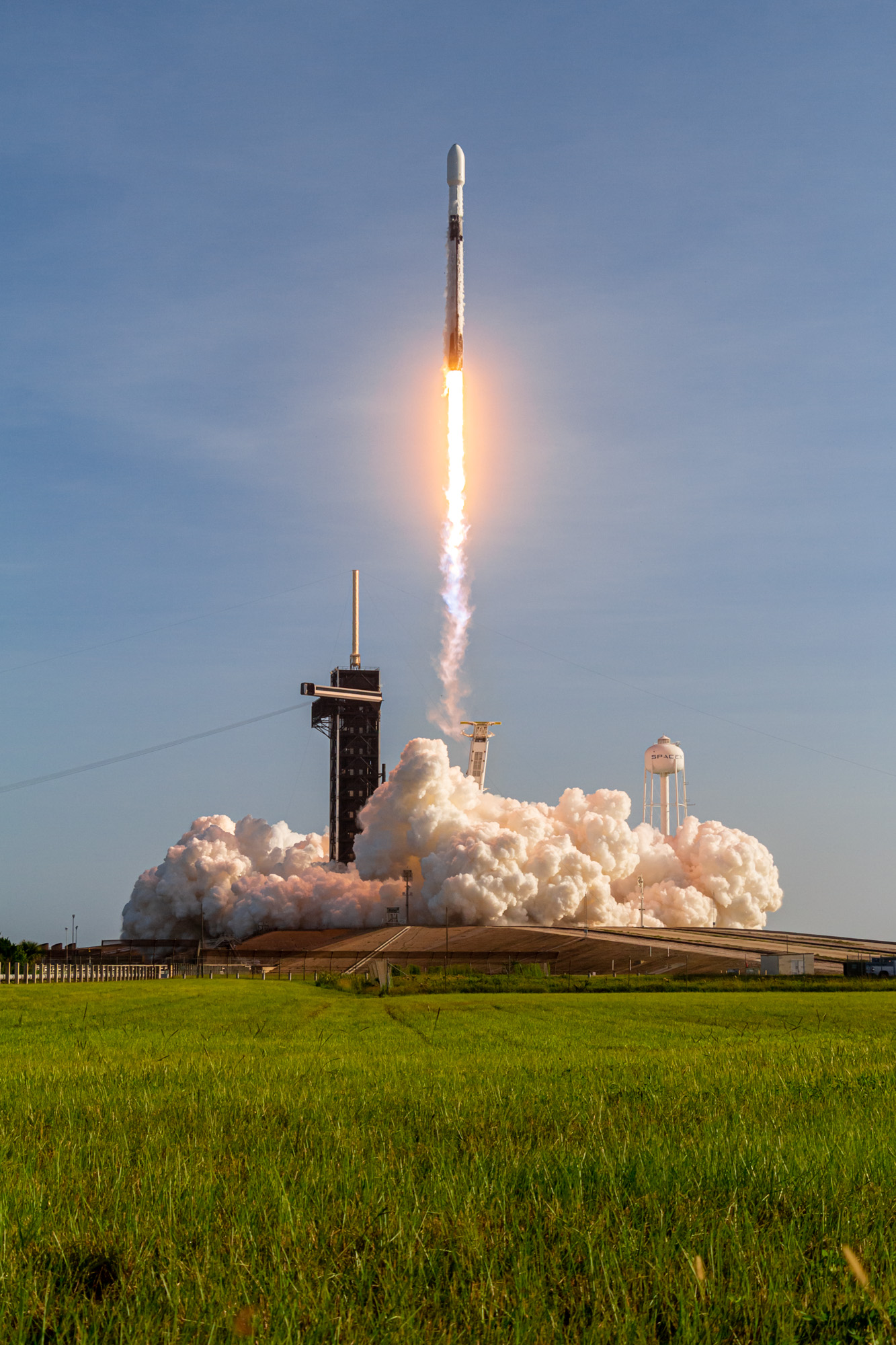
SpaceX deployed 24 Starlink satellites into orbit via a Falcon 9 rocket from Cape Canaveral, Florida, coinciding with the company’s first day of trading on the Nasdaq. According to reports from Spaceflight Now and Space, the mission occurred as the market awaited the official IPO launch and the commencement of public stock trading.
How the Starlink Mission and Nasdaq IPO Coincided
SpaceX executed a dual-track milestone on the same day, managing a high-stakes orbital delivery while transitioning to a publicly traded entity. According to Florida Today, live updates indicated the Starlink launch took place just before the Nasdaq IPO kickoff. This timing aligned the company’s operational capacity in aerospace with its new financial status on the open market.
The mission involved the launch of 24 Starlink satellites. Space reported that these satellites were successfully sent into orbit, ensuring the continued expansion of the company’s low-Earth orbit (LEO) internet constellation. The coordination of a launch with a first-day trade suggests a strategic effort to demonstrate operational reliability to new shareholders.
Key elements of the day’s events included:
- Launch Site: Cape Canaveral, Florida.
- Payload: 24 Starlink satellites.
- Financial Event: First-time trading of SpaceX stock on the Nasdaq.
- Vehicle: Falcon 9 rocket.
The Falcon 9 Reuse Record: A Five-Year Milestone
Beyond the financial news, the mission marked a significant technical achievement in rocket sustainability. According to Ars Technica, the Falcon 9 booster used for this mission is five years old and has set a new record for reuse. This milestone underscores the company’s shift toward a fully reusable launch architecture, which reduces the cost of access to space.
The ability to fly a booster for five years suggests a level of durability and refurbishment efficiency that differs from traditional expendable launch vehicles. Ars Technica highlighted this reuse record as a remarkable feat of engineering, as it demonstrates the long-term viability of the Falcon 9 airframe under the extreme stresses of ascent and reentry.
“A Falcon 9 booster turns 5 years old—and just set a remarkable reuse record,” according to reporting by Ars Technica.
This reuse capability is a primary driver for the frequency of Starlink launches. By recovering and reflashing boosters, SpaceX can maintain a launch cadence that would be financially unsustainable if every rocket were discarded after a single flight. This technical efficiency likely contributed to the company’s valuation as it entered the Nasdaq market.
Analyzing the Impact of the Starlink Constellation
The 24 satellites deployed during this mission are part of a larger strategy to provide high-speed, low-latency internet globally. As noted by Space, the deployment of these specific satellites helps fill gaps in the existing constellation, improving coverage and capacity for users in remote areas.
The Starlink project relies on a massive number of small satellites in LEO, which allows signals to travel a shorter distance than those from traditional geostationary satellites. This reduction in distance is what enables the “low-latency” performance required for activities like video conferencing and online gaming.
The financial implications of this constellation are central to the IPO. Investors on the Nasdaq are not just betting on launch services, but on the recurring revenue generated by Starlink subscriptions. The successful deployment of satellites on IPO day serves as a tangible proof of concept for the company’s growth trajectory.
| Milestone Category | Specific Achievement | Source |
|---|---|---|
| Financial | First-time Nasdaq stock trading | Florida Today / Spaceflight Now |
| Operational | 24 Starlink satellites deployed | Space |
| Technical | 5-year-old booster reuse record | Ars Technica |
| Logistical | Successful Cape Canaveral lift-off | Yahoo |
The Role of Cape Canaveral in SpaceX Operations
Cape Canaveral continues to serve as the primary hub for SpaceX’s heavy-lift operations. Images of the IPO-day lift-off, as shared by Yahoo, show the infrastructure of the Florida coast supporting the company’s rapid launch cycle. The proximity to the Atlantic Ocean allows for the safe trajectory of satellites into orbit and the recovery of boosters on autonomous drone ships.
The use of Cape Canaveral provides SpaceX with access to established federal airspace management and launch pads that can handle the Falcon 9’s propellant requirements. This infrastructure is essential for the company to meet the aggressive deployment schedule required to make Starlink a global utility.
For those interested in the technical side of these operations, a related explainer on Falcon 9 recovery provides more detail on how these boosters return to Earth.
Comparing Technical Success with Market Expectations
The timing of the launch suggests a deliberate effort to link technical performance with market confidence. While Florida Today focused on the timing of the IPO kickoff, Ars Technica focused on the longevity of the hardware. Together, these perspectives reveal a company attempting to prove it is both a lean engineering firm and a scalable financial powerhouse.
Historically, aerospace companies have struggled with the “valley of death”—the period between developing a technology and making it profitable. By launching satellites on the day of its IPO, SpaceX signaled that it has already bridged this gap. The reuse record cited by Ars Technica further proves that the company has lowered its operational overhead, a detail that is highly attractive to Nasdaq investors.
There is a contrast in how the news was framed across different outlets. Yahoo and Space provided visual and immediate updates on the lift-off, treating it as a spectacle of engineering. In contrast, Florida Today framed the event through the lens of the financial markets, focusing on the IPO timing. This duality reflects the current state of SpaceX: it is simultaneously a space exploration agency and a commercial internet provider.
The Strategic Importance of the 24-Satellite Batch
Deploying satellites in batches of 24 allows SpaceX to incrementally optimize the constellation. Each new batch of Starlink satellites often includes hardware iterations that improve signal strength or reduce the risk of orbital debris. According to Space, the successful orbit of these 24 units ensures that the network remains robust as the user base grows.

The scalability of this model is what makes the Nasdaq listing significant. Unlike traditional satellite companies that launch one or two massive, expensive satellites, SpaceX uses a “distributed” model. If one small satellite fails, the network remains intact. This risk-mitigation strategy is a core part of the company’s value proposition to public shareholders.
Users interested in the broader orbital environment can find a related explainer on LEO satellite constellations to understand how these networks differ from traditional GPS or weather satellites.
Addressing Common Misconceptions About SpaceX IPOs
A common misconception is that the IPO only benefits the company’s leadership. In reality, a transition to the Nasdaq allows early employees and private investors to liquidate their holdings, providing liquidity to thousands of stakeholders. According to reports on the IPO kickoff, this move opens the company’s ownership to a broader range of retail and institutional investors.
Another misconception is that the reuse of a five-year-old booster increases risk. However, Ars Technica’s reporting on the reuse record suggests the opposite: that the boosters become more predictable and reliable as the company gathers more data on their performance over time. The “remarkable” nature of the record is not just in the age of the rocket, but in the consistency of its performance.
Future Implications for the Aerospace Industry
The combination of a public stock offering and a record-breaking reuse mission sets a new precedent for the aerospace industry. Competitors must now contend with a company that can launch frequently, reuse hardware for half a decade, and access public capital markets simultaneously.
The success of this mission and the IPO may encourage other private space firms to pursue similar paths. The ability to fund expensive R&D through public markets while maintaining a high operational tempo is a model that could accelerate the colonization of Mars or the expansion of orbital manufacturing.
Industry analysts will likely monitor the stock’s performance on the Nasdaq to see if the market values SpaceX as a transportation company (launch services) or a telecommunications company (Starlink). The 24-satellite launch serves as a reminder that the latter is currently the primary engine of the company’s growth.
Frequently Asked Questions
What happened during the SpaceX launch on the day of the IPO?
SpaceX launched 24 Starlink satellites from Cape Canaveral, Florida, using a Falcon 9 rocket. This mission occurred simultaneously with the company’s first day of trading on the Nasdaq, as reported by Spaceflight Now and Florida Today.
Why is the five-year-old booster significant?
According to Ars Technica, the booster set a reuse record by remaining operational for five years. This demonstrates the durability of SpaceX’s hardware and its ability to significantly lower the cost of space flight through refurbishment.
How many satellites were deployed in this specific mission?
As reported by Space, 24 Starlink satellites were successfully sent into orbit during this mission.
Where did the launch take place?
The mission launched from Cape Canaveral, Florida, with images of the lift-off provided by Yahoo.
What is the relationship between Starlink and the Nasdaq IPO?
Starlink is the primary commercial product driving SpaceX’s valuation. The successful deployment of satellites on the day of the IPO provides a visual and operational demonstration of the company’s value to new public investors.
