
Goblin Company is Out Now: 115,000 Goblins Report for Duty
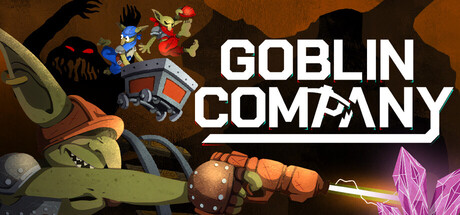
Goblin Company has officially launched, introducing a management simulation where 115,000 goblins report for duty, according to reports from Games Press. The title places players in charge of a massive workforce of fantasy creatures, focusing on the logistics and scaling of a goblin-led enterprise.
What is Goblin Company and how does it play?
Goblin Company is a management simulation game that centers on the industrialization and organization of a goblin society. According to Games Press, the core hook of the experience is the sheer scale of the operation, with a workforce totaling 115,000 goblins. Players must transition from small-scale operations to a massive corporate entity, managing the chaos inherent in goblin nature while maintaining productivity.
The gameplay loop focuses on resource acquisition, workforce allocation, and infrastructure expansion. Unlike traditional colony sims that focus on a few dozen highly detailed individuals, Goblin Company emphasizes the “macro” view of management. This shift in perspective allows players to feel the weight of a true industrial empire, where the individual goblin is less a character and more a unit of production within a vast machine.
- Workforce Scaling: Players manage an army of 115,000 units.
- Industrial Focus: The game emphasizes production chains and corporate growth.
- Genre Blend: It combines elements of city builders and business simulators.
Why does the 115,000 goblin count matter for players?
The specific figure of 115,000 goblins is not just a marketing number; it represents a shift in simulation design. Most management games, such as RimWorld or Going Medieval, limit the population to ensure that each unit has a complex set of needs, desires, and personality traits. By pushing the count to 115,000, Goblin Company moves toward a “swarm” or “mass-simulation” logic.
This scale changes how players interact with the game world. Instead of micromanaging the hunger or mood of a single worker, the player manages flows, quotas, and systemic efficiencies. The challenge shifts from interpersonal management to systemic optimization. According to the announcement via Games Press, this massive workforce is the defining characteristic of the game’s duty-based structure.
From a technical standpoint, simulating 115,000 active entities requires significant optimization. This typically involves “batching” AI behaviors or using simplified logic for units that are not currently in the player’s immediate view, a technique common in grand strategy games but rare in tight management sims.
How does Goblin Company compare to other management sims?
To understand where Goblin Company fits in the market, it is helpful to compare it to other titles that balance unit quantity with simulation depth. While many sims prioritize the “micro,” Goblin Company leans heavily into the “macro.”
| Game Title | Primary Focus | Typical Unit Scale | Management Style |
|---|---|---|---|
| Goblin Company | Industrial Scaling | 115,000+ | Macro/Systemic |
| Dwarf Fortress | Deep Simulation | 100 – 500 | Micro/Individual |
| Cities: Skylines | Urban Planning | Thousands | Zoning/Infrastructure |
| RimWorld | Survival/Story | 1 – 20 | High-Detail Micro |
The contrast is clear: where a game like Dwarf Fortress might simulate the individual toes of a dwarf, Goblin Company simulates the collective output of a goblin horde. This makes it more akin to a factory builder, such as Factorio, but with the added complexity of organic, unpredictable workers. For those interested in the evolution of the genre, a related explainer on the simulation genre provides more context on these design philosophies.
What is the appeal of goblin-themed strategy games?
The choice of goblins as the primary workforce is a calculated design move. In fantasy tropes, goblins are characterized by high energy, low discipline, and a penchant for chaos. This creates a natural tension in a management game: the player’s goal is order, while the workers’ nature is disorder.
This “chaos management” adds a layer of unpredictability that is often missing from sterile business simulators. Players aren’t just fighting a clock or a budget; they are fighting the inherent nature of their employees. This mirrors the “corporate satire” often found in modern indie games, where the absurdity of the workforce reflects the absurdity of real-world corporate bureaucracy.
“The appeal lies in the contrast between the rigid structure of a ‘Company’ and the wild, erratic behavior of a goblin horde.”
This trend of using “monstrous” or “marginalized” fantasy races to lead industrial efforts has seen a rise in the indie scene. It allows developers to comment on labor, productivity, and greed through a lens of humor and fantasy, making the grind of management feel more like a game and less like a spreadsheet.
What technical challenges come with large-scale unit simulation?
Simulating 115,000 goblins reporting for duty presents a massive hurdle for CPU and RAM. In a standard simulation, every entity checks its surroundings and makes a decision every few frames. If 115,000 entities do this simultaneously, the game would crash on most consumer hardware.
To achieve this, developers typically use several strategies:
- Data-Oriented Design: Using frameworks like Unity’s DOTS (Data-Oriented Technology Stack) to process thousands of entities in parallel.
- LOD (Level of Detail) AI: Reducing the complexity of a goblin’s brain if they are far away from the camera.
- Deterministic Simulation: Calculating movements in batches rather than individually.
The fact that Goblin Company can support this number suggests a focus on optimization that prioritizes the “visual spectacle” of a massive crowd over the individual agency of each unit. This is a trade-off that defines the game’s identity: it is a game about the mass, not the individual.
Why this release matters for the indie game market
The release of Goblin Company, as detailed by Games Press, signals a continuing trend toward “niche-maximalism” in indie gaming. Small teams are no longer just making small games; they are attempting to simulate massive systems that were previously the domain of AAA studios.
By focusing on a specific, high-concept hook—like the 115,000 goblin workforce—indie developers can capture attention in a crowded Steam marketplace. This strategy moves away from generic “survival” or “farming” sims and toward high-concept “what if” scenarios. For a deeper look at how this fits into the current landscape, see this related explainer on indie game trends.
Furthermore, the “corporate” framing of the game taps into a current cultural zeitgeist. As remote work and corporate restructuring dominate professional discourse, games that satirize the “Company” structure find a ready audience among players who spend their days in virtual meetings and spreadsheets.
Common misconceptions about mass-unit simulations
A common misconception is that a higher unit count automatically means a “better” or “more complex” game. In reality, there is always a trade-off between quantity and depth. In Goblin Company, the “depth” is found in the systemic interactions—how the flow of 115,000 goblins affects the economy—rather than in the individual stories of the workers.
Another misconception is that such games require “supercomputers.” While high unit counts are demanding, modern optimization allows these games to run on mid-range hardware by shifting the load from the CPU to the GPU or by using smarter AI scheduling. The “115,000” figure is a testament to software engineering as much as it is a gameplay feature.
FAQ about Goblin Company
When was Goblin Company released?
Goblin Company is out now, following the announcement and distribution of its launch details via Games Press.
How many goblins are in the game?
The game features a massive scale of 115,000 goblins reporting for duty.
What genre is Goblin Company?
It is a management simulation game with a focus on industrial scaling and corporate organization within a fantasy setting.
Is Goblin Company a micro-management game?
No. Due to the scale of 115,000 units, the game focuses more on macro-management and systemic optimization than on individual unit control.
What platforms is Goblin Company available on?
Availability is typically via digital storefronts like Steam, though specific platform lists should be verified through the official Games Press release or the developer’s store page.
