European Defence Stocks Retreat on Lower Spending and Higher Wrangling – Financial Times
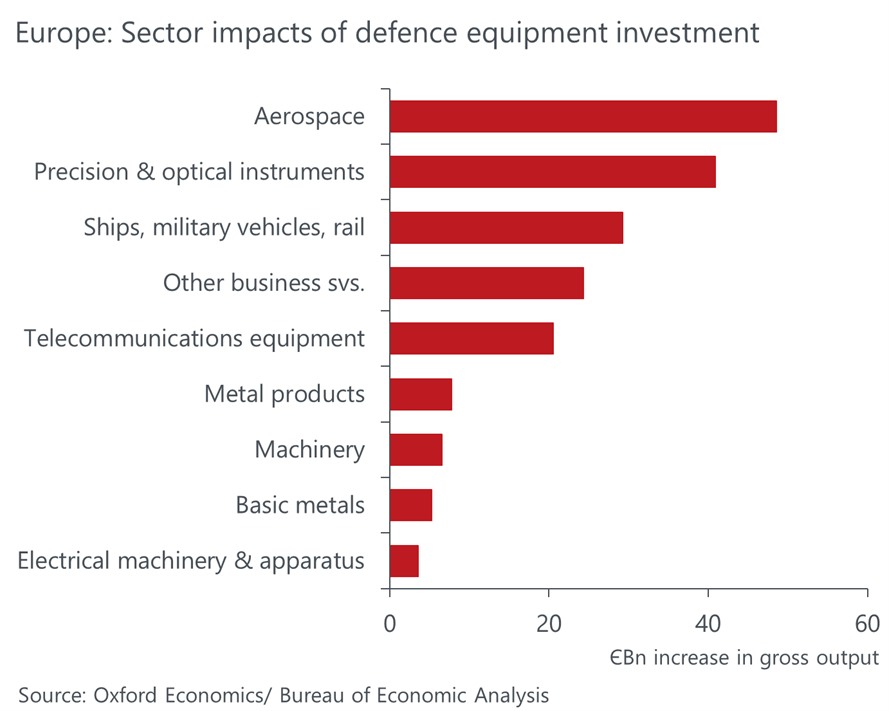
European defence stocks retreat on lower spending and higher wrangling, according to the Financial Times, as investors weigh tightening national budgets against persistent geopolitical tensions. While security concerns drive a general ramp-up in military expenditures, Oxford Economics reports that fiscal constraints and industrial capacity limits are capping the expected economic dividends of European rearmament.
Why are European defence stocks declining despite security threats?
The recent downturn in defence equities marks a shift from speculative growth to a period of fiscal scrutiny. According to the Financial Times, the primary drivers for this retreat are lower-than-expected spending trajectories and increased political friction over how military assets are procured across the European Union. For several years, markets priced in a seamless, rapid increase in spending following the invasion of Ukraine, but the reality of national budget deficits has begun to temper those expectations.
Investors are now grappling with the “execution gap.” While governments pledge high spending targets, the actual disbursement of funds is often slowed by bureaucratic hurdles and political disputes. The Financial Times notes that “wrangling” over joint procurement—where EU nations disagree on which domestic companies should lead projects—creates inefficiency and uncertainty, which markets typically penalize.
Several factors are contributing to this market cooling:
- Budgetary Fatigue: High inflation and rising debt costs are forcing governments to choose between military upgrades and social stability.
- Procurement Friction: Disagreements between member states over “national champions” prevent the scaling of production.
- Valuation Correction: Many defence stocks reached peak valuations based on optimistic projections that are not currently being met by order books.
The market is transitioning from a phase of geopolitical shock, which drove rapid stock price increases, to a phase of industrial reality, where production capacity and budget ceilings dictate growth.
How do fiscal constraints limit the “economic dividend” of rearming?
There is a common assumption that increased defence spending acts as a direct stimulus to the economy. However, Oxford Economics reports that this “economic dividend” is being capped by two primary factors: capacity and fiscal constraints.
Capacity constraints mean that even when governments are willing to spend, the industrial base cannot absorb the capital quickly enough. Factories are running at maximum capacity, and there is a shortage of skilled labor and raw materials. When spending increases but production cannot scale, the result is often inflation in the price of equipment rather than an increase in the volume of goods produced. This limits the broader economic growth typically associated with industrial expansion.
Fiscal constraints further complicate the picture. According to Oxford Economics, many European nations are facing strict debt-to-GDP limits. This creates a ceiling on how much can be spent on long-term military contracts without triggering financial instability or requiring drastic cuts in other sectors.
| Constraint Type | Impact on Defence Sector | Economic Result |
|---|---|---|
| Industrial Capacity | Production bottlenecks and longer lead times. | Price inflation without volume growth. |
| Fiscal Limits | Capped budgets and delayed contract signings. | Slowed revenue growth for defence firms. |
| Political Wrangling | Fragmented procurement and duplicated efforts. | Reduced economies of scale. |
Is there a conflict between “warfare” and “welfare” spending?
The tension between military necessity and social spending has become a central political flashpoint. Reports from malaysiasun.com highlight a growing debate over whether the European bloc is prioritizing “warfare over welfare.” This manifests as a struggle to balance the funding of advanced weaponry with the maintenance of healthcare systems and social safety nets.
This “guns vs. butter” dilemma is not just a political talking point; it has direct implications for defence stocks. When governments face public pressure to protect “wards” (healthcare and social services), defence budgets are often the first to be scrutinized or frozen. This political volatility makes long-term forecasting difficult for defence contractors, as a change in government or a shift in public sentiment can lead to the sudden cancellation or scaling back of major programs.
This conflict is particularly acute in nations with high levels of social spending and aging populations, where the cost of healthcare is rising simultaneously with the cost of national security.
How are investors using ETFs to access the defence market?
Despite the recent retreat in stock prices, institutional and retail interest in the sector remains high, though the methods of investment are evolving. BNP Paribas Asset Management has noted a trend toward ETF (Exchange Traded Fund) investments in European defence. ETFs allow investors to spread risk across a basket of companies rather than betting on a single contractor.
The shift toward ETFs suggests that while investors are still bullish on the long-term necessity of European rearmament, they are wary of the “wrangling” mentioned by the Financial Times. By investing in a diversified defence ETF, investors can capture the general trend of increased security spending while mitigating the risk that a specific company might lose a contested government contract due to political disputes between EU member states.
Key reasons for the rise in defence ETFs include:
- Diversification: Reducing exposure to the failure of a single project or company.
- Liquidity: Easier entry and exit points compared to holding individual small-cap defence stocks.
- Thematic Exposure: Capturing the broad trend of “strategic autonomy” in Europe.
For more on how these financial instruments work, see a related explainer on thematic ETFs.
What is the global context for European spending increases?
While the Financial Times focuses on the retreat of stocks, the broader trend remains one of expansion. China.org.cn reports that European countries continue to ramp up defence spending in response to mounting security concerns. This creates a paradox: nominal spending is increasing, but stock prices are falling.
The reason for this paradox lies in the difference between spending and profitability. Increased spending does not always translate to higher profits if the costs of production are rising faster than the contract prices. Furthermore, much of the current spending is directed toward replacing old stockpiles—essentially “catching up” on years of underinvestment—rather than investing in new, high-margin technologies.
The global security environment, characterized by instability in Eastern Europe and shifting alliances, ensures that the demand for defence products remains high. However, the supply side is hampered by the aforementioned capacity issues and the internal political friction within the EU.
Comparing Market Perspectives
Different sources frame the current state of the European defence industry through different lenses:
- Financial Perspective (FT): Focuses on the disconnect between market valuations and the reality of political wrangling and budget limits.
- Economic Perspective (Oxford Economics): Highlights the structural bottlenecks (capacity) that prevent spending from creating a wider economic boom.
- Sociopolitical Perspective (Malaysia Sun): Frames the issue as a moral and political struggle between military spending and social welfare.
- Strategic Perspective (China.org.cn): Views the spending ramp-up as a necessary response to an increasingly dangerous global security climate.
What are the long-term implications for the defence industry?
The current retreat in stocks may represent a “healthy” correction rather than a long-term decline. The fundamental driver—the need for enhanced security—has not disappeared. However, the industry is entering a more mature phase where efficiency, cooperation, and actual production capacity will matter more than political promises.
If European nations can resolve their procurement wrangling and move toward a more unified purchasing strategy, they could unlock the economies of scale that Oxford Economics suggests are currently missing. This would involve moving away from “national champion” projects and toward standardized equipment used across the bloc.
Failure to do so may result in a permanent “capacity ceiling,” where Europe remains dependent on non-EU suppliers (primarily from the United States) to fill the gap, further limiting the economic dividend for European firms.
Investors and policymakers are now watching for several key indicators:
- Unified Procurement Treaties: Any move toward a single EU-wide buying framework.
- Labour Market Shifts: Increased investment in vocational training for defence manufacturing.
- Budgetary Reallocations: Whether governments find new ways to fund defence without cutting social welfare.
For further analysis on the shift in global military procurement, see a related report on strategic autonomy.
Frequently Asked Questions
Why are European defence stocks falling if governments are spending more?
According to the Financial Times, the retreat is caused by “higher wrangling” over procurement and the realization that spending increases may be lower than previously anticipated. Additionally, high valuations based on early-war optimism are being corrected as fiscal constraints and industrial bottlenecks emerge.
What is meant by “capacity constraints” in the defence sector?
Oxford Economics explains that capacity constraints occur when factories, raw materials, and skilled workers are unavailable to meet new orders. This means that even if a government spends more money, the industry cannot produce more equipment quickly, leading to price inflation rather than increased output.
How does the “warfare vs. welfare” debate affect the market?
As reported by malaysiasun.com, there is political tension between funding military needs and funding social services like healthcare. This creates volatility for defence stocks because budgets can be shifted or frozen if public pressure to prioritize citizen welfare increases.
Are defence ETFs a safer bet than individual stocks?
BNP Paribas Asset Management suggests that ETFs provide a way to invest in the broader trend of European rearmament while diversifying risk. This protects investors from the volatility of a single company losing a contract due to political disputes between EU member states.
Will European defence spending continue to rise?
Yes, according to China.org.cn, European countries are continuing to ramp up spending due to mounting security concerns. The current stock market retreat is a reflection of how that money is being spent and the efficiency of the industry, not a sign that the demand for defence is disappearing.
