Filipino Mayor Requests Urgent Helicopter Aid for Isolated Earthquake Survivors
A Filipino mayor has requested emergency helicopter support to deliver food and essential supplies to survivors isolated by a powerful earthquake in the southern Philippines. The disaster, linked to a 7.7 magnitude quake in the Sulawesi Sea, has triggered tsunami warnings and left thousands displaced across the Philippines and Indonesia, according to reports from multiple regional news outlets.
The Immediate Crisis: Why a Filipino Mayor is Requesting Aerial Aid
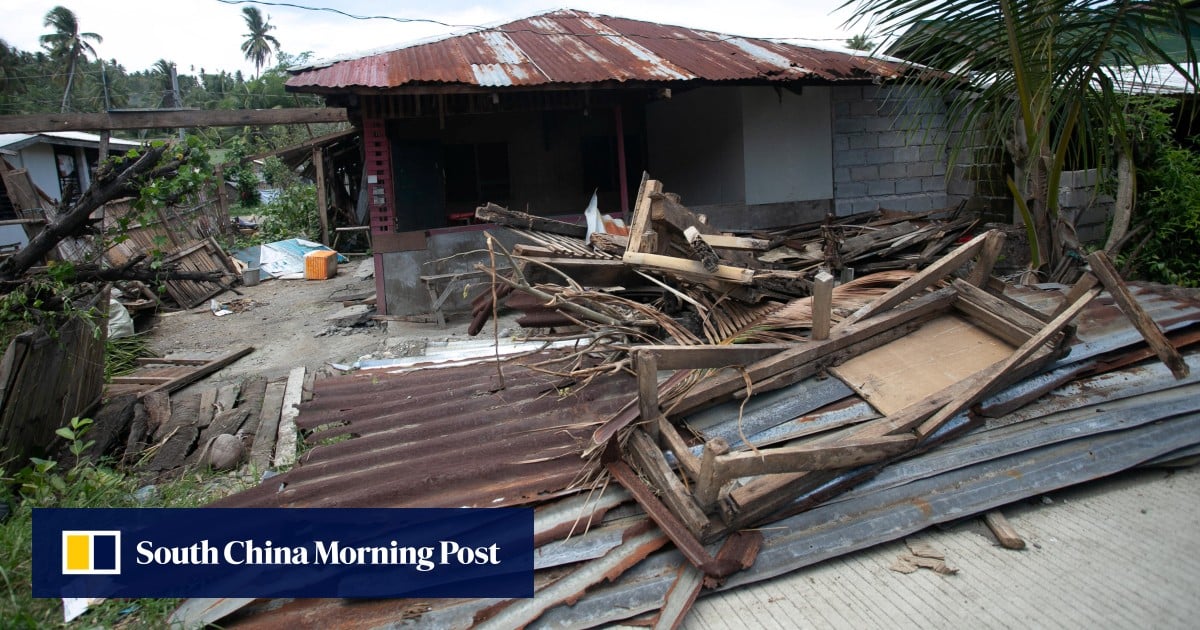
Local leadership in the southern Philippines is facing a logistical crisis following a massive seismic event. According to reports highlighted in the context of “Filipino mayor begs for helicopters to fly food to isolated quake survivors – South China Morning Post,” the devastation has severed primary ground transportation routes, leaving several communities completely cut off from central aid hubs.
The mayor’s plea centers on the inability of ground crews to reach remote villages due to debris, landslides, and collapsed infrastructure. In these isolated zones, survivors are reportedly running out of food and clean water. The request for helicopters is not merely for transport but for “air-dropping” survival kits to prevent a secondary humanitarian crisis caused by starvation and dehydration.
The urgency of the request stems from the geography of the region. The southern Philippines consists of fragmented coastlines and mountainous interiors, which become death traps when roads are compromised. Without aerial assets, the time required to clear roads manually could exceed the survival window for the most vulnerable populations.
“The isolation of these communities means that every hour without food and medical intervention increases the risk of mortality,” according to local administrative reports regarding the disaster response.
Casualty Reports and Displacement Figures
Data regarding the human cost of the earthquake varies between reporting agencies, reflecting the difficulty of gathering accurate numbers in a disaster zone where communication lines are down.
The Jakarta Globe reports a more severe toll, stating that at least 37 people have been killed and approximately 32,000 individuals have been displaced from their homes. This figure suggests widespread structural failure and the necessity for large-scale evacuation centers.
Conversely, Tempo.co English reported lower initial casualty figures, citing 19 deaths and more than 130 injuries in the southern Philippines. This discrepancy is common in the early stages of disaster reporting, where different agencies may be counting confirmed deaths versus missing persons, or focusing on different affected provinces.
| Source | Reported Deaths | Reported Injuries/Displaced |
|---|---|---|
| Jakarta Globe | At least 37 | 32,000 displaced |
| Tempo.co English | 19 | 130+ injured |
The high number of displaced persons reported by the Jakarta Globe indicates that even where the quake did not cause immediate death, it rendered thousands of homes uninhabitable. This creates a massive demand for temporary shelter and sanitation services to prevent the outbreak of waterborne diseases.
The 7.7 Magnitude Quake and Tsunami Warnings
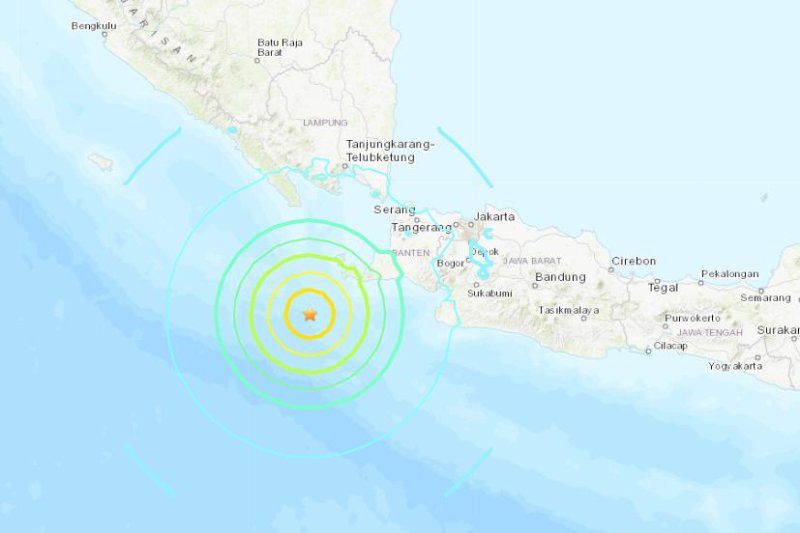
The catalyst for this crisis was a massive 7.7 magnitude earthquake centered in the Sulawesi Sea. According to ANTARA News, the magnitude and location of the quake were sufficient to trigger an immediate tsunami early warning. This alert extended across both the Philippines and Indonesia, forcing coastal residents to flee to higher ground.
The Sulawesi Sea is a volatile tectonic region. When a quake of this magnitude occurs underwater, it can displace massive volumes of water, creating waves that travel across open ocean at high speeds. Tempo.co English confirmed that tsunami alerts were a primary concern for both nations in the hours following the initial shock.
While the initial tsunami warnings are often downgraded as the situation stabilizes, the psychological impact and the physical movement of thousands of people away from the coast complicate the relief effort. Emergency responders must now manage both the survivors of the earthquake and the displaced populations who fled the potential tsunami.
- Epicenter: Sulawesi Sea.
- Magnitude: 7.7.
- Primary Threat: Tsunami waves and structural collapse.
- Affected Areas: Southern Philippines and parts of Indonesia.
Regional Vulnerability: The Ring of Fire
The southern Philippines and the Indonesian archipelago sit atop the “Pacific Ring of Fire,” a horseshoe-shaped zone of intense volcanic and seismic activity. This geographic reality means that earthquakes of this scale are not anomalies but recurring threats.
The interaction between the Philippine Sea Plate and the Eurasian Plate, along with various micro-plates in the Sulawesi region, creates immense pressure that is released through sudden ruptures. These ruptures often occur at depths that maximize surface shaking, leading to the total collapse of non-reinforced masonry buildings.
The vulnerability of the region is compounded by socio-economic factors. Many rural communities in the southern Philippines utilize lightweight materials for housing, which offer little protection against seismic shocks. Furthermore, the lack of redundant road networks means that a single landslide can isolate an entire municipality, as seen in the current plea for helicopter support.
Related explainer on [seismic activity in the Pacific Ring of Fire] may provide further context on why this specific region is so prone to high-magnitude events.
Logistical Barriers to Disaster Response
The request for helicopters highlights a critical gap in the Philippine disaster response infrastructure. When a 7.7 magnitude quake hits, the “golden hour” for rescue is often lost to logistical failures.
Infrastructure Collapse
Earthquakes in the southern Philippines frequently trigger landslides in mountainous terrain. These slides block the only available arteries for food trucks and ambulances. When the mayor begs for helicopters, it is an admission that ground-based logistics have failed completely.
Communication Blackouts
Power grids and cellular towers are often the first to fall. This leaves local officials unable to coordinate with the national government in Manila. Reports indicate that some communities were “dark” for hours, leaving the central government unaware of the scale of the isolation until local leaders managed to establish satellite or radio contact.
The Challenge of Air-Drops
Flying food into a disaster zone is not as simple as dropping crates from the sky. Precise coordination is required to ensure that supplies land in accessible areas and are distributed equitably. The need for helicopters also implies a need for medical evacuation (MEDEVAC) capabilities, as those 130+ injured reported by Tempo.co English may require urgent surgical intervention that cannot be provided in field clinics.
Comparing Regional Responses: Philippines vs. Indonesia
Because the quake occurred in the Sulawesi Sea, both the Philippines and Indonesia were forced into emergency protocols. The response patterns differ based on national infrastructure.
Indonesia, having dealt with the catastrophic 2004 Indian Ocean tsunami and the 2018 Palu earthquake, has integrated highly sophisticated tsunami warning systems. ANTARA News reports a rapid issuance of warnings, showing an improved ability to alert coastal populations in minutes.
In the Philippines, the response is often more decentralized. Local mayors hold significant responsibility for the initial response, which explains why the plea for helicopters came from a municipal level rather than a national directive. This decentralized approach allows for local knowledge to drive the request but can lead to delays if the local government lacks the assets to execute the plan.
The contrast in reporting—with Jakarta Globe focusing on displacement and Tempo.co focusing on immediate casualties—shows how different regional outlets prioritize the “human cost” of the disaster. One emphasizes the long-term housing crisis, while the other emphasizes the immediate medical emergency.
Addressing Common Misconceptions About Tsunami Alerts
There is often a misconception that a tsunami warning means a massive wave is guaranteed to hit every coastline. In reality, a tsunami alert is a precautionary measure based on the magnitude and location of the quake.
According to the data from the Sulawesi Sea event, the 7.7 magnitude quake created a high probability of water displacement. However, the actual impact of a tsunami depends on the bathymetry (underwater topography) of the coast. Some areas may experience a “drawback” where the ocean recedes, while others see a sudden surge. The alerts issued in the Philippines and Indonesia were essential to prevent loss of life, regardless of whether a massive wave eventually materialized.
Another misconception is that the earthquake is the only danger. In the southern Philippines, the “aftershock” period is often more dangerous for those in damaged buildings. The request for food via helicopter also hints at the danger of “secondary disasters,” such as outbreaks of cholera or dysentery if survivors are forced to drink contaminated water from broken pipes.
The Path to Recovery and Long-Term Implications
The immediate focus remains on the delivery of food and the rescue of the injured. However, the long-term implications of this quake are significant for the region’s urban planning.
The displacement of 32,000 people suggests a systemic failure in building codes. If thousands of homes are destroyed by a single event, it indicates that “disaster-resilient” construction has not been widely adopted in the southern provinces. Future recovery efforts will likely need to focus on “building back better”—replacing fragile structures with seismic-resistant housing.
Furthermore, the reliance on helicopters for basic food delivery exposes a need for more resilient infrastructure. The Philippine government may face pressure to invest in redundant road systems or prepositioned emergency stockpiles in isolated villages so that communities can survive the first 72 hours without external aid.
Related explainer on [disaster-resilient architecture in Southeast Asia] explores how other nations have mitigated these risks.
Frequently Asked Questions
How large was the earthquake that affected the Philippines and Indonesia?
The earthquake was recorded as a 7.7 magnitude event, centered in the Sulawesi Sea, according to reports from ANTARA News.
Why is the Filipino mayor asking for helicopters specifically?
The mayor requested helicopters because ground transportation routes were severed by the earthquake, leaving survivors in isolated areas without access to food, water, or medical supplies.

How many people were killed and displaced?
Reports vary: the Jakarta Globe reports at least 37 deaths and 32,000 displaced people, while Tempo.co English reported 19 deaths and over 130 injuries.
Was there a tsunami after the 7.7 magnitude quake?
Tsunami early warnings were issued for both the Philippines and Indonesia following the quake in the Sulawesi Sea, prompting evacuations in coastal areas.
Which regions were most affected by the disaster?
The southern Philippines and coastal regions near the Sulawesi Sea in Indonesia were the primary areas under alert and impact.
