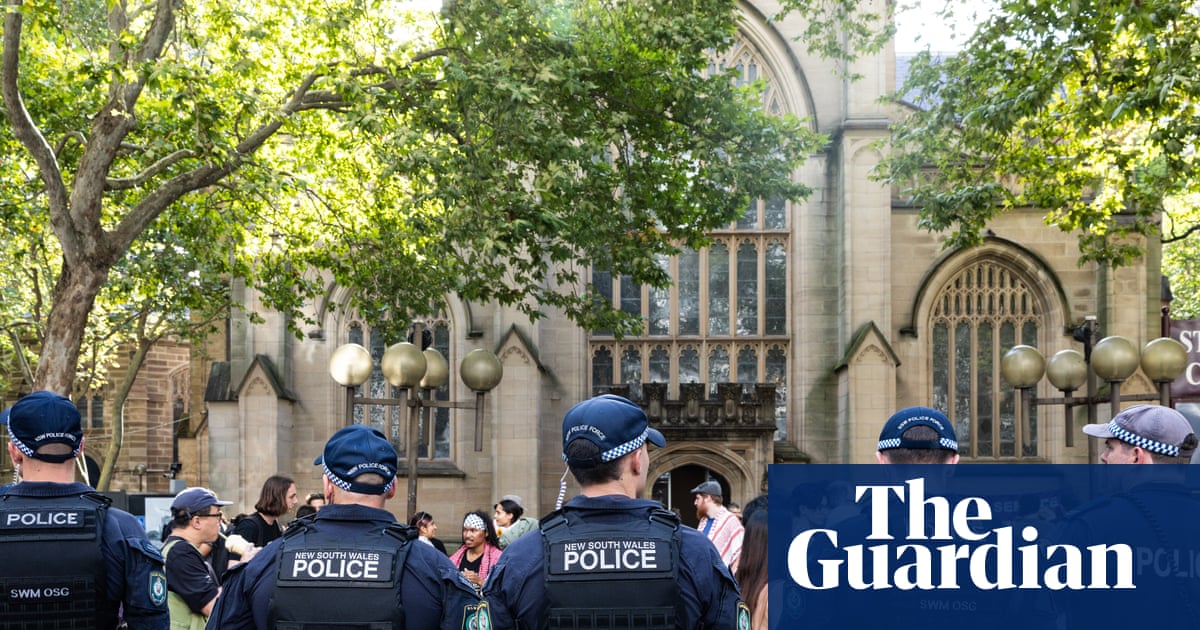
Twenty Five Anti-Isaac Herzog Protesters to Face Joint Trial in Sydney
A Sydney court has ordered that 25 individuals arrested during demonstrations against Israeli President Isaac Herzog will be tried together in a single joint proceeding. The decision, based on court records, seeks to streamline the legal process for a large group of defendants facing similar charges arising from the same set of events during the President’s visit to Australia.
Why are twenty five anti-Isaac Herzog protesters facing a joint trial in Sydney?
The decision to conduct a joint trial stems from the fact that the defendants were all involved in the same series of protests targeting the visit of Israeli President Isaac Herzog. According to court proceedings, the judiciary determined that hearing the cases together would be more efficient than conducting 25 separate trials, as the evidence, witnesses, and core factual disputes are largely identical across the various charges.
In the Australian legal system, specifically within the New South Wales (NSW) jurisdiction, joint trials are often utilized when multiple people are alleged to have participated in a “common enterprise” or a single event. This prevents the court from hearing the same testimony dozens of times, which would otherwise create a significant backlog in the local court system.
The protesters involved face various charges that typically accompany large-scale political demonstrations. While specific charges vary by individual, they generally include:
- Obstruction of traffic: Blocking public roads or entrances to official buildings.
- Trespassing: Entering restricted areas or government precincts without authorization.
- Breach of peace: Engaging in conduct that disrupts public order.
- Failure to comply with police directions: Refusing to move or disperse when ordered by law enforcement.
The events leading to the arrests
The legal proceedings follow a series of protests organized to coincide with the official visit of Isaac Herzog, the President of Israel. The demonstrations were centered on the geopolitical conflict in Gaza and the West Bank, with protesters calling for a ceasefire and criticizing the policies of the Israeli government.
According to police reports and witness accounts, the protests occurred at multiple locations in Sydney, including areas near government offices and the sites where the President’s diplomatic delegation was scheduled to appear. The arrests occurred when protesters moved beyond designated protest zones or attempted to block the movement of the diplomatic convoy.
Legal representatives for the protesters have argued that the actions were a legitimate exercise of the right to free speech and political assembly. Conversely, prosecution filings emphasize that the arrests were necessary to maintain public safety and ensure the security of a visiting foreign head of state.
| Event Component | Details |
|---|---|
| Target of Protest | President Isaac Herzog of Israel |
| Location | Sydney, New South Wales, Australia |
| Number of Defendants | 25 individuals |
| Legal Mechanism | Joint Trial (consolidated proceedings) |
| Core Issues | Public order, diplomatic security, and freedom of assembly |
Who is Isaac Herzog and why was he the target of the protests?
Isaac Herzog serves as the President of Israel, a role that is primarily ceremonial but carries significant diplomatic weight. As the head of state, Herzog represents Israel on the international stage and acts as a symbol of national unity.
The protests in Sydney were not directed at Herzog’s person, but rather at the state he represents. According to statements from the organizing protest groups, the demonstrations were a response to the ongoing military operations in Gaza. Protesters cited reports of civilian casualties and humanitarian crises as the primary motivation for their disruption of the President’s visit.
The timing of the visit coincided with heightened tensions globally regarding the Israel-Hamas war. This context turned a standard diplomatic trip into a flashpoint for local activists in Sydney, who used the presence of a high-ranking Israeli official to bring attention to their cause.
How does a joint trial affect the legal defense?
A joint trial presents both advantages and challenges for the 25 defendants. Legal experts note that while efficiency is the primary goal for the court, the impact on the defense is nuanced.
Potential Advantages for the Defense
- Shared Legal Resources: Defendants can often coordinate their legal strategies and share the costs of expert witnesses or researchers.
- Collective Narrative: A joint trial allows the defense to present a unified argument regarding the political motivation and the “necessity” of the protest, rather than arguing the same point 25 separate times.
- Consistency in Sentencing: If convicted, a joint trial makes it more likely that the magistrate will apply consistent sentencing across the group, preventing wild disparities in penalties for the same act.
Potential Disadvantages for the Defense
- “Guilt by Association”: There is a risk that the actions of the most aggressive protester in the group could color the court’s perception of a more peaceful participant.
- Complexity of Evidence: With 25 defendants, the volume of police evidence—including body-cam footage and witness statements—becomes massive, making it harder for individual lawyers to pinpoint exactly when their specific client committed a specific act.
- Slower Individual Resolution: A joint trial may take longer to reach a verdict than a simple, single-person hearing, meaning defendants remain under the cloud of pending charges for a longer period.
These dynamics are often a point of contention during the “joinder” application phase, where defense lawyers may argue that a joint trial would be “prejudicial” to their specific client.
The broader context of protest laws in New South Wales
This case occurs amidst a broader trend of increased police scrutiny of political protests in Australia. In recent years, New South Wales has seen a rise in arrests related to climate activism and geopolitical protests.
According to legal analysts, the Australian government has balanced the constitutional implied freedom of political communication with laws designed to prevent “significant disruption” to public life. The prosecution of the anti-Herzog protesters follows a similar pattern to the arrests of climate activists who have blocked bridges or entered government buildings.
The key legal tension in these cases is the distinction between peaceful assembly and unlawful disruption. Under the Summary Offences Act 1988 (NSW), police have broad powers to remove people from public spaces if they are deemed to be obstructing the public or causing a nuisance.
Related explainer on Australian protest laws and civil liberties.
Comparing the anti-Herzog protests to other recent Sydney demonstrations
To understand the scale and legal response to this event, it is useful to compare it to other recent high-profile protests in Sydney. While the motives differ, the police response and subsequent legal paths often mirror one another.
- Climate Protests (e.g., Blockade Australia): Similar to the Herzog protests, these often result in joint trials because the arrests happen in a single “wave” during a road blockade. The charges are typically “obstruction” and “trespass.”
- Anti-War/Geopolitical Rallies: These tend to be larger in volume but result in fewer arrests unless the crowd breaches a police line or enters a restricted diplomatic zone. The Herzog protests were distinct because they targeted a specific visiting foreign dignitary, which elevates the security priority from “public order” to “diplomatic protection.”
The decision to pursue a joint trial for 25 people suggests that the prosecution views these individuals not as random offenders, but as a coordinated group. This framing is a common strategy in political cases to demonstrate the organized nature of the disruption.
Common misconceptions about joint trials and political arrests
There are several frequent misunderstandings regarding how these cases are handled in the Sydney court system.
Misconception 1: A joint trial means a “collective verdict.”
In reality, the magistrate or judge delivers a verdict for each individual. It is entirely possible for 10 people to be found guilty and 15 to be acquitted within the same joint trial. The “joint” aspect refers to the process, not the outcome.
Misconception 2: Political motivation is a legal defense.
While a defendant may argue that their motives were noble or political, under Australian law, “political motivation” is generally not a defense against a charge of trespassing or obstructing traffic. However, the court may consider the motivation as a mitigating factor during sentencing, potentially leading to a fine rather than a more severe penalty.
Misconception 3: All protesters are treated the same.
Court records show that charges are often tiered. Some defendants may face simple “failure to comply” charges, while others who were more active in the disruption may face more serious “assault” or “property damage” charges. The joint trial manages these different tiers of charges simultaneously.
What to expect as the trial proceeds
As the case moves forward, the court will likely focus on the specific evidence linking each of the 25 individuals to the alleged crimes. This will involve a heavy reliance on digital evidence.
Police typically present:
- Body-worn camera footage: To prove the exact moment an order was given and the defendant’s refusal to comply.
- CCTV from government buildings: To establish the timeline of the trespass.
- Social media records: To establish whether the protest was “pre-planned,” which can influence how the court views the intent of the participants.
The defense is expected to counter this by presenting evidence of the proportionality of their actions and the context of the humanitarian crisis they were protesting. They may call witnesses to testify about the nature of the protest and whether the police response was excessive.
The final outcome will likely hinge on whether the court views the disruption as a reasonable exercise of political expression or an unlawful act that threatened the safety of a foreign head of state.
Frequently Asked Questions
What is a joint trial in the Sydney court system?
A joint trial occurs when the court decides to hear multiple defendants’ cases together because they are accused of participating in the same event or crime. This is done to save time and resources by avoiding the repetition of evidence and witness testimony.
Why were the protesters targeting Isaac Herzog?
The protesters were demonstrating against the actions of the Israeli government during the conflict in Gaza. As the President of Israel, Isaac Herzog became the symbolic target for these grievances during his official diplomatic visit to Australia.
Can a person be found innocent in a joint trial even if others are found guilty?
Yes. While the trial is conducted together, the court evaluates the evidence against each individual separately. A verdict is reached for every single defendant based on their specific actions.
What are the most likely penalties for these protesters?
For first-time offenders involved in non-violent political protests, penalties in NSW often range from fines to community service orders. However, this depends on the severity of the charges, such as whether property was damaged or if police officers were assaulted.
Does the right to protest protect these individuals from arrest?
While Australia recognizes the importance of political expression, this right is not absolute. It does not provide legal immunity for acts such as trespassing on government property or blocking public highways, which is why the protesters are facing trial.
