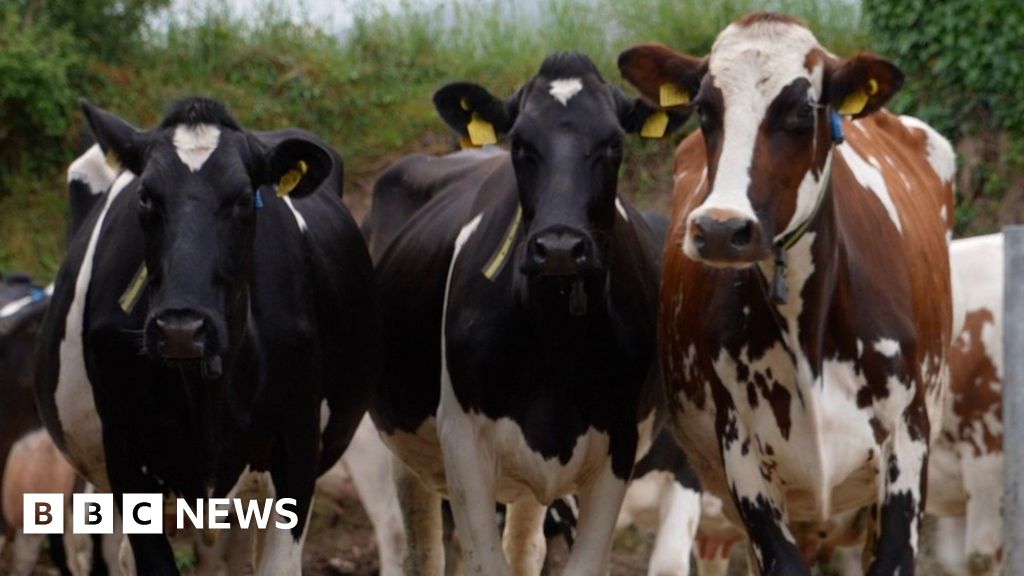
The Perfect Storm: Why Rising Costs are Putting Cornwall Dairy Farms ‘Under Pressure’ – BBC
The agricultural landscape of South West England is currently facing a period of unprecedented volatility. For generations, the rolling hills of Cornwall have been synonymous with high-quality dairy production, but a convergence of global economic shocks and local market instabilities has left many producers in a precarious position. The narrative that rising costs putting Cornwall dairy farms ‘under pressure’ – BBC reports and industry analysts have highlighted is not merely a temporary dip in profits; it is a systemic crisis that threatens the viability of family-run operations.
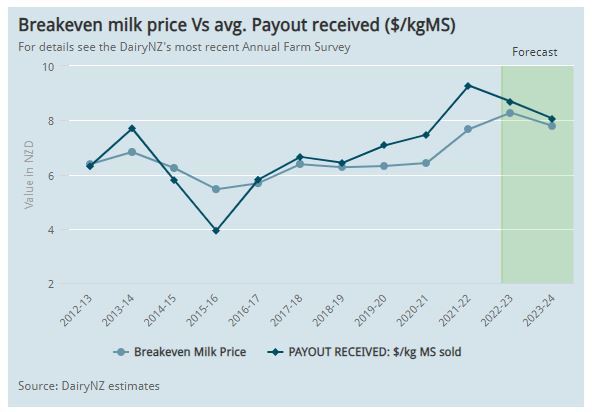
At the heart of the issue is a phenomenon known as the “price scissors.” This occurs when the cost of production—the inputs required to keep a herd healthy and productive—rises sharply while the price received for the final product, in this case, raw milk, remains stagnant or drops. When the cost to produce a litre of milk exceeds the price the farmer receives from the processor, the farm is effectively paying to produce food. For many in Cornwall and across the UK, this is no longer a theoretical risk but a daily reality.
This crisis is not isolated to one county. Similar patterns are emerging across the UK, including significant distress among Welsh dairy farmers. However, the specific geography and economic structure of Cornwall make its dairy sector particularly vulnerable. As we examine the drivers of this pressure, it becomes clear that the struggle of the dairy farmer is a bellwether for broader issues of food security, global supply chain fragility, and the urgent need for a more sustainable agricultural economic model.
The Anatomy of a Dairy Crisis: What is Driving the Costs?
To understand why dairy farms are under such extreme pressure, one must look beyond the farm gate. The costs associated with dairy farming are heavily tied to global commodities markets, making local farmers susceptible to geopolitical events thousands of miles away.
The Fertilizer and Feed Spiral
Fertilizer is perhaps the most volatile input in the dairy cycle. Most synthetic fertilizers rely on natural gas for production and specific minerals like potash and phosphate. With global energy prices fluctuating wildly and supply chains disrupted by conflict in Eastern Europe—a primary source of these minerals—the cost of keeping pastures lush has skyrocketed. When farmers cannot afford sufficient fertilizer, grass yields drop, forcing them to purchase expensive concentrated feed to maintain milk production levels.
Feed costs have mirrored this upward trend. The price of soy and maize, essential for high-protein cattle diets, is subject to international market swings. For a Cornwall farmer, a spike in the price of grain in South America or a poor harvest in the Midwest US translates directly into a higher monthly bill, squeezing margins that were already razor-thin.
Energy and Fuel Inflation
Modern dairy farming is an energy-intensive operation. From the electricity required to run milking parlors and cooling tanks to the diesel needed for tractors and slurry tankers, fuel is an omnipresent cost. The surge in energy prices has hit farms twice: once in the direct cost of fuel and again in the indirect costs of every service and product they purchase from third-party suppliers.
| Cost Driver | Primary Cause of Increase | Impact on Dairy Operation |
|---|---|---|
| Synthetic Fertilizers | Natural gas prices & geopolitical instability | Reduced pasture quality, higher reliance on bought-in feed. |
| Animal Feed | Global grain market volatility & logistics costs | Direct increase in daily overheads per cow. |
| Energy/Diesel | Global oil price fluctuations | Higher costs for milking, cooling, and machinery. |
| Labor | Wage inflation & workforce shortages | Increased operational costs and management stress. |
The ‘Price Scissors’: When Milk Prices Fall Below Production Costs
While input costs have climbed, the revenue side of the equation has failed to keep pace. The market price for milk is often dictated by large-scale processors and global demand, leaving the individual farmer as a “price taker” with highly little bargaining power.
When milk prices dip below the cost of production, farmers face a harrowing choice. They can either dip into their savings, take on more debt, or reduce the size of their herd. Reducing the herd is often a last resort, as it reduces the farm’s future earning potential and can lead to a downward spiral of declining productivity.
“The psychological toll of knowing that every single litre of milk you produce is costing you money is immense. It’s not just a financial calculation; it’s the feeling that the system is rigged against the person actually doing the work.”
This disparity is exacerbated by the complexity of the dairy supply chain. While the raw milk price may be low, the retail price of dairy products in supermarkets often remains high. This suggests that the “value add” is being captured by processors and retailers, while the primary producer absorbs all the risk and the brunt of the inflation.
Regional Perspectives: Cornwall and the Wider UK Impact
The news that rising costs putting Cornwall dairy farms ‘under pressure’ – BBC reports is reflective of a wider trend, but Cornwall’s specific challenges are noteworthy. The region’s reliance on grass-based systems is generally more sustainable, but it makes them more sensitive to changes in fertilizer costs and weather patterns.
The Parallel in Wales
Similarly, Welsh dairy farmers have reported soaring fuel and fertilizer costs. The commonality across these regions is the prevalence of family-owned farms. Unlike massive corporate agricultural enterprises, family farms lack the capital reserves to weather prolonged periods of loss. They are more likely to be heavily leveraged with bank loans, making them hypersensitive to interest rate hikes.
The Role of Financial Institutions
As the crisis deepens, the relationship between farmers and their lenders has become critical. Industry experts have urged farmers to engage in proactive dialogue with their banks. This is not merely about asking for more credit, but about restructuring debt and finding sustainable ways to manage cash flow during the “trough” of the market cycle. However, there is a lingering fear that banks may become less risk-tolerant, potentially leading to a wave of foreclosures if government intervention is not realized.
For more on how agricultural financing is evolving, see our related explainer on farm debt management.
Beyond the Balance Sheet: The Social and Environmental Cost
The pressure on dairy farms is not just an economic story; it has profound social and environmental implications. When farms become financially unviable, the ripple effects are felt throughout the rural community.

- Rural Depopulation: As family farms close, the next generation is less likely to enter the profession, leading to a loss of traditional knowledge and the erosion of rural village life.
- Environmental Degradation: Farmers under extreme financial stress may be forced to cut corners on environmental stewardship. While many are committed to sustainable practices, the ability to invest in hedgerow maintenance, soil health, and carbon-sequestering techniques diminishes when the priority is basic survival.
- Food Security: A reduction in the number of viable dairy farms in the UK increases reliance on imported dairy products. This not only increases the carbon footprint of the food we eat but also makes the national food supply more vulnerable to global disruptions.
Correcting Common Misconceptions
There are several oversimplifications often found in the public discourse regarding the farming crisis. It is important to address these to understand the true nature of the pressure.
Misconception 1: “Farmers are just complaining about market fluctuations.”
Market fluctuations are a normal part of agriculture. However, the current situation is different because the cost of inputs is rising faster than the value of outputs. This is not a standard cycle; it is a structural squeeze. In the past, when milk prices dropped, fuel and fertilizer often stabilized or dropped as well. Now, they are moving in opposite directions.
Misconception 2: “Government subsidies solve the problem.”
While subsidies provide a safety net, the transition from the EU’s Common Agricultural Policy (CAP) to new domestic schemes (like ELMS in England) has created a period of uncertainty. Many farmers are moving from a system that paid them based on the amount of land they farmed to one that pays for “public goods” (environmental services). While this is a positive move for the planet, the transition period is coinciding with the cost-of-living crisis, leaving a funding gap that subsidies alone aren’t filling.
Misconception 3: “Switching to organic or niche markets is an simple fix.”
While diversifying into organic milk or artisan cheese can offer higher margins, the transition period is costly and time-consuming. It requires significant capital investment in new infrastructure and a period of “conversion” where the farmer cannot yet charge premium prices. For a farm already under pressure, this transition is often financially impossible without external grants.
Strategies for Resilience and Future Viability
Despite the grim outlook, there are pathways toward stability. The industry is seeing a shift toward “resilience farming,” which focuses on reducing dependency on volatile global inputs.
Regenerative Agriculture
Many Cornwall farmers are exploring regenerative grazing techniques. By focusing on soil health and rotational grazing, farmers can naturally increase the productivity of their grass, thereby reducing the need for expensive synthetic fertilizers. This not only lowers costs but also makes the farm more resilient to climate change.
Diversification of Income
The “single-income” farm is becoming a liability. Forward-thinking producers are diversifying their revenue streams through:
- Agri-tourism: Converting old barns into holiday lets or hosting farm-stay experiences.
- Direct-to-Consumer Sales: Using milk vending machines or subscription boxes to bypass the processor and capture a higher percentage of the retail price.
- Renewable Energy: Installing solar panels or anaerobic digesters to turn slurry into energy, creating a new income stream while reducing energy bills.
Collective Bargaining and Co-operatives
There is a renewed interest in the co-operative model. By banding together, smaller farms can gain more leverage when negotiating prices with processors and can buy inputs (like feed and fuel) in bulk to reduce costs.
For a deeper dive into sustainable transitions, check out our related explainer on regenerative farming practices.
Frequently Asked Questions
Why are milk prices falling while the cost of living is rising?
Milk prices are influenced by global supply and demand, as well as the pricing power of large dairy processors. While the costs of fuel and feed are driven upward by global inflation and geopolitical conflict, the price paid to farmers does not automatically rise in tandem, leading to a collapse in profit margins.
How does the situation in Cornwall differ from other dairy regions?
While many regions are struggling, Cornwall’s dairy sector is characterized by a high proportion of grass-based, family-run farms. These operations are often more sustainable but have less capital cushioning than large corporate farms, making them more susceptible to sudden spikes in input costs.
What can consumers do to help struggling dairy farmers?
Consumers can support farmers by purchasing local produce, buying from farmers’ markets, or choosing brands that transparently commit to fair pricing for primary producers. Reducing waste and supporting local dairy co-operatives also helps keep wealth within the rural community.
Will this lead to higher prices for milk in supermarkets?
Not necessarily. Retail prices are often decoupled from farm-gate prices. However, if a significant number of farms go out of business, the resulting drop in supply could eventually lead to higher prices for consumers due to scarcity.
Are government grants enough to save these farms?
Grants can provide essential short-term relief and help fund the transition to greener practices, but they are rarely a substitute for a fair market price. Long-term viability requires a structural change in how value is distributed across the food supply chain.
The current state of dairy farming in Cornwall is a stark reminder of the fragility of our food systems. When the people who produce the most basic staples of our diet are pushed to the brink, it is a signal that the economic model of agriculture is broken. The path forward requires a combination of financial pragmatism, government support, and a societal shift in how we value the labor and land that feeds us. Whether through regenerative practices or a fairer distribution of profit, the goal must be to ensure that the dairy farms of Cornwall remain a viable part of the landscape for generations to come.
