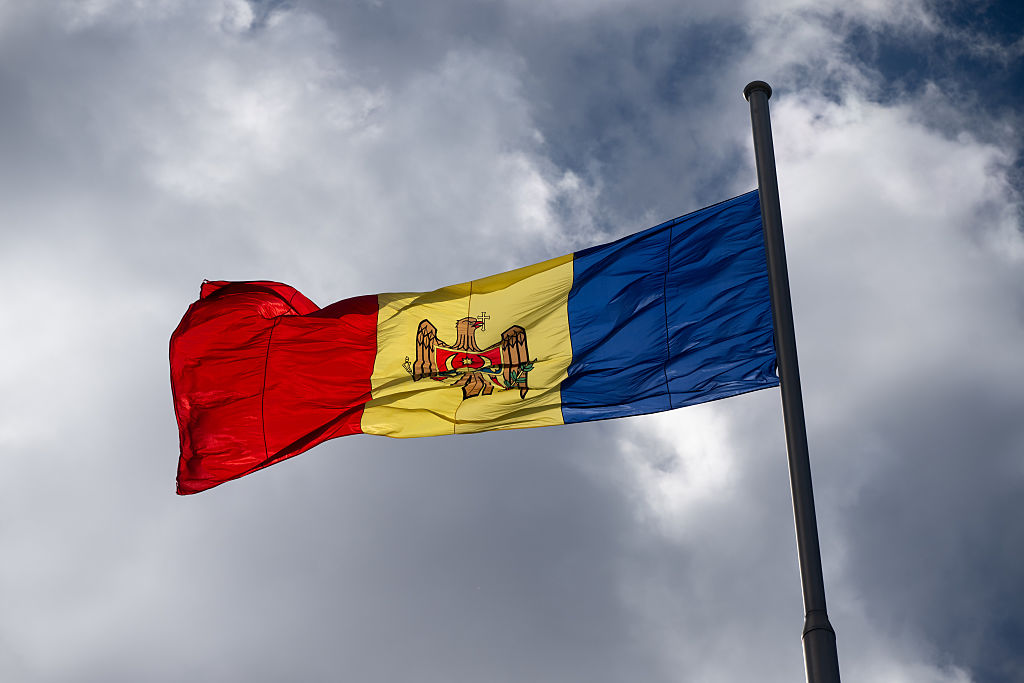
Moldova’s government has openly floated a radical proposal to accelerate its European ambitions: a potential unification with Romania, a move that could erase the modest Eastern European nation from the map and reshape the region’s geopolitical landscape.
The idea, described by Moldova’s deputy prime minister as a “Plan B” to EU membership, has sparked both intrigue and alarm. While the government insists the option remains hypothetical, the discussion underscores the deepening frustration in Chisinau over stalled accession talks with Brussels. With Romanian President Klaus Iohannis signaling cautious openness to dialogue, the proposal has reignited debates over Moldova’s future—and the delicate balance between national identity and European integration.
Why Moldova’s “Plan B” Could Redraw Europe’s Borders
Moldova, a landlocked country of 2.5 million people sandwiched between Romania and Ukraine, has pursued EU accession since gaining independence in 1991. But progress has been slow, hindered by corruption, political infighting, and Russia’s lingering influence in the region. Against this backdrop, unification with Romania—a scenario last seriously discussed in the 1990s—has resurfaced as a potential shortcut to European membership.
Romania, which joined the EU in 2007, has historically opposed formal annexation, citing constitutional barriers and concerns over Moldova’s ethnic composition—roughly 80% ethnic Romanian, with significant Russian and Ukrainian minorities. Yet Iohannis, in a 2023 speech, acknowledged that “the door is not closed” to exploring closer ties, including economic integration and dual citizenship for Moldovans.
Historical Echoes and Political Realities
The idea of a Moldovan-Romanian union traces back to the 19th century, when the region was divided between the Russian and Ottoman empires. After World War II, the Soviet Union absorbed Moldova as a republic, while Romania lost territory to the USSR. The 1991 independence referendum in Moldova saw 94% of voters opt for sovereignty—but also 82% in favor of closer ties with Romania, a result that has fueled pro-unification sentiment ever since.
Today, however, the political climate is far more complex. Moldova’s pro-Western government, led by Prime Minister Dorin Recean, has framed unification as a last resort. “If the EU door remains closed, we must consider all options,” Recean’s office stated in a recent policy brief. The deputy prime minister’s remarks, reported by international observers, framed the proposal as a negotiation tactic rather than an immediate demand.
International Reactions: Between Support and Skepticism
Brussels has responded with measured caution. European Commission officials have reiterated that Moldova’s EU candidacy—officially granted in 2022—remains the preferred path, but they acknowledge the challenges. “We understand Moldova’s desire for stability and security,” a senior EU diplomat told reporters, “but any solution must respect international law and the will of the Moldovan people.”
Russia, which has historically opposed Moldovan integration with the West, has remained silent on the unification proposal, though analysts speculate Moscow may view it as a potential distraction from Moldova’s pro-European trajectory. Meanwhile, Ukraine, Moldova’s eastern neighbor, has expressed concern over the potential implications for its own territorial integrity, given the unresolved status of Transnistria, a breakaway region backed by Moscow.
What’s Next: A Referendum or a Dead End?
Moldova’s government has not yet outlined concrete steps toward unification, but legal experts suggest a constitutional referendum would be required—a process that could take years. Romanian officials have emphasized that any discussion must be “bilateral and consensual,” ruling out unilateral moves. For now, the proposal remains a diplomatic gambit, one that could either accelerate Moldova’s European future or deepen its isolation if miscalculated.

As the debate unfolds, one thing is clear: the small nation at the crossroads of Europe and Eurasia is forcing its neighbors to confront a question they thought long settled. Will Moldova’s next chapter be written in Brussels—or in Bucharest?
