How Olga Tokarczuk’s Short Stories Are Shaping a New Polish Theatre Movement
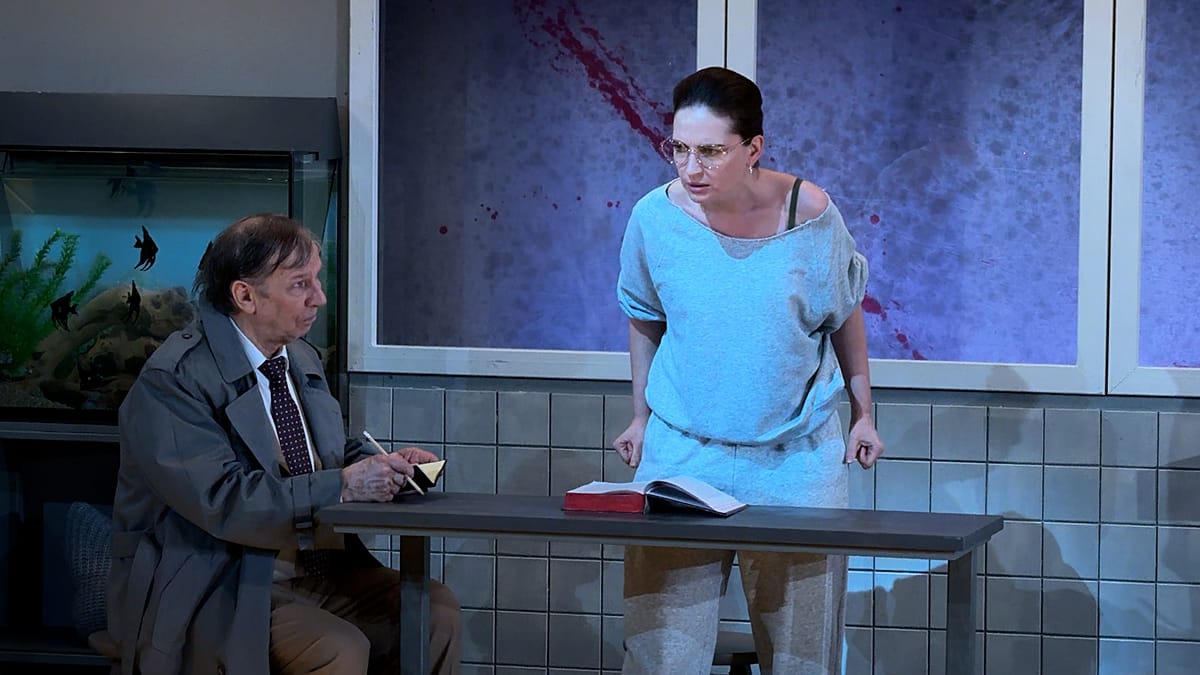
Warsaw, Poland — When a stage director first read Olga Tokarczuk’s short story collection *Drive Your Plow Over the Bones of the Dead*, they saw more than a literary work—they saw a blueprint for a radical new approach to theatre. Now, that vision is taking shape in Warsaw’s avant-garde theatre scene, where playwrights, directors, and actors are reimagining performance through the lens of Tokarczuk’s fragmented, surreal, and deeply human narratives. The result is a cultural phenomenon that blends experimental storytelling with Poland’s rich theatrical tradition, proving once again that literature and live performance can inspire each other in unexpected ways.
This isn’t just another adaptation of a book for the stage. It’s a full-fledged artistic movement, one that challenges audiences to question reality, memory, and the boundaries between fiction and truth. As Poland’s theatre landscape grapples with post-communist identity, political unrest, and a resurgence of literary prestige, Tokarczuk’s influence—already cemented by her Nobel Prize in Literature—is now extending into the realm of live performance. The question is no longer if literature can shape theatre, but how far this collaboration will push the art form forward.
— ### A Storytelling Revolution: From Page to Stage The connection between Olga Tokarczuk’s work and Poland’s theatre scene began quietly, almost by accident. In 2022, a group of young playwrights and directors at the Teatr Powszechny in Warsaw stumbled upon *Drive Your Plow Over the Bones of the Dead*, a collection that defies conventional narrative structure. Instead of a linear plot, Tokarczuk weaves together vignettes about an elderly woman, her eccentric neighbors, and a series of mysterious deaths in a small Polish village. The story is as much about the act of storytelling itself as We see about the characters within it.
“Tokarczuk’s prose doesn’t just tell a story—it unfolds one,” says Magdalena Kowalska, a theatre director who co-created the first stage adaptation. “The way she jumps between perspectives, between reality and hallucination, between the mundane and the mythical—it’s like watching a play where the fourth wall keeps dissolving.”
What followed was a deliberate deconstruction of traditional theatre. Instead of adapting the book directly, Kowalska and her team took Tokarczuk’s themes—memory, loss, the absurdity of human existence—and used them as a starting point for an entirely new work. The result, Open Your Eyes, is a multi-sensory experience that blurs the line between play and performance art.
Key elements of the adaptation:
- A non-linear structure, mirroring Tokarczuk’s storytelling, where scenes unfold in an order dictated by the actors’ improvisations.
- Use of surreal soundscapes, blending Polish folk music with electronic beats to evoke the eerie atmosphere of the village.
- An interactive element where audience members receive cryptic notes that may or may not relate to the performance, forcing them to engage with the narrative on their own terms.
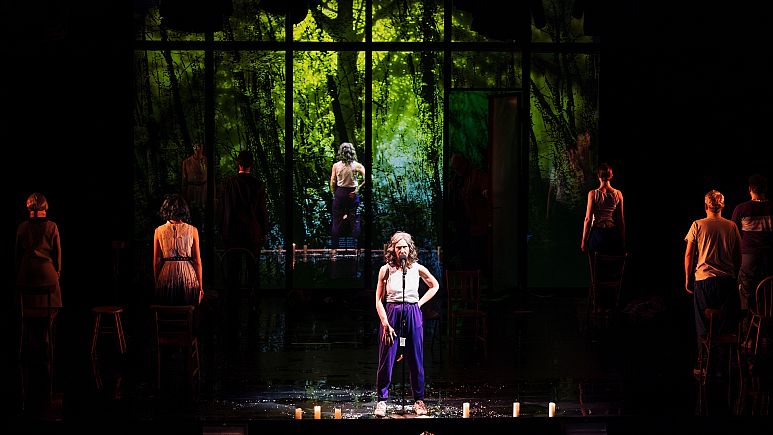
- A minimalist set that shifts between a forest clearing, a crumbling house, and an empty stage—symbolizing the fluidity of memory.
The play’s premiere in October 2023 at the Teatr Nowy in Kraków was met with both acclaim and controversy. Critics praised its bold experimentation, while some traditionalists argued it abandoned the integrity of Tokarczuk’s original work. Yet, the debate itself became part of the conversation—proving that the play’s greatest strength was its ability to provoke.
— ### Why Tokarczuk? Poland’s Literary Giant and Her Theatrical Legacy Olga Tokarczuk’s influence on Polish culture is undeniable. The 2018 Nobel laureate is not just a writer; she is a cultural icon whose work has redefined Polish literature in the 21st century. But why has her short fiction, in particular, resonated so deeply with theatre-makers now?
Part of the answer lies in the political and social climate of modern Poland. Since the rise of the Law and Justice party in 2015, Poland has seen a tightening of cultural freedoms, with debates over historical memory, gender rights, and artistic censorship dominating public discourse. Tokarczuk’s work—often exploring themes of zapomnienie (forgetting) and pamięć (memory)—has become a counterpoint to these political shifts.
“Tokarczuk’s stories are anti-narratives in a country that’s increasingly obsessed with grand stories—national myths, historical truths, ideological battles,” explains Dr. Janusz Wójcik, a literary critic at the University of Warsaw. “Theatre, like her fiction, can be a space where those myths are dismantled, where the audience is forced to confront the gaps in their own understanding of reality.”
Another factor is the global recognition of Tokarczuk’s work. After winning the Nobel Prize, her books saw a surge in international translations, making her one of the most widely read Polish authors outside her home country. This global attention has emboldened Polish artists to experiment with her themes, knowing that their work will reach beyond Warsaw’s city limits.
Tokarczuk’s most influential short story collections for theatre:
| Collection | Key Themes | Theatrical Adaptation Potential |
|---|---|---|
| Drive Your Plow Over the Bones of the Dead (2009) | Memory, death, the absurd, folklore vs. Reality | Non-linear storytelling, surreal imagery, audience participation |
| House of Day, House of Night (2013) | Duality, identity, historical trauma | Split-stage performances, shifting perspectives |
| Bieguni (2007, translated as Primal and Other Stories) | Existentialism, alienation, the search for meaning | Minimalist staging, existential dialogue |
Yet, the relationship between Tokarczuk and theatre is not entirely new. Her novel Flights (2007) was adapted into a play as early as 2010, and her work has long inspired Polish directors known for their experimental approaches, such as Krzysztof Warlikowski, whose productions often blend literature with avant-garde performance.
What makes Open Your Eyes different is its collective creation. Unlike previous adaptations, this project was developed through workshops with actors, writers, and even local villagers who shared their own stories of memory and loss. The result is a piece that feels lived-in, as if Tokarczuk herself had stepped onto the stage.
— ### The Broader Impact: A New Wave of Polish Theatre? The success of Open Your Eyes has sparked a wave of similar projects across Poland. In Gdańsk, the Teatr Wybrzeże is developing an adaptation of Tokarczuk’s House of Day, House of Night, focusing on the novel’s exploration of duality and identity. Meanwhile, in Wrocław, a collective of young playwrights is working on a series of micro-plays inspired by her short stories, each lasting no more than 20 minutes but packed with her signature surrealism.
“We’re seeing a shift from adapting Tokarczuk to collaborating with her,” says Anna Zielińska, a playwright behind the Wrocław project. “It’s not about translating her words to the stage—it’s about using her spirit to create something entirely new.”
This trend is part of a larger movement in Polish theatre known as teatr literacki nowoczesny (modern literary theatre), where the boundary between playwright and director, between text and performance, is increasingly blurred. Directors like Krzysztof Zaleski have argued that Tokarczuk’s work is particularly suited to this approach because it resists being pinned down.
“Tokarczuk’s stories are like open wounds—they don’t heal, they don’t close,” Zaleski says. “Theatre, with its live, breathing nature, is the perfect medium to keep them raw.”
Yet, challenges remain. Some critics worry that the commercialization of Tokarczuk’s image could dilute her work’s radical edge. Others question whether these adaptations truly honor her intent or simply repurpose her fame for box-office appeal. The debate reflects a broader tension in Polish culture: How do you adapt a writer who has spent her career resisting adaptation?
— ### Beyond Poland: How Tokarczuk’s Influence Is Crossing Borders While the immediate impact of Open Your Eyes is felt in Poland, its ripple effects are spreading. In Germany, the Schauspiel Frankfurt is in talks to produce a bilingual version of the play, aiming to introduce Tokarczuk’s work to German-speaking audiences. Meanwhile, in the United States, independent theatre companies are showing interest in staging her stories, though logistical and linguistic hurdles remain.
“Tokarczuk’s appeal is universal because her themes—memory, identity, the search for truth—are universal,” says Dr. Elena Marchesini, a comparative literature professor at Columbia University. “But her Polishness is what makes her stories feel immediately relevant to Polish audiences. The challenge for international productions is to capture that specificity without losing the universality.”
One potential solution is the rise of immersive theatre, where audiences become part of the narrative. A production of Drive Your Plow Over the Bones of the Dead in Berlin, for example, could use augmented reality to layer Tokarczuk’s fictional village over a real-world setting, creating a hybrid experience that bridges literature, theatre, and digital art.
For now, however, the most exciting developments remain in Poland, where Tokarczuk’s influence is reshaping not just what is performed on stage, but how theatre itself is understood.
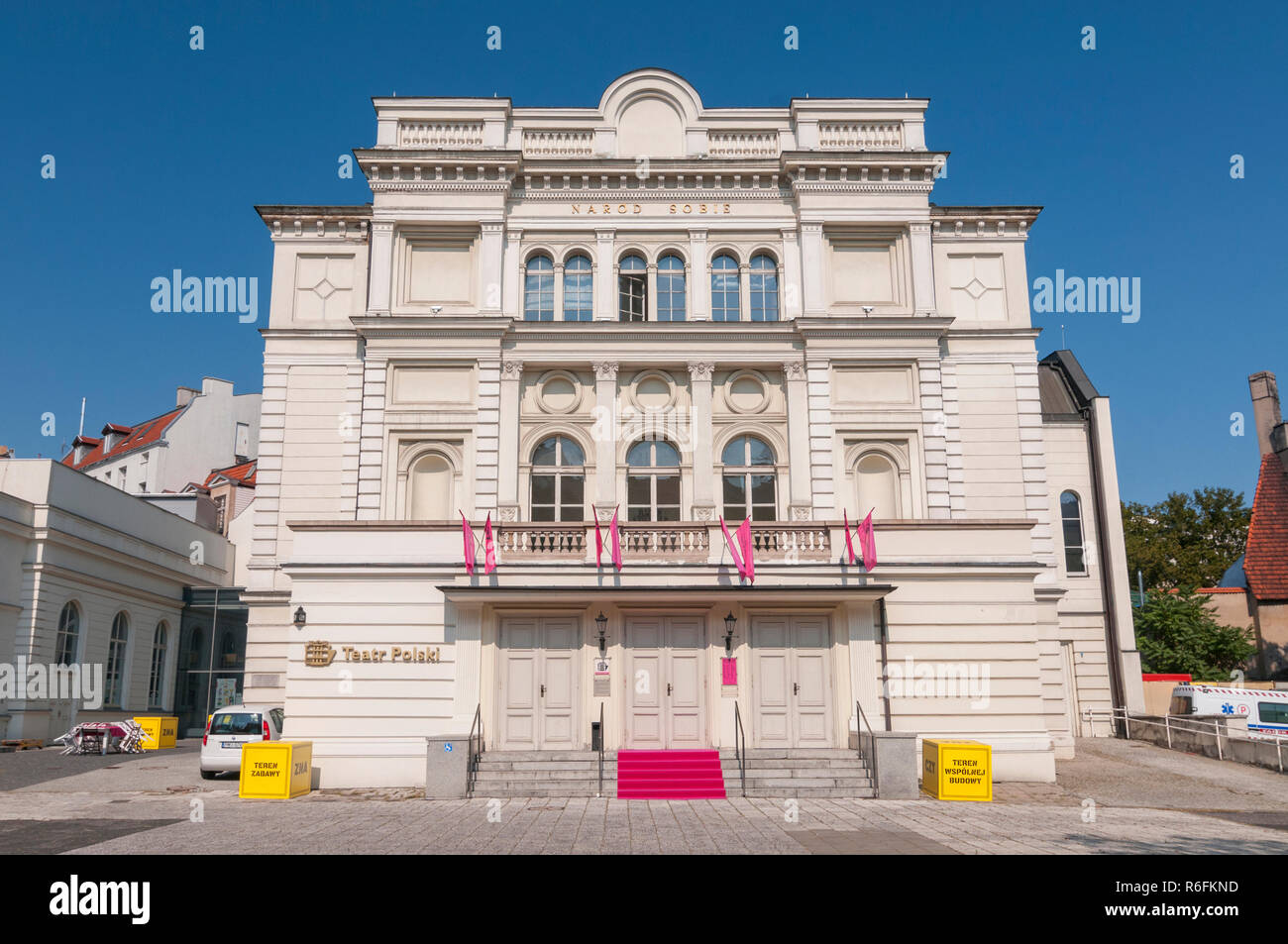
— ### What’s Next? The Future of Literary Theatre in Poland The story of Open Your Eyes is far from over. As the play tours across Poland—from the historic Teatr Wielki in Poznań to the underground Stary Theatre in Kraków—directors and actors are already discussing new adaptations. Some are exploring Tokarczuk’s non-fiction, such as her essays on walking as a metaphor for life, while others are turning to her lesser-known works, like the surreal The Memory Police.
“Tokarczuk’s oeuvre is so vast that we could be adapting her work for the next decade,” says Kowalska. “The key is to keep the spirit of experimentation alive—because that’s what her stories demand.”
What’s clear is that this movement is more than a fleeting trend. It represents a cultural realignment in Poland, where literature and theatre are no longer seen as separate art forms but as collaborative forces. In a country where political tensions often dominate cultural discourse, these adaptations offer a space for quiet rebellion—a way to explore complex ideas without direct confrontation.
For audiences, the experience is equally transformative. As one reviewer put it: “Open Your Eyes doesn’t just tell you a story—it makes you see it. And once you’ve seen it, you can’t unsee it.”
— ### Key Questions About Olga Tokarczuk’s Theatrical Influence
How does Open Your Eyes differ from traditional book adaptations?
Unlike most stage adaptations, which follow a book’s plot closely, Open Your Eyes uses Tokarczuk’s themes and atmosphere as a foundation for an original work. The play’s non-linear structure, audience interaction, and surreal elements are designed to mirror the feeling of her stories rather than their exact details.
Is this the first time Tokarczuk’s work has been adapted for theatre?
No, but it’s the most ambitious. Earlier adaptations, like the 2010 play based on Flights, were more straightforward. Open Your Eyes represents a shift toward collaborative creation, where directors and actors treat Tokarczuk’s work as a starting point rather than a script to follow.
Why is Poland’s political climate relevant to these adaptations?
Tokarczuk’s themes—memory, truth, and the fluidity of history—directly challenge Poland’s current political narrative, which often emphasizes fixed historical truths. Her work in theatre becomes a way to question those narratives without outright opposition, making it a powerful form of cultural resistance.
Will these plays be performed outside Poland?
Yes, but with adaptations. International productions will likely need to address language barriers and cultural differences. For example, a German or English version might emphasize Tokarczuk’s universal themes while downplaying her Polish-specific references to folklore and history.
Are there risks in commercializing Tokarczuk’s work?
Critics argue that turning her stories into theatre could dilute their radical edge. However, supporters believe that even commercial productions can introduce new audiences to her ideas, ensuring her influence grows beyond literary circles.
What other Polish writers are inspiring similar theatrical movements?
While Tokarczuk leads the charge, other contemporary Polish authors like Witold Gombrowicz (for his absurdist plays) and Stanisław Lem (for his sci-fi explorations of identity) are also seeing renewed interest in theatre. However, none have matched Tokarczuk’s immediate cultural impact.
—
