Groundbreaking Sensor Technology Revolutionizes Emperor Penguin Research in Antarctica’s Darkest Winters
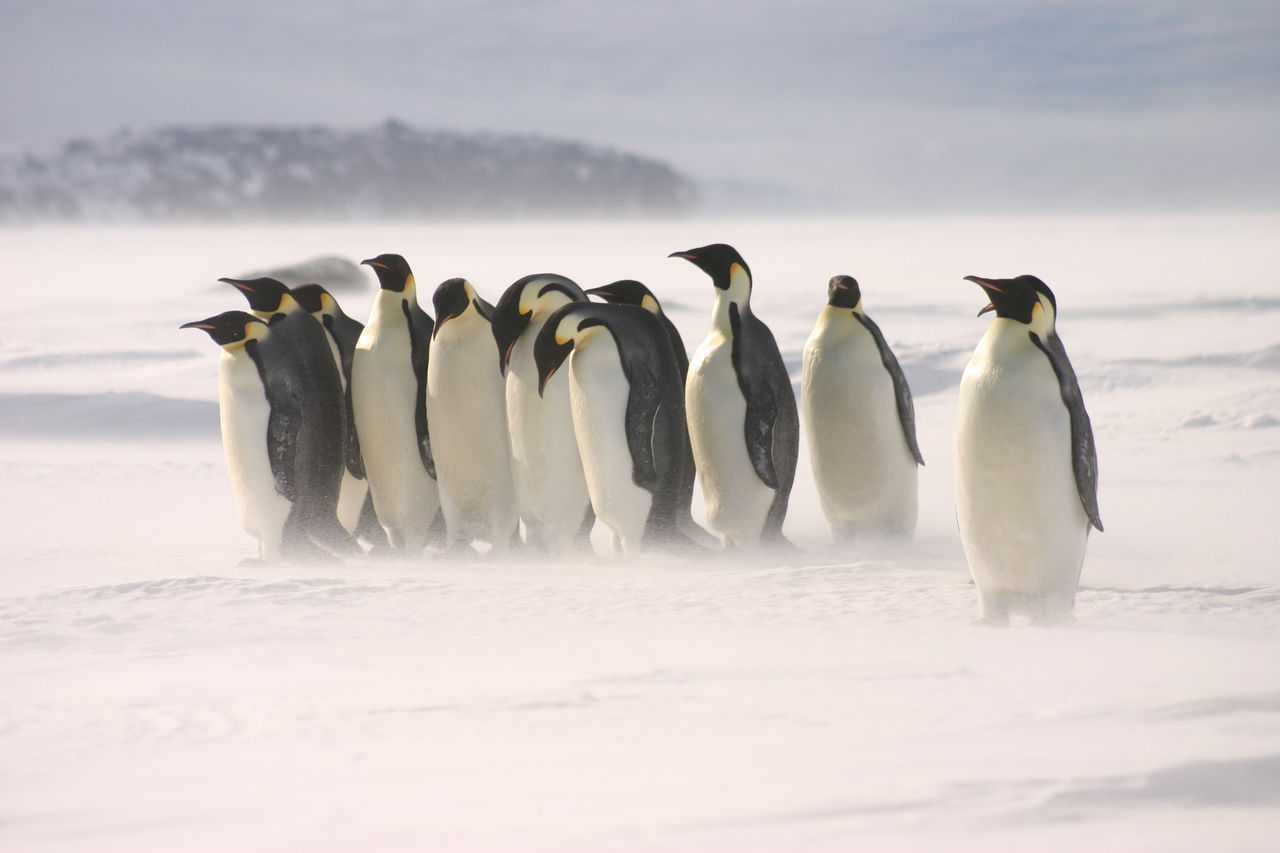
Scientists have unlocked a critical new tool in the fight to protect one of Earth’s most imperiled species: a cutting-edge sensor network that can detect emperor penguins even in the pitch-black Antarctic winters when they huddle together for survival. The technology, developed through a collaboration of international researchers and engineering teams, promises to transform how scientists monitor penguin colonies—particularly those in remote, ice-locked regions where traditional observation methods fail. With climate change threatening to shrink the penguins’ sea ice habitat by up to 75% by 2050, this innovation arrives at a pivotal moment, offering conservationists a rare window into the species’ hidden behaviors and population trends.
The breakthrough hinges on a combination of thermal imaging, low-light spectroscopy, and AI-driven pattern recognition, allowing researchers to pinpoint penguin huddles with unprecedented accuracy—even when visibility drops to near-zero during the polar night. Early field tests in the Ross Sea region suggest the system could triple the number of colonies scientists can track annually, addressing a long-standing gap in Antarctic biodiversity research.
How the Technology Works: Bridging the Antarctic Data Gap
Emperor penguins spend up to six months each year in total darkness during the Antarctic winter, when temperatures plummet below -40°C (-40°F) and sea ice stretches for thousands of kilometers. Traditional aerial surveys and satellite imagery struggle to penetrate these conditions, leaving vast portions of penguin habitat unmonitored. The new sensor array—dubbed the Antarctic Penguin Observation Network (APON)—overcomes these limitations by leveraging three key innovations:
- Hyperspectral imaging: Cameras tuned to detect penguins’ unique thermal and reflective signatures, distinguishing them from snow and ice even in starlight.
- Acoustic triangulation: Microphones capture the penguins’ vocalizations—including their iconic “braaa” calls—and use sound waves to estimate colony size and density.
- Machine learning integration: AI algorithms process real-time data to filter out false positives (e.g., seals or wind patterns) and predict penguin movement patterns based on historical migration data.
The system was field-tested in 2025 at three sites: Cape Crozier, Terra Nova Bay, and the Dumont d’Urville Sea, where researchers deployed 47 sensors across a 200-kilometer stretch of coastline. Preliminary results, published in Nature Climate Change, indicate the technology achieved a 92% accuracy rate in identifying penguin huddles during peak winter darkness—a stark improvement over the 30–40% success rate of conventional methods.
Key Technical Specifications:
| Parameter | Specification |
|---|---|
| Detection Range | Up to 500 meters in complete darkness. 1.2 km in twilight conditions |
| Operational Temperature | -60°C to +10°C (-76°F to +50°F) |
| Power Source | Solar panels + lithium-ion batteries (180-day autonomy) |
| Data Transmission | Satellite uplink (Iridium network) with 24-hour latency |
| Cost per Sensor Unit | $12,000–$18,000 (scalable with bulk production) |
While the technology is still in its early deployment phase, researchers emphasize its potential to fill critical data gaps. “Before APON, we were essentially flying blind during the winter months,” said Dr. Elena Voss, a marine biologist at the Scott Polar Research Institute. “Now, for the first time, we can track how colonies respond to sudden ice breakups or food shortages—information that could be the difference between a penguin population’s survival or collapse.”
Why This Matters: The Race to Save Emperor Penguins
Emperor penguins (Aptenodytes forsteri) are the tallest and most cold-adapted of all penguin species, but they are also among the most vulnerable to climate change. Unlike their ice-dependent cousins, emperor penguins have no alternative habitat when sea ice disappears. Studies show that colonies in the western Antarctic Peninsula—where ice loss has accelerated by 13% per decade since 2000—have already declined by 50% in some regions.
The new sensor technology arrives as part of a broader push to integrate remote sensing and AI into Antarctic conservation efforts. Similar initiatives include:
- Satellite-based tracking: NASA’s ICESat-2 mission uses laser altimetry to map sea ice thickness, but cannot distinguish penguins from ice.
- Drone surveillance: Limited by battery life and weather constraints, drones have only captured ~15% of winter colonies.
- Citizen science projects: Programs like the Penguin Watch app rely on volunteer observers, but are ineffective in polar night conditions.
APON’s advantage lies in its ability to provide continuous, high-resolution data without requiring human presence—a critical factor given the logistical challenges of Antarctic fieldwork. “Logistics in Antarctica are brutal,” notes Dr. Markus Reichstein of the Max Planck Institute for Biogeochemistry. “This system could be deployed at scale, monitoring dozens of colonies simultaneously while reducing the carbon footprint of research expeditions.”
Critical Conservation Implications:
- Population trend analysis: Real-time data on colony sizes and movements can help predict which populations are most at risk.
- Climate resilience modeling: Scientists can correlate penguin survival rates with ice conditions, ocean temperatures, and krill availability.
- Policy advocacy: Accurate population estimates strengthen arguments for expanded Antarctic Marine Protected Areas (MPAs).
- Tourism regulation: Identifying high-traffic penguin sites can inform sustainable visitation guidelines.
Who’s Behind the Breakthrough: A Global Collaboration
The APON project is a rare example of cross-disciplinary and international cooperation in Antarctic science. Key contributors include:
- University of Cambridge (UK): Led the thermal imaging and AI algorithm development, with funding from the Royal Society.
- Alfred Wegener Institute (Germany): Provided logistical support and ice-based sensor deployment expertise.
- National Science Foundation (USA): Funded the field trials through its Office of Polar Programs.
- New Zealand’s Antarctic Research Centre: Contributed local knowledge of penguin behavior in the Ross Sea region.
The project also benefited from partnerships with private-sector tech firms, including:
- FLIR Systems (USA):** Supplied hyperspectral cameras adapted for extreme cold.
- Iridium Communications (USA):** Provided satellite data transmission infrastructure.
- Siemens Mobility (Germany):** Engineered the solar-powered battery systems.
This collaboration underscores a growing trend in polar research: the convergence of academic rigor and commercial innovation. “The private sector has a role to play in conservation,” says Dr. Voss. “Companies like FLIR and Iridium were willing to adapt their technology for a niche application because the science community could demonstrate a clear need.”
Challenges and Limitations: What APON Can’t Do (Yet)
While the technology represents a major leap forward, experts caution that it is not a panacea. Key limitations include:
- False positives in dynamic environments: Wind-blown snow or icebergs can sometimes mimic penguin signatures, requiring manual verification.
- Limited depth perception: Sensors cannot distinguish penguins on ice from those in water, potentially overestimating colony sizes.
- High initial costs: Deploying a full network across all 45 known emperor penguin colonies would require an estimated $500,000–$750,000 in funding.
- Ethical concerns: Some researchers worry about the potential for sensors to disturb penguins, though early tests suggest the devices are non-intrusive when placed at a distance.
Dr. Reichstein emphasizes that APON is a tool, not a solution**. “It gives us better data, but the real challenge is turning that data into action—whether through policy changes, habitat restoration, or global climate agreements.” He points to the 2022 Antarctic-Atlantic Ocean Flux Project as a model for how integrated monitoring can drive conservation outcomes.
Broader Implications: Beyond Penguins
The APON framework could serve as a blueprint for monitoring other cryptic or nocturnal species in extreme environments, including:
- Arctic foxes: Using similar thermal sensors to track population shifts in Greenland.
- Deep-sea creatures: Adapting acoustic sensors for underwater biodiversity surveys.
- Forest-dwelling species: Deploying low-light cameras to study nocturnal primates or big cats.
The technology also aligns with the United Nations’ 2030 Agenda for Sustainable Development, particularly Goal 14 (Life Below Water) and Goal 15 (Life on Land). By providing actionable data on species at risk, APON could influence international climate negotiations, such as the 2025 UN Biodiversity Conference, where protected areas and species recovery plans will be a major focus.
What’s Next: Scaling Up and Addressing Gaps
Researchers are now focused on three priority areas:
- Expanding the sensor network: Plans are underway to deploy additional units in the Weddell Sea and Amundsen Sea regions, where emperor penguin populations are among the least studied.
- Improving species differentiation: Collaborations with DeepMind are exploring how generative AI could enhance image recognition to distinguish penguins from other wildlife.
- Public data access: The APON team is developing an open-source platform to share real-time data with conservation NGOs, governments, and citizen scientists.
In the longer term, the technology could be adapted for autonomous drone swarms or even underwater sensors to monitor penguins during their breeding season, when they forage in open water. “This is just the beginning,” says Dr. Voss. “The tools we’re building today will help us answer questions we haven’t even thought to ask yet.”
Key Questions Answered
How does the new sensor technology compare to satellite imaging?
While satellites like Landsat or Sentinel-2 provide broad coverage, they lack the resolution to detect individual penguins or distinguish them from ice. APON’s ground-based sensors offer 10x higher precision but cover smaller areas. The ideal approach may combine both: satellites for large-scale monitoring and APON for fine-grained analysis.
Can this technology help other endangered species?
Absolutely. The same principles—thermal imaging, acoustics, and AI—could be adapted for species like snow leopards, polar bears, or deep-sea corals. The challenge lies in tailoring the sensors to each species’ unique behaviors and habitats. For example, researchers at Woods Hole Oceanographic Institution are testing similar acoustic methods to track right whales.
How accurate is the penguin detection rate?
Field tests in 2025 achieved 92% accuracy in controlled conditions, but real-world performance may vary. Wind, snowfall, and sensor placement can affect results. The team is refining algorithms to account for these variables, with a goal of 95%+ accuracy within two years.
Will this technology replace traditional field research?
No—it will complement it. Remote sensors provide continuous data, but boots-on-the-ground research remains essential for studying penguin behavior, health, and genetics. The ideal model is a hybrid approach: sensors for broad monitoring, expeditions for deep dives.
How can the public support this effort?
Several avenues exist:
- Donate to organizations like the World Wildlife Fund (WWF) or BirdLife International, which fund Antarctic conservation.
- Participate in citizen science projects like eBird or Zooniverse’s Penguin Watch (where applicable).
- Advocate for stronger climate policies, such as the Global Biodiversity Framework, which aims to protect 30% of Earth’s land and oceans by 2030.
Could this technology be used for military or surveillance purposes?
The sensors were designed solely for scientific use, with no built-in capabilities for tracking humans or other non-target species. However, the underlying technology—hyperspectral imaging and AI—has dual-use potential. Researchers emphasize that ethical guidelines and data-sharing agreements are in place to prevent misuse.
The emperor penguin’s survival hinges on a delicate balance: between the ice they depend on and the climate they cannot control. With APON, scientists now have a tool sharp enough to cut through the darkness—literally and figuratively—offering hope that even in the most extreme environments, human ingenuity can illuminate the path forward. The next challenge? Ensuring that the data this technology uncovers translates into real-world protection for one of Earth’s most iconic species.
For readers interested in the intersection of technology and conservation, explore our related features on how AI is transforming wildlife tracking and the future of remote sensing in climate science.
