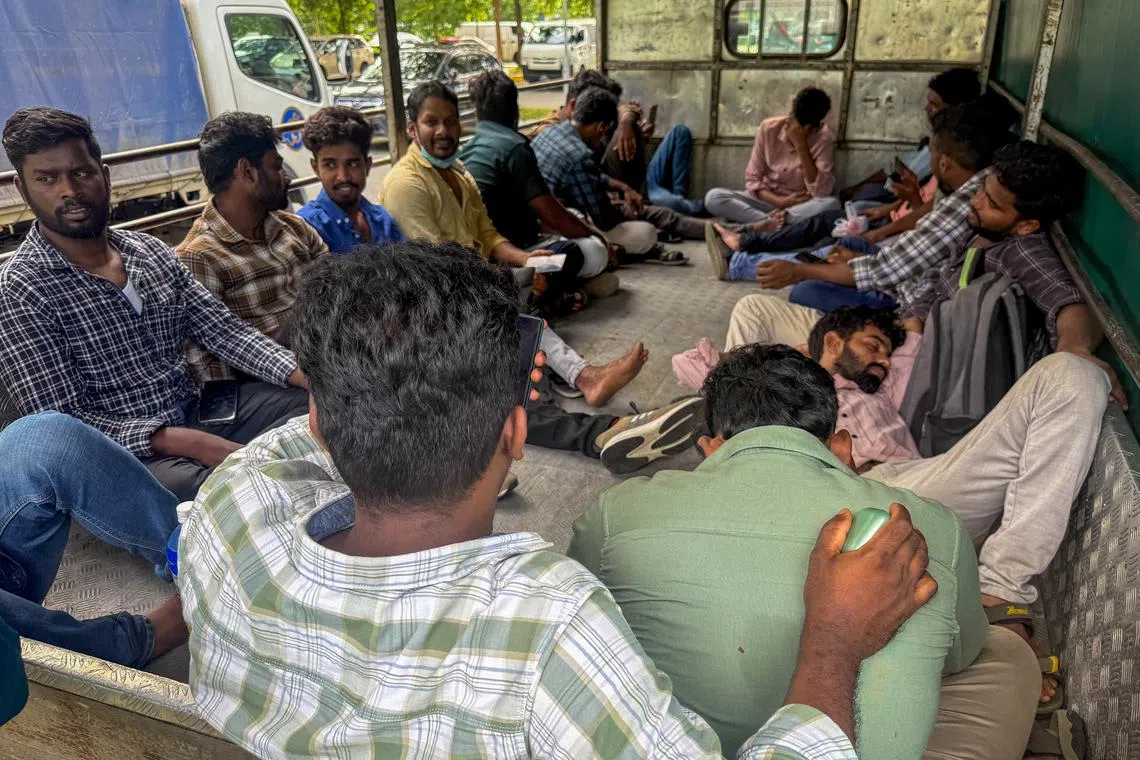
Over 400 migrant workers report unpaid wages tied to air-conditioning firm—how the dispute escalated and what it means for foreign laborers in Singapore
More than 400 migrant workers have come forward with claims of unpaid wages linked to a major air-conditioning firm, marking a sharp rise in reported labor disputes that have drawn scrutiny from government agencies and worker advocacy groups. The surge in cases—now quadruple the number from just months ago—highlights systemic challenges in wage enforcement for foreign laborers in Singapore’s construction and maintenance sectors, where such firms operate.
According to government sources, the Ministry of Manpower (MOM) is actively investigating two firms, including one specializing in air-conditioning installation and servicing, after receiving over 100 direct complaints from workers seeking assistance with unpaid salaries and housing issues. Worker support organizations say the actual number of affected individuals may be higher, as many fear retaliation or legal barriers to reporting violations.
This article breaks down the latest developments, the scale of the problem, and why this dispute has become a focal point in Singapore’s labor rights landscape. It also examines the broader context of wage enforcement failures, the role of intermediaries in the construction sector, and what steps are being taken—or should be taken—to address the issue.
How the dispute unfolded: A timeline of escalating claims
The current wave of complaints began in early 2024, when a cluster of workers from a single air-conditioning firm first approached the Migrant Workers’ Centre (MWC) for help. By mid-year, the MWC had assisted over 100 workers from the same company, with allegations of unpaid wages spanning several months. What started as a localized issue quickly expanded as additional workers from a second firm—also in the air-conditioning sector—reported similar problems.
Key milestones in the dispute include:
- January–March 2024: Initial complaints filed with MWC and NTUC U Portal, with workers citing wage deductions for “training fees” and delays in salary payments.
- April 2024: MOM launches preliminary investigations into both firms after receiving formal complaints.
- June 2024: Number of reported cases surpasses 200, prompting MWC to issue a public statement urging workers to document wage discrepancies.
- August 2024: Claims exceed 400, with workers from both firms reporting overlapping issues, including unpaid overtime and substandard living conditions.
Worker advocacy groups say the rapid escalation suggests a broader pattern of wage abuse in the air-conditioning maintenance sector, where firms often rely on subcontractors to employ foreign laborers. “This isn’t an isolated incident—it’s part of a recurring problem where workers are trapped in cycles of unpaid wages and debt,” said a spokesperson for the MWC.
Why it matters: The air-conditioning sector is a critical part of Singapore’s construction and maintenance economy, employing tens of thousands of foreign workers. If left unchecked, wage disputes in this sector could deter laborers from reporting abuses, exacerbating existing vulnerabilities.
Who is involved—and what are their roles?
The dispute centers on two firms, both of which specialize in air-conditioning installation and servicing. While neither company has been publicly named, sources indicate they operate under contracts with larger construction firms, a common practice in Singapore’s labor market. Below are the key stakeholders and their roles:
| Stakeholder | Role | Position on the Dispute |
|---|---|---|
| Migrant Workers (400+ affected) | Foreign laborers (primarily from Bangladesh, India, and Myanmar) employed in air-conditioning maintenance and installation. | Report unpaid wages, housing issues, and retaliation after raising concerns. Many rely on loans to cover basic expenses. |
| MOM (Ministry of Manpower) | Government agency responsible for labor enforcement, wage protection, and worker welfare. | Investigating both firms; has issued warnings to employers over wage violations in the past. |
| Migrant Workers’ Centre (MWC) | Nonprofit providing legal and financial assistance to foreign laborers. | Assisting over 100 workers; advocates for stronger wage enforcement mechanisms. |
| NTUC U Portal | Union-backed platform offering wage mediation and dispute resolution. | Handling wage claims for affected workers; pushing for transparency in subcontractor payments. |
| Air-Conditioning Firms (2 investigated) | Private companies employing foreign workers under subcontracting arrangements. | Deny systemic wage violations; cite “administrative delays” and “disputes with subcontractors.” |
Key observation: Unlike direct-hire employers, subcontracted firms often face weaker oversight, allowing wage abuses to go unreported. A 2023 MOM report found that 60% of labor disputes in the construction sector involved subcontractors.
Why are wages being withheld—and what does this reveal about Singapore’s labor system?
Workers and advocates point to three primary reasons for the wage disputes:
- Subcontractor exploitation: Many air-conditioning firms hire workers through labor agencies or subcontractors, who often withhold wages under the guise of “deductions” for tools, training, or accommodation. In some cases, workers are paid in cash, making audits difficult.
- Delayed payments: Workers report receiving partial or late salaries, with employers citing “banking issues” or “pending approvals.” Some have gone months without full payment.
- Fear of retaliation: Workers who raise concerns risk losing jobs or facing harassment. A worker from Bangladesh, who spoke anonymously, said, “If I complain, they threaten to send me home with no pay. What choice do I have?”
Industry experts note that Singapore’s reliance on foreign labor—especially in sectors like construction and maintenance—creates structural vulnerabilities. “The system is designed to protect employers more than workers,” said a labor law specialist. “When firms use subcontractors, accountability gets diluted, and workers have no recourse.”
Comparison: Unlike direct-hire employers, subcontracted firms are not always bound by Singapore’s Tripartite Guidelines on Fair Employment Practices, which require timely wage payments and transparent deductions. This loophole has allowed wage abuses to persist in low-visibility sectors.
What are the immediate consequences for workers—and what legal recourse exists?
For the 400+ workers involved, the financial strain is immediate and severe. Many rely on loans to cover rent, food, and school fees for children back home. One worker, whose wife borrowed SGD$2,000 to pay for their children’s education, said, “I haven’t seen a full salary in six months. Now my family is in debt because of this.”
Legally, workers have several avenues for recourse:
- MOM’s Wage Protection System (WPS): Mandates that employers pay wages via GIRO or pay cards. However, subcontracted firms can bypass this by paying workers in cash.
- NTUC U Portal: Offers mediation for wage disputes, but resolution times can exceed three months.
- MWC Legal Assistance: Provides free legal aid, but cases often drag on due to bureaucratic hurdles.
- Police Reports: Workers can file criminal complaints for wage theft, but prosecutions are rare without clear evidence.
Challenge: Many workers lack documentation of their employment terms, making it difficult to prove violations. Advocates urge workers to keep records of pay slips, contracts, and communications with employers.
In response to the escalating claims, MOM has increased inspections of air-conditioning firms and is reviewing subcontractor agreements for compliance. However, critics argue that enforcement remains inconsistent, particularly for smaller firms.
Broader implications: Why this dispute could reshape labor protections
This case is not an isolated incident but part of a larger trend in Singapore’s labor market. A 2023 study by the Institute of Policy Studies found that one in five foreign workers reported wage-related disputes, with construction and maintenance sectors among the highest-risk industries. The current dispute could push policymakers to address several systemic issues:
- Strengthening subcontractor oversight: Currently, MOM’s inspections focus on direct employers, leaving subcontractors with minimal scrutiny. Advocates propose expanding audits to cover all tiers of employment.
- Digital wage tracking: Expanding the WPS to include cash payments could reduce abuses, though this would require worker cooperation.
- Worker education: Many laborers are unaware of their rights or how to document wage violations. NGOs are pushing for mandatory orientation sessions.
- Retaliation protections: Workers fear reporting abuses due to job insecurity. Strengthening anti-retaliation laws could encourage more complaints.
Precedent: Similar wage disputes in 2021–2022 led to MOM tightening rules on wage deductions, but enforcement gaps persist. If this case results in criminal charges against the firms involved, it could signal a shift toward stricter penalties.
Industry analysts warn that prolonged labor disputes could also harm Singapore’s reputation as a business-friendly destination. “Foreign investors and workers alike are watching how these cases are resolved,” said an economist. “If wage abuses go unchecked, it could deter skilled labor from coming here.”
What workers should do now—and how to avoid falling victim to wage theft
With disputes continuing to rise, worker advocacy groups offer the following steps for foreign laborers in similar situations:
- Document everything: Save copies of pay slips, employment contracts, and messages with employers regarding wages.
- Report to MOM: File a complaint via the MOM website or visit a labor advisory center. Complaints are confidential.
- Seek free legal aid: Organizations like MWC and NTUC U Portal provide assistance with no cost to workers.
- Avoid cash payments: Insist on salary transfers via GIRO or pay cards to create a paper trail.
- Connect with peers: Many workers are unaware of their rights. Sharing information within work groups can help identify abuses early.
Red flags to watch for:
- Employers deducting fees for “tools,” “uniforms,” or “training” without written agreement.
- Delays in salary payments beyond the agreed payday.
- Threats or intimidation when workers ask about unpaid wages.
- Employers refusing to provide itemized pay slips.
For employers, MOM emphasizes compliance with the Tripartite Guidelines on Fair Employment Practices, which include:
- Paying wages on time and in full.
- Avoiding unauthorized deductions.
- Providing clear contracts outlining wage terms.
- Ensuring safe and decent housing for workers.
Violations can result in fines, license suspensions, or criminal charges.
Frequently asked questions about wage disputes in Singapore’s air-conditioning sector
Q: Can workers in Singapore legally withhold part of their salary for “deductions”?
A: No. Under Singapore law, employers can only deduct wages for items explicitly agreed upon in writing, such as union fees or court-ordered payments. Unauthorized deductions—like “tool fees” or “training costs”—are illegal. Workers should report such practices to MOM.
Q: How long does it take for MOM to resolve a wage dispute?
A: Resolution times vary. Simple cases may be settled within weeks, but complex disputes—especially those involving subcontractors—can take three to six months. Workers are advised to seek interim assistance from NGOs like MWC while waiting for official action.
Q: Are subcontracted workers covered by Singapore’s Wage Protection System (WPS)?
A: Not automatically. The WPS applies to direct employers, but subcontractors can bypass it by paying workers in cash. MOM is exploring ways to extend WPS protections to subcontracted laborers, but no timeline has been set.
Q: What happens if a firm is found guilty of wage theft?
A: Penalties include fines up to SGD$10,000 per offense, imprisonment for up to two years, or both. Firms may also face license suspensions or debarment from government contracts. However, prosecutions are rare without clear evidence.
Q: How can workers prove they were owed unpaid wages?
A: Workers should gather:
- Pay slips (even partial or handwritten records).
- Messages or emails from employers confirming wage amounts.
- Witness statements from coworkers (if safe to do so).
- Bank statements showing discrepancies between expected and actual deposits.
Organizations like NTUC U Portal can help structure evidence for MOM investigations.
Q: Are there industries in Singapore with worse wage abuse records than air-conditioning?
A: Yes. Construction and maritime sectors have historically reported higher rates of wage disputes due to complex subcontracting chains. However, air-conditioning firms—often operating under smaller, less regulated entities—have seen a recent surge in complaints.
Q: What should I do if my employer threatens me for reporting unpaid wages?
A: Document the threat and report it immediately to MOM or a labor NGO. Retaliation for reporting wage violations is illegal under Singapore’s Employment Act. Workers can also seek temporary relocation assistance through MWC if they fear job loss.
The escalating wage disputes in Singapore’s air-conditioning sector underscore a persistent challenge: balancing economic growth with labor protections for foreign workers. While MOM and advocacy groups work to strengthen enforcement, the onus remains on workers to document abuses and seek help early. For those affected, the path to resolution is often long—but support networks are expanding to ensure no worker faces these struggles alone.
As investigations continue, industry observers will watch closely to see whether this case leads to broader reforms in subcontractor oversight and wage enforcement. One thing is clear: the issue is not going away, and its resolution will shape the future of foreign labor rights in Singapore.
