
Multiple shooters kill 12 people and wound 9 in a late-night attack in South Africa – AP News
At least 12 people were killed and nine others wounded during a late-night mass shooting in a Johannesburg settlement, according to police reports cited by ABC News and the Associated Press. Multiple attackers carried out the assault, prompting a large-scale manhunt by South African authorities to locate the suspects. Emergency responders and police confirmed the casualties following the discovery of bodies at the scene.
How did the Johannesburg mass shooting unfold?
The attack occurred late at night in a residential settlement within Johannesburg. According to reports from the Associated Press and the New York Times, the violence was not the work of a lone gunman but involved multiple shooters who targeted the area. The coordinated nature of the attack suggests a level of planning, though official motives have not yet been released by law enforcement.
Witnesses and early reports indicate that the shooters opened fire in a concentrated area, leading to high casualty numbers in a short window of time. Police sources cited by ABC News confirmed that the attack took place in a settlement, which often refers to densely populated or informal residential areas where security infrastructure may be limited. This environment likely contributed to the difficulty of immediate intervention and the high number of victims.
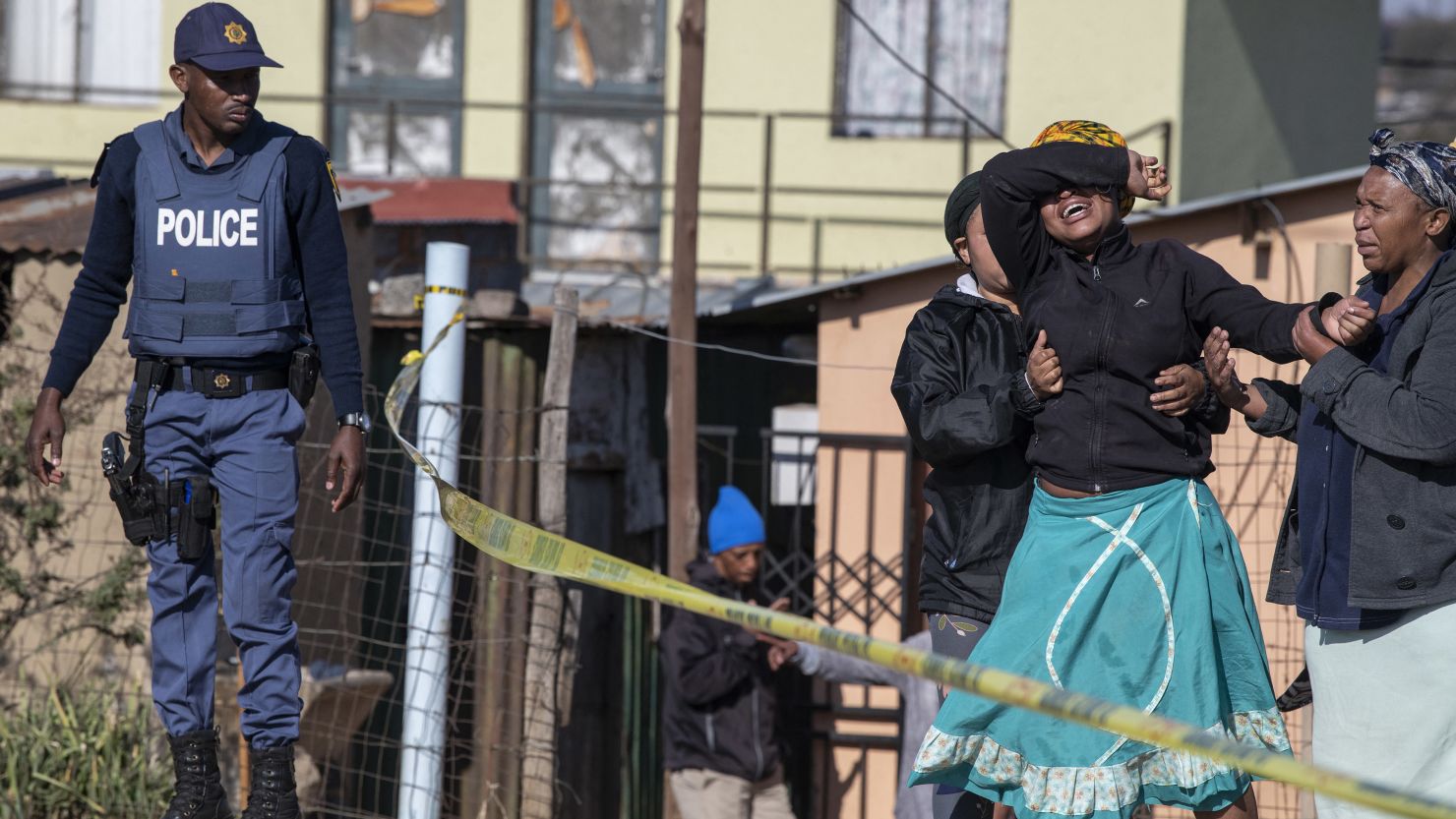
Following the gunfire, emergency services arrived to find a scene of significant devastation. Yahoo reported that bodies were removed from the site as forensic teams began processing the area for evidence. The precision and brutality of the late-night strike have left the local community in shock, with many residents questioning how multiple armed attackers could operate with such impunity.
Who are the victims and what is the current casualty count?
The current death toll stands at 12 people, while nine others are treating injuries sustained during the attack. These figures are consistent across reports from the Associated Press, ABC News, and the New York Times. The injured were transported to local hospitals, though the severity of their wounds has not been detailed individually in official police briefings.
While the identities of the deceased have not been publicly released, the scale of the loss represents one of the more lethal single-incident shootings in the region recently. The distribution of casualties—12 dead and nine wounded—highlights the lethality of the weapons used and the proximity of the victims to the shooters.
| Reported Metric | Confirmed Figure | Source Attribution |
|---|---|---|
| Fatalities | 12 | AP, NYT, ABC News, BBC |
| Injuries | 9 | AP, ABC News |
| Number of Attackers | Multiple | AP, NYT |
| Location | Johannesburg Settlement | ABC News, Yahoo |
What is the status of the manhunt for the attackers?
A massive manhunt is currently underway to apprehend the perpetrators. The BBC reports that South African police have deployed resources to track the shooters, who fled the scene before authorities could establish a perimeter. Because multiple shooters were involved, investigators are looking into whether the attack was a targeted hit, a gang-related conflict, or a broader act of violence.
Police have not yet released descriptions of the suspects or the types of vehicles used in the getaway. However, the focus remains on the surrounding areas of the Johannesburg settlement. Law enforcement agencies are reviewing any available surveillance footage and interviewing survivors to build a profile of the attackers.
The challenge for the South African Police Service (SAPS) lies in the nature of the settlement’s layout. Informal settlements often feature narrow alleys and unplanned roads, which can hinder rapid vehicle deployment and provide numerous hiding spots for fugitives. Despite these obstacles, the BBC confirms that the search remains a priority for national security forces.
Why is violence increasing in Johannesburg settlements?
The attack in Johannesburg is not an isolated incident of violence but occurs within a broader context of high crime rates in South Africa’s urban centers. Johannesburg, the country’s economic hub, has long struggled with systemic issues that contribute to volatility in its residential settlements.
- Socioeconomic Disparity: Extreme wealth gaps often lead to high tension and crime in impoverished settlements located near affluent areas.
- Firearm Proliferation: The availability of illegal firearms remains a critical driver of mass casualty events in the region.
- Gang Activity: Territorial disputes between organized crime groups frequently spill over into civilian areas, resulting in “collateral” casualties during targeted attacks.
- Policing Gaps: Informal settlements often lack a permanent police presence, making them soft targets for coordinated criminal strikes.
Experts in regional security suggest that when multiple shooters are involved, it often points to organized crime or “hit squads” rather than spontaneous violence. The use of multiple gunmen allows for the suppression of resistance and a faster execution of the crime, which aligns with the patterns seen in this late-night massacre.
For more context on regional stability, readers may find a related explainer on South African urban crime trends useful for understanding the historical roots of this violence.
How are different news outlets framing the tragedy?
A comparison of the reporting shows a consistent set of facts but different points of emphasis. The Associated Press and ABC News focused heavily on the raw numbers—the 12 dead and 9 wounded—providing the primary data points for the global news cycle. Their reporting is characterized by a “breaking news” approach, prioritizing the immediate toll and police confirmation.
In contrast, the BBC highlighted the ongoing operational aspect of the story, focusing on the “manhunt.” This framing shifts the narrative from the tragedy of the loss to the state’s response and the quest for justice. The New York Times emphasized the “multiple attackers” aspect, signaling to readers that this was a coordinated effort rather than a random act of violence.
Yahoo’s reporting provided a more visceral detail, mentioning the removal of bodies from the scene. This adds a layer of on-the-ground imagery that underscores the aftermath of the shooting. While the facts remain the same across all outlets, the choice of focus—whether it be the casualties, the chase, or the scene—shapes how the public perceives the urgency and nature of the event.
What are the implications for local security?
This mass shooting is likely to trigger calls for increased security patrols and better infrastructure in Johannesburg’s settlements. The fact that a dozen people could be killed in a single night without immediate police intervention suggests a failure in early warning systems and rapid response capabilities.
Short-term implications include a heightened state of alert in neighboring communities and a potential increase in “vigilante” activity if residents feel the state is unable to protect them. Long-term, this event may force the South African government to address the specific vulnerabilities of informal settlements, such as improving street lighting and establishing more permanent police posts.
Furthermore, the incident puts pressure on the SAPS to demonstrate their ability to solve high-profile mass killings. Failure to capture the shooters in a timely manner could erode public trust in the judicial system and embolden other criminal elements to carry out similar attacks.
“The coordinated nature of the attack, involving multiple shooters, indicates a level of aggression and organization that challenges current community policing models in Johannesburg.”
Common misconceptions about the attack
In the wake of such violence, misinformation often spreads quickly. It is important to distinguish between confirmed reports and speculation:
- Misconception: The attack was a random act of terrorism.
Correction: While the scale was massive, police have not classified this as a terrorist attack. Current evidence points toward a coordinated criminal strike, though the specific motive is still under investigation. - Misconception: The death toll is still fluctuating.
Correction: While initial reports in mass shootings often change, the figure of 12 dead and 9 wounded has been consistently cited by major outlets like the AP and ABC News. - Misconception: The attackers were captured immediately.
Correction: As reported by the BBC, the suspects are still at large, and a manhunt is actively ongoing.
For those tracking the legal aftermath, a related guide on South African criminal proceedings can explain how suspects are typically processed following mass casualty events.
Frequently Asked Questions
How many people were killed in the Johannesburg shooting?
According to reports from the Associated Press and ABC News, 12 people were killed in the attack.
How many people were injured?
Police and news sources report that 9 people were wounded during the late-night shooting.
Where exactly did the attack take place?
The shooting occurred in a residential settlement in Johannesburg, South Africa.
Were the shooters caught?
No. According to the BBC, a manhunt is currently underway to find the multiple attackers who fled the scene.
Was this a lone-wolf attack?
No. Multiple sources, including the New York Times and AP News, confirm that multiple shooters were involved in the assault.
What caused the shooting?
The official motive has not yet been disclosed by the South African Police Service, though the coordinated nature of the attack is under investigation.
