
Sunken Station on WWII ‘Death Railway’ Resurfaces in Thailand
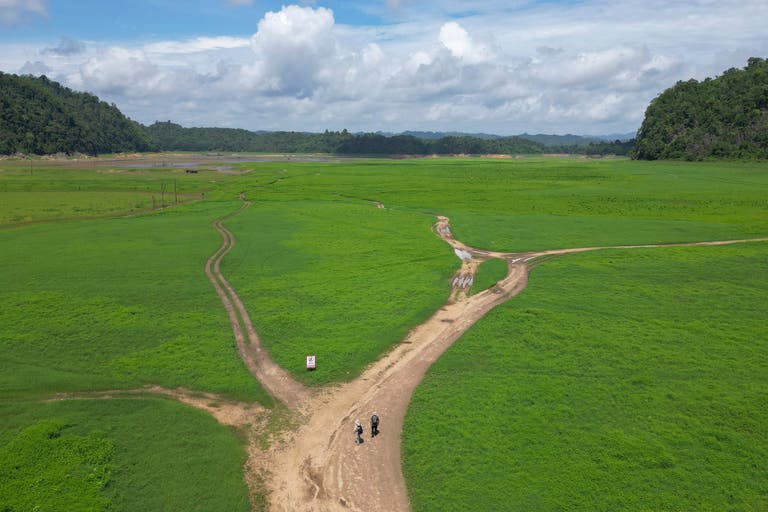
A World War II-era railway station has resurfaced in Thailand after remaining submerged for 40 years. According to reports from Newser and Yahoo, the structure was part of the infamous “Death Railway,” a project constructed by Allied prisoners of war and forced laborers under the Imperial Japanese Army.
What happened to the sunken Death Railway station?
A section of the railway infrastructure, specifically a station, has reappeared above the waterline in Thailand. Reports from Yahoo and Newser indicate the site had been underwater for four decades. The resurgence of the structure provides a physical glimpse into the construction of the Burma-Siam Railway, a project defined by extreme hardship and high mortality rates during the Second World War.
The reappearance of such sites typically occurs due to fluctuating water levels in reservoirs or rivers, often influenced by seasonal droughts or managed water releases from dams. While the specific station’s name is not detailed in every report, its emergence highlights the enduring physical remnants of the conflict scattered across the Thai-Burmese border.
Key facts about the discovery:
- Duration submerged: Approximately 40 years.
- Location: Thailand, along the route of the former Burma-Siam Railway.
- Origin: Built by Allied Prisoners of War (PoWs) and Asian forced laborers.
- Current status: Visible and accessible as water levels receded.
Why is the “Death Railway” historically significant?
The railway, officially known as the Burma-Siam Railway, was a strategic military project designed by the Japanese Empire to connect Bangkok, Thailand, to Rangoon, Burma. The goal was to create a secure supply route for Japanese forces during the campaign in Burma, avoiding the dangerous sea routes plagued by Allied submarines. According to historical records, the line stretched approximately 415 kilometers (258 miles) through dense jungle and rugged mountains.
The project earned the name “Death Railway” due to the brutal conditions imposed on the workforce. The laborers faced starvation, tropical diseases such as cholera and malaria, and systemic violence from their overseers. The construction was accelerated during the “Speedo” period, where workers were forced to work around the clock to meet deadlines, leading to a massive spike in deaths.
The railway stands as a monument to the suffering of thousands of Allied PoWs and an even larger number of Asian laborers, known as romusha, who perished during its construction.
For more context on wartime infrastructure, see this related explainer on WWII strategic logistics.
Who built the railway and what was the human cost?
The workforce consisted of a mixture of Allied prisoners of war—primarily British, Australian, and Dutch—and hundreds of thousands of forced laborers from Southeast Asia, including Malays, Tamils, and Burmese. While the PoWs’ experiences are well-documented in military archives, the losses among the Asian laborers were significantly higher and often less recorded.
The conditions were characterized by a total lack of medical supplies and adequate nutrition. Workers were forced to carve through solid rock and build massive bridges using hand tools. The most famous of these structures, the Bridge over the River Kwai, remains a primary tourist site today.
| Labor Group | Estimated Contribution | Primary Hardships |
|---|---|---|
| Allied PoWs | Approx. 60,000 | Malnutrition, Tropical Disease, Forced Labor |
| Asian Forced Laborers (Romusha) | Hundreds of Thousands | Extreme Violence, Starvation, Neglect |
Which sections of the railway remain active today?
While much of the original line was dismantled or fell into ruin after the war, certain portions remain operational. According to the Sandusky Register, Thamkra Sae Station is one of the active sections of the former railway. These active segments now serve as both transport links and historical landmarks.
Tourist activity at these sites is significant. The Sandusky Register notes that international visitors, including Russian tourists, frequently visit active stations to photograph the trains and reflect on the history of the line. This blend of active utility and historical mourning creates a unique atmosphere at the remaining sites.
The role of tourism in preservation
The emergence of the sunken station is likely to increase interest in the region’s “dark tourism” sites. By visiting these locations, the public is reminded of the human cost of war. However, the resurfacing also poses challenges for preservation, as structures that have been submerged for 40 years are often fragile and susceptible to rapid decay once exposed to air.
How does this discovery compare to other WWII sites?
The resurfacing of the Thai station mirrors other global events where changing environments reveal wartime secrets. For example, receding glaciers in the Alps frequently reveal WWII equipment and remains, and lowering water levels in European lakes have occasionally exposed sunken vessels.

Unlike the accidental discovery of wreckage, the reappearance of a station is a structural event. It provides architects and historians with an opportunity to study the specific construction methods used by the PoWs under duress. The contrast between the active Thamkra Sae Station and the newly resurfaced sunken station illustrates the two paths of the Death Railway’s legacy: one of continued function and one of ghostly remnants.
Common misconceptions about the Death Railway
- The “River Kwai” Myth: Many believe the entire railway was as visually striking as the bridge depicted in popular media. In reality, most of the line consisted of grueling jungle treks and rudimentary embankments.
- PoW-only Construction: It is often assumed only Western PoWs built the line. In fact, the Asian romusha died in far greater numbers, though they are less frequently mentioned in Western accounts.
- Immediate Abandonment: Not all of the railway was destroyed; as noted by the Sandusky Register, parts of the infrastructure were integrated into Thailand’s national rail system.
For a deeper look at the impact of these sites, read our analysis of wartime memorialization.
What are the implications of the station’s reappearance?
The resurfacing of the station serves as a catalyst for renewed historical inquiry. For historians, the site offers a “time capsule” effect, as the water may have preserved certain materials or layouts that would have been destroyed by weather or human interference on land.
From a political and social standpoint, the event reinforces the importance of documenting war crimes and honoring the victims of forced labor. It transforms a forgotten piece of submerged concrete into a tangible reminder of the Imperial Japanese Army’s conduct during the occupation of Southeast Asia.
Environmental factors and historical visibility
The fact that the station was hidden for 40 years suggests it was likely submerged during the creation of a reservoir or due to a significant shift in river morphology. Its reappearance suggests a shift in the local ecosystem or water management strategy, highlighting how environmental changes can unexpectedly rewrite the visible history of a landscape.
Frequently Asked Questions
What was the “Death Railway” in Thailand?
The Death Railway, or Burma-Siam Railway, was a 415-km track built during WWII by the Japanese Empire to supply their forces in Burma. It is called the “Death Railway” because tens of thousands of Allied PoWs and Asian forced laborers died during its construction due to brutality, disease, and starvation.
Why did the station resurface after 40 years?
While the reports from Newser and Yahoo do not specify the exact cause, such events are typically caused by receding water levels in reservoirs or rivers, often resulting from severe drought or the intentional draining of water by dam authorities.

Is the Death Railway still used today?
Yes, parts of the railway are still active. For example, the Sandusky Register mentions that Thamkra Sae Station is one of the sections still in use, serving both as a transit point and a tourist destination.
Who were the primary victims of the railway’s construction?
The victims included British, Australian, and Dutch prisoners of war, as well as a massive number of forced laborers from across Asia (romusha). The Asian laborers suffered the highest casualty rates.
Where is the most famous part of the Death Railway?
The Bridge over the River Kwai is the most recognized landmark of the railway, symbolizing both the engineering effort and the suffering of those who built it.
