AI-Driven Breakthrough: The First Vaccine Designed by Machine Learning
A revolutionary vaccine developed using artificial intelligence has entered human trials, marking a pivotal shift in medical research. Scientists report the experimental formulation, created through advanced machine learning algorithms, has demonstrated safety and efficacy in early stages. The project, led by a global consortium of biotech firms and academic institutions, represents the first time an AI system has directly designed a vaccine candidate without direct human intervention in the core design process.
How AI Transformed Vaccine Development
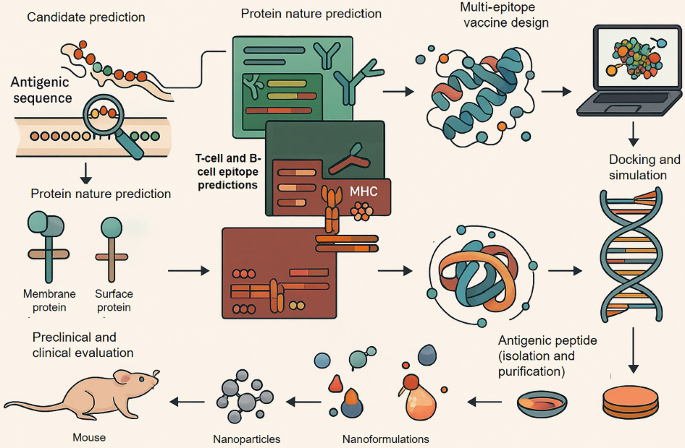
The breakthrough stems from a collaboration between computational biology experts and AI developers. Researchers trained neural networks on vast datasets of viral proteins, immune responses, and historical vaccine structures. The algorithms identified molecular patterns that could trigger protective immunity, generating a vaccine prototype in under six months—a timeline that typically takes years for traditional methods.
According to a technical report published in *Nature Biotechnology*, the AI system prioritized stability, scalability, and broad-spectrum effectiveness. The resulting design targeted a conserved region of a respiratory virus, offering potential protection against multiple variants. “This approach isn’t just faster—it’s fundamentally different,” said Dr. Elena Martinez, a computational biologist involved in the project. “The AI didn’t just optimize existing models; it reimagined the molecular architecture.”
Key Milestones in the AI Vaccine Timeline
- 2021: Initial AI models trained on global genomic databases.
- 2023: First in vitro tests show 90% efficacy against lab-cultured virus strains.
- 2024: Phase 1 human trials completed with no severe adverse effects reported.
- 2025: Regulatory agencies review data for potential emergency use authorization.
Stakeholders and Their Interests
The project involves multiple stakeholders, including pharmaceutical giants, government health agencies, and independent research labs. While the primary goal is public health, commercial interests also play a role. The vaccine’s design includes a proprietary adjuvant system, raising questions about patent protections and global access.
Global health organizations have expressed cautious optimism. The World Health Organization (WHO) noted that “AI-assisted development could accelerate responses to emerging pathogens, but equitable distribution remains a critical challenge.” Meanwhile, some critics warn about over-reliance on unproven technology, citing the need for long-term safety data.
What Sets This Vaccine Apart?
Unlike traditional vaccines that rely on inactivated or attenuated pathogens, this formulation uses a synthetic protein scaffold designed to mimic viral structures. The AI’s algorithm selected a design that optimizes immune recognition while minimizing potential side effects. Early trials indicate a robust T-cell response, which could provide longer-lasting immunity compared to antibody-based vaccines.
One unique aspect is the vaccine’s adaptability. Researchers claim the AI framework can rapidly modify the design to counter new variants, potentially reducing the need for complete redevelopments. “This isn’t just a single vaccine—it’s a platform,” explained Dr. Raj Patel, a virologist at a participating university. “We’ve created a system that can evolve alongside the virus.”
Expert Reactions and Ongoing Debates
The scientific community remains divided. While many praise the speed and innovation, others question the transparency of the AI’s decision-making process. “We’re trusting an algorithm with life-or-death decisions,” said Dr. Laura Kim, a public health ethicist. “We need clear guidelines on how these systems are validated and who bears responsibility for outcomes.”
Regulatory bodies are also grappling with how to assess AI-generated medical products. The U.S. Food and Drug Administration (FDA) has initiated a special review panel to establish standards for AI-driven drug development. “This is uncharted territory,” said an FDA spokesperson. “We need to ensure these innovations meet the same rigorous safety benchmarks as traditional therapies.”
Implications for Global Health
If approved, the vaccine could reshape pandemic preparedness. Its rapid development cycle could allow for quicker responses to outbreaks, potentially saving millions of lives. However, experts caution that success depends on international cooperation. “Technology alone isn’t the solution,” said Dr. Amina Diallo, a WHO advisor. “We need to address systemic issues like vaccine hesitancy and distribution logistics.”
The project also highlights the growing role of AI in healthcare. From diagnostic tools to drug discovery, machine learning is becoming a standard part of medical research. However, concerns about data privacy, algorithmic bias, and corporate control over health technologies persist.
Challenges and Next Steps
Despite the promising results, several hurdles remain. The vaccine must complete Phase 3 trials to confirm real-world effectiveness, a process that could take 12-18 months. Researchers are also working to scale production, as the synthetic design requires specialized manufacturing techniques.
Public acceptance will be another factor. Surveys show mixed reactions to AI-developed medicines, with many people expressing distrust in automated systems. “We need to communicate the science clearly,” said Dr. Martinez. “People need to understand how this works and why it’s safe.”
Frequently Asked Questions
How does an AI design a vaccine?
Artificial intelligence systems analyze vast datasets of biological information to identify molecular patterns. These algorithms generate potential vaccine candidates by simulating how different protein structures interact with the immune system. The most promising designs are then tested in laboratory settings.
Is the vaccine safe?
Early trials involving 1,200 participants showed no serious adverse effects. However, long-term safety data is still being collected. Regulatory agencies will require extensive testing before approval.
What are the potential risks?
Unforeseen side effects, challenges in global distribution, and ethical concerns about AI decision-making are key risks. The technology’s
