France passes law banning social media for children under 15
France has become the first EU member to approve legislation banning social media access for children under 15, aiming to mitigate potential developmental risks.

France has taken a definitive step toward reshaping its digital environment, becoming the first member of the European Union to approve legislation that bans social media access for children under the age of 15. The measure, which passed through both chambers of the French Parliament on Tuesday, aims to curb what supporters characterize as significant risks to the cognitive, emotional, and affective development of young users.
The legislative package, which also formalizes a ban on mobile phones within high schools, serves as a cornerstone of President Emmanuel Macron’s late-term agenda. Having long advocated for stricter digital boundaries, the French leader previously signaled his intent to act if the broader European bloc did not prioritize the issue. This push gained urgency following a violent incident last year, in which a 14-year-old boy was involved in a fatal attack on a school staff member during a bag search.
Related media
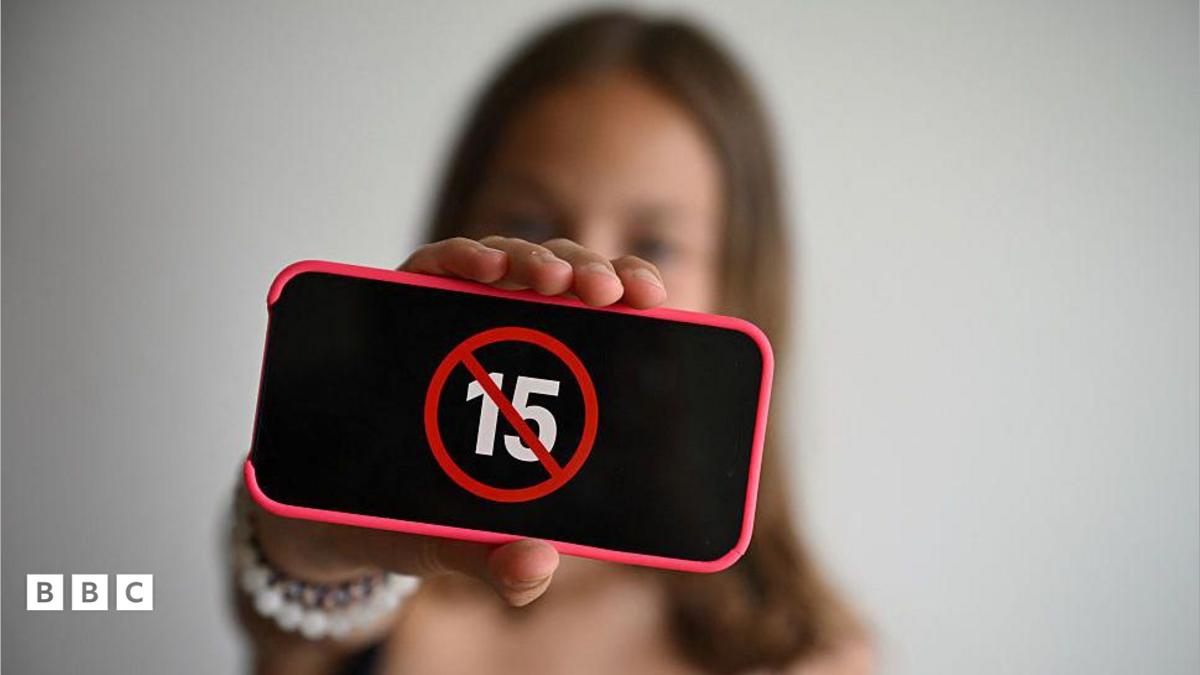
Under the new rules, social media platforms will be required to implement age-verification systems to filter out users who do not meet the threshold. While the legislation creates exceptions for educational digital services and online encyclopedias, the mandate remains broad for commercial social networking sites. The implementation timeline is split: new account restrictions take effect on 1 September 2026, while the rules for existing accounts are set to apply beginning 1 January 2027.
Implementation Timeline
| Date | Requirement |
|---|---|
| 1 September 2026 | Age-verification protocols must be active for all new account registrations. |
| 1 January 2027 | The ban extends to all existing accounts for users under 15; full age-verification compliance required. |
Government officials have defended the feasibility of these measures. Anne Le Hénanff, the Digital Minister, dismissed concerns regarding the technical difficulty of the rollout, noting that the necessary age-verification tools are already in existence. However, the legislation still awaits finalization by the Constitutional Council before it formally becomes law.
The move has met with varied reactions from political factions and industry observers. Legislators from the France Unbowed party voiced significant opposition, arguing that the law is constitutionally questionable and poses a threat to online anonymity. Critics also point to the potential for widespread circumvention. Similar restrictions implemented in Australia in 2024 have already demonstrated the difficulty of enforcement, with many young users successfully accessing banned platforms via virtual private networks (VPNs) and other technical workarounds.
Industry leaders have also expressed skepticism. Elon Musk, the owner of the platform X, described the move as a backdoor way
to control internet access. Jessica Galissaire, a researcher at the Berlin-based think tank Interface, suggested that the move serves partly as a symbolic political maneuver intended to compel swifter action from the broader European Union, rather than a fully localized solution to the complexities of internet safety.
"I had promised it, and now it has been voted on: Social media will be banned for those under 15 starting back-to-school. Merci aux parlementaires. Au Conseil constitutionnel de statuer puis place à l’action pour rendre cette mesure concrète et protéger nos enfants en ligne."
Emmanuel Macron, President of France, via social media post
The broader push for digital age restrictions is gaining momentum across the Western world. The United Kingdom has plans underway to enforce a social media ban for children under 16 by next year, and nations including Italy, Poland, Portugal, and Spain are currently drafting their own restrictive frameworks. Whether this domestic policy succeeds in its stated goals of protecting children remains a point of contention, as the focus now shifts toward the Constitutional Council and the practical challenges of enforcement in a globalized digital space.
Archypedia is dedicated to independent, evidence-backed reporting. This briefing was synthesized from primary source reporting, corroborated across independent newsrooms, and verified against our Editorial Standards.
Transparency record
Evidence behind this report
This report synthesizes 4 distinct sources. Open the source ledger below to compare the underlying coverage.
Prepared under the Archypedia Editorial Policy by the Samir Haddad editorial desk profile. AI-assisted tools may support drafting and verification; public accountability remains with Archypedia. Report an error.