
Wordle Today: The Answer and Hints for June 10, 2026
The Wordle answer for June 10, 2026, is STARE. This five-letter word is the solution for the daily puzzle provided by The New York Times, continuing the game’s daily cycle of word-guessing challenges.
What is the Wordle answer for June 10, 2026?
The answer to today’s Wordle puzzle is STARE. Players have six attempts to identify this word, using color-coded tiles to indicate whether letters are in the correct position, the wrong position, or not in the word at all.
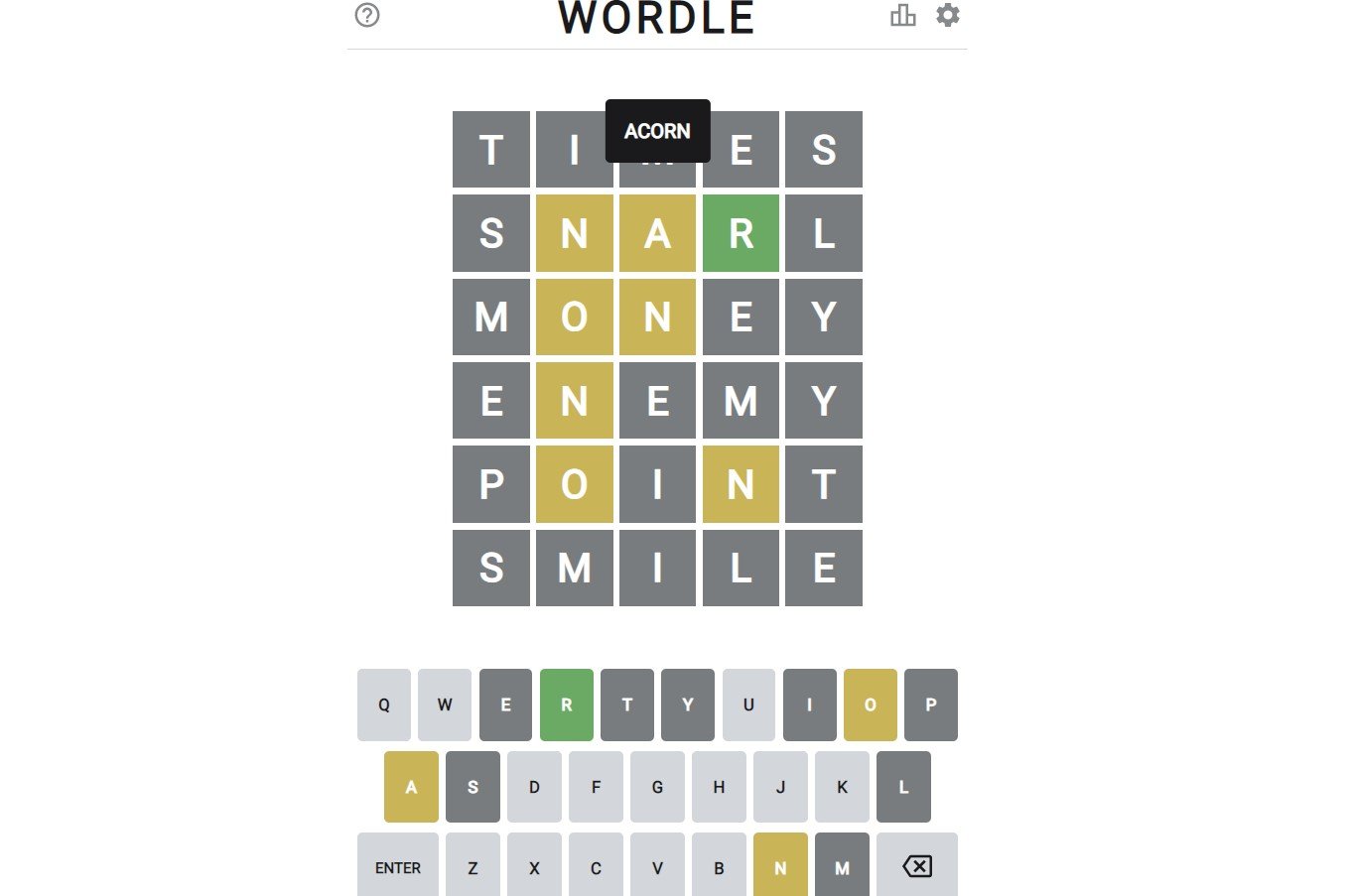
According to the game’s mechanics, a green tile signifies a letter is correct and in the right spot. A yellow tile means the letter exists in the word but is currently misplaced. A gray tile indicates the letter does not appear in the target word.
Hints for today’s Wordle puzzle
For players who prefer to solve the puzzle without the direct answer, several clues can narrow down the possibilities for the June 10 solution.
- Clue 1: The word is a verb that describes a fixed, intense look.
- Clue 2: It contains two vowels.
- Clue 3: The word begins with the letter “S”.
- Clue 4: It shares a similar structure to words like “share” or “spare”.
If these hints aren’t enough, consider the word’s usage. It often describes a reaction of surprise, anger, or deep concentration. It is a common English word and does not use any obscure or archaic terminology.
How to play Wordle and improve your score
Wordle requires players to guess a secret five-letter word in six tries. Each guess provides immediate feedback via colors. To maximize efficiency, experienced players often use a specific sequence of starting words to eliminate as many common letters as possible.
The importance of starting words
The first guess is the most critical. Using words with a high frequency of common vowels (A, E, I, O, U) and consonants (R, S, T, L, N) helps narrow the field. Words like “ADIEU” or “AUDIO” are popular for vowel hunting, while “STARE” or “SLATE” are often cited by analysts as mathematically superior for identifying consonant placements.
Hard Mode vs. Normal Mode
The New York Times offers two primary ways to experience the game. Normal mode allows any guess, regardless of previous clues. Hard mode forces players to use any revealed hints in subsequent guesses.
| Feature | Normal Mode | Hard Mode |
|---|---|---|
| Guess Flexibility | Can guess any valid word | Must use revealed hints |
| Strategy | Can use “burner” words to find letters | Must narrow down the specific word |
| Risk Level | Lower risk of getting stuck in a “trap” | Higher risk of repetitive guesses |
A “trap” occurs when a player identifies four out of five letters (e.g., _IGHT) but has several remaining options (LIGHT, NIGHT, FIGHT, SIGHT). In normal mode, a player can guess “FLOWN” to eliminate L, N, and F in one turn. In hard mode, they must guess each “_IGHT” word individually, which can lead to a loss of the streak.
The evolution of Wordle since the New York Times acquisition
Wordle began as a private project created by Josh Wardle for his partner. Its viral growth in early 2022 led to its acquisition by The New York Times Company in January 2022. Since then, the game has moved from a standalone website to an integrated part of the NYT Games suite.

The acquisition brought several technical and social changes. The game now features the “WordleBot,” an AI-driven analysis tool that compares a player’s guesses against the most mathematically optimal path. This tool provides a “skill” rating and suggests better starting words based on the day’s specific solution.
“The WordleBot doesn’t just tell you if you were right; it tells you how efficient your logic was compared to an ideal solver.”
This shift toward data-driven gaming has changed how the community interacts with the puzzle. Instead of simply sharing the grid of colored squares, players now discuss “bot scores” and “optimal paths,” turning a casual word game into a study of probability and linguistics.
Analyzing the psychology of the Wordle streak
The “streak”—the number of consecutive days a player solves the puzzle—has become a primary driver of user retention. This mechanic leverages the “loss aversion” principle in psychology, where the pain of losing a long-running streak is more motivating than the joy of starting a new one.
This drive for consistency is why many players seek out hints or answers. When a streak reaches hundreds of days, the stakes feel higher. The social aspect, powered by the game’s unique shareable grid, creates a communal experience. Because the grid shows the process of solving rather than the answer, it allows players to participate in the trend without spoiling the game for others.
For more on how digital games use these mechanics, see our related explainer on gamification and psychology.
Common misconceptions about Wordle strategy
Many players believe that “vowel-heavy” starting words are the best way to begin. While “ADIEU” is popular, linguistic data suggests that consonants provide more information. For example, identifying an ‘S’ or an ‘R’ often narrows the list of possible five-letter words more significantly than identifying an ‘I’ or an ‘E’.
Another common misconception is that the game uses a random word generator every day. In reality, the game operates on a curated list of five-letter words. This list excludes overly obscure terms, pluralizations ending in ‘S’ (in most cases), and proper nouns, ensuring the puzzle remains accessible to a general audience.
Key Strategy Points:
- Avoid repeating gray letters: This is a basic mistake that wastes a guess.
- Test consonants early: Prioritize R, S, T, and L to establish the word’s skeleton.
- Use “Burner” words: In normal mode, use a word that contains five new letters even if you know some of the target letters already.
- Analyze letter patterns: Remember that ‘Q’ is almost always followed by ‘U’, and ‘C’ is often followed by ‘H’.
Comparing Wordle to other daily word puzzles
Since the success of Wordle, several alternatives have emerged, including “Quordle,” “Octordle,” and “Contexto.” While Wordle focuses on a single word and letter placement, these variants increase the difficulty or change the mechanic entirely.
Quordle, for instance, requires players to solve four Wordles simultaneously with the same guesses. This forces a much more aggressive elimination strategy, as a single guess must serve four different target words. Contexto, on the other hand, uses artificial intelligence to rank words based on semantic similarity rather than spelling.
Despite these alternatives, Wordle remains the industry standard due to its simplicity and the prestige of the New York Times branding. Its “one-a-day” limit prevents burnout and creates a synchronized global event every midnight.
Frequently Asked Questions
What time does the new Wordle reset?
Wordle resets at midnight in your local time zone. This ensures that players across the world have a consistent daily routine, though it means players in different time zones may be solving the puzzle at different times.
Can I play more than one Wordle per day?
The official New York Times version limits players to one puzzle per day. However, archive sites and third-party clones often allow users to play previous puzzles for practice.
How do I share my Wordle results without spoilers?
The game provides a “Share” button that generates a grid of emojis (🟩, 🟨, ⬛). This grid shows the number of attempts and the accuracy of each guess without revealing the actual letters of the word.
What happens if I lose my streak?
If you fail to guess the word within six attempts, your current streak resets to zero. You can still see the answer after the sixth failed attempt, but the streak counter will start over the following day.
Is there a way to get a hint officially?
The New York Times does not provide official hints within the game interface. Players typically rely on community forums, social media, or dedicated hint guides to help them when they are stuck.
For those looking to sharpen their vocabulary for future puzzles, a guide to common five-letter English words can provide a useful reference for starting guesses.
