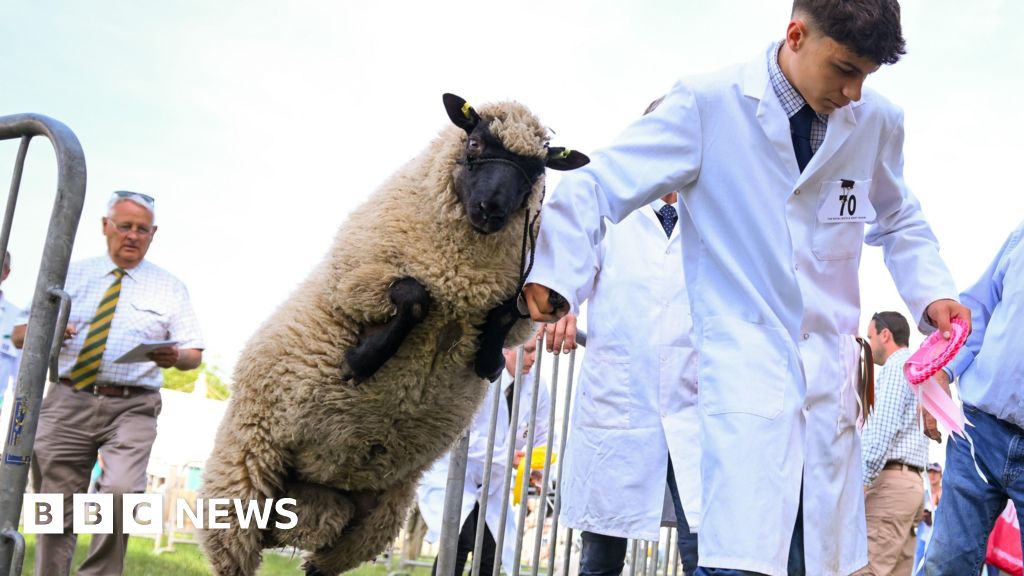
West In Pics: Leaping Sheep and Lightning Bolts – BBC: Capturing the Raw Energy of the Rural West
The visceral contrast between the serene rhythms of pastoral life and the sudden, violent outbursts of nature is rarely captured with as much clarity as in the collection known as West In Pics: Leaping sheep and lightning bolts – BBC. This striking assembly of imagery does more than simply document a landscape; it serves as a window into the volatile intersection of agriculture and atmosphere. From the acrobatic movements of livestock in open fields to the jagged electrical discharges that split the darkening skies, the visual narrative underscores a fundamental truth about the Western regions: nature here is not a backdrop, but a dominant, unpredictable force.
For those observing from a distance, the images of leaping sheep and atmospheric electricity might seem like mere coincidences of timing. However, for the inhabitants of these rugged terrains, these elements are the daily bread of existence. The interplay between the livestock and the weather is a complex dance of survival, instinct, and environmental adaptation. To understand the story behind these visuals is to understand the unique geography, meteorology, and cultural resilience of the West.
The Geography of Volatility: Why the West?
The regions typically associated with these dramatic visuals—spanning the highlands of Scotland, the peaks of Wales, and the exposed coasts of South West England—share a common geographical trait: they are the first line of defense against the Atlantic Ocean. This positioning creates a unique meteorological laboratory where moisture-laden air from the ocean crashes into elevated landmasses.
This process, known as orographic lift, forces air upward, cooling it rapidly and triggering the formation of towering cumulonimbus clouds. These are the engines of the “lightning bolts” captured in the imagery. When the atmospheric instability reaches a breaking point, the resulting electrical storms are not merely rain events; they are high-energy discharges that transform the landscape into a high-contrast theater of light and shadow.
The topography also dictates the movement of the animals. The steep, undulating hills of the West require livestock to be agile. The “leaping sheep” are not merely playing; they are navigating a vertical world where movement is a necessity for grazing and safety. The combination of high-altitude grazing and sudden weather shifts creates a high-stakes environment for both the animals and the farmers who tend to them.
Key Environmental Drivers of the Western Landscape
- Atlantic Influence: Constant exposure to maritime air masses ensures high humidity and frequent precipitation.
- Topographic Variation: Rapid changes in elevation lead to localized weather patterns, where one valley may be sunny while the next is engulfed in a thunderstorm.
- Soil Composition: The peat-rich and rocky soils of the West influence how water drains and how electricity from lightning strikes interacts with the ground.
The Science of the Storm: Understanding the Lightning Bolts
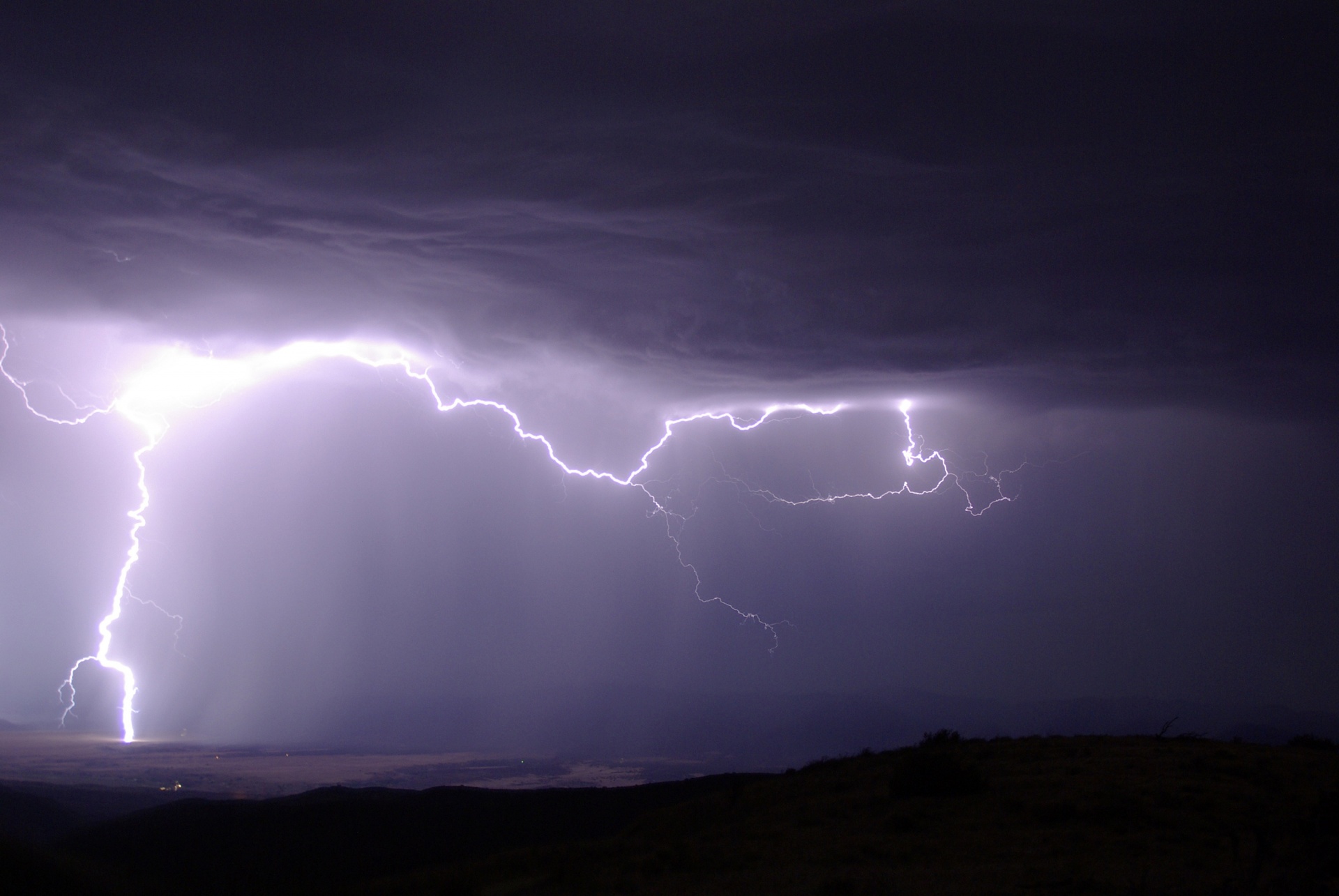
Lightning is one of the most visually arresting phenomena in nature, but its presence in the Western countryside is a result of specific physical conditions. The “lightning bolts” seen in these photographs are typically the result of charge separation within a storm cloud. As ice crystals and graupel (soft hail) collide within the cloud, static electricity builds up—positive charges at the top and negative charges at the bottom.
When the electrical potential difference between the cloud and the ground becomes too great, the air—which normally acts as an insulator—breaks down. A “stepped leader” descends from the cloud, and a “streamer” rises from the ground. When they meet, a massive current of electricity flows, creating the blinding flash we see.
“The power of a single lightning bolt can reach temperatures of 30,000 Kelvin—five times hotter than the surface of the sun. In the open pastures of the West, where there are few tall structures, the earth itself and the livestock upon it become the primary targets for these discharges.”
Capturing this on camera requires an extraordinary blend of patience and technology. Photographers must often wait for hours in suboptimal conditions, using long exposures or high-speed triggers to catch the millisecond the bolt strikes. The resulting images provide a sense of scale, showing the fragility of the rural landscape against the sheer magnitude of atmospheric energy.
Livestock and Instinct: The Mystery of the Leaping Sheep
The image of “leaping sheep” often evokes a sense of whimsy, but from a biological and behavioral perspective, it is an expression of instinct. Sheep are prey animals, and their movement is governed by a high state of alertness. When a flock “leaps” or “gambols,” it is often a sign of high energy, social bonding, or a reaction to a sudden change in their environment.
Interestingly, animals are often more sensitive to the precursors of a storm than humans are. The increase in static electricity in the air and the drop in barometric pressure can trigger restlessness in livestock. The leaping behavior seen in the West may often be a manifestation of this environmental stress or a reaction to the sudden onset of wind and rain that accompanies a lightning storm.
| Behavioral Trigger | Animal Response | Environmental Cause |
|---|---|---|
| Pressure Drop | Increased restlessness/movement | Approaching low-pressure system (storm) |
| Static Charge | Grouping or fleeing | Electrical buildup in the atmosphere |
| Topographical Need | Leaping/Climbing | Navigating steep, rocky terrain for grazing |
| Social Bonding | Synchronized jumping | Herd dynamics and youth energy |
The Human Element: Hill Farming in the Danger Zone
Behind every image of a leaping sheep or a lightning strike is the invisible presence of the hill farmer. Farming in the West is not merely an occupation; it is a battle of attrition against the elements. The farmers who manage these flocks must contend with the same lightning bolts that make for such stunning photography.
Lightning strikes in open pastures are a genuine occupational hazard. Because sheep are often grazed on high ridges or open moorlands, they—and their handlers—are frequently the highest points in the landscape. This exposes them to the risk of direct strikes or “side flashes,” where lightning jumps from a nearby object to a person or animal.
The Challenges of High-Altitude Husbandry
- Weather Exposure: Livestock must be hardy enough to survive sudden temperature drops and torrential rains.
- Terrain Management: Moving sheep across steep slopes requires immense physical effort and a deep understanding of the land.
- Predation and Disease: The damp climate of the West can increase the prevalence of certain livestock diseases, requiring constant vigilance.
The resilience of these farming communities is a testament to their adaptation. They have developed a “weather-sense” that allows them to predict shifts in the atmosphere, knowing exactly when to move a flock to lower ground before the lightning begins. This symbiotic relationship between the farmer, the animal, and the environment is the silent narrative running through the West In Pics: Leaping sheep and lightning bolts – BBC collection.
The Art of the Capture: Photography in Extreme Conditions
To produce images that resonate, photographers must embrace the chaos of the West. Capturing a sheep mid-leap while a lightning bolt strikes in the background is a feat of timing that borders on the miraculous. This requires an understanding of both the subject’s behavior and the storm’s cycle.
Most storm photographers utilize a technique called “lightning triggering,” where sensors detect the first faint glow of a strike and trigger the shutter instantly. However, the most authentic images often come from manual patience—the willingness to stand in the rain, adjusting the aperture and shutter speed to balance the dim light of a storm with the blinding intensity of a bolt.
There is also the challenge of the “action shot.” To freeze a leaping sheep in mid-air requires a swift shutter speed (typically 1/1000th of a second or faster), but to capture the trail of a lightning bolt often requires a slower exposure. Balancing these two conflicting technical needs is what separates a snapshot from a professional news feature image. For those interested in the technical side, a related explainer on nature photography techniques can provide deeper insight into how these contrasts are managed.
Climate Change and the Future of Western Weather
While the images of lightning and leaping sheep are timeless, the patterns behind them are shifting. Meteorologists have noted changes in the intensity and frequency of Atlantic storm systems. As the ocean warms, there is more energy available to fuel the convective storms that produce lightning.
So that the “lightning bolts” of the future may become more frequent or more severe. For the rural West, this isn’t just a matter of better photos; it’s a matter of increased risk. More intense storms lead to higher rates of soil erosion, increased flooding in the valleys, and greater danger for livestock on the hills.
the shifting seasons are affecting the grazing patterns of sheep. If the spring “leap” occurs too early due to an unseasonably warm winter, but is followed by a sudden, violent cold snap or a series of electrical storms, the vulnerability of the lambs increases significantly. The balance of the Western ecosystem is delicate, and the imagery we see today may eventually serve as a record of a climate that no longer exists in the same form.
Comparative Analysis: Traditional vs. Modern Storm Patterns
In previous decades, storms in the West followed more predictable seasonal arcs. Today, we see a rise in “out-of-season” volatility. The juxtaposition of extreme heat followed by immediate, violent thunderstorms is becoming more common, leading to more dramatic—but more dangerous—atmospheric events.

Common Misconceptions About Rural Storms
When viewing images like those in the West In Pics: Leaping sheep and lightning bolts – BBC series, it is uncomplicated to fall into certain myths. One common misconception is that sheep “sense” the lightning and leap in fear. While they are sensitive to pressure, the leaping is more often a result of general excitement or the sudden arrival of wind gusts that stir the flock into motion.
Another myth is that lightning always strikes the tallest object. While height is a major factor, the electrical conductivity of the ground and the specific ionization of the air play massive roles. A sheep in a field might be struck even if there is a slightly taller bush nearby, simply because the path of least resistance was through the animal.
Finally, many believe that these dramatic storms are rare. In reality, the West is a constant churn of weather. The “rarity” is not the storm itself, but the ability to capture the exact moment where the animal’s movement and the atmosphere’s discharge align in a single frame.
Frequently Asked Questions
What is the significance of the “West In Pics: Leaping sheep and lightning bolts – BBC” collection?
This collection highlights the raw, unbridled energy of the Western landscapes, focusing on the contrast between the instinctive movements of livestock and the power of atmospheric electrical storms. It serves as both a visual study and a commentary on the volatility of rural life.
Why are there so many lightning storms in the West?
The West’s proximity to the Atlantic Ocean and its mountainous terrain create a “perfect storm” of conditions. Moist air is forced upward by the hills (orographic lift), leading to the formation of cumulonimbus clouds and frequent lightning discharges.
Do sheep actually react to lightning?
Yes, sheep are sensitive to the drop in barometric pressure and the increase in static electricity that precedes a storm. This often leads to restlessness, grouping behaviors, or sudden bursts of energy, which can appear as leaping.
Is lightning a major threat to hill farming?
Absolutely. Because hill farms are located in open, elevated areas, both livestock and farmers are at a higher risk of being struck by lightning, making weather awareness a critical part of their daily survival strategy.
How are these photographs typically captured?
Photographers use a combination of high-speed shutters to freeze animal movement and either long exposures or specialized lightning triggers to capture the electrical bolts, often spending hours waiting for the perfect alignment of events.
The enduring appeal of these images lies in their ability to remind us that despite our technological advancements, we are still subject to the whims of the natural world. The leaping sheep and the lightning bolts are symbols of a wilder, more honest version of existence—one where life is lived in the open, under the gaze of an unpredictable sky. For those who live and work in the West, these are not just pictures; they are the rhythms of home.
