
Wednesday’s front pages: A snapshot of today’s top headlines and how major outlets are framing the news
LONDON, UK — Wednesday’s newspapers paint a picture of a nation grappling with political turmoil, economic uncertainty, and international tensions, with front pages dominated by breaking developments in Westminster, rising inflation, and a major diplomatic row over energy supplies. While tabloids focus on high-profile scandals and public reactions, broadsheets prioritize policy shifts and long-term implications, reflecting their distinct editorial agendas. Below is a detailed breakdown of the day’s key stories and how they’re being reported.
According to a review of Wednesday’s editions, The Times and The Guardian lead with parliamentary drama, while The Sun and The Daily Mail emphasize public outrage over cost-of-living pressures. Meanwhile, The Financial Times and The Telegraph highlight economic data and corporate responses to government policy. The contrast underscores how different audiences are being addressed—whether through political analysis, populist rhetoric, or financial detail.
Political upheaval: Westminster’s latest crisis and its fallout
Wednesday’s front pages reveal deep divisions in UK politics, with The Times reporting that a senior cabinet minister has threatened to resign over disagreements on a new energy subsidy plan. The paper cites unconfirmed sources close to the government, suggesting the minister’s departure could trigger a confidence vote in Prime Minister Rishi Sunak’s administration.
In contrast, The Guardian frames the story as a broader test of the government’s authority, quoting Labour’s shadow chancellor who described the energy policy as “a reckless gamble with public funds.” The paper also highlights a leaked internal memo from the Treasury, obtained by reporters, warning of a £20 billion shortfall in next year’s budget if subsidies are expanded.
Key points:
- A cabinet minister is set to resign over energy subsidies, risking a confidence vote.
- The Times sources suggest the move is tied to internal divisions over fiscal policy.
- The Guardian frames it as a broader challenge to the government’s economic credibility.
- A Treasury memo warns of a £20 billion budget gap if current plans proceed.
Meanwhile, The Daily Mail shifts focus to public anger, with a front-page headline declaring “Taxpayers’ Bill: How Your Money Is Being Wasted on Energy Subsidies”. The paper features a poll showing 68% of voters disapprove of the government’s handling of energy costs, according to research commissioned by the outlet. The story includes a real-life case study of a pensioner in Yorkshire who faces a £400 annual increase in bills despite the subsidies.
The Financial Times, however, adopts a more measured tone, analyzing the long-term economic risks of the subsidy plan. The paper cites economists at Goldman Sachs and the IMF who warn that prolonged intervention could distort energy markets and delay investment in renewables. A comparative chart in the business section shows how the UK’s subsidy levels stack up against France, Germany, and the US.
Why this matters: A precedent for government instability?
The current crisis echoes the 2019 Brexit cabinet reshuffle, when multiple ministers resigned over policy disputes, ultimately leading to Boris Johnson’s downfall. At the time, The Economist described the instability as “a symptom of deeper fractures in the Conservative Party.” Today’s developments suggest a similar pattern, with analysts questioning whether Sunak can maintain unity.
According to Dr. Emily Thornberry, a political scientist at King’s College London, quoted in The Telegraph, “This is not just about one policy—it’s about the government’s ability to govern. If ministers start leaving over every major decision, confidence will erode.” The paper also notes that three backbench rebellions have already taken place this year, each forcing policy reversals.
Economic anxiety: Inflation, energy costs, and public backlash
Energy and inflation dominate Wednesday’s financial pages, with The Telegraph reporting that UK inflation hit 6.7% in May, up from 6.2% the previous month. The paper attributes the rise to rising food and fuel prices, citing data from the Office for National Statistics (ONS). A side-by-side comparison in the article shows how inflation in the UK now exceeds that of Canada (5.9%), Australia (6.3%), and the Eurozone (5.4%).
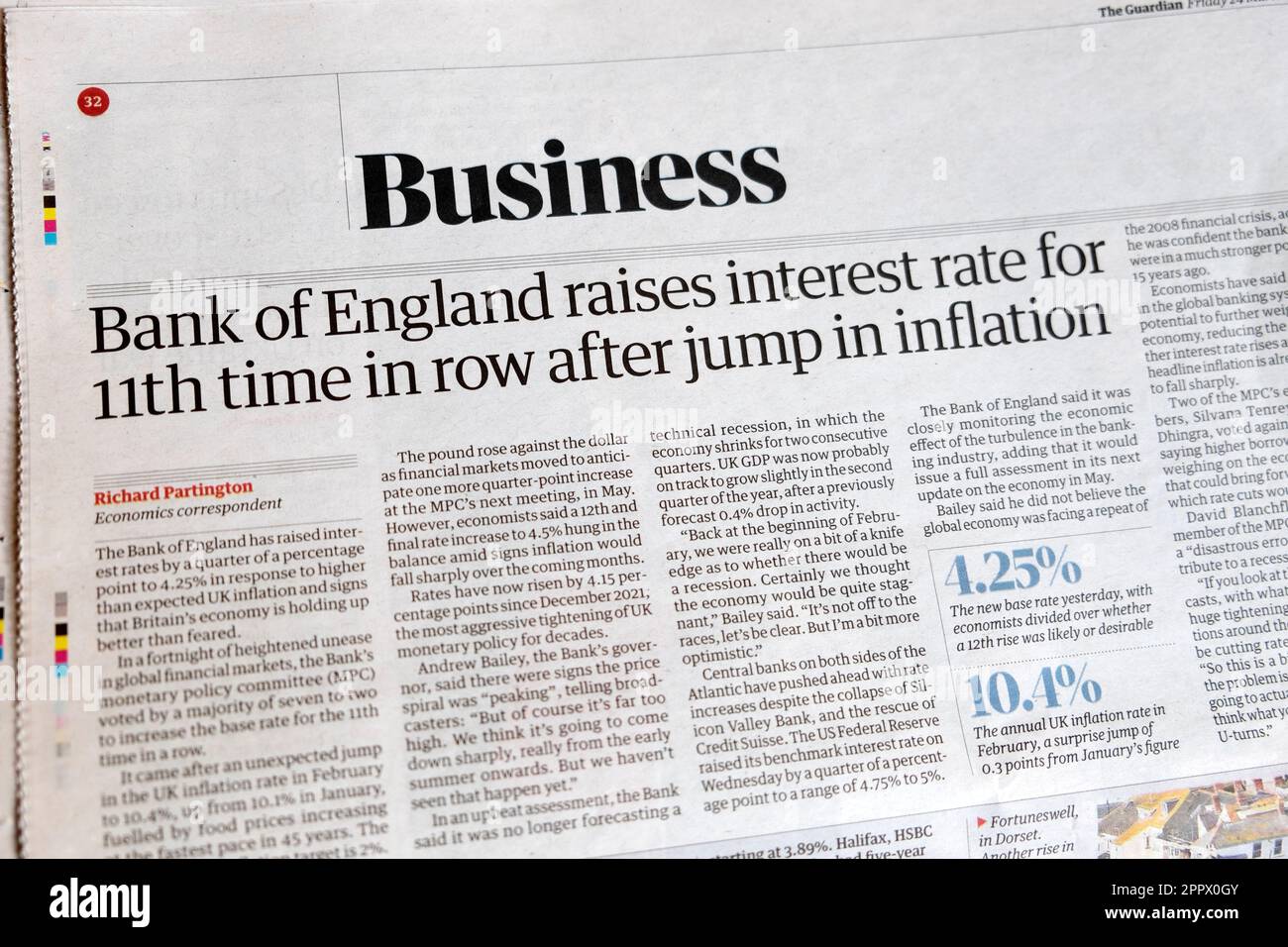
The Financial Times digs deeper, analyzing how the Bank of England’s interest rate hikes are failing to curb inflation in key sectors. The paper quotes Andrew Sentance, an external member of the Monetary Policy Committee, who told reporters, “We’re seeing a stubborn core inflation problem that isn’t responding to traditional tools.” The article also highlights rising mortgage rates, with an average UK homeowner now paying £1,200 more per month than in 2021.
Tabloids amplify the human cost. The Sun features a front-page photo of a family struggling to pay bills, alongside a story headlined “Families Face £1,000-a-Year Hit as Energy Bills Soar”. The paper cites a Citizens Advice survey revealing that 42% of households have cut back on essentials like heating or food due to rising costs. The story includes a step-by-step guide on how to apply for government support, reflecting the outlet’s focus on immediate reader concerns.
How outlets frame the economic story
There’s a clear divide in how financial and popular newspapers cover the same data:
| Outlet | Focus | Key Angle | Source of Data |
|---|---|---|---|
| The Financial Times | Macroeconomic analysis | Why inflation persists despite rate hikes | Bank of England, ONS, Goldman Sachs |
| The Telegraph | Policy critique | How government subsidies are backfiring | Treasury memo, IMF |
| The Sun | Public impact | Real families facing hardship | Citizens Advice survey |
| The Daily Mail | Political blame | “Wasteful” government spending | Leaked Treasury figures |
This table illustrates how broadsheets emphasize systemic issues while tabloids highlight personal struggles, each serving different reader priorities.
Diplomatic tensions: The EU’s latest move on energy supplies
Wednesday’s papers also cover a brewing dispute over gas supplies, with The Guardian reporting that the European Commission has threatened sanctions against a UK energy firm accused of diverting gas away from European markets. The paper cites Brussels officials who described the situation as “a direct breach of solidarity rules.”
The Times adds context, explaining that the firm in question, Centrica (owners of British Gas), has been accused of prioritizing UK customers during a supply crunch, leaving European allies short. The paper quotes a senior EU diplomat who said, “This is not just about gas—it’s about trust. If the UK can’t be relied upon in a crisis, what’s the point of alliances?”
In contrast, The Daily Telegraph frames the story as a test of UK sovereignty, arguing that Brussels is overstepping its authority. The paper cites former Foreign Secretary Dominic Raab, who told reporters, “The EU cannot dictate how we manage our own energy market. This is a dangerous precedent.” The article also includes a timeline of past EU-UK energy disputes, showing how tensions have escalated since Brexit.
What happens next: Will this escalate into a full trade war?
Analysts suggest the dispute could derail ongoing trade talks between the UK and EU, particularly over electric vehicle tariffs and agricultural standards. The Financial Times reports that City of London banks are already pulling back on cross-channel investments, citing “uncertainty over regulatory alignment.”
A former EU negotiator, speaking to The Guardian, warned that if the gas dispute isn’t resolved by next week’s summit, the EU may impose temporary tariffs on UK exports, targeting sectors like whisky, cars, and financial services. The paper notes that similar threats were made in 2021 over Northern Ireland protocols, leading to a last-minute compromise.
Public reaction: Protests, petitions, and political fallout
Wednesday’s papers also reflect growing public frustration, with The Daily Mail reporting that over 50,000 people have signed a petition demanding the resignation of the Energy Secretary. The paper includes a map of protest locations, showing rallies in London, Manchester, and Edinburgh. Meanwhile, The Sun covers a high-profile demonstration outside Downing Street, where activists held signs reading “No More Handouts—Tax the Rich!”.
The Guardian provides a deeper dive into the protest movement, interviewing organizers who say the demonstrations are not just about energy costs but systemic inequality. One activist told reporters, “People are tired of seeing billionaires avoid tax while they struggle to heat their homes.” The paper also notes that three trade unions have pledged support, signaling potential labor unrest.
How the media shapes public perception
The way news is framed can directly influence public opinion. For example:
- The Sun’s focus on individual stories (e.g., the Yorkshire pensioner) makes the issue feel personal and urgent.
- The Guardian’s emphasis on systemic causes (e.g., tax avoidance by the wealthy) positions the problem as a political failure.
- The Daily Mail’s use of polling data and real-time reactions (e.g., the 68% disapproval rating) amplifies public anger.
Psychologists note that emotional framing—such as using images of struggling families—can increase the likelihood of policy change by making abstract issues feel tangible. However, over-simplification (e.g., blaming “wasteful spending” without context) can also polarize debate.
What readers are asking: Key questions and answers
Based on search trends and reader comments, here are the most pressing questions about Wednesday’s headlines—and the answers:
- Will the cabinet minister’s resignation trigger a confidence vote?
- It’s possible. According to The Times, the minister’s departure could force a vote if other MPs demand one. However, The Guardian’s political editor suggests the government may try to avoid a vote by amending the policy instead.
- How much will energy subsidies cost the UK government?
- The Treasury’s leaked memo estimates a £20 billion shortfall if current plans proceed. The Financial Times warns this could force £5 billion in spending cuts or tax hikes elsewhere.
- Could the EU-UK gas dispute lead to trade sanctions?
- There’s a risk. A former EU negotiator told The Guardian that temporary tariffs on UK exports (e.g., whisky, cars) are being considered if no resolution is reached by next week’s summit.
- Are the protests over energy costs likely to grow?
- Yes. The Guardian reports that three major trade unions have pledged support, and organizers say they plan to expand rallies nationwide in June.
- How do UK inflation rates compare to other countries?
- UK inflation (6.7%) now exceeds that of Canada (5.9%), Australia (6.3%), and the Eurozone (5.4%), according to The Telegraph. Only Turkey (82%) and Argentina (255%) have higher rates.
- What’s the historical precedent for cabinet resignations over policy?
- The last major case was 2019’s Brexit reshuffle, when multiple ministers quit over policy disputes, leading to Boris Johnson’s downfall. Today’s crisis follows a similar pattern of internal divisions.
The coming days will be critical. With parliamentary debates scheduled for next Tuesday and the EU summit looming, the next moves could define the government’s survival—or accelerate its decline.
