
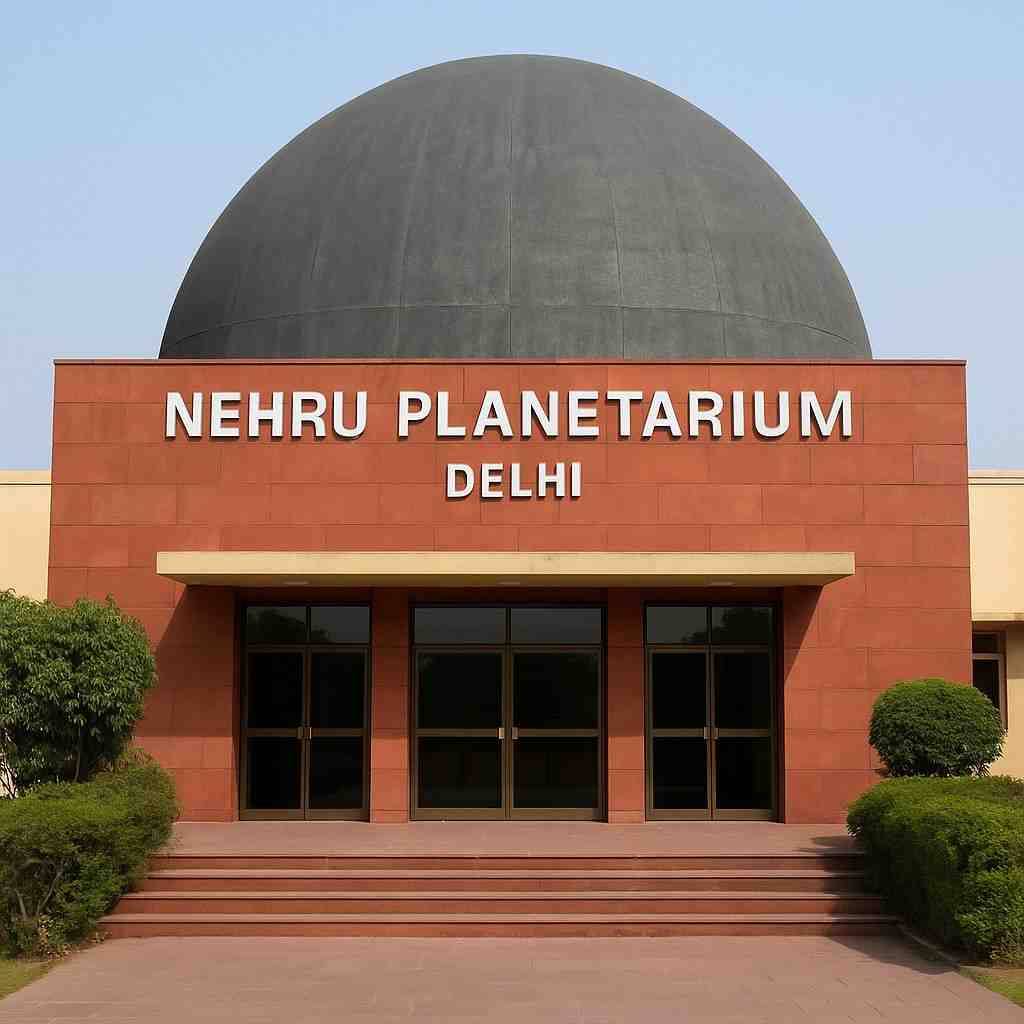
Venus-Jupiter Conjunction: Nehru Planetarium to Host Special Viewing on June 9
Astronomy enthusiasts and the general public are preparing for a spectacular celestial display as the Venus-Jupiter conjunction: Nehru Planetarium to host special viewing on June 9 – Press Trust of India becomes a focal point for skywatchers across the region. This rare alignment, where two of the brightest planets in our solar system appear to move close to one another from Earth’s perspective, offers a unique opportunity for both seasoned astronomers and curious novices to witness the grandeur of the cosmos.
The upcoming event is more than just a visual treat. It’s a masterclass in orbital mechanics. When Venus and Jupiter reach their closest apparent proximity, they create a “double star” effect in the night sky, often appearing as a singular, brilliant light source to the naked eye. To ensure the public can maximize this experience, the Nehru Planetarium has organized a specialized viewing session designed to provide the necessary equipment and expert guidance to interpret this cosmic encounter.
Understanding the Venus-Jupiter Conjunction
At its core, a planetary conjunction occurs when two or more celestial bodies appear close to each other in the sky from the vantage point of an observer on Earth. It is important to clarify a common misconception: the planets are not actually physically close to one another in space. Instead, they are simply aligned along the same line of sight.
In the case of the June 9 event, Venus—the inner rocky planet—and Jupiter—the outer gas giant—will align in a way that minimizes their angular separation. Because both planets have high albedos (reflectivity), they are among the brightest objects in the sky, second only to the Sun and the Moon. Their convergence results in a concentrated area of luminosity that is visible even in areas with moderate light pollution.
Planetary conjunctions serve as a reminder of the dynamic nature of our solar system, illustrating the varying orbital speeds of planets as they race around the Sun at different distances and velocities.
The Mechanics of Apparent Proximity
The phenomenon is driven by the differing orbital periods of the two planets. Venus, being closer to the Sun, completes its orbit much faster than the distant Jupiter. As Venus “overtakes” Jupiter from our perspective on Earth, they appear to merge. This movement is part of a cycle of alignments that occur periodically, though the degree of closeness varies with each occurrence.
- Angular Separation: The distance between the two planets measured in degrees, minutes, and seconds of arc.
- Synodic Period: The time it takes for a planet to return to the same position relative to the Sun as seen from Earth.
- Line of Sight: The straight path from the observer’s eye to the celestial object.
The Role of Nehru Planetarium in Public Astronomy
The decision by the Nehru Planetarium to host a special viewing on June 9 underscores the importance of public science communication. For many urban dwellers, the “light dome” created by city lights makes it difficult to identify celestial bodies. By providing a curated environment and professional-grade optics, the planetarium bridges the gap between theoretical astronomy and lived experience.
The viewing event is expected to include not only telescope access but also educational briefings. Experts will likely guide visitors on how to distinguish between the two planets, as they possess distinct visual characteristics when viewed through a lens.
Why Visit a Planetarium for this Event?
While the conjunction is visible to the naked eye, using a telescope at a facility like the Nehru Planetarium adds layers of depth to the experience:

- Resolution of Detail: While they look like stars to the naked eye, a telescope can reveal Jupiter’s cloud bands and perhaps its largest moons.
- Guided Identification: Expert astronomers can help viewers find the exact coordinates of the conjunction, preventing confusion with nearby bright stars.
- Community Engagement: Such events foster a shared sense of wonder and encourage students to pursue interests in STEM (Science, Technology, Engineering, and Mathematics).
For those interested in more structured learning, a related explainer on orbital mechanics can provide deeper insight into why these alignments occur.
Deep Dive: The Protagonists of the Night Sky
To appreciate the Venus-Jupiter conjunction: Nehru Planetarium to host special viewing on June 9 – Press Trust of India, one must understand the vastly different natures of the two planets involved.
Venus: The Veiled Inferno
Venus is often referred to as Earth’s “sister planet” due to its similar size and mass. However, the similarities end there. Venus is a world of extremes, shrouded in a thick, dense atmosphere of carbon dioxide that creates a runaway greenhouse effect. This makes it the hottest planet in our solar system, with surface temperatures capable of melting lead.
Because of its highly reflective cloud layer, Venus is the brightest planet in the sky, often appearing as the “Morning Star” or “Evening Star.” During the conjunction, its brilliant white light will contrast sharply with the steady glow of Jupiter.
Jupiter: The Gas Giant
In stark contrast to Venus, Jupiter is a behemoth. As the largest planet in the solar system, it is composed primarily of hydrogen and helium. It lacks a solid surface, consisting instead of layers of gas and liquid. Jupiter is famous for its Great Red Spot—a massive storm that has raged for centuries—and its extensive system of moons, which act as a “miniature solar system” of their own.
| Feature | Venus | Jupiter |
|---|---|---|
| Type | Terrestrial (Rocky) | Gas Giant |
| Atmosphere | Thick CO2 / Sulfuric Acid | Hydrogen / Helium |
| Visual Appearance | Brilliant White / Yellowish | Pale Yellow / Beige |
| Surface Temp | Extreme Heat (Lead-melting) | Extreme Cold (Core is hot) |
| Satellites | None | Numerous (95+ confirmed) |
Viewing Guide: How to Watch the Event
Whether you are attending the Nehru Planetarium event or watching from your own backyard, certain strategies can enhance your viewing experience. The timing and location of the conjunction are critical.
Optimal Timing
The conjunction is typically most visible shortly after sunset or shortly before sunrise, depending on the planets’ positions relative to the Sun. For the June 9 event, observers should look toward the western horizon as the sun dips below the skyline. The “golden hour” provides the best contrast, as the sky darkens enough for the planets to pop, but remains light enough to maintain orientation.
Equipment Recommendations
While the event is accessible to everyone, different tools provide different experiences:
- Naked Eye: Perfect for appreciating the overall brightness and the “pairing” effect.
- Binoculars: A pair of 7×50 or 10×50 binoculars will allow you to see the planets as distinct discs rather than points of light.
- Telescopes: Essential for seeing Jupiter’s Galilean moons (Io, Europa, Ganymede, and Callisto) and the phase of Venus.
Environmental Considerations
To get the clearest view, seek out a location with a clear view of the horizon. Avoid standing directly under streetlights, as the glare can reduce the perceived contrast of the planets. If you are in a city, a rooftop or a park is often the best choice.
The Significance of Planetary Alignments
Beyond the visual appeal, planetary conjunctions have held significance for humanity for millennia. Ancient civilizations used these alignments to calibrate calendars, navigate oceans, and develop early theories of the universe.
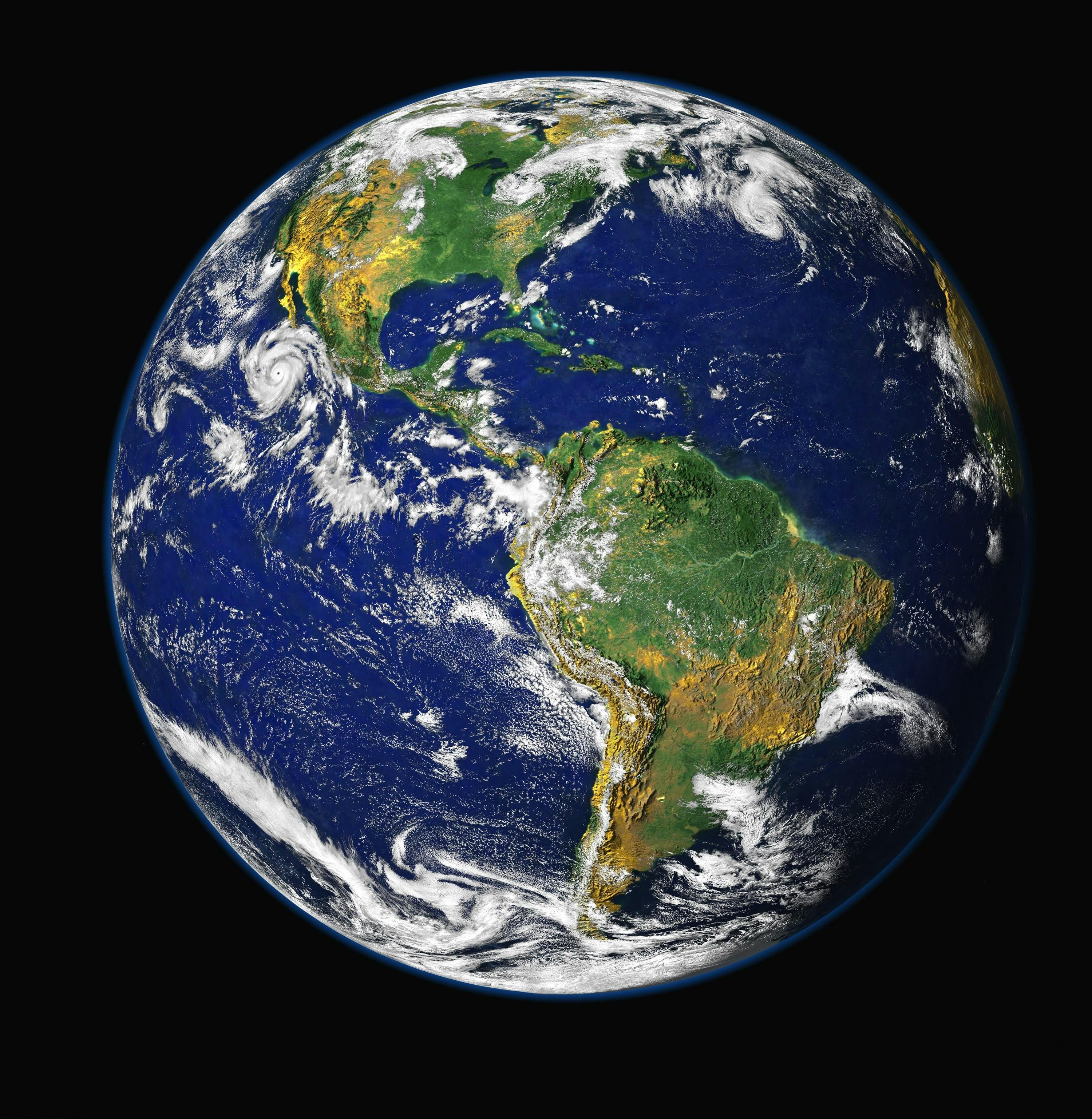
In the modern era, these events serve as vital educational tools. They allow scientists to test orbital models and provide a tangible way for the public to engage with the scale of the solar system. When we see Venus and Jupiter “touching,” we are actually witnessing a cosmic coincidence of geometry that spans millions of miles of vacuum.
Common Misconceptions
It is a common myth that conjunctions cause terrestrial disruptions or “energy shifts.” In reality, the gravitational influence of a conjunction on Earth is negligible. The distance between the planets is so vast that their alignment has no physical effect on Earth’s weather, tides, or human behavior. The “power” of a conjunction is entirely observational and educational.
Observation Checklist for June 9
To ensure you don’t miss a moment of the Venus-Jupiter conjunction: Nehru Planetarium to host special viewing on June 9 – Press Trust of India, follow this simple checklist:
- Check the Weather: Cloud cover is the primary enemy of astronomy. Check local forecasts for clear skies in the evening.
- Find Your Horizon: Identify where the west is in your location and ensure We find no tall buildings or trees blocking that view.
- Arrive Early: If attending the planetarium, arrive early to secure a spot and get a briefing from the staff.
- Bring a Star Map: Use a mobile app or a physical star chart to identify surrounding constellations, which helps provide context to the planets’ positions.
- Avoid Digital Distraction: While taking photos is tempting, remember to spend a few minutes observing with your own eyes to truly appreciate the scale.
For those unable to attend the physical event, many astronomical societies often provide live streams or digital telescope feeds, making the event accessible to a global audience.
Frequently Asked Questions
What exactly is a planetary conjunction?
A conjunction occurs when two celestial objects, such as Venus and Jupiter, appear very close to each other in the sky from the perspective of an observer on Earth. They are not actually close in space; they are simply aligned along the same line of sight.

Can I see the Venus-Jupiter conjunction without a telescope?
Yes. Both Venus and Jupiter are among the brightest objects in the night sky. The conjunction will be clearly visible to the naked eye, appearing as two very bright “stars” positioned close together.
Why is the Nehru Planetarium hosting a special event for this?
The planetarium provides professional telescopes and expert astronomers who can help the public identify the planets, explain the science behind the alignment, and offer a viewing experience that is far more detailed than what is possible with the naked eye.
Will the planets collide or affect Earth’s gravity?
No. The planets remain millions of miles apart despite appearing close together. There is no risk of collision, and the alignment has no measurable gravitational effect on Earth.
What is the best time to watch the conjunction on June 9?
The best time is generally just after sunset, looking toward the western horizon. This is when the planets are most visible before they set below the horizon.
As the date of June 9 approaches, the anticipation for the Venus-Jupiter conjunction: Nehru Planetarium to host special viewing on June 9 – Press Trust of India continues to grow. Whether you are a lifelong student of the stars or someone who rarely looks up, this event serves as a poignant reminder of our place in a vast, clockwork universe, where the simple movement of spheres creates moments of profound beauty.
