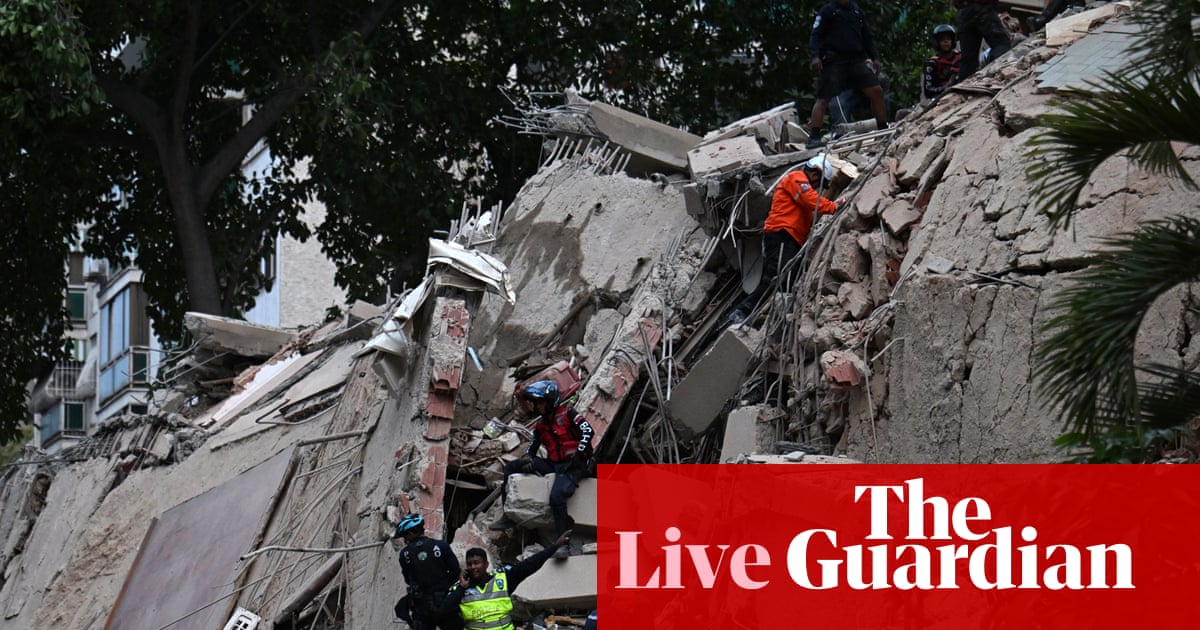
Venezuela earthquake: at least 32 dead and dozens of buildings collapsed, says interim president – live updates – The Guardian
At least 32 people are dead and dozens of buildings have collapsed following powerful earthquakes in Venezuela, according to the interim president. A state of emergency has been declared as officials warn of widespread damage and the potential for high casualties across the affected regions.
How many casualties have been reported in the Venezuela earthquake?
The interim president of Venezuela has confirmed that at least 32 people died following the seismic events. While this figure represents the current verified count, government officials have issued warnings that the number of victims could rise significantly. According to reports from The Guardian, authorities are bracing for “high casualties” as search and rescue operations continue in the hardest-hit areas.
The human toll is compounded by the scale of the structural failure. The interim president stated that dozens of buildings have collapsed, trapping residents and complicating the effort to provide an exact death toll. Rescue teams are currently working through rubble to locate survivors, though the instability of remaining structures poses a risk to first responders.
Key casualty and damage metrics reported so far include:
- Confirmed Dead: 32 (Source: Interim President)
- Structural Loss: Dozens of buildings collapsed (Source: Interim President)
- Casualty Outlook: “High casualties” feared (Source: The Guardian)
- Emergency Status: State of emergency declared (Source: The Guardian)
What is the current status of the emergency response?
A formal state of emergency is now in effect across the impacted zones. According to The Guardian, this declaration follows warnings from officials regarding the extent of the widespread damage. A state of emergency typically allows the government to bypass standard bureaucratic hurdles to mobilize military resources, allocate emergency funding, and coordinate international aid more rapidly.
The response effort is focused on two primary objectives: search and rescue and the stabilization of critical infrastructure. With dozens of buildings collapsed, the priority remains the extraction of individuals from the debris. However, the logistics of the operation are hampered by the magnitude of the destruction, which has affected multiple locations.
The interim president’s administration is overseeing the coordination of these efforts, though the scale of the disaster has put significant pressure on local emergency services. The declaration of a state of emergency signals that the domestic capacity to handle the crisis may be stretched to its limit.
Why did “twin earthquakes” hit Venezuela?
Reports from the Australian Broadcasting Corporation (ABC) indicate that Venezuela was struck by “twin earthquakes.” In seismology, this often refers to a sequence where two powerful shocks occur in close proximity in terms of time and location. This can happen as a result of a mainshock and a powerful aftershock, or as a “doublet,” where two earthquakes of similar magnitude occur on the same or adjacent fault lines.

The impact of twin earthquakes is often more devastating than a single event. The first quake weakens the structural integrity of buildings, leaving them vulnerable to the second shock. This sequence likely contributed to the “dozens of buildings” that the interim president reported as collapsed. A building that might have survived one tremor often fails during the second.
The geological volatility of the region is a known factor. Venezuela sits near the boundary of the Caribbean and South American tectonic plates. The interaction between these plates creates significant seismic tension, which is released through the types of powerful earthquakes reported by Nine.com.au and SMH.com.au.
| Reporting Source | Key Focus of Report | Specific Detail Provided |
|---|---|---|
| The Guardian | Casualties & Government Action | 32 dead; state of emergency declared. |
| ABC | Seismic Pattern | Identification of “twin earthquakes.” |
| Nine.com.au / SMH | Event Magnitude | Characterized as “powerful” and “major” earthquakes. |
What is the extent of the structural damage?
The physical destruction is widespread, with the interim president highlighting the collapse of dozens of buildings. Video evidence, as cited by the Australian Broadcasting Corporation, shows significant destruction in the wake of the twin quakes. This imagery confirms that the damage is not limited to isolated structures but affects entire blocks and residential areas.
The nature of the collapse suggests a failure of older or non-seismic-resistant infrastructure. In many regions of Venezuela, building codes may not have been strictly enforced or updated to withstand powerful seismic events. When the first of the twin earthquakes hit, it likely created micro-fractures in concrete and masonry; the second quake then triggered total structural failure.
Beyond residential buildings, officials are assessing damage to:
- Transport Links: Roads and bridges that may be blocked or severed, hindering rescue access.
- Utility Grids: Power and water lines that often rupture during major seismic shifts.
- Public Services: Hospitals and clinics that may be struggling to handle the influx of injured survivors while dealing with their own structural damage.
“High casualties” are feared as powerful earthquakes hit Venezuela.
— SMH.com.au
Understanding the broader context of seismic risk in Venezuela
To understand why this event is so critical, it is necessary to look at the regional tectonic setting. Venezuela is characterized by a complex system of faults. The interaction between the Caribbean Plate and the South American Plate creates a high-risk environment for seismic activity. When these plates slide past each other or collide, they build up immense pressure that is eventually released as an earthquake.
The occurrence of “twin earthquakes” increases the risk of landslides and further soil liquefaction, especially in urban areas built on softer sediment. This geological reality means that even after the initial shocks, the region remains unstable. Aftershocks are common and can continue to bring down buildings that were already compromised by the primary events.
Furthermore, the socio-economic climate in Venezuela can exacerbate the impact of natural disasters. A state of emergency is not just a legal formality; it is a recognition that the existing infrastructure—already strained by economic challenges—cannot cope with a disaster of this magnitude without extraordinary measures.
For more information on how tectonic movements affect the region, see a related explainer on Caribbean Plate seismicity.
Common misconceptions regarding the disaster
One common misconception is that a single earthquake is the only cause of collapse in these scenarios. As the ABC reporting on “twin earthquakes” suggests, the sequence of events is often more critical than the magnitude of a single shock. The cumulative stress on buildings is what leads to the widespread collapse reported by the interim president.
Another misconception is that a “state of emergency” implies a total collapse of government control. In reality, as reported by The Guardian, it is a strategic tool used to centralize resources and expedite the delivery of aid. It allows for the rapid deployment of the military to assist in search and rescue operations, which is essential when “dozens of buildings” have fallen.
Frequently Asked Questions
How many people have died in the Venezuela earthquake?
According to the interim president, at least 32 people have been confirmed dead. However, officials have warned that this number is likely to increase as more areas are reached by rescue teams.

What does “twin earthquakes” mean in this context?
As reported by the ABC, “twin earthquakes” refers to two powerful seismic events occurring in close succession. This often results in greater destruction because the first quake weakens structures, making them more likely to collapse during the second.
Why was a state of emergency declared?
The Guardian reports that a state of emergency was declared due to warnings of widespread damage and the fear of high casualties. This allows the government to mobilize emergency resources and military support more efficiently.
What is the current status of the buildings in the affected areas?
The interim president stated that dozens of buildings have collapsed. Video evidence confirms significant destruction, and rescue teams are currently searching the rubble for survivors.
Is the earthquake still causing issues?
While the primary shocks have passed, the threat of aftershocks remains. These subsequent tremors can cause further collapses of already damaged buildings, which is why officials remain on high alert.
The situation remains fluid as search and rescue operations continue. The focus now shifts to the long-term recovery and the ability of the interim government to provide housing and medical care to those displaced by the collapse of their homes.
