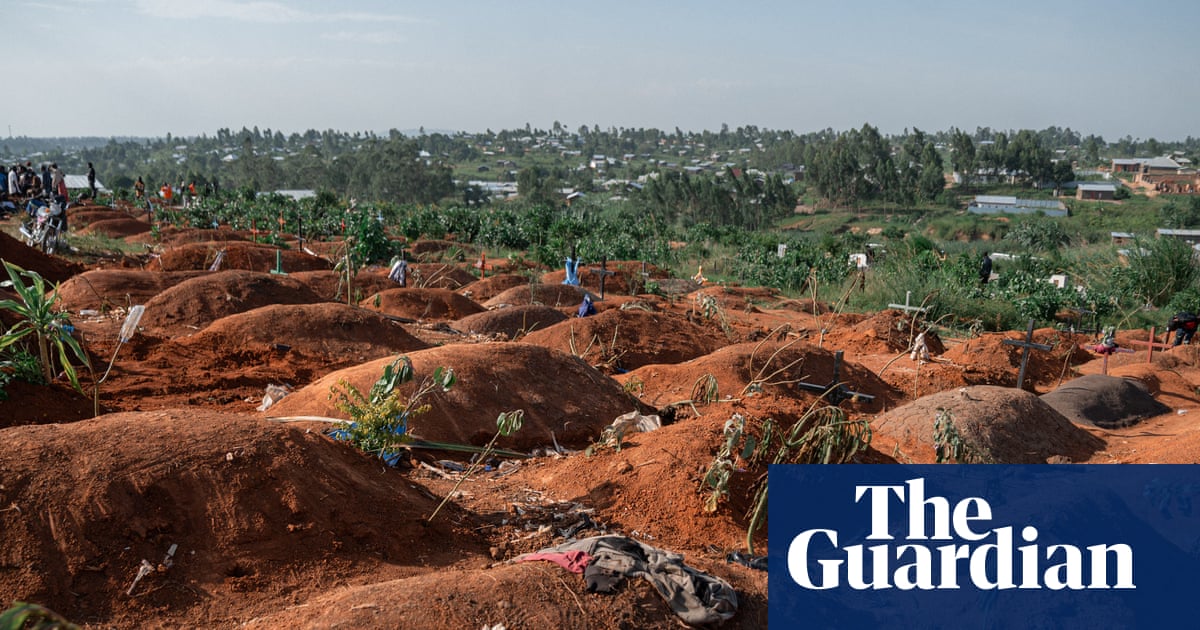
Global leaders warned: ‘The next pandemic is coming—and nations must act now’ as WHO and Lula push for final pandemic treaty deal
The world’s next pandemic could strike within months, not years, and without urgent action from governments, the crisis will arrive unprepared, according to a direct warning from Brazil’s President Luiz Inácio Lula da Silva and the World Health Organization’s director-general. In a rare joint appeal, both leaders have urged G7, G20, BRICS, and all member states to finalize the WHO Pandemic Agreement—particularly its Pathogen Access and Benefit-Sharing (PABS) annex—before the next outbreak forces them into reactive chaos.
With negotiations stalled amid geopolitical tensions and domestic resistance, the warning comes as public health experts and former WHO officials privately concede that even a moderate-severity outbreak could overwhelm global supply chains, trigger economic contractions exceeding $10 trillion, and leave low-income countries without critical vaccines for months. “The next pandemic will not wait for political debates,” Lula stated in a statement released alongside the WHO’s latest Pandemic Agreement progress report. “We have the tools to prevent a catastrophe—if we act together now.”
The stakes could not be higher. The 2022–2023 WHO survey of 125 countries found that only 27% had pandemic preparedness plans fully funded, and 40% lacked stockpiles of essential medicines. Meanwhile, the 2020 COVID-19 vaccine rollout exposed deep inequities: 90% of high-income nations secured doses within six months, while only 1% of low-income countries reached that milestone by the same time. The PABS annex, designed to address these gaps, remains the most contentious sticking point in the agreement.
This article explains why the treaty is stalled, what the PABS annex actually does, and how the delay could cost lives—and trillions—when the next outbreak arrives.
—
Why is the WHO Pandemic Agreement stalled—and what happens if it fails?
The WHO Pandemic Agreement, negotiated since 2021, aims to create a legally binding framework for global cooperation on disease surveillance, vaccine sharing, and equitable access to medical tools. But progress has ground to a halt over two key issues:
- Pathogen Access and Benefit-Sharing (PABS): A system to ensure fair compensation for scientists in low-income countries who discover or study new viruses, while allowing rapid global access to samples. Developing nations argue this protects their researchers; wealthy countries and pharmaceutical firms fear it could slow innovation or create legal barriers.
- Funding and enforcement: The agreement lacks a dedicated global financing mechanism, leaving gaps in how costs would be shared. The U.S. and EU have pushed for voluntary contributions, while China and Brazil advocate for mandatory assessments tied to GDP.
According to Dr. Tedros Adhanom Ghebreyesus, WHO director-general, the PABS annex—the most technically complex part of the treaty—requires final approval from at least two-thirds of WHO member states before the full agreement can be adopted. As of June 2024, only 118 of 194 states have submitted formal positions, and 15 holdouts remain, including India, South Africa, and the U.S..
Key point: Without the PABS annex, the treaty risks becoming a non-binding set of guidelines, leaving nations to act—or fail—on their own during the next outbreak.
Historically, similar delays have cost lives. The 2014–2016 Ebola outbreak exposed flaws in global response: West African countries lacked real-time data sharing, and vaccine trials took 18 months to complete. The 2009 H1N1 pandemic saw rich nations stockpile vaccines while poorer ones waited. “We cannot repeat these mistakes,” said Dr. Soumya Swaminathan, former WHO chief scientist, in a recent interview with Science magazine.
—
What is the Pathogen Access and Benefit-Sharing (PABS) annex—and why is it so controversial?
The PABS annex is the cornerstone of the WHO’s plan to prevent another COVID-19-style inequality crisis. It proposes:
- Mandatory sharing of pathogen samples with the WHO’s Global Influenza Surveillance and Response System (GISRS), with compensation for contributing scientists.
- Equitable access to vaccines and treatments, including tiered pricing for low-income countries.
- Legal protections for researchers in countries where pathogens originate (e.g., DRC for Ebola, China for SARS).
But critics argue the system could:
- Slow vaccine development if patent protections are weakened (a concern for Pfizer, Moderna, and AstraZeneca).
- Create bureaucratic delays in outbreak response (cited by the U.S. Department of Health in a 2023 internal briefing).
- Undermine national sovereignty by requiring data sharing without consent (a stance held by Russia and some African nations).
“The PABS annex is not about punishment—it’s about preventing another scenario where one country hoards vaccines while another burns bodies in the street,” said Dr. Maria Van Kerkhove, WHO’s technical lead on COVID-19. “But the politics are messy.”
Comparison: The 2005 International Health Regulations (IHR)—the current global health treaty—lacked enforcement teeth. During COVID-19, China delayed sharing the virus sequence for 10 days, and Italy initially blocked EU-wide vaccine data. The PABS annex aims to codify faster, fairer responses—but only if nations agree.
—
Who is pushing for the treaty—and who is blocking it?
The push for the Pandemic Agreement divides roughly into three blocs:

| Supporters | Position | Key Arguments |
|---|---|---|
| Global South (Brazil, South Africa, India) | Strong PABS, mandatory funding | “We were the lab rats for COVID vaccines—now we demand fair access.” (Lula, June 2024) |
| EU & Canada | PABS with safeguards, voluntary funding | “We support equity but need legal certainty for pharma.” (EU Health Commissioner Stella Kyriakides) |
| U.S. & Japan | Oppose mandatory PABS, prefer bilateral deals | “The WHO lacks accountability—we’ll act faster alone.” (U.S. HHS Secretary Xavier Becerra) |
Three countries are seen as critical holdouts:
- India: Demands full intellectual property waivers for pandemic tools, fearing PABS could still favor Western firms.
- South Africa: Wants stronger penalties for vaccine hoarding, citing its 2021 legal challenge to COVID-19 patents.
- United States: Opposes mandatory pathogen sharing, arguing it could violate national security laws (e.g., Biological Weapons Act).
China’s stance remains ambiguous. While it supports the treaty’s principles, it has not committed to PABS, citing concerns over data sovereignty after Western criticism of its 2020–2021 COVID-19 transparency.
Expert view: “The U.S. and China are playing a long game here,” said Dr. Lawrence Gostin, director of the O’Neill Institute for National and Global Health Law. “Both want to shape global health rules—but neither wants to cede control over pathogen data.”
—
What would happen if the treaty fails?
The risks of inaction are not hypothetical. The 2023–2024 WHO Global Risk Assessment identified five high-threat pathogens with pandemic potential:
- Nipah virus (90% fatality rate) – Already spreading in Bangladesh.
- H5N1 avian flu (60% fatality rate) – Mutating in mammals.
- Monkeypox (evolving strains) – Cases up 40% in 2024.
- Lassa fever (West Africa) – Undetected outbreaks in 3 Nigerian states.
- Unknown zoonotic spillover – 75% of new diseases come from animals (WHO).
Without the treaty, experts warn of:
- Vaccine nationalism 2.0: Rich nations would stockpile doses again, as seen in 2020–2021.
- Supply chain collapses: 90% of active pharmaceutical ingredients come from China/India—disruptions could halt production.
- Economic damage: The 2020 COVID-19 recession cost $16 trillion globally (IMF). A moderate-severity pandemic could exceed $20 trillion.
- Misinformation wars: Social media delays in 2020 cost lives (Oxford Internet Institute).
Case study: During the 2014–2016 Ebola outbreak, Liberia’s health system collapsed because neighboring countries blocked cross-border aid. The WHO estimates that with better coordination, 28,000 deaths could have been prevented.
“The next pandemic won’t care about borders or politics,” said Dr. Jeremy Farrar, director of the Wellcome Trust. “But our failure to act will determine how many die.”
—
What’s the timeline for finalizing the agreement?
The WHO’s Intergovernmental Negotiating Body (INB) has set three critical deadlines:
| Date | Milestone | Status |
|---|---|---|
| June 2024 | PABS annex draft submitted to member states | Completed (but 15 nations still reviewing) |
| September 2024 | WHO General Assembly vote on treaty adoption | Two-thirds majority required |
| 2025 | Full implementation (if approved) | Funding and enforcement mechanisms still unresolved |
If the treaty fails, the WHO plans to adopt a “lightweight” version—but without PABS, it will lack legal teeth. “We’re at a crossroads,” said Dr. Adhanom Ghebreyesus in a June 2024 press briefing. “Either we finalize this now, or we wait for the next crisis to force our hand—and by then, it may be too late.”
What’s next?:
- The G7 summit in Italy (June 13–15, 2024) will discuss pandemic preparedness, with Lula and Macron pushing for U.S./EU support.
- The WHO’s 77th World Health Assembly (May 2025) could see a revised PABS proposal if current talks fail.
- China and the U.S. may seek bilateral deals to bypass the treaty, risking fragmented global responses.
—
How could the deadlock be broken?
Three potential solutions are under discussion:
- Compromise on PABS: Allow voluntary pathogen sharing with strong incentives (e.g., WHO funding for labs in Africa/Asia).
- Phased implementation: Adopt the treaty without PABS first, then negotiate the annex later.
- U.S. leadership shift: If the next U.S. administration (post-2024 election) prioritizes global health, it could unblock key provisions.
“The politics are brutal, but the science is clear,” said Dr. Paul Hunter, professor of medicine at the University of East Anglia. “If we don’t act now, the next pandemic will write the obituary for this generation’s leadership.”
—
Common misconceptions about the Pandemic Agreement
Despite its urgency, the treaty faces three persistent myths:

- “This is just about vaccines.”
Reality: Only 20% of the agreement focuses on vaccines. The rest covers surveillance, supply chains, and misinformation.
- “PABS will kill innovation.”
Reality: The 2005 IHR already allows pathogen sharing—but no compensation. PABS aims to incentivize participation, not punish it.
- “The U.S. is the only obstacle.”
Reality: India and South Africa have harder lines on IP waivers, while China’s silence is a wildcard. A three-way stalemate is the real blocker.
—
What you need to know now
If you’re tracking this story, here’s what to watch:
- G7 summit (June 13–15, 2024): Will the U.S. and EU signal support?
- WHO INB meetings (August 2024): Will any holdout nations shift?
- New pathogen detections: Nipah or H5N1 outbreaks could force a last-minute deal.
- U.S. election (November 2024): A Democratic win could accelerate talks; a Republican victory may slow them.
—
Frequently asked questions
Q: What is the WHO Pandemic Agreement, and why does it matter?
A: It’s a proposed legally binding treaty to improve global cooperation on disease outbreaks, including faster vaccine sharing and equitable access. Without it, the next pandemic could see rich nations hoarding supplies again, as in COVID-19.
Q: What is the Pathogen Access and Benefit-Sharing (PABS) annex?
A: A system to ensure scientists in low-income countries are compensated when their research helps develop vaccines or treatments. It also requires sharing pathogen samples with the WHO for global response.
Q: Which countries are blocking the agreement?
A: The U.S., India, and South Africa are key holdouts. The U.S. opposes mandatory pathogen sharing, while India and South Africa demand stronger intellectual property waivers.
Q: Could the treaty fail?
A: Yes. If two-thirds of WHO member states don’t approve the PABS annex by September 2024, the treaty will likely become a non-binding set of guidelines, leaving response efforts fragmented.
Q: How much could the next pandemic cost?
A: The 2020 COVID-19 recession cost $16 trillion (IMF). A moderate-severity pandemic could exceed $20 trillion, with low-income countries facing the worst economic hits.
Q: What happens if no deal is reached?
A: Nations would likely act alone, leading to vaccine nationalism, supply chain breakdowns, and delayed responses. The 2014 Ebola crisis showed how lack of coordination costs lives.
Q: How can I stay updated on this story?
A: Follow WHO press releases, G7/G20 statements, and health ministry updates from Brazil, India, and the U.S.. Key dates: G7 summit (June 2024) and WHO INB meetings (August 2024).
—
