Is Hidradenitis Suppurativa More Than a Skin Disease? Examining the Systemic Impact
Hidradenitis suppurativa (HS) is increasingly recognized as a systemic inflammatory condition rather than a localized skin disease. According to medical analysis from Medscape and research from Institut Pasteur, the disorder involves complex interactions between skin-colonizing bacteria and the immune system, often accompanied by significant mental health challenges and systemic comorbidities.
Why Medical Experts Now Ask if Hidradenitis Suppurativa is More Than a Skin Disease
For years, clinical perspectives on hidradenitis suppurativa focused primarily on the visible symptoms: painful nodules, abscesses, and tunneling scars in areas like the armpits and groin. However, current medical discourse, including analysis featured by Medscape, suggests that viewing HS solely as a dermatological issue misses the broader systemic nature of the disease.
The shift in understanding stems from the realization that HS is a chronic inflammatory process. It doesn’t just affect the surface of the skin; it involves the immune system’s overreaction to triggers, leading to widespread inflammation. This systemic involvement means that patients often experience symptoms that extend far beyond the skin’s surface, including joint pain and fatigue.
According to reporting from ClickOnDetroit, HS is a chronic inflammatory skin disease that requires a comprehensive management approach. The disease is characterized by the blockage of hair follicles, which then rupture and cause inflammation. While the rupture happens in the skin, the drive behind that inflammation is often rooted in systemic biological malfunctions.
- Systemic Inflammation: The body’s immune response is not limited to the site of the lesion.
- Comorbidities: Patients often present with other inflammatory conditions, such as metabolic syndrome or inflammatory bowel disease.
- Chronic Nature: Unlike a temporary infection, HS is a long-term condition that requires systemic management.
The Unexpected Role of Skin-Colonizing Bacteria in HS
New research from Institut Pasteur indicates that skin-colonizing bacteria play a more complex and unexpected role in the development and progression of hidradenitis suppurativa. Rather than the bacteria being the primary cause of the disease, they appear to interact with the host’s immune system in ways that exacerbate inflammation.
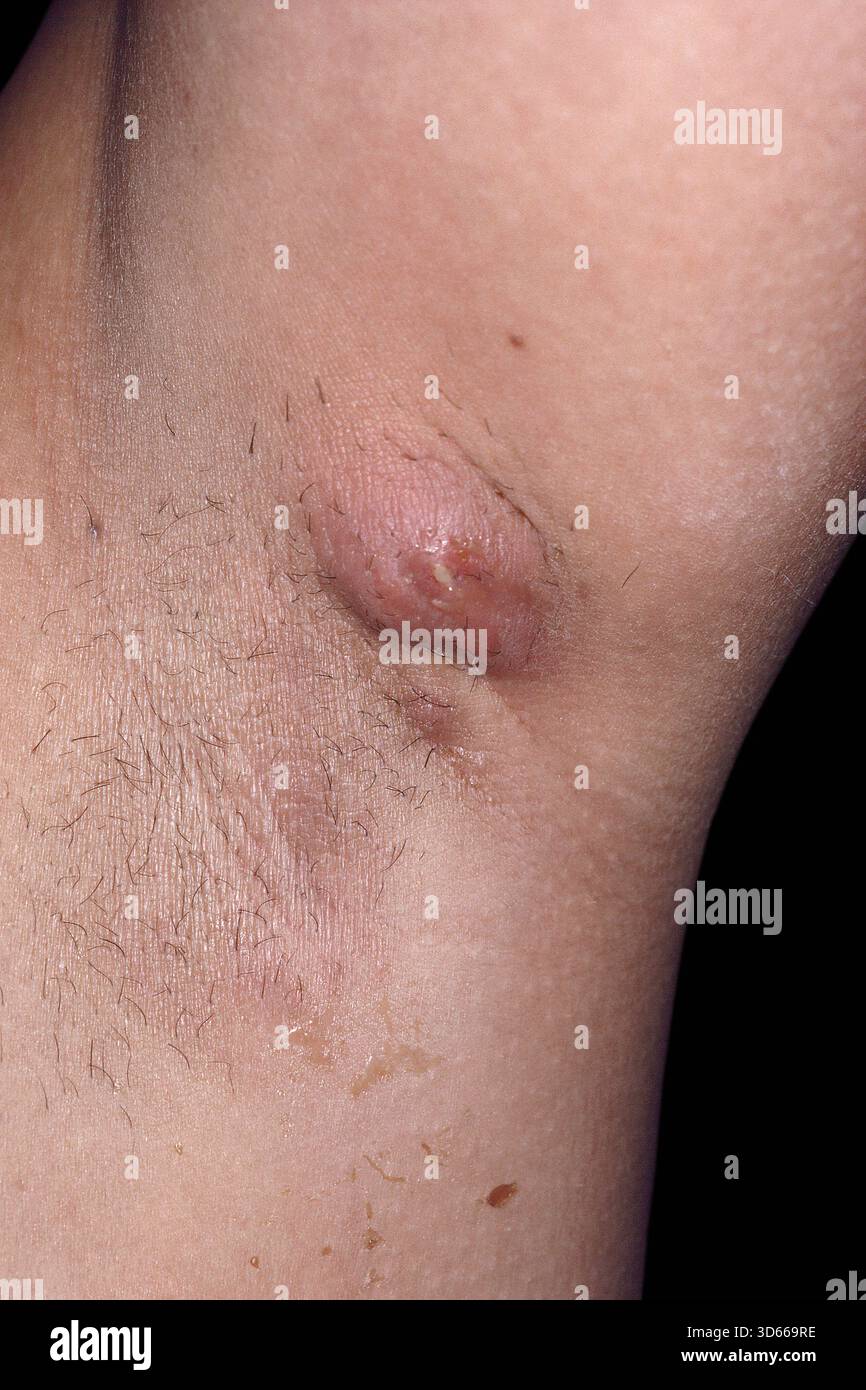
The Institut Pasteur findings suggest that the microbiome—the community of microorganisms living on the skin—is not just a passive bystander. In patients with HS, the balance of these bacteria is disrupted. This imbalance can trigger the immune system to produce a more aggressive inflammatory response, which in turn leads to the characteristic nodules and tunnels associated with the disease.
This discovery is critical because it moves the conversation away from “cleaning” the skin to “managing” the biological environment. If the disease is driven by an interaction between bacteria and the immune system, then treatment must address both the microbial landscape and the inflammatory pathways. This supports the theory that HS is a systemic biological failure rather than a simple hygiene or surface-level issue.
The interaction between the skin’s microbiome and the immune system suggests that HS is a complex biological dialogue, not just a series of isolated skin infections.
The Psychosocial Toll: Evidence from the Detroit Summit
While the biological aspects of HS are managed in clinics, the psychological impact is often handled in isolation. The Michigan Chronicle reports that events like the Detroit Summit provide a critical space for people living with HS to find understanding and community, highlighting that the disease’s impact is as much mental as it is physical.
The Detroit Summit underscored a recurring theme: the “silence” of the disease. Because HS occurs in areas of the body that are typically covered, patients often hide their condition from friends, family, and employers. This isolation leads to significant mental health burdens, including depression and anxiety. The Michigan Chronicle notes that these summits are essential for patients who have spent years feeling misunderstood by both society and their healthcare providers.
The psychological burden is often exacerbated by the nature of the lesions. The pain is persistent, and the drainage from abscesses can lead to social withdrawal. When a patient’s primary interaction with the disease is one of shame and secrecy, the systemic impact expands to include psychiatric comorbidities. This reinforces the argument that HS is “more than a skin disease”—it is a condition that affects the patient’s entire quality of life and mental stability.
Comparing the Clinical and Patient Perspectives
There is often a gap between how a clinician views HS and how a patient experiences it. The following table contrasts these two perspectives based on reported data from Medscape, the Michigan Chronicle, and wbbjtv.com.
| Perspective | Primary Focus | View of the “Problem” | Desired Outcome |
|---|---|---|---|
| Clinical (Medscape/Pasteur) | Inflammatory markers and microbiome | Immune dysfunction and bacterial interaction | Reduction of lesions and systemic inflammation |
| Patient (Detroit Summit/wbbjtv) | Pain, stigma, and daily function | Social isolation and physical agony | Validation, pain relief, and social reintegration |
Diagnosis Hurdles and the “Silent” Struggle
A major component of why HS is perceived as a skin disease—rather than a systemic one—is the delay in diagnosis. Reporting from wbbjtv.com emphasizes that many individuals suffer in silence for years before receiving a correct diagnosis. This delay often occurs because the early stages of HS are mistaken for simple boils, acne, or poor hygiene.
When a patient is told they have “boils,” the treatment is usually localized (such as a warm compress or a local antibiotic). However, because HS is systemic, these localized treatments often fail. The frustration of failed treatments leads many patients to stop seeking care, further entrenching the “silent” nature of the struggle. According to wbbjtv.com, the pain associated with HS is not just acute during a flare-up but can become a chronic baseline for the patient.
The path to diagnosis often involves a cycle of misidentification:
- Initial Lesion: Patient notices a painful lump, often mistaken for an ingrown hair or cyst.
- Misdiagnosis: A primary care provider may treat it as a recurring bacterial infection.
- Disease Progression: Nodules begin to connect under the skin, forming tunnels (sinus tracts).
- Specialist Referral: The patient eventually sees a dermatologist who recognizes the systemic patterns of HS.
This diagnostic lag prevents patients from accessing systemic therapies—such as biologics—that target the immune system rather than just the skin surface. By the time HS is correctly identified, the physical scarring and psychological trauma are often already advanced.
The Implications of Systemic Thinking in Treatment
If HS is accepted as a systemic disease, the approach to treatment must change. Rather than focusing solely on draining abscesses or applying topical creams, the goal shifts toward modulating the entire immune response.
According to the frameworks discussed by Medscape and supported by the findings at Institut Pasteur, the future of HS treatment likely lies in “precision medicine.” This involves analyzing a patient’s specific microbiome and inflammatory markers to determine which systemic medication will work best. For some, this may mean biologics that block specific cytokines (proteins that signal inflammation), while for others, it may involve managing metabolic health to reduce the overall inflammatory load on the body.
Furthermore, the Detroit Summit’s emphasis on community suggests that “treatment” must include mental health support. A systemic approach to HS recognizes that a patient cannot be “cured” of their skin lesions if they are still battling severe clinical depression caused by the disease’s stigma.
Key points regarding the evolution of HS treatment include:
- From Local to Systemic: Moving from topical antibiotics to systemic immunomodulators.
- Integrated Care: Combining dermatology, gastroenterology, and psychology into a single care plan.
- Microbiome Management: Exploring how to alter skin bacteria to prevent the immune system from overreacting.
For more information on how chronic inflammation affects the body, see a related explainer on chronic inflammation.
Common Misconceptions About Hidradenitis Suppurativa
Because HS is often misdiagnosed, several myths persist that contribute to the stigma reported by the Michigan Chronicle and wbbjtv.com. Correcting these is essential for improving patient outcomes.
Myth: HS is caused by poor hygiene.
Fact: HS is an inflammatory disease involving the immune system and the microbiome. According to Institut Pasteur, it is a biological interaction, not a result of cleanliness. No amount of scrubbing can “cure” a systemic immune dysfunction.
Myth: HS is just “bad acne.”
Fact: While both involve follicles, HS is far more destructive. It creates deep tunnels (sinus tracts) under the skin and is associated with systemic inflammation that acne typically does not produce.
Myth: HS only affects the skin.
Fact: As highlighted by Medscape, the disease is linked to systemic comorbidities and significant mental health challenges, making it a whole-body condition.
Frequently Asked Questions
Is Hidradenitis Suppurativa contagious?
No. According to clinical data from Medscape and other medical sources, HS is a non-contagious inflammatory condition. It is not caused by a transmissible infection but by a combination of genetic predisposition, immune system dysfunction, and interactions with skin bacteria.
Why is it so hard to diagnose HS?
As reported by wbbjtv.com, HS is often mistaken for more common conditions like boils, cysts, or severe acne. Because it occurs in hidden areas of the body, patients may not seek help immediately, and primary care providers may not recognize the specific pattern of nodules and tunneling until the disease is advanced.

Can diet and lifestyle affect HS?
While not a primary cure, systemic inflammation is often influenced by overall health. Because HS is viewed as a systemic disease, managing metabolic health and reducing inflammatory triggers can help some patients manage their symptoms, although medical intervention is usually required for moderate to severe cases.
What is the role of the microbiome in HS?
Research from Institut Pasteur suggests that certain skin-colonizing bacteria interact with the immune system to trigger or worsen inflammation. The disease is not caused by a single “bad” bacteria, but rather an imbalance and an abnormal immune response to the bacteria present on the skin.
How does HS impact mental health?
The Michigan Chronicle reports that the stigma, pain, and physical appearance of HS often lead to social isolation, anxiety, and depression. The “silent” nature of the disease means patients often lack the social support necessary to cope with the chronic physical pain.
The evolving understanding of hidradenitis suppurativa suggests that the medical community is moving toward a holistic model. By integrating the biological findings from Institut Pasteur with the patient-centered insights from the Detroit Summit and the clinical analysis from Medscape, the goal is to treat the person, not just the skin. This systemic shift is the only way to address the physical pain, the microbial triggers, and the psychological trauma that define the HS experience.
