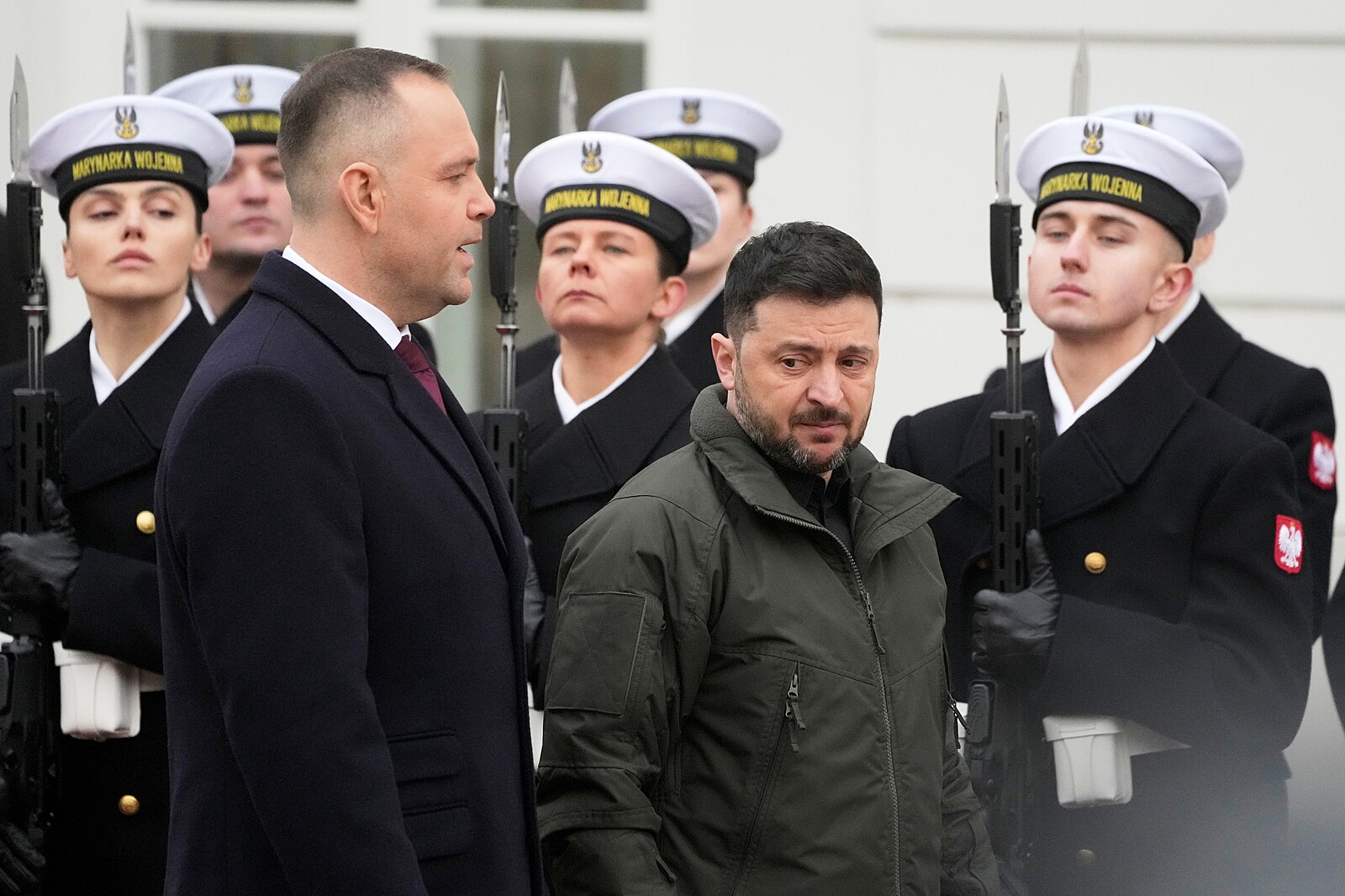
Kyiv and Warsaw’s public rift over military aid threatens Ukraine’s Western support network as Moscow seizes on the dispute to undermine unity
Ukrainian President Volodymyr Zelensky has launched a sharp public critique of Poland’s approach to supplying weapons to Kyiv, accusing Warsaw of prioritizing its own domestic political interests over the war effort. The escalation—marked by Zelensky’s rare direct rebuke of a key NATO ally—comes as Ukrainian officials warn that the dispute risks weakening Kyiv’s already strained relations with Western donors at a time when Moscow is actively exploiting divisions among supporters.
Poland, Ukraine’s largest military aid provider in Europe, has faced mounting criticism after reports emerged that it had redirected some promised arms shipments to its own armed forces amid domestic political pressure. Zelensky’s office stated in a public address that Poland’s actions “undermine trust” and create “unnecessary obstacles” for Ukraine’s defense needs. Meanwhile, Polish Defense Minister Bartosz Cichocki acknowledged in interviews that Warsaw’s approach had left Ukrainian officials “confused,” though he insisted the delays were temporary and tied to internal logistical challenges.
Why This Matters: A Test for NATO’s Unity
The dispute highlights deepening tensions between Kyiv and its Eastern European allies, who are increasingly struggling to balance domestic political constraints with their commitments to Ukraine. Poland, a vocal supporter of Ukraine since Russia’s invasion in February 2022, has faced backlash from opposition parties and some lawmakers who argue that continued arms transfers divert resources from Poland’s own defense modernization—a priority after Moscow’s threats to NATO’s eastern flank.

Analysts warn the fallout could embolden Russia, which has spent months publicly highlighting divisions among Western backers. A report from iDNES.cz noted that Moscow’s state media has amplified the dispute, framing it as evidence that Ukraine’s allies are “abandoning” Kyiv. Meanwhile, Ukrainian officials have privately expressed frustration that Poland’s hesitation contrasts with steady support from the U.S. and Germany, which have recently approved new military aid packages.
A Timeline of the Breaking Points
The current crisis follows months of simmering frustration in Kyiv over Poland’s slow delivery of promised weapons, including Patria AMOS air defense systems and PT-91 Twardy tanks. In April, Ukrainian officials disclosed that Poland had delayed shipments of critical ammunition, citing “technical issues” that Ukrainian military leaders described as excuses. Zelensky’s recent remarks—delivered during a press conference with European leaders—marked the first time he had publicly named Poland in connection with the delays.
“We need partners who understand the urgency of the situation,” Zelensky told reporters.
“When promises are made, they must be kept.”
Poland’s government has countered that its delays stem from a need to prioritize its own defense needs, particularly after Russia’s recent military buildup near Belarus. However, Ukrainian officials argue that Warsaw’s hesitation sends a damaging signal to other donors, particularly smaller EU states that may follow Poland’s lead in scaling back support.
How Moscow Is Exploiting the Divide
Russian state media has seized on the dispute, with outlets like RT and Sputnik running headlines suggesting that Ukraine’s allies are “losing patience” with Kyiv’s war aims. A report from Hospodářské noviny noted that Moscow’s disinformation campaigns have increasingly focused on portraying Poland as a “reliable partner” for Russia, contrasting it with what Kremlin propagandists frame as “unpredictable” Western support.

Ukrainian military analysts warn that the rhetoric risks eroding morale among Ukrainian troops, who have grown accustomed to Poland’s role as a critical supplier. “Poland was always seen as a stable partner,” said one Kyiv-based defense expert, speaking on condition of anonymity. “Now, the message is that even our closest allies can’t be trusted.”
What Happens Next: Aid Pledges and Political Fallout
Poland’s government has pledged to accelerate deliveries, with Cichocki announcing that the first batch of delayed tanks would arrive in Ukraine by late July. However, Ukrainian officials have signaled skepticism, with one senior advisor stating that “words alone won’t restore trust.” Meanwhile, Poland’s opposition parties have vowed to block further aid shipments unless the government commits to a public timeline for deliveries.
In Brussels, EU diplomats are monitoring the dispute closely, concerned that it could derail upcoming discussions on a new aid package for Ukraine. A European Commission spokesperson stated that the bloc would “urgently address” the issue during next week’s summit, though no concrete measures have been proposed.
The immediate question now is whether Poland’s actions will trigger a broader reassessment of Ukraine’s Western support network—or whether other donors, particularly the U.S. and Germany, will step in to fill the gap. For now, Moscow appears to be the only clear beneficiary of the rift.
