UK, France, Germany, and Italy Signal Potential Sanctions Lift on Iran Amid US-Iran Diplomatic Talks
European nations including the United Kingdom, France, Germany, and Italy are considering the removal of economic restrictions on Iran as part of broader negotiations between the United States and Tehran, according to diplomatic sources and official statements. The move, if finalized, would mark a significant shift in the region’s geopolitical landscape and reflect evolving dynamics in international relations. The developments come amid heightened tensions in the Persian Gulf and a push for renewed diplomatic engagement between Western powers and Iran.
The potential lifting of sanctions follows months of backchannel discussions and public assurances from European leaders about the importance of de-escalation. While no formal agreement has been announced, officials in Brussels and Berlin have indicated that the European Union is preparing contingency plans for a phased relaxation of measures imposed under the 2015 nuclear deal, known as the Joint Comprehensive Plan of Action (JCPOA). The U.S. and Iran have also been engaged in indirect talks, though progress remains limited.
What Led to the Current Developments?
The current situation is rooted in the collapse of the JCPOA in 2018, when the U.S. under President Donald Trump withdrew from the agreement and reimposed stringent sanctions on Iran. This action, coupled with Iran’s subsequent violations of the deal’s terms, led to a sharp escalation in hostilities. Over the years, European countries have sought to preserve the framework, but their efforts have been hampered by U.S. pressure and Iran’s continued nuclear activities.
Recent months have seen a cautious shift. A series of diplomatic meetings between U.S. and Iranian officials, facilitated by intermediaries such as Iraq and Oman, have reopened channels of communication. European nations, particularly Germany, have played a key role in maintaining dialogue, arguing that a return to the JCPOA is the most viable path to ensuring Iran does not develop nuclear weapons. The UK, France, and Italy have echoed this stance, though their positions have sometimes diverged on the pace and conditions of any agreement.
A critical factor in the current discussions is the growing concern over regional stability. The Strait of Hormuz, a vital shipping route for global oil supplies, has become a flashpoint for tensions between Iran and Western powers. In 2021, a series of incidents involving tankers and naval vessels raised fears of a broader conflict. European leaders have since emphasized the need for a diplomatic solution to prevent further escalation.
Who Is Involved in the Negotiations?
The U.S. and Iran are the central parties in the negotiations, but the European Union has played a pivotal role in mediating and offering technical and political support. The UK, France, and Germany—collectively known as the E3—have historically been the primary European voices in the JCPOA. Italy, while not a signatory to the original agreement, has aligned with the E3 on most major issues related to Iran.

On the U.S. side, President Joe Biden has expressed openness to rejoining the JCPOA, provided Iran returns to full compliance with its terms. However, his administration has also emphasized the need for additional measures to address Iran’s ballistic missile program and regional activities. The White House has been cautious in its public statements, balancing pressure on Iran with the desire to avoid direct confrontation.
European officials have taken a more pragmatic approach. In a recent statement, the European Commission reiterated its commitment to the JCPOA and called for a “comprehensive and durable solution” to the Iranian nuclear issue. The EU has also pledged to continue supporting the development of the Instrument in Support of Trade Exchanges (INSTEX), a special-purpose vehicle designed to facilitate trade with Iran despite U.S. sanctions. While INSTEX has faced challenges in practice, it remains a symbol of European efforts to preserve the deal.
Iran, meanwhile, has maintained a firm stance. Officials have insisted that any agreement must address the reimposition of sanctions by the U.S. and include guarantees for Iran’s economic interests. The country’s leadership has also highlighted the need for a broader regional security framework, including dialogue with Gulf states and the U.S.
What Are the Implications of Lifting Sanctions?
If the sanctions are lifted, it could have far-reaching consequences for both Iran and the international community. For Iran, the removal of restrictions would likely lead to a boost in trade and investment, particularly in the energy sector. The country has been under severe economic strain since the U.S. sanctions, with its currency, the rial, experiencing significant depreciation and inflation surging to over 40% in recent years.
For the U.S., the decision would represent a major diplomatic victory, signaling a return to multilateralism and a willingness to engage with Iran despite its history of nuclear proliferation and regional aggression. However, it could also face pushback from lawmakers in Congress, many of whom oppose any relaxation of sanctions without stronger guarantees from Iran.
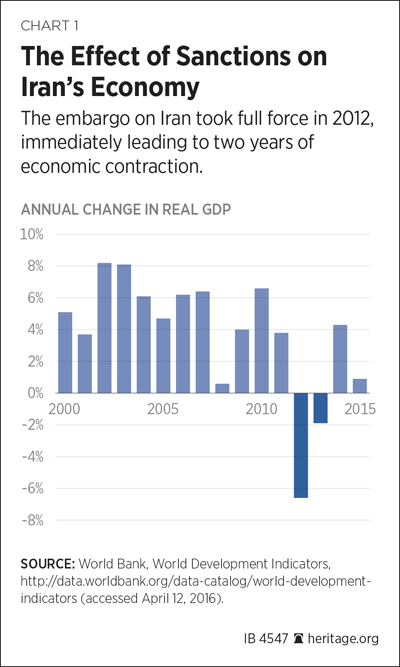
The European Union’s role in this scenario is complex. While the E3 has consistently advocated for the JCPOA, the bloc has also faced criticism for its perceived inaction in the face of Iranian aggression. Lifting sanctions could be seen as a way to reassert European influence in the region, but it also risks being perceived as capitulating to Iran’s demands.
Regionally, the move could lead to a reduction in tensions, but it may also provoke backlash from Gulf states such as Saudi Arabia and the United Arab Emirates. These countries have long viewed Iran as a rival and have been vocal in their opposition to any easing of restrictions. The potential for renewed hostilities, particularly in the Strait of Hormuz, remains a concern.
Reactions and Expert Perspectives
The potential sanctions lift has drawn mixed reactions from analysts and policymakers. Some experts argue that it is a necessary step to de-escalate tensions and prevent a wider conflict. “The JCPO
