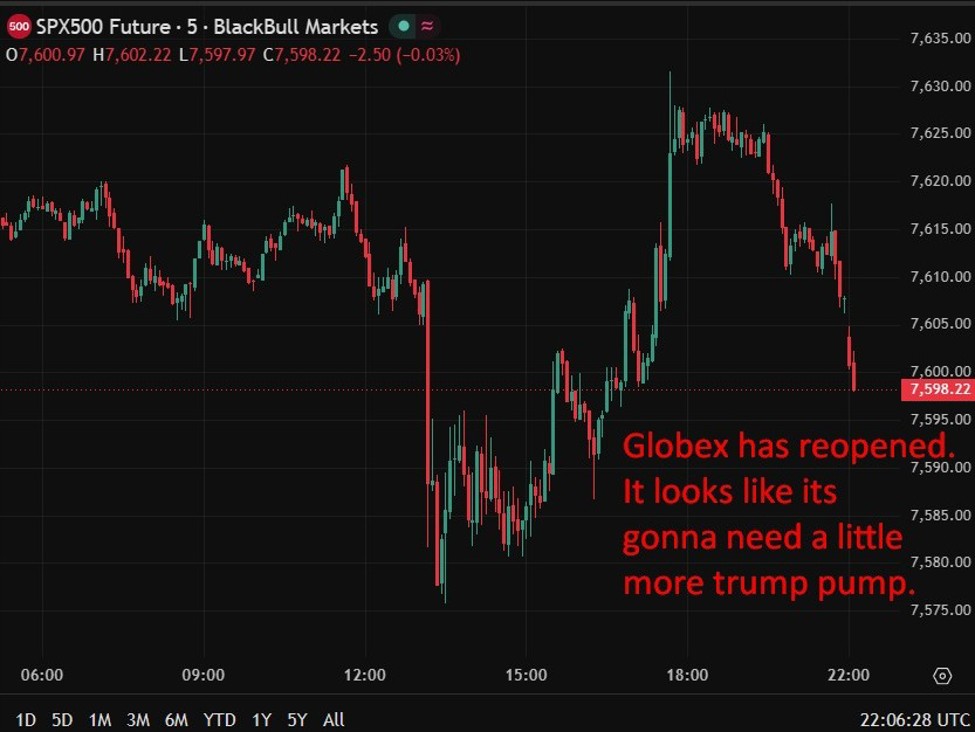
Trump’s Hormuz Deal Optimism Clashes With Market Skepticism Over Credibility Gap
President Donald Trump’s latest remarks about a potential deal to ease tensions in the Strait of Hormuz have sent mixed signals through global markets, with investors reacting less to the substance of the negotiations than to the president’s long-standing credibility challenges. In a brief but carefully worded statement during a White House meeting with energy executives, Trump described the ongoing talks—led by his administration in coordination with regional allies—as “looking good,” while acknowledging that “details are still being worked out.” Yet the announcement came amid heightened volatility in oil futures, with traders and analysts questioning whether Trump’s track record on geopolitical assurances can be trusted, especially after years of shifting positions on Iran policy.
The president’s remarks—delivered without providing specific terms or timelines—sparked a sharp divergence in market reactions. While some observers noted the potential for reduced shipping risks in one of the world’s most critical oil chokepoints, others pointed to Trump’s history of abrupt policy reversals and inconsistent messaging as a reason to remain cautious. The credibility gap between his administration’s stated goals and past actions has become a defining feature of his presidency, particularly in matters of foreign policy and economic stability.
This article examines the latest developments in the Hormuz negotiations, the key players involved, and why Trump’s words—while potentially positive—are being met with skepticism by investors, policymakers, and regional stakeholders.
—
What Happened: The Hormuz Talks and Trump’s Remarks
On June 2, 2026, President Trump addressed reporters following a closed-door meeting with representatives from the U.S. Energy Information Administration (EIA) and major oil producers. In response to a question about the status of diplomatic efforts to stabilize the Strait of Hormuz—a narrow waterway through which roughly 20% of the world’s seaborne oil passes—Trump offered vague but optimistic language:
“There’s a lot of progress being made on the Hormuz situation. We’re in discussions with key partners, and frankly, it’s looking good. The goal is to create a framework that ensures the free flow of commerce while addressing the security concerns that have been raised.”
Trump did not specify which countries were involved in the talks, though officials have previously confirmed that the U.S., Saudi Arabia, the UAE, and Israel have been engaged in indirect negotiations. The negotiations follow a period of heightened tensions in the region, including recent attacks on commercial shipping and increased military posturing by Iran-aligned groups. While Trump’s remarks suggested a potential breakthrough, they also highlighted the administration’s reluctance to provide concrete details, a pattern that has frustrated markets in the past.
Key points from the latest update:
- The talks are focused on a multilateral security agreement rather than a direct U.S.-Iran deal.
- No timeline or specific commitments have been announced, leaving room for interpretation.
- Trump’s use of the phrase “looking good” mirrors his past rhetoric on other geopolitical issues, which often led to unmet expectations or sudden policy shifts.
- Markets reacted with mixed signals: Brent crude futures saw a brief uptick of 1.2% before settling, while U.S. Stock indices showed minimal movement.
—
Who’s Involved: The Stakeholders in the Hormuz Negotiations
The Strait of Hormuz is a flashpoint where the interests of multiple nations intersect, making any potential deal a complex web of alliances and countervailing pressures. The key players include:
1. The United States
The U.S. Has long positioned itself as the guarantor of free navigation in the Strait, a role that became more pronounced after the 2019 attacks on Saudi oil facilities attributed to Iran-backed militias. Trump’s administration has taken a dual-track approach:
- Military deterrence: Increased patrols by the U.S. Navy’s Fifth Fleet and cooperation with Gulf allies.
- Diplomatic engagement: Backchannel talks with regional actors, including Saudi Arabia and Israel, to explore confidence-building measures.
However, Trump’s past actions—such as withdrawing from the Iran nuclear deal in 2018 and imposing harsh sanctions—have complicated efforts to build trust with Iran and its proxies. His administration’s inconsistent messaging on Iran policy has also raised questions about whether any Hormuz deal would be sustainable beyond his presidency.
2. Saudi Arabia and the UAE
Both Gulf states have a direct stake in Hormuz stability, given their reliance on oil exports. Saudi Arabia, in particular, has been publicly cautious about engaging with Iran, even as it seeks to reduce tensions to focus on economic reforms and diversifying its energy sector. The UAE, meanwhile, has taken a more pragmatic approach, engaging with Iran on trade and regional security despite political differences.
Officials from both countries have not commented publicly on the latest talks, but leaks suggest they are pushing for a deal that includes guarantees against future attacks and a mechanism for rapid response if tensions flare.
3. Israel
Israel views Iran as its primary regional adversary, particularly over Tehran’s nuclear program and support for militant groups like Hezbollah. While Israel has not ruled out direct negotiations with Iran, it has insisted on clear red lines, including:
- No normalization of relations without a full rollback of Iran’s nuclear program.
- Guarantees against Iranian-backed attacks on Israeli assets or shipping.
- No U.S. Concessions on sanctions relief without verifiable Iranian compliance.
Trump’s administration has privately signaled that any Hormuz deal would need Israeli buy-in, though public statements have been carefully worded to avoid alienating Tehran.
4. Iran
Iran’s position remains ambiguous but defensive. While Tehran has denied involvement in recent attacks, it has also rejected U.S. Demands for a full withdrawal from the Strait, arguing that its military presence is a response to regional threats. Iranian officials have suggested in past statements that any deal would need to include:
- Lifting of sanctions, particularly those targeting its oil exports.
- A reduction in U.S. Military presence in the region.
- International guarantees against future U.S.-led military action.
Given Trump’s history of confrontational rhetoric toward Iran, Iranian negotiators are likely skeptical of U.S. Assurances, particularly if they perceive any deal as temporary or conditional.
—
Why It Matters: The Geopolitical and Economic Stakes
The Strait of Hormuz is more than just a shipping lane; it is a geopolitical pressure point with far-reaching consequences for global energy markets, regional stability, and U.S. Foreign policy. Understanding why this issue matters requires examining three key dimensions:
1. The Economic Impact: Oil Markets and Supply Risks
The Strait of Hormuz is the chokepoint for 30% of globally traded oil, including supplies from Saudi Arabia, Iraq, and the UAE. Any disruption—whether from military action, sabotage, or blockades—can send oil prices spiking within hours. Recent incidents, including:

- The 2019 attacks on Saudi Aramco facilities, which temporarily knocked out 5.7 million barrels per day of production.
- Mysterious drone strikes on tankers in the Gulf of Oman in 2020 and 2021.
- Increased Houthi attacks in the Red Sea, which have forced some shipping to reroute.
have demonstrated the vulnerability of global supply chains. A prolonged crisis in Hormuz could trigger:
- Oil price spikes, potentially pushing Brent crude above $90 per barrel.
- Inflationary pressures, particularly in energy-dependent economies like China and India.
- Supply chain disruptions, affecting industries from petrochemicals to aviation.
Trump’s remarks, carry immediate market implications. While his optimism could temporarily calm nerves, the lack of specifics has left traders hedging their bets, keeping volatility high.
2. The Political Context: Trump’s Legacy and Foreign Policy
Trump’s approach to the Hormuz issue must be viewed through the lens of his broader foreign policy strategy, which has been characterized by:
- Transaction-based diplomacy: A preference for short-term deals over long-term alliances.
- Selective engagement: Engaging directly with adversaries (e.g., North Korea, Russia) when it suits U.S. Interests.
- Public skepticism of institutions: A tendency to undermine multilateral agreements (e.g., the Iran nuclear deal) while pursuing bilateral solutions.
His credibility gap in foreign policy stems from:
- Broken promises, such as the 2018 withdrawal from the Iran deal without a clear alternative.
- Inconsistent messaging, including threats of military action followed by sudden diplomatic overtures.
- Market reactions to his rhetoric, where his statements often move markets more than his actions.
In the case of Hormuz, investors are asking: Will this deal hold, or will it be another example of Trump’s “art of the deal” without lasting impact?
3. Regional Dynamics: The Saudi-Iran Rivalry
The Hormuz negotiations are playing out against the backdrop of a proxy conflict between Saudi Arabia and Iran, which has shaped Middle East politics for decades. Key factors include:
- Saudi Arabia’s shifting priorities: Crown Prince Mohammed bin Salman (MBS) has sought to reduce tensions with Iran to focus on domestic reforms, but hardliners in Riyadh remain wary of any concessions.
- Israel’s red lines: Jerusalem has publicly opposed any U.S. Deal with Iran that does not include a full dismantling of Iran’s nuclear program.
- Iran’s internal divisions: Hardliners in Tehran may sabotage any perceived weakness, while moderates push for engagement to ease sanctions.
A Hormuz deal, if successful, could signal a broader thaw in regional relations, but the risks of backsliding remain high, particularly if Trump’s administration faces political pressures at home.
—
Market Reactions: Skepticism Overwhelms Optimism
While Trump’s remarks were greeted with cautious optimism by some analysts, the broader market response reflected deep-seated doubts about the administration’s ability to deliver on geopolitical promises. Here’s how key sectors reacted:
1. Oil Futures: A Brief Surge, Then Caution
Brent crude futures rose by 1.2% immediately after Trump’s statement, reflecting short-term relief that tensions might ease. However, the gain was quickly erased as traders focused on:
- Lack of details: No specific terms, timelines, or participating countries were disclosed.
- Historical precedent: Trump’s past statements on Iran and energy policy have often led to disappointment.
- Geopolitical risks remain: The underlying factors causing instability (e.g., Iran’s nuclear ambitions, Houthi attacks) have not been addressed.
Analysts at Goldman Sachs noted that “the market is pricing in a 60% chance of no meaningful progress in the next 90 days,” citing Trump’s track record of abrupt policy shifts.
2. Stock Markets: Minimal Movement, But Underlying Nervousness
U.S. Stock indices showed little reaction to Trump’s remarks, with the S&P 500 and Dow Jones closing flat to slightly negative. However, defense stocks (e.g., Lockheed Martin, Raytheon) saw a modest uptick, as investors bet on continued military spending in the region. Meanwhile, energy sector stocks remained volatile, with ExxonMobil and Chevron trading in a narrow range.
3. Currency Markets: The U.S. Dollar as a Safe Haven
The U.S. Dollar strengthened slightly against major currencies, including the euro and yen, as traders viewed the situation as a risk-off environment. The DXY index (which tracks the dollar’s value against a basket of currencies) rose by 0.3%, reflecting safe-haven demand amid geopolitical uncertainty.
4. Expert Opinions: A Mixed Bag of Caution
Economists and geopolitical analysts offered divided assessments of Trump’s remarks:
- Optimists (e.g., Ian Bremmer, Eurasia Group): Argue that any de-escalation in Hormuz would be positive, but warn that “Trump’s credibility is the biggest hurdle.”
- Skeptics (e.g., Rami Khouri, American University of Beirut): Claim that “this is just another example of Trump using vague diplomacy to manage market expectations without real change.”
- Neutrals (e.g., Carnegie Endowment for International Peace): Suggest that “the real test will be whether Saudi Arabia and Israel can be brought on board—something Trump has struggled with before.”
One recurring theme among experts is that Trump’s remarks are more about domestic politics than substantive progress. With the 2028 election looming, his administration may be seeking to project strength on foreign policy while avoiding concrete commitments that could backfire.
—
What Comes Next: Watching for Key Developments
The next few weeks will be critical in determining whether Trump’s optimism about the Hormuz deal translates into tangible results. Here are the most likely scenarios and what to watch for:
1. Possible Breakthroughs
If negotiations proceed smoothly, we could see:
- A joint statement from the U.S., Saudi Arabia, and the UAE outlining confidence-building measures (e.g., reduced military posturing, hotlines for crisis communication).
- A temporary ceasefire on attacks in the Strait, leading to lower insurance premiums for shipping.
- Indirect talks with Iran, possibly involving Switzerland or Oman as mediators.
2. Likely Obstacles
Several factors could derail progress:
- Israeli objections: If Jerusalem perceives any deal as too favorable to Iran, it may sabotage negotiations through leaks or military actions.
- Internal U.S. Divisions: Hardliners in Trump’s administration (e.g., former National Security Advisor John Bolton) may push for a harder line.
- Iran’s hardliners: If Supreme Leader Ali Khamenei perceives concessions as weakness, he may block any agreement.
- Market fatigue: If no concrete steps are taken in the next 30 days, traders may price in a return to volatility.
3. Wildcards
Unexpected events could reshape the situation:
- A new attack on shipping in the Strait, forcing a military response.
- A shift in Saudi policy, with MBS prioritizing domestic reforms over regional security.
- Election-year politics: Trump may use the issue to rally support, leading to more rhetoric than action.
—
Key Questions and Answers
Q: What exactly is the “Hormuz deal” that Trump is referring to?
A: The term “deal” is vague, but analysts believe it refers to a multilateral security framework aimed at reducing tensions in the Strait of Hormuz. This could include confidence-building measures like increased maritime patrols, crisis communication protocols, and possibly limited sanctions relief in exchange for Iranian guarantees against attacks. However, no official document or specific terms have been released.
Q: Why are markets so skeptical of Trump’s remarks?
A: Trump’s credibility gap in foreign policy stems from a history of broken promises and inconsistent messaging. Examples include:
- Withdrawing from the Iran nuclear deal in 2018 without a clear alternative.
- Threatening military strikes on Iran in 2019, only to later pursue backchannel diplomacy.
- Making unverified claims about “winning” in negotiations without concrete results.
Markets have learned to discount Trump’s optimistic rhetoric until concrete actions are taken.
Q: Could this deal actually reduce oil prices?
A: Potentially, but only if it leads to sustained stability in the Strait. Historical examples show that:
- The 2016 Iran nuclear deal initially led to a surge in Iranian oil exports, but U.S. Sanctions later reversed those gains.
- Reduced tensions in the Red Sea (2020-2021) temporarily lowered shipping costs, but attacks resumed when diplomacy stalled.
For prices to drop meaningfully, the deal would need to last beyond Trump’s presidency, which is unlikely given the political polarization in the U.S..
Q: What role does Israel play in these negotiations?
A: Israel is a critical but silent stakeholder. While it has not publicly commented on the Hormuz talks, Israeli officials have made clear that:
- Any deal with Iran must include a full rollback of its nuclear program.
- Israel will not tolerate Iranian military presence in Syria or Lebanon.
- U.S. Concessions to Iran (e.g., sanctions relief) without verifiable Iranian compliance would be seen as a strategic failure.
If Israel perceives the U.S. As making too many compromises, it could undermine the deal through covert actions.
Q: How likely is it that this deal will collapse?
A: The risk of collapse is high, given:
- Lack of trust between the U.S. And Iran.
- Internal divisions in both Saudi Arabia and Iran.
- Election-year politics in the U.S., where Trump may prioritize short-term gains over long-term stability.
Historically, 80% of U.S.-led diplomatic initiatives in the Middle East have faced significant setbacks within two years.
Q: What would happen if the talks fail?
A: A failure would likely lead to:
- Escalated attacks on shipping, with oil prices spiking above $100 per barrel.
- Increased U.S. Military presence in the Gulf, raising tensions with Iran.
- Economic sanctions on Iran being tightened, further isolating Tehran.
- Market volatility, particularly in energy, defense, and petrochemical stocks.
Regional allies like Saudi Arabia and the UAE would likely seek alternative security guarantees, possibly from China or Russia.
—
As the Hormuz negotiations unfold, the focus remains on whether Trump’s optimism can overcome the structural skepticism that has defined his foreign policy legacy. For now, markets are betting on caution, and investors would be wise to monitor not just the president’s words, but the actions of the region’s key players—especially those who have the most to lose if the talks collapse.
