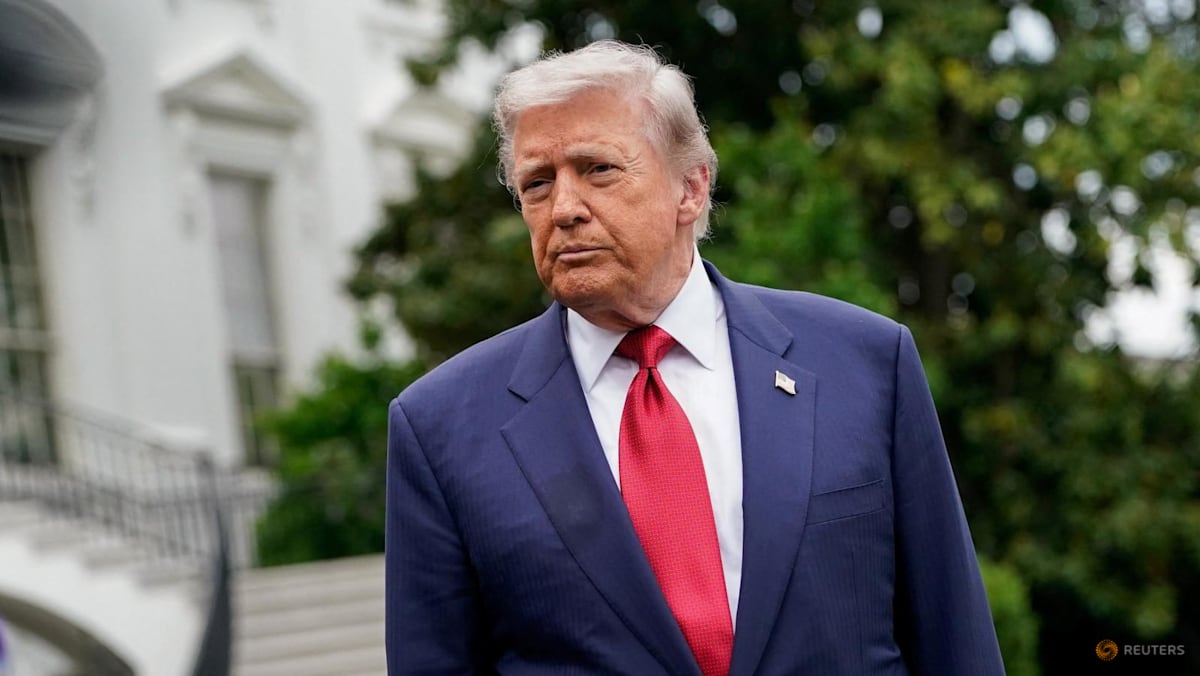
Trump calls Iran’s response to US peace proposal ‘unacceptable’ – CNA: Diplomatic Deadlock Deepens
The fragile hope for a diplomatic resolution to the ongoing conflict between the United States and Iran has suffered a significant setback. In a move that has sent ripples through international diplomatic circles, Donald Trump has declared that Iran’s formal response to a U.S.-led peace proposal is “totally unacceptable.” This blunt assessment comes at a critical juncture, as a precarious ceasefire begins to fray, raising fears that the region could be sliding back toward open kinetic warfare.
For weeks, reports had surfaced suggesting that both Washington and Tehran were closing in on a streamlined agreement—potentially a concise, one-page memorandum of understanding—designed to halt hostilities and create a framework for long-term stability. However, the current breakdown in communication suggests that the gap between the two nations’ core demands remains an insurmountable chasm. When Trump calls Iran’s response to US peace proposal ‘unacceptable’ – CNA and other global outlets report the friction, it signals not just a failed document, but a failure of the current diplomatic strategy to align the security needs of the U.S. With the political survival requirements of the Iranian leadership.
The Anatomy of a Diplomatic Collapse
To understand why the U.S. Administration has dismissed Iran’s counter-proposal so decisively, one must look at the nature of the “peace plan” that was on the table. Unlike the sprawling, technical complexities of previous nuclear agreements, the recent effort was reportedly focused on a simplified “memo” approach. The goal was to establish immediate “red lines” and “green lights” to prevent accidental escalation and stop the cycle of retaliatory strikes.
The U.S. Proposal likely centered on three non-negotiable pillars: the cessation of support for regional proxies, a verifiable reduction in missile capabilities, and a commitment to a permanent ceasefire. From the American perspective, any response that did not explicitly commit to these points was viewed as a stalling tactic rather than a genuine attempt at peace.
“Diplomacy only works when both parties are willing to concede something of value. If the response offers nothing but rhetoric and demands, This proves not a negotiation. it is a manifesto.”
Iran, conversely, has historically demanded the complete lifting of economic sanctions as a prerequisite for any behavioral changes. By insisting on “sanctions first,” Tehran likely positioned its response in a way that the Trump administration viewed as an ultimatum rather than a compromise. This clash of sequencing—behavior first versus relief first—is the primary engine driving the current deadlock.
Key Points of Contention in the Peace Proposal
- Sanctions Relief: Iran seeks a comprehensive removal of all U.S. Sanctions before making security concessions.
- Regional Influence: The U.S. Demands a drawdown of Iranian-backed militias in Iraq, Syria, and Yemen.
- Nuclear Threshold: Washington requires strict limitations on uranium enrichment to ensure Iran does not reach “breakout” capacity.
- Ceasefire Verification: Disagreement over who monitors the ceasefire and how violations are penalized.
The “One-Page Memo” Strategy: Ambition vs. Reality
The attempt to distill a complex, decades-long geopolitical rivalry into a one-page memo was a bold strategic move. The logic was that a shorter, more focused document would be harder to obfuscate and easier to enforce. By stripping away the bureaucratic layers of traditional treaties, officials hoped to reach a “gentleman’s agreement” that could be implemented immediately.
However, the failure of this approach highlights a fundamental truth about US-Iran relations: the issues are too systemic for a simplified solution. While a one-page memo can stop a battle, it cannot resolve a rivalry. The “unacceptable” nature of Iran’s response suggests that Tehran viewed the simplified format as an attempt to bypass the deeper, structural guarantees they feel are necessary for their national security.
| Approach | Objective | Outcome/Status |
|---|---|---|
| Traditional Treaties (e.g., JCPOA) | Detailed technical limits on nuclear activity. | Highly complex, prone to political reversal. |
| The “One-Page Memo” | Rapid ceasefire and immediate stability. | Rejected/Deemed “unacceptable.” |
| Maximum Pressure | Economic strangulation to force surrender. | Increased tension and proxy activity. |
Why the Timing Matters: The Fraying Ceasefire
The rejection of the peace proposal does not happen in a vacuum. It coincides with a visible deterioration of the ceasefire on the ground. In various flashpoints across the Middle East, skirmishes have increased, and the rhetoric from both sides has shifted from cautious optimism to aggressive posturing.
When diplomatic channels close, the “language of force” often takes over. The fraying ceasefire is a direct symptom of the diplomatic failure. For the U.S., the lack of a signed agreement means there is no formal mechanism to hold Iran accountable for proxy attacks. For Iran, the lack of a deal means the U.S. Remains a potent economic and military threat that must be deterred through asymmetric means.
This creates a dangerous feedback loop: diplomatic failure leads to ceasefire violations, which in turn makes the other side less likely to accept a peace proposal, as they no longer trust the partner’s commitment to peace.
The Role of Regional Stakeholders
The US-Iran deadlock is not a bilateral issue; it is a regional crisis. Several key players are watching these developments with extreme anxiety:
- Israel: Views any “simplified” deal with suspicion, fearing it might ignore Iran’s nuclear ambitions or its support for Hezbollah.
- Saudi Arabia: Concerned that a U.S. Withdrawal or a weak agreement would leave a power vacuum for Iran to fill in the Gulf.
- The European Union: Desperately seeking a middle ground to prevent a full-scale war that would destabilize global energy markets.
For a deeper look at how these regional dynamics shift, see our related explainer on Middle East proxy warfare.
Historical Context: A Cycle of Failed Diplomacy
To understand why Trump calls Iran’s response to US peace proposal ‘unacceptable’ – CNA, one must look at the historical pattern of engagement between these two powers. The relationship has been characterized by a “pendulum swing” between engagement and confrontation.
During the Obama administration, the Joint Comprehensive Plan of Action (JCPOA) represented the peak of engagement. It was a meticulously detailed document that traded sanctions relief for nuclear restrictions. However, the Trump administration viewed this deal as fundamentally flawed, arguing that it didn’t address ballistic missiles or regional aggression. By withdrawing from the JCPOA and implementing “Maximum Pressure,” the U.S. Shifted the pendulum toward confrontation.
The current attempt at a “peace proposal” was an effort to find a third way—neither a massive, complex treaty nor a purely confrontational stance. It was an attempt at “transactional diplomacy.” But transactional diplomacy requires a baseline of trust, which is currently non-existent. The “unacceptable” response from Iran is essentially a statement that the era of trust has not yet returned.
Common Misconceptions About the Current Crisis
In the wake of breaking news, several oversimplifications often emerge. It is critical to clarify these points to understand the true stakes of the situation.
Misconception 1: “A rejected proposal means war is inevitable.”
Not necessarily. In high-stakes diplomacy, “unacceptable” is often a tactical signal used to force the other side to improve their offer. While the risk of escalation increases, a rejected proposal is often just one stage in a longer, more grueling negotiation process. The goal is often to “flush out” the other side’s true bottom line.
Misconception 2: “The U.S. And Iran are fighting over a single issue.”
The conflict is multi-layered. While the news focuses on the “peace proposal,” the actual fight is over three different things simultaneously: nuclear proliferation, regional hegemony (proxies), and economic sovereignty (sanctions). A deal on one does not automatically solve the others.
Misconception 3: “The ceasefire is a formal treaty.”
The current ceasefire is largely an informal understanding or a “de facto” pause in hostilities. Because it lacks the weight of a signed, international treaty, it is incredibly fragile and can be broken by a single rogue commander on either side.
The Geopolitical Implications of a Continued Deadlock
If the U.S. And Iran cannot find common ground on this proposal, the long-term implications are severe. We are looking at a potential “Cold War” in the Middle East, characterized by permanent instability and constant low-level conflict.
Economic Volatility: Any escalation in the Strait of Hormuz—a critical chokepoint for global oil—could lead to a spike in energy prices, triggering inflation globally. The market reacts not just to war, but to the threat of war.
The Proxy War Expansion: Without a diplomatic framework to curtail proxy activity, the conflicts in Yemen and Syria may become permanent fixtures. These “shadow wars” drain resources and cause immense human suffering without ever reaching a definitive conclusion.
Shift in Global Alliances: A continued U.S.-Iran deadlock pushes Tehran closer to Russia and China. We are already seeing increased military cooperation between Iran and Russia, particularly in the context of the conflict in Ukraine. A failed peace proposal with the U.S. Only accelerates this strategic alignment, creating a formidable “axis” of opposition to Western influence.
What to Monitor in the Coming Days
As the dust settles from the announcement that the response was “unacceptable,” observers should watch for several key indicators to determine if the situation is escalating or merely pausing.
First, watch for “signaling” actions. If Iran increases its uranium enrichment levels or if the U.S. Increases its naval presence in the Persian Gulf, it suggests that both sides are preparing for a kinetic phase. Conversely, if a third-party mediator (such as Oman or Qatar) emerges to “massage” the proposal, there may still be a path to peace.
Second, monitor the rhetoric from the Iranian Supreme Leader. While the foreign ministry handles the “response,” the ultimate decision rests with the clerical leadership. Any shift in their language toward “strategic patience” could indicate a willingness to reconsider the proposal.
Finally, pay attention to the stability of the ceasefire. If the “fraying” becomes a full-scale collapse, the window for diplomacy will close rapidly, leaving military options as the only remaining tools of statecraft.
Frequently Asked Questions
Why did Trump call Iran’s response ‘unacceptable’?
While the full text of the response is not public, the U.S. Administration indicated that Iran failed to make meaningful concessions regarding its regional proxies and nuclear program, instead focusing primarily on the immediate removal of economic sanctions.
What was the ‘one-page memo’ mentioned in reports?
It was a proposed simplified agreement intended to end the war quickly by focusing on immediate ceasefire terms and basic security guarantees, rather than a complex, multi-year treaty.
Does this mean a war between the US and Iran is starting?
Not necessarily. Diplomatic setbacks are common in high-tension negotiations. However, the failure to reach an agreement increases the risk of accidental escalation, especially as the existing ceasefire weakens.
How does this affect global oil prices?
Instability in the Middle East, particularly near the Strait of Hormuz, creates market uncertainty. If the deadlock leads to military action, oil prices typically rise due to fears of supply disruptions.
Who are the main mediators in this conflict?
Countries like Oman and Qatar often serve as intermediaries, providing a secure channel for communication between Washington and Tehran when direct talks are impossible.
The current impasse serves as a stark reminder of the volatility of Middle Eastern diplomacy. When Trump calls Iran’s response to US peace proposal ‘unacceptable’ – CNA and other reports highlight the collapse of a potential deal, it underscores the difficulty of bridging the gap between two regimes with fundamentally different visions of regional security. For now, the world waits to see if this is a final break or merely a painful step toward a more realistic agreement.
For more analysis on international security, you may find our detailed report on global sanctions regimes useful.
